
Protecting Your Indiana Deck from Freeze-Thaw Cycles & Storms
Indiana decks face harsh winters and storms. Learn how to protect your deck from freeze-thaw damage, wind, and rain with expert tips.
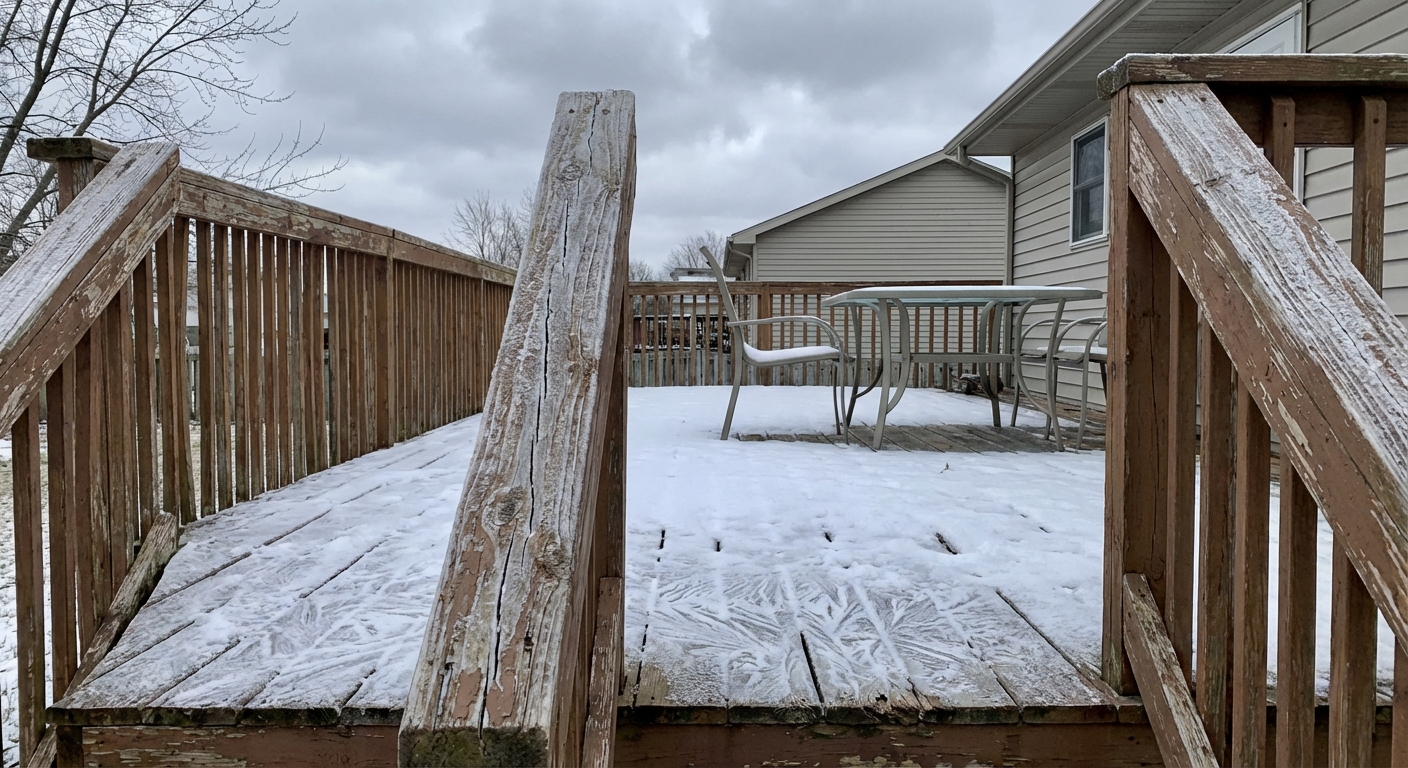
Does your Indiana deck feel the brunt of every harsh winter and summer storm? The constant cycle of freezing and thawing, combined with heavy snowfall and the occasional tornado, can wreak havoc on even the best-built decks. This guide provides practical advice to protect your investment and keep your deck looking great for years to come.
📅 Tool Alert: Maintenance Planner
Get a custom seasonal maintenance schedule to protect your investment for decades.
Plan Maintenance →Understanding Indiana's Climate & Its Impact on Decks
Looking for more regional information? Check out our Indiana State Decking Hub.
🏗️ Planning a deck project?
Get a free manual project review, or visualize your dream deck with AI before requesting quotes.
Indiana's climate presents unique challenges for deck owners. We experience hot, humid summers, with temperatures often reaching between 85-92°F, and cold winters with significant snowfall. The real culprit, however, is the freeze-thaw cycle. Water seeps into cracks and crevices, freezes, expands, and then thaws, repeating the process and gradually weakening the deck's structure. This is especially problematic in areas like South Bend (Michiana region) that experience heavy lake-effect snow.
Furthermore, Indiana sits within tornado alley. While not as frequent as in some other states, tornado season (April-June) requires you to consider wind resistance when building or maintaining your deck.
<!-- slot:after-intro -->
Key Areas of Vulnerability & How to Protect Them
Several key areas of your deck are particularly susceptible to damage from Indiana's weather. Addressing these vulnerabilities proactively can save you significant repair costs down the line.
1. Footings & Foundations
Your deck's foundation is its most critical component. In Indiana, it's essential to ensure your footings are deep enough to avoid the freeze-thaw cycle. The frost line in Indiana ranges from 30 inches in southern Indiana (around Evansville and Bloomington) to 36 inches in northern Indiana (near South Bend). Footings *must* extend below this depth.
- Problem: Shallow footings crack and heave due to freezing water in the soil.
- Solution: Ensure footings are below the frost line. Consider using concrete with air entrainment for increased freeze-thaw resistance. If your deck is older, inspect footings annually for cracks.
- Pro Tip: Many rural townships in Indiana have no permit requirements, but don't skip proper footing depth! Cities and suburbs generally require permits for decks over 30 inches above grade or attached to the dwelling.
2. Deck Boards & Railings
Deck boards and railings are directly exposed to the elements. Wood, in particular, is susceptible to rot, warping, and cracking.
- Problem: Moisture absorption leads to rot and decay, especially in areas with poor ventilation.
- Solution: Choose weather-resistant materials like composite decking (Trex, Fiberon), cedar, or pressure-treated lumber. Apply a high-quality sealant or stain every 1-3 years. Regularly clean your deck to remove debris that can trap moisture. See also: Deck Staining Tips for Indiana Weather: Timing & Products
- Material Cost Comparison (Installed):
| Material | Cost per sq ft | Pros | Cons |
| ----------------- | -------------- | ------------------------------------------------------------------------ | ------------------------------------------------------------------------------ |
| Pressure-Treated | $20-38 | Affordable, readily available | Susceptible to rot if not properly maintained, can splinter |
| Composite (e.g., Trex) | $38-65 | Low maintenance, durable, resists rot and insects | Higher upfront cost |
| Cedar | $28-48 | Naturally rot-resistant, beautiful appearance | Requires regular sealing, can be more expensive than pressure-treated lumber |
| Trex | $42-72 | Extremely durable, fade-resistant, low maintenance | High upfront cost, can get hot in direct sunlight |
- PaperPlan Tip: Use PaperPlan (paperplan.app) to visualize your deck with PaperPlan design with different materials and layouts before committing to a contractor. See how different materials hold up visually and estimate costs.
3. Fasteners & Connections
The connectors holding your deck together are crucial for structural integrity.
- Problem: Corrosion weakens fasteners, compromising the deck's stability, particularly during high winds.
- Solution: Use stainless steel or coated fasteners designed for outdoor use. Regularly inspect connections for rust or looseness and replace them as needed. In areas prone to high winds (especially open areas or near lakes), consider using wind-rated connectors.
- Pro Tip: Consider the increased termite pressure in southern Indiana (Evansville, Bloomington area) when choosing wood and fasteners. Termite shields on posts can add an extra layer of protection.
4. Railings & Stairs
Railings and stairs are safety features that must be maintained.
- Problem: Rot, loose connections, and damaged surfaces create safety hazards.
- Solution: Regularly inspect railings and stairs for damage. Repair or replace any damaged components immediately. Ensure railings meet current building codes, especially regarding height and spacing.
- Indianapolis Suburb Consideration: If you live in an Indianapolis suburb like Carmel, Fishers, Westfield, or Zionsville, be sure to check HOA requirements and design standards before making any changes to your deck.
5. Ledger Board Attachment
The ledger board is where the deck attaches to your house. Improper installation or water damage here can lead to serious structural problems.
- Problem: Rot behind the ledger board weakens the connection to the house, potentially causing the deck to pull away.
- Solution: Ensure the ledger board is properly flashed to prevent water intrusion. Use appropriate fasteners and follow local building codes. Regularly inspect the area for signs of rot or water damage.
<!-- slot:mid-content -->
Seasonal Maintenance Tips for Indiana Decks
Protecting your deck is an ongoing process. Here's a breakdown of seasonal maintenance tasks:
Spring
- Inspection: Thoroughly inspect your deck for any signs of damage, including cracks, rot, loose fasteners, and heaving footings.
- Cleaning: Power wash your deck to remove dirt, mildew, and algae. Use a mild detergent and avoid excessive pressure that can damage the wood.
- Repair: Repair any damage identified during the inspection. Replace damaged boards, tighten loose fasteners, and address any structural issues.
- Staining/Sealing: Apply a fresh coat of stain or sealant to protect the wood from the elements. See also: Indiana Deck Maintenance by Season: Year-Round Care Guide
Summer
- Regular Cleaning: Sweep your deck regularly to remove debris. Clean up spills immediately to prevent staining.
- Inspect for Insects: Watch for signs of insect infestation, such as termites or carpenter bees. Take appropriate action to control pests.
Fall
- Leaf Removal: Remove leaves and debris regularly to prevent moisture buildup and rot.
- Prepare for Winter: Apply a water-repellent sealant to protect the wood from snow and ice.
- Furniture Storage: Store outdoor furniture in a dry place to protect it from the elements.
Winter
- Snow Removal: Remove snow from your deck to prevent excessive weight buildup. Use a plastic shovel to avoid damaging the deck surface. Avoid using salt, as it can damage wood and concrete.
Navigating Indiana Deck Building Codes & Permits
Understanding local building codes and permit requirements is crucial before building or modifying your deck.
- Indiana Residential Code: Indiana's building codes are based on the International Residential Code (IRC), but enforcement varies by township, city, and county.
- Permit Requirements: Most Indiana cities require permits for decks over 30 inches above grade or attached to the dwelling. Many rural townships have no requirements.
- Indianapolis Metro Area: Marion County (Indianapolis) has a unified city-county government (IndyDPS handles permits). Suburbs like Carmel, Fishers, Westfield, and Zionsville have their own requirements, often stricter due to HOA regulations.
- Fort Wayne Area: Fort Wayne (Allen County) also has its own permit processes.
- Permit Costs: Typical permit costs range from $50-350, depending on the municipality. Always check with your local building department for specific requirements.
<!-- slot:before-faq -->
Finding the Right Deck Builder in Indiana
Building a deck that can withstand Indiana's climate requires expertise. Here's what to look for in a deck builder:
- Experience: Choose a builder with experience in your specific region of Indiana. Someone familiar with the challenges of building in South Bend's lake-effect snow zone will have different insights than a builder in Evansville with its milder winters.
- Licensing & Insurance: Ensure the builder is properly licensed and insured.
- References & Reviews: Check online reviews and ask for references from previous clients.
- Knowledge of Local Codes: The builder should be familiar with local building codes and permit requirements.
- Material Expertise: The builder should be knowledgeable about different decking materials and their suitability for Indiana's climate.
<!-- slot:end -->
> 📘 Planning a deck in Indiana? Read our Complete Guide to Deck Costs in Indiana for detailed pricing, permits, and material comparisons.
🎨 Not sure which material to pick?
Upload a photo of your backyard and see exactly how Trex, TimberTech, or cedar would look — free and instant.
Frequently Asked Questions
How often should I seal my Indiana deck?
The frequency of sealing depends on the type of wood, the sealant used, and the deck's exposure to the elements. Generally, you should seal your deck every 1-3 years. Water should bead up on the surface after sealing. If water soaks in, it's time to reseal.
What's the best decking material for Indiana's climate?
Composite decking (like Trex) offers excellent durability and low maintenance, making it a great choice for Indiana. Cedar is another good option due to its natural rot resistance. Pressure-treated lumber is the most affordable but requires more maintenance.
How do I prevent ice buildup on my deck in the winter?
Shovel snow regularly to prevent ice buildup. Avoid using salt, as it can damage wood and concrete. Consider using sand or ice melt products specifically designed for decks.
Can I build a deck myself in Indiana?
Yes, you can build a deck yourself, but it's essential to have the necessary skills and knowledge. Be sure to obtain the required permits and follow local building codes. See also: How to Build a Deck in Indiana: DIY Guide with Local Rules If you're unsure, it's best to hire a professional deck builder.
📋 Planning a deck project?
Get a free manual project review from our team — no obligation, no spam.
Get Free Project Review →Upload a backyard photo and preview real decking materials with AI — free, instant, no sign-up.
Permits, costs, material comparisons, and questions to ask before requesting quotes — delivered to your inbox.