
How to Build a Deck in Indiana: DIY Guide with Local Rules
Learn how to build a deck in Indiana! This DIY guide covers permits, costs, frost lines, and local building codes across Indiana.
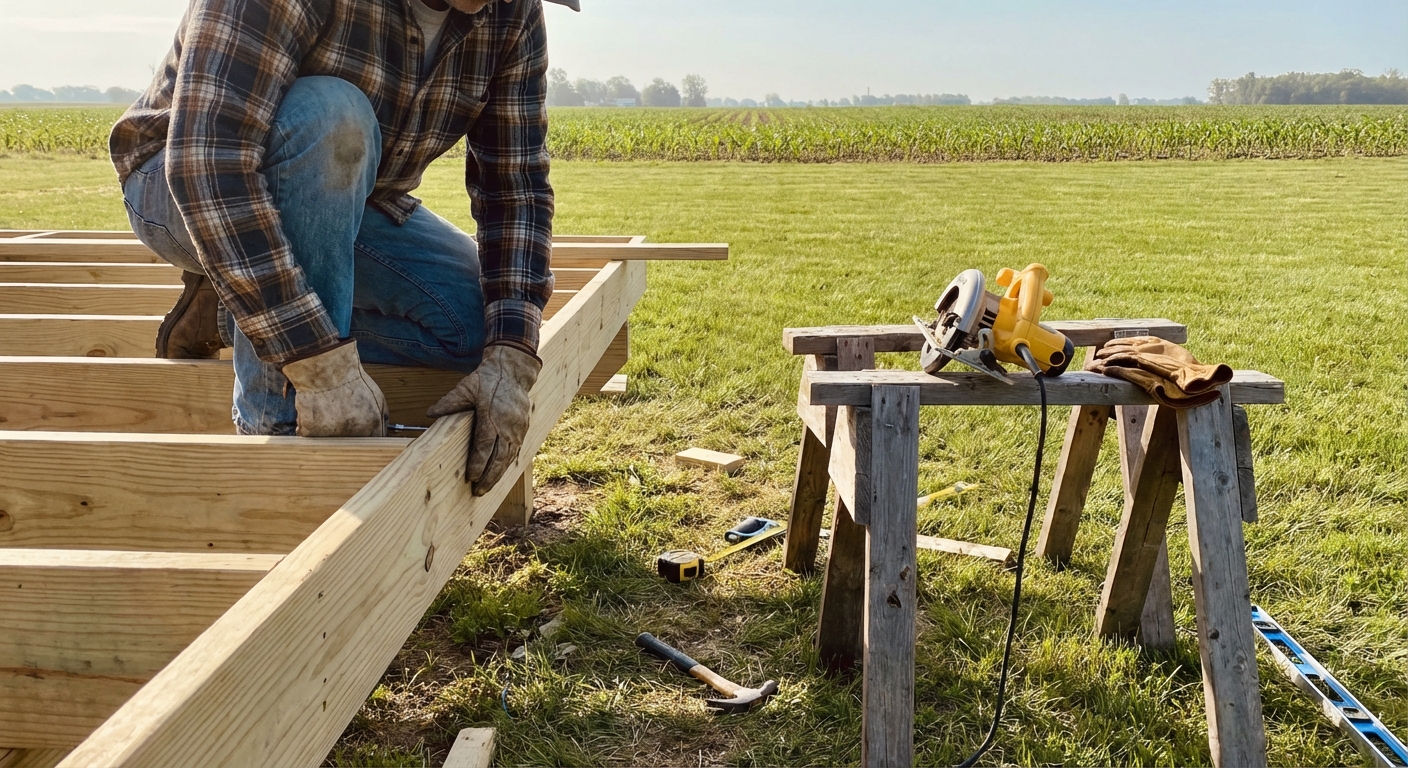
Want to build a deck yourself in Indiana, but unsure where to start with permits, materials, and Indiana-specific building codes? This guide walks you through every step, from planning to final inspection, so you can confidently build a deck that lasts through Indiana's tough weather.
📐 Tool Alert: Deck Stair Calculator
Calculate rise, run, and stringer cuts while ensuring IRC/OBC code compliance.
Calculate Stairs →Planning Your Indiana Deck Build
Looking for more regional information? Check out our Indiana State Decking Hub.
🏗️ Planning a deck project?
Get a free manual project review, or visualize your dream deck with AI before requesting quotes.
Your deck project begins with careful planning, taking into account Indiana's unique climate and local regulations. Consider the size, location, and intended use of your deck. Will it be for grilling, entertaining, or simply relaxing?
Size and Location Considerations
The size of your deck depends on your needs and your yard. Think about furniture placement, traffic flow, and activities you plan to enjoy. Location matters too. South-facing decks in Indiana get the most sun, while decks shaded by trees will stay cooler in the summer. Consider proximity to your house, access to utilities, and potential obstructions like trees or underground lines. Use PaperPlan (paperplan.app) to visualize your deck with PaperPlan design with different materials and layouts before committing to a contractor. This helps you get a feel for the space and identify any potential challenges early on.
Material Selection for Indiana Weather
Indiana's climate presents challenges: hot, humid summers and cold, snowy winters with significant freeze-thaw cycles. Choose materials that can withstand these conditions. Popular options include:
- Pressure-Treated Lumber: The most affordable option, typically costing $20-38 per square foot installed. Requires regular sealing and maintenance.
- Cedar: A naturally rot-resistant wood with a beautiful appearance. Expect to pay around $28-48 per square foot installed. Still needs sealing for optimal lifespan.
- Composite Decking: Made from recycled plastic and wood fibers, composite decking is low-maintenance and resists fading, staining, and rotting. Costs range from $38-65 per square foot installed.
- Trex: A popular brand of composite decking known for its durability and wide range of colors and styles. Expect to pay $42-72 per square foot installed.
Here's a quick cost comparison:
| Material | Installed Cost per Sq Ft | Pros | Cons |
| ------------------ | ------------------------ | -------------------------------------------------------------------- | ------------------------------------------------------------------------- |
| Pressure-Treated | $20-38 | Affordable, readily available | Requires regular maintenance, prone to rot and insect damage |
| Cedar | $28-48 | Naturally rot-resistant, beautiful appearance | Requires sealing, can be more expensive than pressure-treated |
| Composite | $38-65 | Low-maintenance, durable, resists fading and staining | More expensive than wood, can get hot in direct sunlight |
| Trex | $42-72 | Very durable, wide range of colors and styles, low-maintenance | Most expensive option, can get hot in direct sunlight |
Understanding Indiana Permit Requirements
This is where things get specific. Indiana's Residential Code (based on the IRC) is the baseline, but enforcement varies significantly by location.
- Decks over 30 inches: If your deck is more than 30 inches above grade (ground level) or attached to your house, you *likely* need a permit in most Indiana cities and suburbs.
- Rural Townships: Many rural townships in Indiana have *no* permit requirements for decks. Check with your local government.
- Cities and Suburbs: Cities like Indianapolis, Fort Wayne, Evansville, and South Bend, and their surrounding suburbs, almost always require permits for decks.
- HOAs: If you live in a neighborhood with a Homeowners Association (especially common in Indianapolis suburbs like Carmel, Fishers, Westfield, and Zionsville), you'll *also* need HOA approval, which often involves design standards and material restrictions.
Typical Permit Costs: Range from $50-350 depending on your municipality. Contact your local building department for specific fees and requirements. In Indianapolis/Marion County, contact IndyDPS.
<!-- slot:after-intro -->
Obtaining Permits and Approvals
Don't skip this step! Building without a permit can lead to fines, legal issues, and even having to tear down your deck.
Researching Local Codes and Regulations
Start by contacting your local building department. Every city, town, and county in Indiana has its own specific requirements. Ask about:
- Permit application process
- Required documents (site plan, construction drawings)
- Inspections required
- Setback requirements (distance from property lines)
- Specific code requirements for decks (footing depth, railing height, etc.)
Preparing Your Permit Application
A typical permit application includes:
- Site Plan: A drawing showing the location of your deck on your property, including property lines, existing structures, and utility lines.
- Construction Drawings: Detailed plans showing the dimensions, materials, and construction methods you'll use. These don't need to be professionally drafted for smaller, simpler decks, but they need to be accurate and clear.
- Permit Fee: Varies by location.
Navigating Inspections
Once you have your permit, you'll need to schedule inspections at various stages of construction, typically:
- Footing Inspection: Before pouring concrete. Ensures proper depth and size.
- Framing Inspection: After the deck frame is built, but before decking is installed. Checks for proper joist spacing, beam size, and connections.
- Final Inspection: After the deck is complete. Verifies that all work meets code requirements.
Building Your Deck: Step-by-Step
Now for the fun part! This is a general overview. Always refer to your local building codes and consult with a professional if you're unsure about any aspect of the construction.
1. Layout and Excavation
- Mark the perimeter of your deck.
- Excavate for footings. Remember the frost line! It's 30 inches in southern Indiana (Evansville, Bloomington) and 36 inches in northern Indiana (South Bend, Fort Wayne). Your footings *must* extend below the frost line to prevent cracking from freeze-thaw cycles.
2. Footings and Posts
- Pour concrete footings. Use concrete forms or dig bell-shaped footings for added stability.
- Install posts. Use pressure-treated lumber and ensure they are plumb (perfectly vertical).
3. Beam and Joist Construction
- Attach beams to posts. Beams support the joists.
- Install joists. Joists are the horizontal framing members that support the decking. Use proper joist spacing based on the type of decking you're using.
4. Decking Installation
- Install decking boards. Leave a small gap between boards for expansion and contraction.
- Use screws or hidden fasteners for a clean look.
5. Railing Installation
- Install posts for railings.
- Attach railing sections. Railings must meet code requirements for height and spacing to prevent falls.
6. Stairs (If Applicable)
- Build stair stringers.
- Attach stair treads and risers.
<!-- slot:mid-content -->
Indiana-Specific Considerations
Beyond the general steps, keep these Indiana-specific factors in mind:
Freeze-Thaw Protection
Indiana's severe freeze-thaw cycles are a major concern. Proper footing depth is crucial to prevent concrete from cracking. Consider using air-entrained concrete, which is more resistant to freeze-thaw damage. See also: Protecting Your Indiana Deck from Freeze-Thaw Cycles & Storms
Termite Control
Southern Indiana, especially around Evansville and Bloomington, has moderate to high termite pressure. Use pressure-treated lumber that is resistant to termites, and consider applying a soil treatment around the perimeter of your deck.
Wind Resistance
Indiana experiences tornadoes, especially during tornado season (April-June). In exposed areas, consider using wind-rated connectors to secure your deck frame to the house and footings.
Best Time to Build
The best months to build a deck in Indiana are April-June and September-October. Avoid building during the winter months (November-March) when the ground is frozen.
Cost Savings in Indiana
Indiana has some of the most affordable construction costs in the Midwest. Take advantage of this by building a larger or more elaborate deck than you might be able to afford in other states.
Deck Maintenance in Indiana
Building the deck is only half the battle. Regular maintenance is essential to keep your deck looking its best and lasting for years to come.
Cleaning and Sealing
- Clean your deck at least once a year to remove dirt, mildew, and debris.
- Seal your deck every 1-3 years to protect it from the elements. Use a sealant specifically designed for your type of decking. See also: Deck Staining Tips for Indiana Weather: Timing & Products
Inspections and Repairs
- Inspect your deck regularly for signs of damage, such as rot, cracks, or loose fasteners.
- Repair any damage promptly to prevent it from getting worse.
Seasonal Maintenance
- In the fall, remove leaves and debris from your deck to prevent moisture buildup.
- In the winter, clear snow and ice from your deck to prevent slips and falls. Avoid using salt, which can damage wood and concrete. See also: Indiana Deck Maintenance by Season: Year-Round Care Guide
<!-- slot:before-faq -->
Building a deck in Indiana is a rewarding project that can add value and enjoyment to your home. By following these steps and taking into account Indiana's unique climate and regulations, you can build a deck that will last for years to come. If you'd prefer to leave it to the pros, find reliable and experienced deck builders right here at Local.click. We connect you with top-rated contractors in your area.
> 📘 Planning a deck in Indiana? Read our Complete Guide to Deck Costs in Indiana for detailed pricing, permits, and material comparisons.
🎨 Not sure which material to pick?
Upload a photo of your backyard and see exactly how Trex, TimberTech, or cedar would look — free and instant.
Frequently Asked Questions
Do I need a permit to build a deck in Indiana?
It depends on your location and the size and height of your deck. Decks over 30 inches above grade or attached to your house generally require permits in most cities and suburbs. Many rural townships have no permit requirements. Always check with your local building department.
How deep do my footings need to be in Indiana?
Your footings must extend below the frost line. The frost line is 30 inches in southern Indiana and 36 inches in northern Indiana.
What type of wood should I use for my deck in Indiana?
Pressure-treated lumber, cedar, and composite decking are all good options. Consider the cost, maintenance requirements, and durability of each material.
How much does it cost to build a deck in Indiana?
The cost depends on the size, materials, and complexity of your deck. Expect to pay $20-38 per square foot for pressure-treated, $28-48 per square foot for cedar, and $38-72 per square foot for composite decking, installed.
What are some common mistakes to avoid when building a deck in Indiana?
Failing to obtain proper permits, not digging footings deep enough, using improper fasteners, and neglecting maintenance are common mistakes. Also, failing to account for snow load in northern Indiana can lead to structural issues.
<!-- slot:end -->
📋 Planning a deck project?
Get a free manual project review from our team — no obligation, no spam.
Get Free Project Review →Upload a backyard photo and preview real decking materials with AI — free, instant, no sign-up.
Permits, costs, material comparisons, and questions to ask before requesting quotes — delivered to your inbox.