
How Much Does a Deck Cost in Indiana? Complete 2026 Guide
Planning a new deck in Indiana? This 2026 guide covers average deck costs per square foot, materials, permits, and regional price variations across IN.
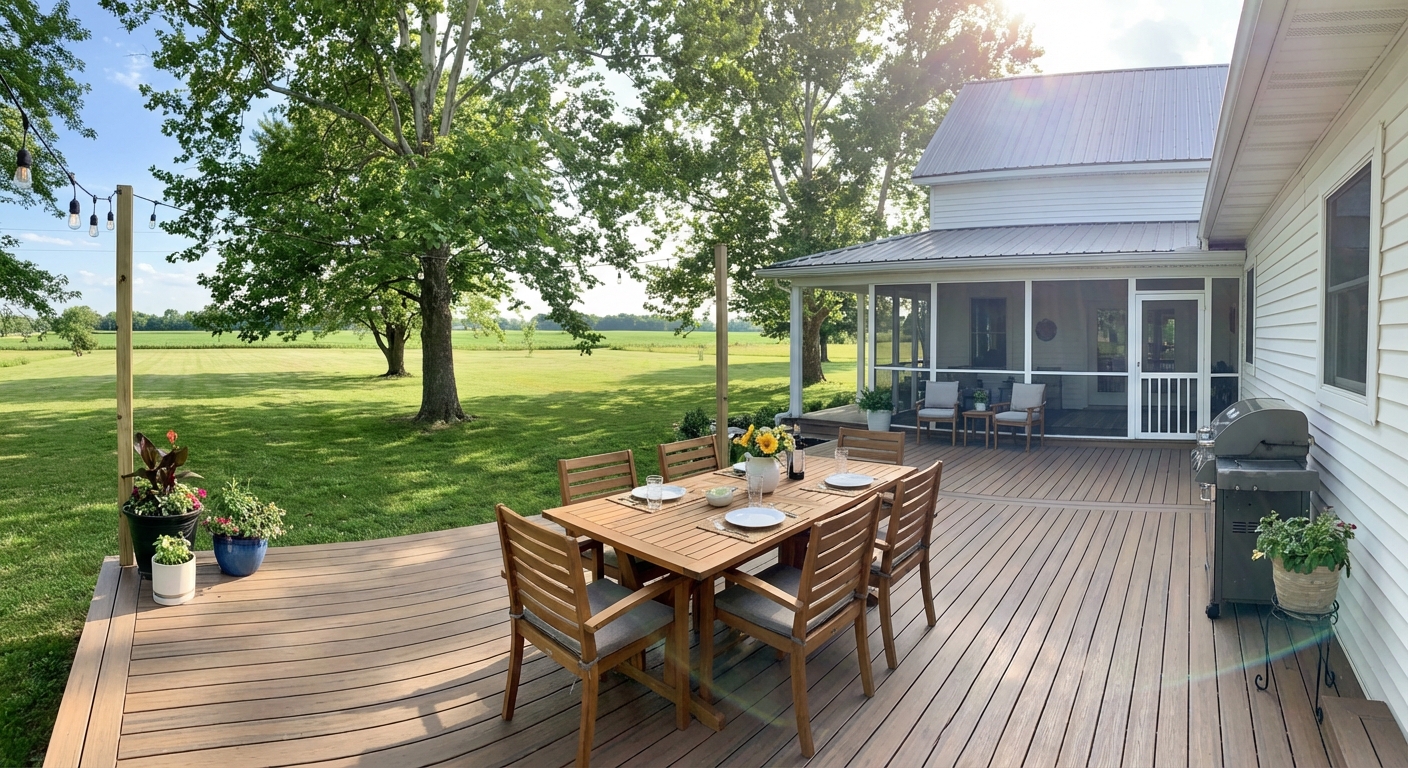
Building a new deck in Indiana involves several cost factors, from materials and labor to permits and regional variations. This guide breaks down the expenses you can expect in 2026, helping you plan your budget and choose the best options for your needs and location. Because Indiana boasts some of the most affordable construction costs in the Midwest, you can often get great value for your money.
🧮 Tool Alert: Deck Cost Calculator
Estimate your project costs in seconds based on local pricing bands for your area.
Calculate My Cost →Average Deck Costs in Indiana
Looking for more regional information? Check out our Indiana State Decking Hub.
🏗️ Planning a deck project?
Get a free manual project review, or visualize your dream deck with AI before requesting quotes.
Deck costs in Indiana are influenced by the material you choose, the size of your deck, and labor rates. Here's a general breakdown per square foot, installed:
- Pressure-Treated Wood: $20-$38/sqft
- Composite Decking: $38-$65/sqft
- Cedar Decking: $28-$48/sqft
- Trex Decking: $42-$72/sqft
These figures include both materials and labor. The final price will also depend on the complexity of the design, any special features (like railings, stairs, or built-in seating), and the contractor you hire.
<!-- slot:after-intro -->
Material Costs in Detail
Let's look closer at the cost factors associated with each material:
- Pressure-Treated Wood: This is the most budget-friendly option. The wood is chemically treated to resist rot, insects, and fungal decay, making it suitable for Indiana's varying climate. However, it requires regular maintenance (staining or sealing) to prevent warping and cracking.
- Composite Decking: Composite decks are made from a blend of wood fibers and recycled plastic. They're more expensive upfront but offer superior durability and require minimal maintenance. Brands like Trex and Fiberon are popular choices. They resist fading, staining, scratching, and are insect-proof.
- Cedar Decking: Cedar is a naturally beautiful and durable wood that's resistant to rot and insects. It has a distinct aroma and a warm, reddish hue. While more expensive than pressure-treated lumber, it requires less maintenance and offers a longer lifespan.
- Trex Decking: Trex is a leading brand of composite decking known for its high quality, durability, and wide range of colors and styles. It's a premium option that comes with a higher price tag but provides exceptional performance and longevity.
Consider using PaperPlan (paperplan.app) to visualize your deck with PaperPlan design with different materials and layouts before committing to a contractor. See how different colors and textures will look on *your* home!
Labor Costs in Indiana
Labor costs can vary depending on your location within Indiana and the experience of the contractor. Areas with higher costs of living, such as the Indianapolis metro area, may have slightly higher labor rates. However, Indiana generally has lower labor costs compared to other states in the Midwest. Expect to pay between $8-$20 per square foot for labor, depending on the complexity of the project.
Additional Cost Considerations
Beyond materials and labor, keep these factors in mind:
- Permits: Most Indiana cities and towns require permits for decks over 30 inches above grade or attached to a dwelling. Permit costs typically range from $50 to $350, depending on the municipality. See "Do You Need a Deck Permit in Indiana? Township & City Rules" for more info.
- Demolition: If you're replacing an existing deck, factor in the cost of demolition and disposal.
- Site Preparation: Clearing the area, leveling the ground, and removing obstacles can add to the overall cost.
- Railings and Stairs: Railings and stairs are essential safety features that will increase the price. The type of railing (wood, composite, metal) will affect the final cost.
- Features: Built-in seating, planters, lighting, and other features will add to the expense.
- Footings: Concrete footings are essential for supporting the deck and preventing it from settling or shifting. In Indiana, the frost line is 30-36 inches deep (30 inches in southern IN, 36 inches in northern IN near Michigan border), so footings must extend below this depth to prevent damage from freeze-thaw cycles.
- Fasteners: Using high-quality, weather-resistant fasteners is crucial for ensuring the deck's longevity.
Regional Cost Variations in Indiana
Deck costs can vary depending on your location within Indiana. Here's a breakdown of some key regional differences:
Indianapolis Metro Area (Central Indiana)
As the largest metropolitan area in Indiana, Indianapolis and its surrounding suburbs (Carmel, Fishers, Westfield, Zionsville) tend to have slightly higher labor costs compared to other parts of the state. Marion County has a unified city-county government (IndyDPS handles permits), while suburbs have their own distinct requirements. These suburbs also often have stricter HOA requirements, so consider this when planning your deck. See "Indianapolis Deck Permit: Requirements, Costs & How to Apply in 2026".
Fort Wayne (Northeast Indiana)
Fort Wayne and Allen County offer more affordable building costs. The growing suburban areas (Aboite, New Haven) provide a range of options for deck construction.
Evansville (Southwest Indiana)
Evansville, situated in the Tri-State area (IN/KY/IL) along the Ohio River, experiences a slightly warmer climate than northern Indiana. Termite pressure is moderate to high in this region, so consider using treated lumber or composite decking.
South Bend (Michiana)
South Bend, located in the Michiana region, experiences lake-effect snow from Lake Michigan, resulting in colder winters. Ensure that your deck footings are deep enough to withstand the freeze-thaw cycles.
Bloomington (Southern Indiana)
Bloomington and surrounding areas in southern Indiana also experience moderate to high termite pressure.
<!-- slot:mid-content -->
Indiana Climate Considerations
Indiana's climate presents specific challenges for deck construction. Consider these factors when planning your deck:
- Hot, Humid Summers: Indiana summers are hot and humid, with temperatures often reaching 85-92°F. Choose materials that can withstand the heat and humidity without warping or fading.
- Cold Winters with Snowfall: Indiana winters are cold, with significant snowfall. Ensure that your deck is designed to handle the weight of snow and ice.
- Severe Freeze-Thaw Cycles: Indiana experiences severe freeze-thaw cycles, which can crack concrete footings if they're not below the frost line. Getting the footing depth correct is critical.
- Tornado Season: Indiana is in tornado alley, with the peak season being April-June. Consider using wind-rated connections in exposed areas.
Best Time to Build a Deck in Indiana
The best months to build a deck in Indiana are April-June and September-October. Avoid building during the frozen ground months of November-March.
Permits and Building Codes in Indiana
The Indiana Residential Code (based on the International Residential Code) governs deck construction in the state. However, enforcement varies by township, city, and county. Many rural Indiana townships have no permit requirements, while cities and suburbs do. Decks over 30 inches above grade or attached to a dwelling generally require permits in most Indiana cities. See "Indiana Deck Building Codes: Key Requirements for 2026" for more info.
Key Building Code Requirements
- Footings: Footings must extend below the frost line (30-36 inches).
- Posts: Posts must be properly sized and spaced to support the deck's load.
- Beams: Beams must be adequately sized to span the distance between posts.
- Joists: Joists must be properly spaced and sized to support the deck's surface.
- Decking: Decking must be securely fastened to the joists.
- Railings: Railings are required for decks over 30 inches above grade and must meet specific height and spacing requirements.
- Stairs: Stairs must have consistent rise and run dimensions and must meet specific width and headroom requirements.
<!-- slot:before-faq -->
Saving Money on Your Deck Project
- Compare Quotes: Get quotes from multiple contractors to ensure you're getting a fair price.
- Choose Materials Wisely: Pressure-treated lumber is the most affordable option, but consider the long-term maintenance costs.
- DIY Some of the Work: If you're handy, you can save money by doing some of the work yourself, such as demolition, site preparation, or painting.
- Build During the Off-Season: Contractors may offer lower rates during the off-season (November-March).
- Keep the Design Simple: Complex designs with multiple levels, angles, or features will increase the cost.
By carefully planning your deck project and considering all the relevant factors, you can build a beautiful and functional outdoor space that fits your budget. Consider exploring "Deck Cost Per Square Foot in Indiana: 2026 Pricing Breakdown" for a more granular pricing analysis. You might also want to see "Composite Deck Cost in Indiana: What to Expect in 2026" if you're leaning toward composite. If you are in a specific area, check out "Best Deck Builders in Indianapolis: Central Indiana Guide for 2026" or "Best Deck Builders in Fort Wayne, IN: Northeast Indiana Guide for 2026" or "Best Deck Builders in Evansville, IN: Tri-State Area Guide for 2026" or "Best Deck Builders in South Bend, IN: Michiana Guide for 2026".
<!-- slot:end -->
🎨 Not sure which material to pick?
Upload a photo of your backyard and see exactly how Trex, TimberTech, or cedar would look — free and instant.
Frequently Asked Questions
How long will a deck last in Indiana?
A properly built and maintained deck in Indiana can last for 15-25 years or more. Pressure-treated lumber decks typically last 15-20 years, while composite and cedar decks can last 20-30 years or longer. Regular maintenance, such as cleaning, staining, and sealing, will extend the lifespan of your deck.
Do I need a permit to build a deck in Indiana?
Generally, yes, if your deck is more than 30 inches above grade or attached to your house. However, many rural townships do not require permits. Always check with your local building department to determine the specific requirements in your area.
What is the best material for a deck in Indiana?
The best material depends on your budget, aesthetic preferences, and maintenance requirements. Pressure-treated lumber is the most affordable option, while composite decking offers superior durability and low maintenance. Cedar is a good middle ground, offering natural beauty and decent durability.
How deep should deck footings be in Indiana?
Deck footings in Indiana must extend below the frost line, which is 30-36 inches deep. In southern Indiana, 30 inches is sufficient, while in northern Indiana near the Michigan border, 36 inches is recommended.
Can I build a deck myself in Indiana?
Yes, you can build a deck yourself in Indiana, but it's essential to have the necessary skills and knowledge. Familiarize yourself with local building codes and obtain the required permits. If you're not comfortable with the project, it's best to hire a qualified contractor.
📋 Planning a deck project?
Get a free manual project review from our team — no obligation, no spam.
Get Free Project Review →Upload a backyard photo and preview real decking materials with AI — free, instant, no sign-up.
Permits, costs, material comparisons, and questions to ask before requesting quotes — delivered to your inbox.