
Indiana Deck Building Codes: Key Requirements for 2026
Navigate Indiana's deck building codes for 2026. Learn about permits, frost lines, material costs, and regional variations across IN.
Building a deck in Indiana adds valuable outdoor living space, but you need to understand the state's specific building codes to ensure your project is safe, compliant, and avoids costly rework. This guide breaks down the key requirements, regional differences, and cost considerations for building a deck in Indiana in 2026.
📋 Tool Alert: Permit Checker
Do you really need a permit? Check the exact rules for your city or township.
Check Permits →Understanding Indiana's Residential Code and Permits
Looking for more regional information? Check out our Indiana State Decking Hub.
🏗️ Planning a deck project?
Get a free manual project review, or visualize your dream deck with AI before requesting quotes.
Indiana adheres to a modified version of the International Residential Code (IRC), but enforcement varies significantly across the state. Many rural townships have *no* permit requirements, while cities and suburban areas almost always require permits for decks. As a general rule, if your deck is more than 30 inches above grade or attached to your house, you'll likely need a permit.
The Indiana Residential Code covers everything from footing depth and structural support to railing heights and stair construction. It's crucial to familiarize yourself with the specific requirements enforced in your area. Contact your local building department (city hall, township office, or county building department) to confirm permit requirements and obtain the necessary applications. Typical permit costs in Indiana range from $50-$350, depending on your municipality.
<!-- slot:after-intro -->
Indiana's Climate and Its Impact on Deck Construction
Indiana's climate presents unique challenges for deck construction. You'll experience hot, humid summers with temperatures reaching 85-92°F, and cold winters with significant snowfall. These temperature extremes and frequent freeze-thaw cycles put stress on deck materials.
Frost Line Considerations
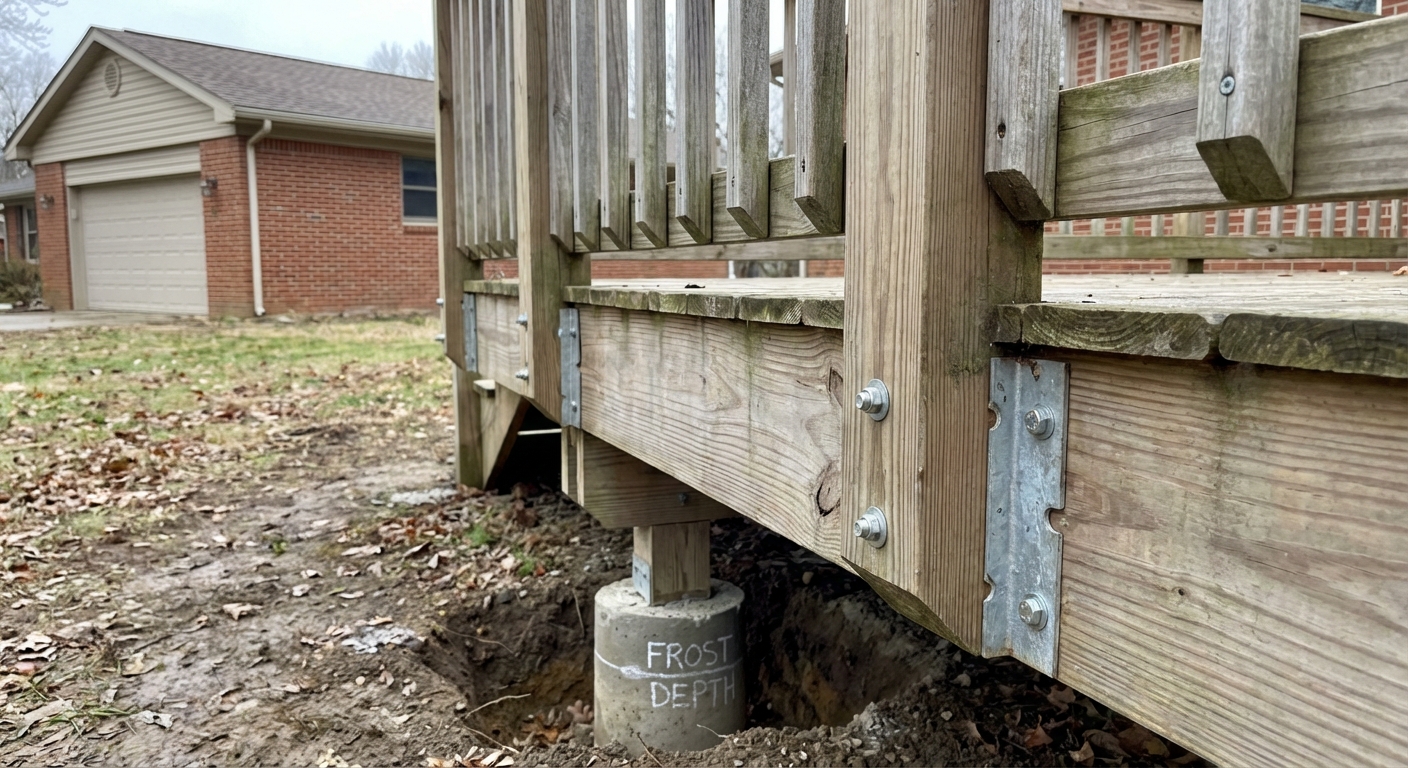
The frost line, the depth to which the ground freezes, is a critical factor. Footings must extend below the frost line to prevent heaving and cracking due to frozen ground. In southern Indiana (Evansville, Bloomington), the frost line is around 30 inches. In northern Indiana (South Bend, Fort Wayne) near the Michigan border, it's closer to 36 inches. Ignoring the frost line will lead to serious structural problems.
Wind and Tornado Risks
Indiana experiences tornado season from April to June. While decks aren't typically the primary concern during a tornado, considering wind-rated connectors can enhance the overall structural integrity, especially in exposed areas.
Best Time to Build
The best months to build a deck in Indiana are typically April-June and September-October. These months offer milder temperatures and avoid the extreme heat of summer and frozen ground of winter (November-March).
Material Choices and Costs in Indiana
Indiana offers very affordable construction costs compared to other Midwestern states, giving you good value for your deck-building budget. Material choices significantly impact the final cost. Here's a cost breakdown per square foot, installed:
| Material | Cost per SqFt (Installed) | Pros | Cons |
|-------------------|---------------------------|-------------------------------------------------------------------------|--------------------------------------------------------------------------|
| Pressure-Treated | $20-$38 | Most affordable, readily available | Requires regular maintenance, prone to warping/splitting |
| Composite | $38-$65 | Low maintenance, long-lasting, resists rot and insects | Higher upfront cost, can get hot in direct sunlight |
| Cedar | $28-$48 | Naturally beautiful, insect-resistant | Requires regular staining/sealing, can be more expensive than treated lumber |
| Trex (Composite) | $42-$72 | Premium composite, excellent durability, wide range of colors and styles | Highest upfront cost |
*Note: These are average costs. Prices can vary depending on contractor, design complexity, and specific material grades.*
Use PaperPlan (paperplan.app) to visualize your deck with PaperPlan design with different materials and layouts before committing to a contractor. This can help you estimate costs and make informed decisions.
Key Code Requirements for Indiana Decks
Here are some critical aspects of the Indiana Residential Code to keep in mind:
- Footings: Must extend below the frost line (30-36 inches) and be properly sized to support the deck's load.
- Posts: Should be pressure-treated lumber and adequately sized based on the deck's height and span.
- Beams: Must be properly sized to support the joists and deck load. Consult span tables for appropriate sizing.
- Joists: Should be spaced according to code requirements and span tables based on the decking material and load.
- Decking: Must be securely fastened to the joists with appropriate screws or fasteners.
- Railings: Required for decks more than 30 inches above grade. Must be at least 36 inches high for residential decks.
- Stairways: Must have a minimum width of 36 inches and meet specific rise and run requirements. Handrails are required on stairways with four or more risers.
- Guardrails: Openings in guardrails must be small enough to prevent a 4-inch sphere from passing through.
- Attachment to House: If attached to the house, the deck must be properly connected to the house's structure with appropriate hardware.
<!-- slot:mid-content -->
Regional Considerations Across Indiana
Indiana's diverse regions have specific considerations:
- Indianapolis Metro/Central Indiana: Marion County (Indianapolis) has a unified city-county government, so IndyDPS handles permits. Suburbs like Carmel, Fishers, Westfield, and Zionsville have their own specific requirements and often stricter HOA guidelines. Expect higher scrutiny and potentially longer permit processing times.
- Fort Wayne/Northeast Indiana: Allen County and Fort Wayne offer relatively affordable builds. Growing suburban areas like Aboite and New Haven are seeing increased deck construction. Pay close attention to the 36-inch frost line in this region.
- Evansville/Southwest Indiana: The Tri-State area (Indiana/Kentucky/Illinois) has a slightly warmer climate due to the Ohio River's influence. Termite pressure is higher here, so consider termite-resistant materials and treatments. The frost line is around 30 inches.
- South Bend/Michiana: This region experiences lake-effect snow from Lake Michigan, resulting in colder winters and more significant snowfall. Ensure your deck can handle the snow load and that footings are well below the 36-inch frost line.
- Bloomington/Southern Indiana: This area also has a 30-inch frost line and moderate to high termite pressure. Consider using pressure-treated lumber rated for ground contact.
Dealing with Homeowners Associations (HOAs)
If you live in a neighborhood with an HOA, you'll likely need to get approval for your deck design before starting construction. Indianapolis suburbs like Carmel, Fishers, Westfield, and Zionsville are known for having particularly strict HOA requirements. Submit detailed plans, including materials, dimensions, and colors, to your HOA for review. Be prepared to make adjustments to your design to comply with their guidelines.
Finding a Qualified Deck Builder
Choosing the right deck builder is crucial for a successful project. Look for contractors with experience building decks in Indiana and a thorough understanding of local building codes. Get multiple quotes and check references before making a decision. Ensure the contractor is licensed and insured.
<!-- slot:before-faq -->
Protecting Your Deck from Termites
Termite pressure varies across Indiana, with southern Indiana experiencing higher risks. Consider these preventative measures:
- Use pressure-treated lumber rated for ground contact, especially for posts and framing near the ground.
- Maintain good drainage around the deck to prevent moisture buildup, which attracts termites.
- Consider professional termite treatment before and after construction.
- Regularly inspect your deck for signs of termite activity, such as mud tubes or damaged wood.
<!-- slot:end -->
🎨 Not sure which material to pick?
Upload a photo of your backyard and see exactly how Trex, TimberTech, or cedar would look — free and instant.
Frequently Asked Questions
Do I need a permit to build a deck in Indiana?
Generally, yes, if your deck is more than 30 inches above grade or attached to your house. However, permit requirements vary by city, township, and county. Contact your local building department to confirm. See also: Do You Need a Deck Permit in Indiana? Township & City Rules
How deep should my deck footings be in Indiana?
Footings must extend below the frost line. In southern Indiana, this is typically 30 inches. In northern Indiana, it's closer to 36 inches.
What's the average cost to build a deck in Indiana?
The cost varies depending on the materials you choose. Pressure-treated decks typically cost $20-$38 per square foot, while composite decks range from $38-$65 per square foot, installed. See also: How Much Does a Deck Cost in Indiana? Complete 2026 Guide and Deck Cost Per Square Foot in Indiana: 2026 Pricing Breakdown
What type of decking material is best for Indiana's climate?
Both composite and pressure-treated lumber are popular choices. Composite decking is low-maintenance and resists rot and insects, making it a good option for Indiana's humid summers and snowy winters. Pressure-treated lumber is more affordable but requires regular maintenance. Cedar is another good option but needs regular staining and sealing. See also: Composite Deck Cost in Indiana: What to Expect in 2026
Where can I find a reputable deck builder in Indiana?
Local.click connects you with prescreened, reputable deck builders in your area. You can also search online directories and check reviews. Consider these regional guides: Best Deck Builders in Indianapolis: Central Indiana Guide for 2026, Best Deck Builders in Fort Wayne, IN: Northeast Indiana Guide for 2026, Best Deck Builders in Evansville, IN: Tri-State Area Guide for 2026, and Best Deck Builders in South Bend, IN: Michiana Guide for 2026
📋 Planning a deck project?
Get a free manual project review from our team — no obligation, no spam.
Get Free Project Review →Upload a backyard photo and preview real decking materials with AI — free, instant, no sign-up.
Permits, costs, material comparisons, and questions to ask before requesting quotes — delivered to your inbox.