
Deck Cost in Thornton (2026)
What does a deck cost in Thornton, CO? See 2026 pricing by material, labor rates, and smart ways to save. Real numbers for Thornton homeowners.
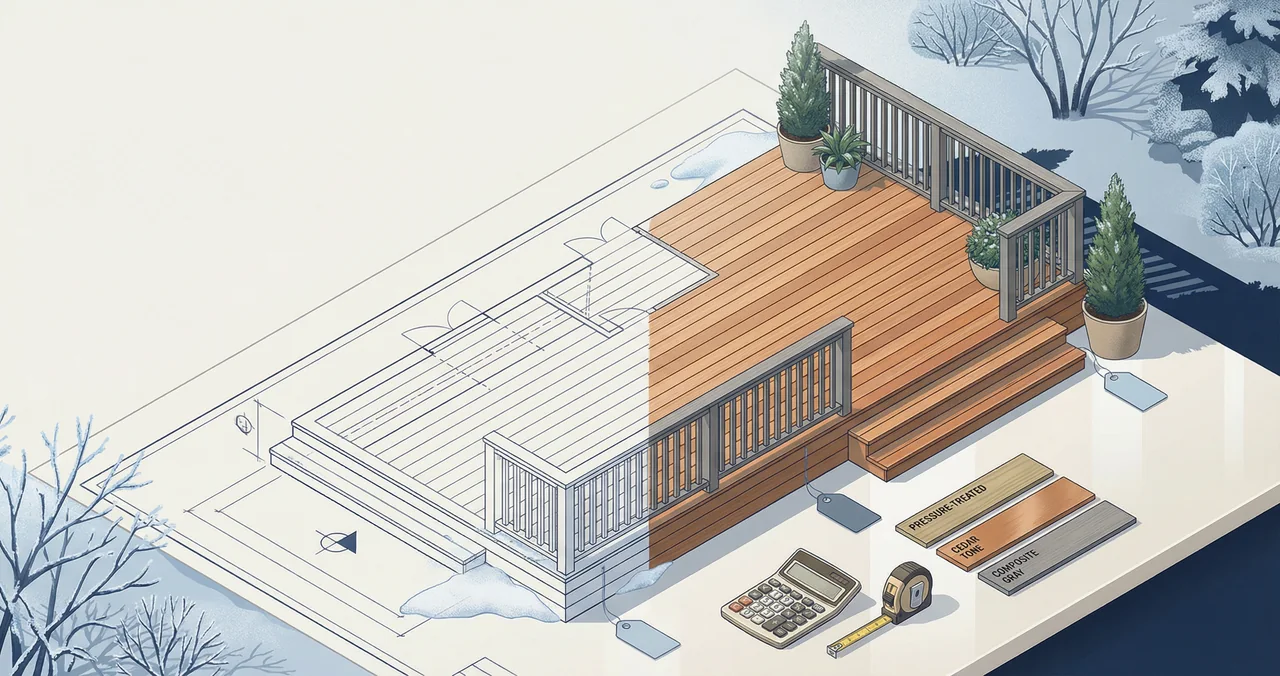
Deck Cost in Thornton: What Homeowners Are Paying in 2026
You're looking at your backyard right now — maybe it's still under snow — and wondering what a new deck would actually cost. Not a vague national average. What Thornton homeowners are paying real contractors in 2026.
🏗️ Planning a deck project?
Get a free manual project review, or visualize your dream deck with AI before requesting quotes.
🧮 Tool Alert: Deck Cost Calculator
Estimate your project costs in seconds based on local pricing bands for your area.
Calculate My Cost →Looking for more regional information? Check out our Colorado State Decking Hub.
The short answer: most Thornton decks land between $8,000 and $30,000 depending on size, material, and complexity. A standard 12×16 pressure-treated deck runs about $4,800–$8,640 installed, while the same footprint in composite pushes $8,640–$14,400.
But those ranges only tell part of the story. Thornton's freeze-thaw cycles, frost line requirements, and a compressed building season all shape what you'll pay — sometimes in ways that don't show up in generic cost guides.
<!-- slot:after-intro -->
For a broader look at deck pricing across different materials and regions, see our deck cost guide.
Average Deck Cost in Thornton by Material
Material choice is the single biggest factor in your total cost. Here's what Thornton contractors are quoting in 2026 for a fully installed deck, including framing, footings, and basic railing:
| Material | Cost Per Sq Ft (Installed) | 12×16 Deck (192 sq ft) | 16×20 Deck (320 sq ft) |
|---|---|---|---|
| Pressure-Treated Pine | $25–$45 | $4,800–$8,640 | $8,000–$14,400 |
| Cedar | $35–$55 | $6,720–$10,560 | $11,200–$17,600 |
| Composite | $45–$75 | $8,640–$14,400 | $14,400–$24,000 |
| Trex (brand-name composite) | $50–$80 | $9,600–$15,360 | $16,000–$25,600 |
| Ipe (tropical hardwood) | $60–$100 | $11,520–$19,200 | $19,200–$32,000 |
A few notes on these numbers. Pressure-treated is the most popular choice in Thornton by volume, but composite is gaining ground fast — and for good reason in this climate. Cedar sits in the middle as a natural-look option, though it demands more upkeep than most homeowners expect.
Ipe is stunning and nearly indestructible, but the installed cost puts it in premium territory. Most Thornton builds we see fall in the pressure-treated or composite range.
Cost Per Square Foot Breakdown
That per-square-foot price covers more than just decking boards. Here's roughly where your money goes on a typical Thornton composite deck at $55/sqft:
- Decking material: $18–$28/sqft (boards, fascia, trim)
- Substructure and framing: $8–$12/sqft (joists, beams, posts, hardware)
- Footings: $5–$10/sqft (more on this below — Thornton's frost line matters)
- Railing: $3–$8/sqft (aluminum, composite, or cable)
- Labor: $15–$22/sqft
- Permits and design: $1–$3/sqft
Footings deserve special attention. Thornton sits in a zone where the frost line runs 36 to 42 inches deep in most areas, and some spots closer to the foothills push deeper. Every footing must extend below frost line — that means more digging, more concrete, and more cost compared to cities with shallower frost requirements.
If you're comparing quotes and one seems oddly cheap, check the footing specs. Undersized footings in Thornton's clay-heavy soils are a recipe for frost heave. Your deck shifts, your ledger board pulls away from the house, and you're looking at expensive repairs within a few years.
Labor Costs in Thornton
Labor typically accounts for 40–60% of your total deck cost in Thornton. Here's what that looks like in practice:
- General deck labor rate: $15–$25/sqft depending on complexity
- Simple ground-level deck: Lower end of that range
- Second-story or elevated deck: $20–$30/sqft (more structural work, safety requirements, scaffolding)
- Curved or multi-level designs: Add 15–25% over a standard rectangular build
Thornton's labor rates run slightly above the national average, and there's a straightforward reason: the building window is compressed. Deck contractors in the Front Range can reliably work from May through October. That's roughly six months of prime building season, which means schedules fill quickly.
When to Book Your Contractor
This is one of the most practical pieces of advice for Thornton homeowners: contact contractors by March. By mid-April, the best builders are booked through summer. Waiting until June to start calling means you're either paying a premium for a rushed timeline or pushing your build to fall — which brings its own weather risks.
Getting quotes in January or February, when contractors are slower, often gets you better pricing and more attention to your project details.
<!-- slot:mid-content -->
What Affects Your Total Price
Beyond material and labor, several Thornton-specific factors move your final number up or down:
Deck Size and Layout
Obvious, but worth quantifying. Going from a 12×16 deck (192 sqft) to a 16×20 deck (320 sqft) doesn't just increase cost proportionally — the per-square-foot cost often drops slightly on larger decks because fixed costs like permits, mobilization, and design get spread across more area.
Irregular shapes, angles, and curves cost more. Every cut means more waste and more labor time. A simple rectangle is the most cost-efficient shape.
Elevation and Access
A ground-level deck on a flat lot is the cheapest scenario. As height increases, so does cost:
- Ground-level (under 30 inches): Baseline pricing
- Elevated 4–6 feet: Add 20–35% for deeper posts, structural beams, stairs, and guardrail code requirements
- Second-story (8+ feet): Add 40–60% or more — this is essentially building a structure, not just a platform
Many homes in Thornton's newer neighborhoods — places like Anthem Ranch, North Creek, and Hunters Glen — have walkout basements that put the main floor 4–8 feet above grade. Budget accordingly.
Soil Conditions and Grading
Thornton's expansive clay soils are notorious along the Front Range. These soils swell when wet and shrink when dry, which creates movement. Your contractor should account for this with proper footing design — bell-bottom piers or helical piles are common solutions, and they cost more than standard sono-tube footings.
If your lot slopes significantly, you'll need retaining considerations or stepped footings, adding $1,000–$4,000+ to the project.
Permits and Code Requirements
In Thornton, you'll need a building permit for any deck that's over 200 square feet or more than 30 inches above grade. The permit process through Thornton's Building and Development Services department typically includes:
- Permit fees: $200–$600 depending on project scope
- Plan submission: A site plan showing setbacks, a structural plan, and footing details
- Inspections: Usually two — footing inspection before pouring and a final inspection
Don't skip the permit. Beyond the legal issues, an unpermitted deck can create real problems when you sell your home — buyers' inspectors flag unpermitted structures, and you may have to tear it down or retrofit it to code.
Add-Ons That Change the Budget
Common upgrades and their approximate costs:
- Built-in bench seating: $1,200–$3,000
- Pergola or shade structure: $2,500–$8,000
- Deck lighting (recessed or post-cap): $500–$2,000
- Built-in planters: $400–$1,200
- Skirting/underdeck enclosure: $800–$2,500
- Stairs (per flight of 4–6 steps): $500–$1,500
Composite vs Wood: Cost Comparison
This is the decision most Thornton homeowners wrestle with, so let's break it down honestly.
Upfront Cost
Pressure-treated wood wins on day one. A 320-sqft pressure-treated deck runs $8,000–$14,400 versus $14,400–$24,000 for composite. That's a real difference — potentially $6,000–$10,000.
Cedar falls between at $11,200–$17,600 for the same size.
Maintenance Cost Over Time
Here's where the math shifts. In Thornton's climate — with harsh UV exposure at altitude, freeze-thaw cycles from November through March, and occasional hail — wood decks take a beating.
Pressure-treated wood maintenance schedule:
- Annual power wash and seal/stain: $300–$600 per year (DIY) or $600–$1,200 (professional)
- Board replacement (warped, cracked, or split): $200–$500 every 3–5 years
- Full re-stain every 2–3 years: $400–$800
Composite maintenance:
- Annual wash: $50–$100 (garden hose and soap)
- That's basically it. No staining, no sealing, no board replacement under normal use
Over 15 years, a wood deck can cost $5,000–$12,000 in maintenance alone. That often erases the upfront savings — and sometimes then some.
Durability in Thornton's Climate
This matters more here than in milder climates. Thornton regularly sees temperature swings of 40–50 degrees in a single day during spring and fall. Water gets into wood grain, freezes, expands, and splits fibers. Snow sits on deck surfaces for days or weeks. Ice melt products (if you use them) accelerate wood degradation.
Composite and PVC decking hold up dramatically better in these conditions. The material doesn't absorb moisture, so freeze-thaw cycles don't cause the same structural damage. Most composite brands offer 25–50 year warranties that cover fading, staining, and structural integrity.
If you're planning to stay in your Thornton home for more than 5–7 years, composite is almost always the better long-term value. If you're building on a tight budget for a shorter timeframe, pressure-treated still makes sense — just budget for annual maintenance.
Visualizing Your Options
Choosing between a warm cedar tone, a grey composite, or a rich tropical hardwood look is hard from swatches alone. Use PaperPlan to visualize different decking materials on your own home before committing — it's much easier to feel confident in a $15,000+ decision when you can see how it actually looks against your siding and landscaping.
How to Save Money on Your Thornton Deck
Smart savings without cutting corners:
1. Build in the Off-Season
Thornton contractors slow down from November through March. While full-on winter builds aren't practical, scheduling for late April or early October can land you discounts of 10–15%. Footings can be poured in cooler weather as long as the ground isn't frozen solid.
2. Keep the Design Simple
A straightforward rectangle with a single set of stairs is your most cost-efficient layout. Every angle, curve, and level change adds labor and waste. If you want visual interest, choose a creative railing system or add lighting instead of complicating the footprint.
3. Right-Size Your Deck
A 12×16 deck (192 sqft) comfortably fits a dining table for six and a grill. Many homeowners default to larger without thinking through how they'll actually use the space. Going from 320 to 192 square feet saves $4,000–$8,000 on a composite build.
4. Do Some Prep Work Yourself
You probably shouldn't frame your own deck. But you can save real money by:
- Demolishing and removing an old deck (saves $500–$1,500)
- Clearing vegetation and grading (saves $300–$800)
- Staining/sealing a wood deck yourself instead of paying a pro (saves $400–$800 per application)
5. Get Three to Five Quotes
Pricing varies significantly between Thornton contractors. We consistently see 20–30% spreads between the highest and lowest quotes for identical projects. Getting multiple bids isn't just about finding the cheapest option — it helps you understand what a fair price looks like and gives you leverage to negotiate.
6. Choose Materials Strategically
You don't need the top-tier composite across your entire deck. Some homeowners use premium composite for the deck surface and railing (what you see and touch) but standard pressure-treated lumber for the substructure (what's hidden). This approach can save 15–20% while maintaining the look and feel of a full composite build.
Also consider that lower-maintenance materials reduce your total cost of ownership even if they cost more upfront. Factor in at least 10 years of maintenance when comparing options.
7. Time Your Material Purchases
Lumber and composite decking prices fluctuate seasonally. Late fall and winter typically see the lowest prices as demand drops. If you can purchase materials in advance and store them, you might save 5–10% on materials alone.
<!-- slot:before-faq -->
🎨 Not sure which material to pick?
Upload a photo of your backyard and see exactly how Trex, TimberTech, or cedar would look — free and instant.
Frequently Asked Questions
How much does a 12×16 deck cost in Thornton?
A 12×16 deck (192 square feet) in Thornton costs between $4,800 and $14,400 installed, depending on material. Pressure-treated pine sits at the low end ($4,800–$8,640), composite in the middle ($8,640–$14,400), and premium options like Trex or Ipe go higher. These prices include footings dug to Thornton's frost line depth, framing, decking, basic railing, and labor. Permits add $200–$600. Most Thornton homeowners building this size deck in composite spend around $10,000–$12,000 all-in.
Do I need a permit to build a deck in Thornton, CO?
Yes, in most cases. Thornton requires a building permit for decks that exceed 200 square feet or sit more than 30 inches above grade. Even smaller decks may need permits depending on your lot's specifics. Contact Thornton's Building and Development Services department before starting construction. The permit process typically takes 1–3 weeks for review, and you'll need a site plan and structural drawings. Skipping the permit is risky — it can cause problems during home sales and may violate your homeowner's insurance terms.
What is the best decking material for Thornton's climate?
Composite or PVC decking performs best in Thornton's harsh conditions. The combination of intense UV exposure at Colorado's elevation, repeated freeze-thaw cycles, heavy snow loads, and dramatic temperature swings puts enormous stress on natural wood. Composite doesn't absorb water, so it resists the freeze-thaw cracking that destroys wood decks along the Front Range. If you prefer the look of natural wood, cedar with annual sealing is a reasonable middle ground, but expect to put in maintenance work every year. Pressure-treated pine is fine for budget builds if you commit to regular upkeep.
When is the best time to build a deck in Thornton?
The prime building window runs May through October, with June through September being the sweet spot. However, the most important timeline consideration is when you start the process. Begin getting quotes and finalizing plans in January–March. By the time spring arrives, the best contractors are already booked. If you wait until summer to start looking, you'll likely face higher prices and limited availability. Fall builds (September–October) are viable and sometimes cheaper, but weather becomes less predictable. best time to build a deck is one of the simplest ways to save money and get better results.
Is it cheaper to build a deck yourself in Thornton?
DIY can save you 40–50% on labor, which translates to roughly $3,000–$8,000 on a mid-sized deck. But there are real trade-offs. Thornton's deep frost line requirements (36–42+ inches) mean footing work is physically demanding and must be done precisely. Building code compliance, especially for elevated decks, requires structural knowledge. And if your DIY deck fails inspection or develops problems, the cost to fix it often exceeds what you saved. A middle approach: hire a contractor for the substructure and footings, then install the decking and railing yourself. That's where the labor savings are biggest and the risk is lowest.
<!-- slot:end -->
📋 Planning a deck project?
Get a free manual project review from our team — no obligation, no spam.
Get Free Project Review →Upload a backyard photo and preview real decking materials with AI — free, instant, no sign-up.
Permits, costs, material comparisons, and questions to ask before requesting quotes — delivered to your inbox.