
Carport vs Garage in Ontario: Cost and Permit Guide
Compare carport vs garage costs, permits, and requirements in Ontario. Get CAD pricing, permit rules, and help choosing the right option for your home.
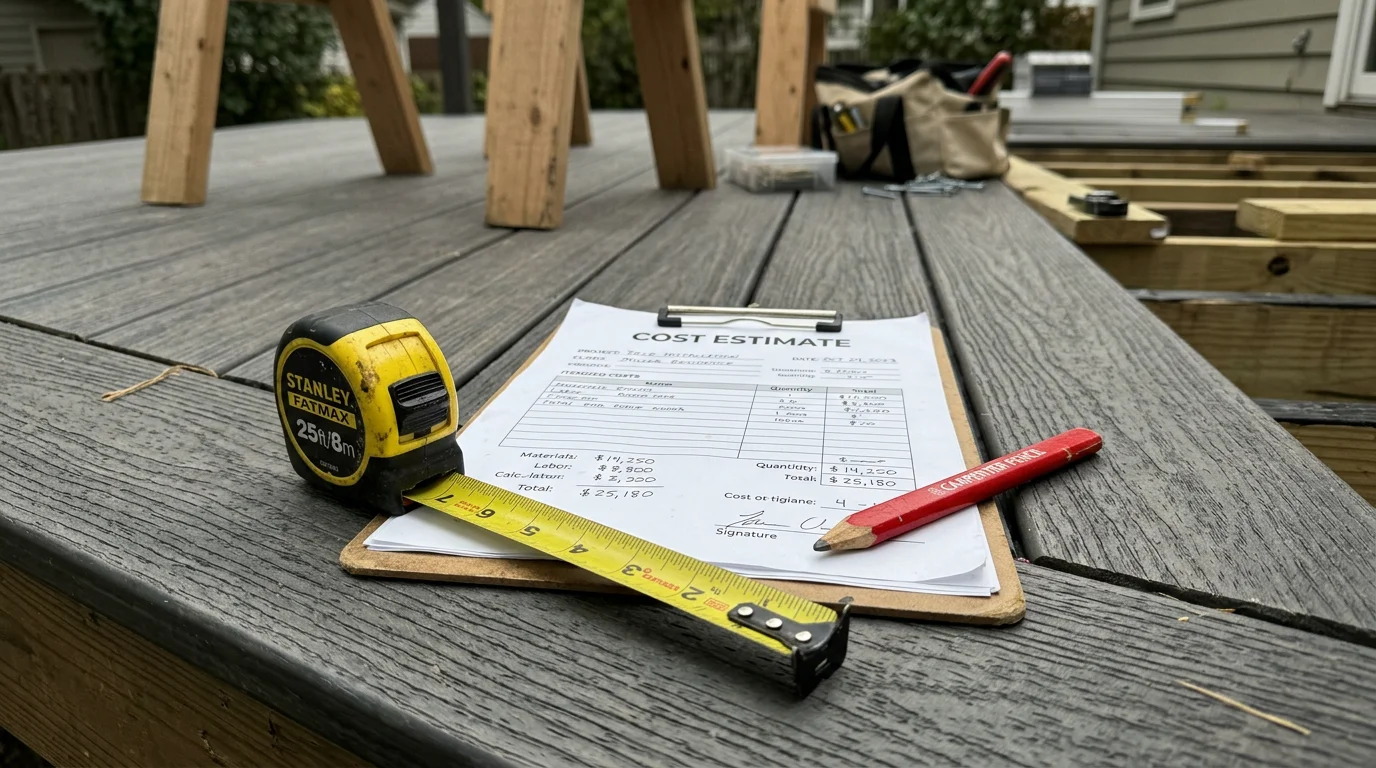
Choosing between a carport and garage means weighing upfront cost against long-term value. In Ontario's freeze-thaw climate, both options protect your vehicle — but they do it differently and at vastly different price points.
Here's what you need to know about costs, permits, and which structure makes sense for your property in Kitchener-Waterloo-Cambridge.
Carport vs Garage: Cost Comparison
Carport installed: $3,000-$12,000 (single vehicle)
🏗️ Planning a deck project?
Get a free manual project review, or visualize your dream deck with AI before requesting quotes.
Garage built: $25,000-$65,000+ (single vehicle)
That's not a typo. A basic metal carport costs roughly 80-90% less than building a garage from scratch.
Carport Cost Breakdown (2026 Ontario)
- Prefab metal carport kit (installed): $3,000-$6,000 for 12×20 ft (single car)
- Custom wood carport (built on-site): $6,000-$12,000 for 12×20 ft
- Double carport (metal, 20×20 ft): $5,500-$10,000
- Double carport (wood frame): $10,000-$18,000
Metal carports are cheaper because they're prefabricated. You're buying a kit that gets anchored to a concrete pad or gravel base. Wood carports require custom framing, which pushes labor costs higher.
Garage Cost Breakdown (2026 Ontario)
- Detached single-car garage (12×20 ft): $25,000-$40,000
- Detached double-car garage (20×20 ft): $35,000-$65,000
- Garage with loft storage: Add $8,000-$15,000
- Heated/insulated garage: Add $3,000-$8,000
- Garage door (insulated): $1,200-$2,500 installed
Garage costs include foundation, wall framing, roofing, electrical, insulation, drywall, and finish work. You're building a complete structure, not just a roof on posts.
If you're adding a garage to an existing home, you'll also pay for grading, permits, and possibly utility hookups (water, sewer if adding a workshop sink).
Permit Requirements in Ontario
Both structures typically require a building permit, but the review process differs significantly.
Carport Permits
Most Ontario municipalities require a permit for carports, even simple metal kits. Exceptions exist for temporary structures (seasonal shelters removed in spring), but permanent anchored carports need approval.
Kitchener, Waterloo, Cambridge requirements:
- Building permit: $200-$400 (depends on structure value)
- Site plan showing setbacks from property lines
- Foundation/anchoring details (concrete footings or helical piles)
- Engineering stamp if over 10 square meters (107 sq ft) or attached to house
Carport permits usually process faster than garage permits because there's no electrical, plumbing, or interior finish work to inspect. Expect 2-4 weeks for approval in KWC.
Garage Permits
Garage permits require more detailed drawings and multiple inspections.
Required submissions:
- Site plan with setback dimensions (typically 3 ft from side property lines, 10-20 ft from rear)
- Foundation plan (usually 4-inch concrete slab with thickened edges)
- Framing elevations showing wall studs, roof trusses
- Electrical plan if adding power (outlets, lights, garage door opener)
- Grading/drainage plan
Inspection stages:
1. Foundation inspection (before pouring concrete)
2. Framing inspection (studs, headers, roof structure)
3. Electrical rough-in (if applicable)
4. Final inspection (drywall, garage door, grading)
Permit timeline in KWC: 4-8 weeks for approval, plus scheduled inspections during construction.
Learn more about the permit process in Kitchener deck permit application, Waterloo deck permit application, and Cambridge deck permit application — the same municipal offices handle garage and carport permits.
Structural Differences
What You Get With a Carport
- Roof and posts only — no walls, doors, or windows
- Open on 2-4 sides depending on design
- Protects from rain, snow, UV, bird droppings
- Does not protect from wind, blowing snow, or theft
- Ventilated naturally — no moisture buildup concerns
A carport keeps your car dry and shaded, which prevents paint fade and reduces interior heat in summer. It won't stop ice from forming on your windshield during freezing rain, and it offers zero security.
What You Get With a Garage
- Four walls, insulation, garage door
- Lockable and secure — protects tools, bikes, equipment
- Can be heated — prevents frozen door locks, easier winter starts
- Storage space — shelving, workbench, seasonal gear
- Increases home resale value significantly (carports do not)
Garages also protect vehicles from road salt spray kicked up by passing cars — a real concern on Ontario roads November through March.
Climate Considerations in Ontario
Ontario's freeze-thaw cycles create specific challenges for both structures.
Carports in Ontario Winter
Pros:
- Snow slides off open sides (less load on roof)
- No garage door mechanism to freeze or jam
- Natural ventilation prevents salt corrosion buildup
Cons:
- Vehicle still exposed to blowing snow
- Windshield scraping still required most mornings
- No protection from freezing rain accumulation
Metal carports handle snow load well if properly engineered. Most prefab kits are rated for 30-40 PSF (pounds per square foot) snow load, which exceeds Ontario Building Code minimums for the KWC area.
Garages in Ontario Winter
Pros:
- Vehicle stays above freezing (if heated)
- No scraping, no frozen locks
- Workshop space remains usable year-round
Cons:
- Road salt and slush tracked inside create moisture issues
- Requires ventilation to prevent rust from trapped humidity
- Garage door weatherstripping needs annual replacement
Important: If you heat your garage, crack a window or install a ventilation fan. Driving a snow-covered car into a heated space creates condensation that accelerates rust.
Resale Value Impact
Here's where garages pull far ahead.
Garage: Adds $15,000-$40,000 to home resale value (70-90% ROI on construction cost)
Carport: Adds $0-$5,000 to resale value (often viewed as temporary)
Real estate agents in KWC consistently report that buyers prioritize garages over carports. A home with a double garage sells faster and commands higher offers than an identical home with a carport or no covered parking.
If you're building for long-term home value, the garage wins despite the higher upfront cost.
Maintenance Requirements
Carport Maintenance
- Metal carports: Inspect anchors annually, touch up scratched paint, clear debris from roof
- Wood carports: Stain every 3-5 years, check posts for rot, replace damaged shingles
- Foundation: Repair cracked concrete pads, re-level gravel bases
Annual cost: $50-$200 for DIY maintenance, $300-$600 if hiring professionals for wood staining.
Garage Maintenance
- Garage door: Lubricate tracks/springs annually, replace weatherstripping, adjust opener tension
- Roof: Inspect shingles, clean gutters, check for leaks
- Siding/paint: Repaint or re-side every 10-15 years
- Foundation: Seal cracks, maintain positive grading around perimeter
Annual cost: $100-$400 for routine maintenance, $2,000-$5,000 for major repairs (door replacement, roof reshingling).
Garages cost more to maintain because there are more components — but they also last longer. A well-built garage lasts 50+ years. Carports typically last 15-25 years before requiring significant repairs or replacement.
Which Should You Choose?
Choose a carport if:
- You need affordable covered parking now
- You're on a tight budget ($3K-$12K available)
- You don't need secure storage or workshop space
- Your property has setback restrictions that prevent a garage
- You're okay with scraping windshields in winter
Choose a garage if:
- You want long-term home value appreciation
- You need secure storage for tools, bikes, equipment
- You want a heated workspace for winter projects
- You have $30K-$65K budget available
- You're planning to stay in your home 5+ years
Many homeowners start with a carport to get immediate rain/snow protection, then build a garage later when budget allows. If you take this approach, position the carport where it won't interfere with future garage placement — usually along the side property line rather than at the rear.
For more advice on planning outdoor structures, see our guide on deck setback rules — similar principles apply to carports and garages.
Foundation Options
Both structures need a solid base, but requirements differ.
Carport Foundations
Concrete pad (most common):
- 4-inch thick concrete slab
- Gravel base (4-6 inches compacted)
- Cost: $8-$12/sq ft installed
- Total for 12×20 ft: $1,900-$2,900
Gravel base (budget option):
- 6-8 inches compacted gravel
- Landscape fabric underneath
- Cost: $2-$4/sq ft installed
- Total for 12×20 ft: $500-$1,000
Helical piles (frost-protected):
- Screw piles below frost line (4 ft depth in KWC)
- No concrete curing time required
- Cost: $150-$300 per pile × 4-8 piles = $1,200-$2,400
Gravel works for metal carports but isn't recommended for wood structures. Concrete or helical piles prevent rot and shifting. Learn more in our helical piles vs concrete footings comparison.
Garage Foundations
Garages require monolithic concrete slabs with thickened edges (frost footings).
Standard garage slab:
- 4-inch slab thickness (6 inches for heavy vehicles/equipment)
- 12-inch deep perimeter footings extending below frost line
- Rebar reinforcement
- Vapor barrier underneath
- Cost: $12-$18/sq ft installed
Total foundation cost for 20×20 ft garage: $4,800-$7,200
Garage slabs must cure 7-10 days before framing begins, which extends your construction timeline.
DIY vs Professional Installation
Carport DIY Feasibility
Metal carport kits: Moderate DIY project if you have 2-3 helpers and basic tools. Most homeowners can install in 1-2 weekends.
Required skills:
- Leveling and measuring
- Operating a drill and socket wrench
- Mixing concrete (for anchor footings)
Kit includes: Pre-cut steel frame, roofing panels, bolts, anchors, instructions.
DIY savings: $800-$2,000 in labor costs.
Wood carport: Advanced DIY project requiring carpentry skills, post-hole diggers, circular saw, and framing knowledge. Most homeowners hire professionals.
Garage DIY Feasibility
Not recommended unless you have construction experience. Garages require:
- Foundation pouring (usually subcontracted even by pros)
- Wall framing and roof truss installation
- Electrical rough-in (requires licensed electrician in Ontario)
- Garage door installation (specialized tools and springs under high tension)
DIY garage builds often fail inspection due to incorrect framing, inadequate ventilation, or improper electrical work. You'll spend more fixing mistakes than you save on labor.
Professional installation: $15-$30/sq ft labor for complete garage build.
Insurance and Liability
Carport Insurance
Most home insurance policies cover carports as detached structures under your standard policy. No additional premium required unless the carport exceeds 10% of your home's insured value.
Coverage typically includes:
- Wind damage
- Falling tree limbs
- Hail damage to roofing
Not covered:
- Vehicles parked underneath (covered by auto insurance)
- Damage from poor installation or lack of maintenance
Garage Insurance
Garages are also covered as detached structures, but contents inside the garage may have coverage limits.
Check your policy for:
- Tools and equipment coverage limits (often $2,500-$5,000 max)
- Whether garage contents are covered for theft
- Whether attached garages are covered differently than detached
If you store $10,000+ in tools, bikes, or equipment in your garage, you may need a personal property rider to increase coverage limits.
Call your insurance broker before building either structure to confirm coverage and any policy adjustments needed.
🎨 Not sure which material to pick?
Upload a photo of your backyard and see exactly how Trex, TimberTech, or cedar would look — free and instant.
Common Questions
Can I convert a carport into a garage later?
Yes, but it's rarely cost-effective. Adding walls, a garage door, and insulation to an existing carport costs $15,000-$25,000 — nearly as much as building a new garage. The carport's foundation may not meet garage requirements (frost-protected footings, thicker slab), requiring expensive retrofitting. If you think you'll want a garage within 5 years, build it from the start.
Do I need a permit for a portable carport in Ontario?
Maybe. Temporary carports removed seasonally (typically October-May storage) don't usually require permits in KWC. But if the structure is anchored, has a concrete base, or remains in place year-round, it's considered permanent and requires a building permit. Contact your municipal building department before purchasing — installing without a permit can result in $500-$5,000 fines and forced removal.
How close to my property line can I build a carport or garage?
Typical KWC setback requirements:
- Side yard: 3 ft minimum from property line
- Rear yard: 10-20 ft from rear property line (varies by zoning)
- Front yard: Usually prohibited in front yard setback area
These rules vary by zoning district, lot size, and whether you have a corner lot. Always verify setbacks before purchasing materials — setback violations are the #1 reason permits get denied. See our setback rules guide for checking your property's specific requirements.
Will a carport or garage affect my property taxes?
Yes. Both increase your property's assessed value, which raises your annual property taxes. Garages add more value and therefore more tax than carports. Expect a $100-$400/year property tax increase for a carport, $300-$800/year for a garage. The exact amount depends on your municipality's mill rate and how the MPAC (Municipal Property Assessment Corporation) values the addition during the next assessment cycle.
Can I attach a carport or garage to my house?
Attached carports: Rare in Ontario. Most attached covered parking structures are designed as garages with walls and doors. Attaching a carport requires a ledger board connection similar to deck construction (see our ledger board attachment guide), proper flashing to prevent water infiltration, and engineering approval. Most homeowners find it cheaper to build a detached carport.
Attached garages: Common and often preferred by builders. Attached garages require a fire-rated wall between the garage and living space (5/8" Type X drywall), a self-closing fire-rated door, and proper sealing to prevent carbon monoxide infiltration. Building attached costs 10-20% less than detached (shared wall, no additional foundation footing on house side) but requires careful compliance with Ontario Building Code fire separation requirements.
Upload a backyard photo and preview real decking materials with AI — free, instant, no sign-up.
Permits, costs, material comparisons, and questions to ask before requesting quotes — delivered to your inbox.