
Deck Cost in Austin: What Homeowners Are…
What does a deck cost in Austin in 2026? Get real pricing per square foot for composite, wood, and Trex decks plus local tips to save money.
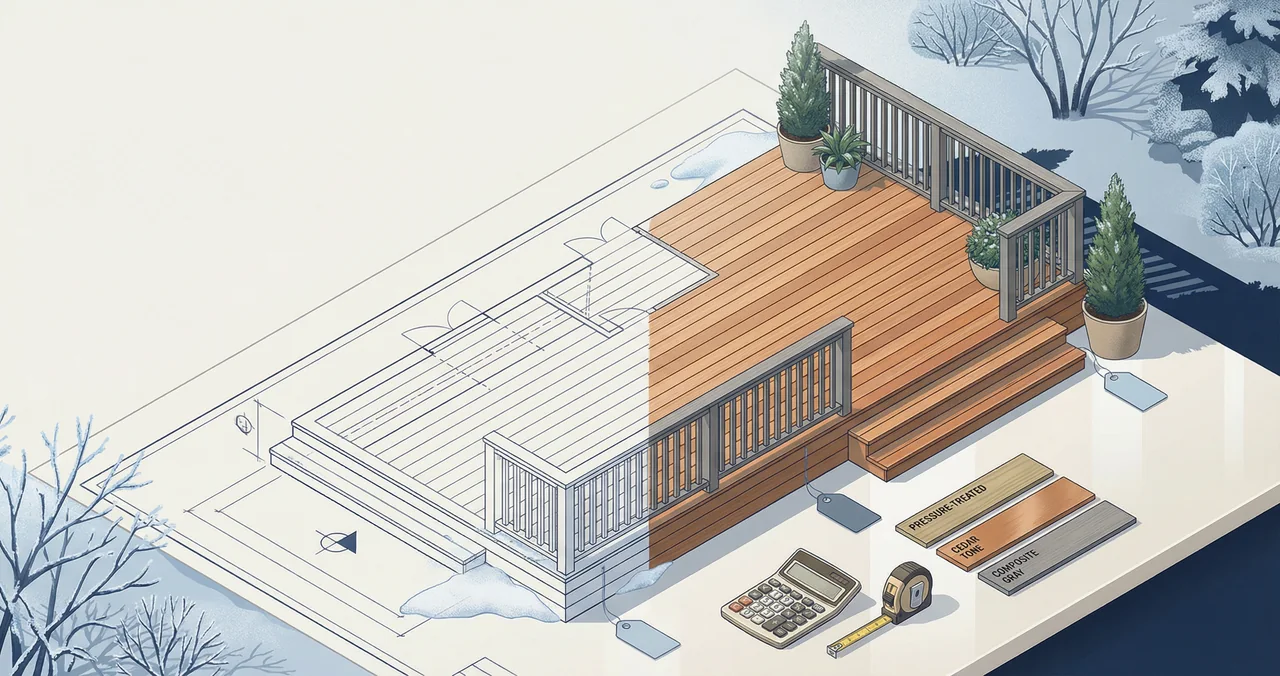
You're probably here because you got a quote — or three — and you're wondering if the numbers are reasonable. Or maybe you haven't called anyone yet and just want a ballpark before you commit to the conversation. Either way, here's what Austin homeowners are actually paying for deck construction in 2026.
🧮 Tool Alert: Deck Cost Calculator
Estimate your project costs in seconds based on local pricing bands for your area.
Calculate My Cost →Average Deck Cost in Austin by Material
Looking for more regional information? Check out our Texas State Decking Hub.
🏗️ Planning a deck project?
Get a free manual project review, or visualize your dream deck with AI before requesting quotes.
The total cost of your deck depends heavily on what it's made of. Here's a realistic range for a standard 12x16 deck (192 sq ft) in Austin, fully installed:
| Material | Cost Per Sq Ft (Installed) | 192 Sq Ft Deck Total |
|---|---|---|
| Pressure-treated pine | $25–$45 | $4,800–$8,640 |
| Cedar | $35–$55 | $6,720–$10,560 |
| Composite | $45–$75 | $8,640–$14,400 |
| Trex (branded composite) | $50–$80 | $9,600–$15,360 |
| Ipe (hardwood) | $60–$100 | $11,520–$19,200 |
Most Austin homeowners land somewhere in the $8,000–$14,000 range for a mid-size deck. That typically means composite or a well-built cedar deck with decent railings.
A few things push Austin pricing slightly below cities like Los Angeles or New York: lower labor costs and year-round building weather that keeps contractor schedules flexible.
<!-- slot:after-intro -->
For a broader look at deck pricing across different materials and regions, see our complete deck cost guide for Texas. Timing your build right can also save thousands — check our guide on the best time to build a deck.
Cost Per Square Foot Breakdown
The per-square-foot price your contractor quotes includes materials, labor, and basic structural work. But not all square footage costs the same.
Ground-level decks (under 30 inches above grade) are the cheapest to build. No railing required by code, simpler footings, less structural complexity. Expect to be at the low end of each material's range.
Elevated decks — say, off a second-story door or on a sloped lot common in neighborhoods like Barton Hills, Westlake, or Travis Heights — cost more. You're paying for:
- Taller posts and deeper footings (Austin's frost line is only 6–12 inches, which keeps foundation costs reasonable)
- Railing systems (code-required above 30 inches)
- Stairs and landings
- Additional engineering for structural loads
A raised deck can add $5–$15 per square foot to your base price. Stairs alone often run $1,500–$3,500 depending on height and material.
What About Smaller or Larger Decks?
Smaller decks don't save as much as you'd think per square foot. The fixed costs — permits, mobilization, footings — get spread across fewer square feet, so your per-square-foot price goes up.
Bigger decks (300+ sq ft) bring some economy of scale, but material costs dominate at that size. If you're planning something in the 20x20 range, expect to spend $18,000–$30,000+ depending on material and complexity.
Labor Costs in Austin
Labor typically accounts for 40–60% of your total deck cost. In Austin, deck builders charge anywhere from $15–$35 per square foot for labor alone, depending on:
- Deck complexity — A simple rectangle on flat ground is one price. Multi-level with built-in seating and custom railings is another.
- Material choice — Ipe and hardwoods take longer to cut and fasten. Composite has its own installation quirks. Pressure-treated pine is the fastest to work with.
- Time of year — Austin's building season runs year-round, but the sweet spot is October through April. Summer builds happen, but crews work shorter hours in 100°F+ heat, which can extend timelines and occasionally bump costs.
- Permit requirements — In Austin, deck permits are typically required for structures over 200 sq ft or 30 inches above grade. Your contractor handles this, but the permit process adds to the timeline and cost. Check with Austin's Building/Development Services department for current requirements.
One advantage Austin homeowners have: because contractors can build 12 months a year, there's generally more availability and more room to negotiate than in seasonal markets up north.
<!-- slot:mid-content -->
What Affects Your Total Price
Beyond material and labor, here are the real cost drivers Austin homeowners encounter:
Design Complexity
A basic rectangular deck? Straightforward pricing. Start adding angles, curves, multi-levels, built-in benches, or planter boxes and you're looking at 15–30% more than a simple layout.
Railings and Stairs
Railings deserve their own line item in your mental budget. Basic wood railings run $20–$35 per linear foot. Cable railing systems or glass panels can hit $60–$100+ per linear foot. For a 192 sq ft deck, railing costs often add $2,000–$5,000.
Site Preparation
Sloped lots — and Austin has plenty — require more grading, longer posts, and sometimes retaining work. If your lot drops 4+ feet across the deck footprint, budget an extra $2,000–$6,000 for site prep.
Austin's Climate Tax
This is the one most people don't think about until year three. Austin's intense UV, summer humidity, and termite pressure mean:
- Pressure-treated wood needs sealing every 1–2 years to prevent cracking, warping, and mold. That's $300–$800 each time for a mid-size deck if you hire it out.
- Cedar holds up better but still needs regular staining and sealing.
- Composite and Trex handle Austin's climate with almost zero maintenance — no sealing, no staining, no termite damage. The higher upfront cost often pays for itself within 5–7 years.
The mold and mildew issue is real here. Shaded decks in neighborhoods with tree cover (think Zilker, Bouldin Creek, Tarrytown) will grow algae and mildew fast on untreated wood.
Permits and HOA Rules
Beyond Austin's city permits, many neighborhoods — especially planned communities in Cedar Park, Round Rock, Pflugerville, and the Domain area — have HOA restrictions on deck materials, colors, and dimensions. Check before you buy materials.
Composite vs Wood: Cost Comparison
This is the decision most Austin homeowners wrestle with. Here's how the numbers actually shake out over time:
| Factor | Pressure-Treated Wood | Composite |
|---|---|---|
| Installed cost (192 sq ft) | $4,800–$8,640 | $8,640–$14,400 |
| Annual maintenance | $300–$800 (sealing/staining) | $0–$100 (occasional cleaning) |
| Lifespan | 10–15 years | 25–50 years |
| 10-year total cost | $7,800–$16,640 | $8,640–$15,400 |
| Termite risk | High (common in Austin) | None |
| UV/fade resistance | Low without regular sealing | Built-in UV protection |
| Mold/mildew resistance | Low | High |
At the 10-year mark, total costs are nearly identical. Past that, composite pulls ahead significantly.
For Austin specifically, composite makes a strong case. The combination of extreme UV, humidity, and active termite populations shortens wood's effective lifespan and increases maintenance frequency compared to cooler, drier climates.
That said, if you're on a strict budget and willing to put in the maintenance work, pressure-treated pine still gets you a functional deck at roughly half the upfront cost. If you want to explore how different materials would look on your home before deciding, use PaperPlan to visualize different decking materials on your own home before committing.
For a deeper look at the top-performing composite brands, check out our guide on the best composite decking options — many of the same brands are available through Austin suppliers.
How to Save Money on Your Austin Deck
Build in the Off-Peak Window
Austin doesn't have a true off-season, but November through February is when contractors are most flexible. You're competing with fewer homeowners, and many builders offer better pricing to keep crews busy through the slower months.
Keep the Design Simple
Every angle, level change, and custom feature adds cost. A well-built rectangular deck with quality materials will look great and last decades. Don't add complexity just for the sake of it.
Do Your Own Demo
If you're replacing an existing deck, tearing out the old one yourself saves $500–$1,500 in labor. It's hard work but doesn't require specialized skills.
Get Three Quotes Minimum
Austin has a healthy contractor market. Get at least three detailed, written quotes. Make sure each quote breaks out materials, labor, permits, and any site prep separately so you're comparing apples to apples. If you need help finding reputable builders, our list of top deck builders in San Antonio covers contractors who frequently serve the Austin metro area as well.
Choose Your Material Strategically
Don't default to the cheapest option or the most expensive one. Think about your actual maintenance tolerance. If you know you won't seal a wood deck every year, you'll spend more in the long run on repairs and premature replacement. Be honest with yourself.
Consider a Smaller Footprint with Better Materials
A 12x14 composite deck often costs the same as a 16x16 pressure-treated deck — but the composite version lasts twice as long with zero upkeep. Sometimes less square footage with better materials is the smarter investment.
Phase Your Project
Want a deck with a pergola, built-in kitchen, and lighting? Build the deck this year and add features next year. Spreading costs across two seasons makes premium builds more manageable. If you're planning to add deck lighting later, have your contractor run conduit during the initial build — it's much cheaper than retrofitting.
<!-- slot:before-faq -->
🎨 Not sure which material to pick?
Upload a photo of your backyard and see exactly how Trex, TimberTech, or cedar would look — free and instant.
Frequently Asked Questions
How much does a 12x12 deck cost in Austin?
A basic 12x12 deck (144 sq ft) in Austin runs approximately $3,600–$6,480 for pressure-treated wood and $6,480–$10,800 for composite, fully installed. These ranges assume a ground-level build on relatively flat terrain with standard railings. Add stairs, elevation, or premium railings and you're looking at the higher end or above.
Do I need a permit to build a deck in Austin?
In most cases, yes. Austin typically requires permits for decks over 200 square feet or those that are more than 30 inches above grade. Even smaller decks may need permits if they're attached to the house. Contact Austin's Building/Development Services department before construction starts. Your contractor should handle the permit process, but confirm this upfront — building without a permit carries real risks, including fines and being forced to tear down non-compliant work.
What is the best decking material for Austin's climate?
Composite decking is the top performer for Austin's heat, humidity, and termite pressure. It won't rot, won't attract termites, and handles UV exposure far better than untreated wood. Cedar is a solid middle ground — naturally resistant to insects and decay, but still needs periodic sealing. Pressure-treated pine works on a budget but requires the most upkeep in Austin's harsh summers. If you go with wood, plan on sealing it every 1–2 years without exception.
When is the best time to build a deck in Austin?
October through April gives you the best combination of comfortable working temperatures and contractor availability. Summer builds are possible — and Austin contractors are used to the heat — but expect crews to start early and quit by early afternoon during June through August. The cooler months also give your deck time to settle before it faces its first full Austin summer.
How long does it take to build a deck in Austin?
A standard 12x16 deck typically takes 3–7 days of actual construction time once materials are on site. The full timeline — from signing a contract through permit approval, material delivery, and construction — usually runs 3–6 weeks. Complex builds with multiple levels, custom features, or permit complications can stretch to 8–12 weeks. Getting your permit application in early is the single best way to shorten the timeline.
<!-- slot:end -->
📋 Planning a deck project?
Get a free manual project review from our team — no obligation, no spam.
Get Free Project Review →Upload a backyard photo and preview real decking materials with AI — free, instant, no sign-up.
Permits, costs, material comparisons, and questions to ask before requesting quotes — delivered to your inbox.