
Deck Cost in Texas: 2026 Price Guide
Planning a new deck in Texas? This 2026 guide covers average costs per square foot, materials, permits, and how to save money. Get the facts!
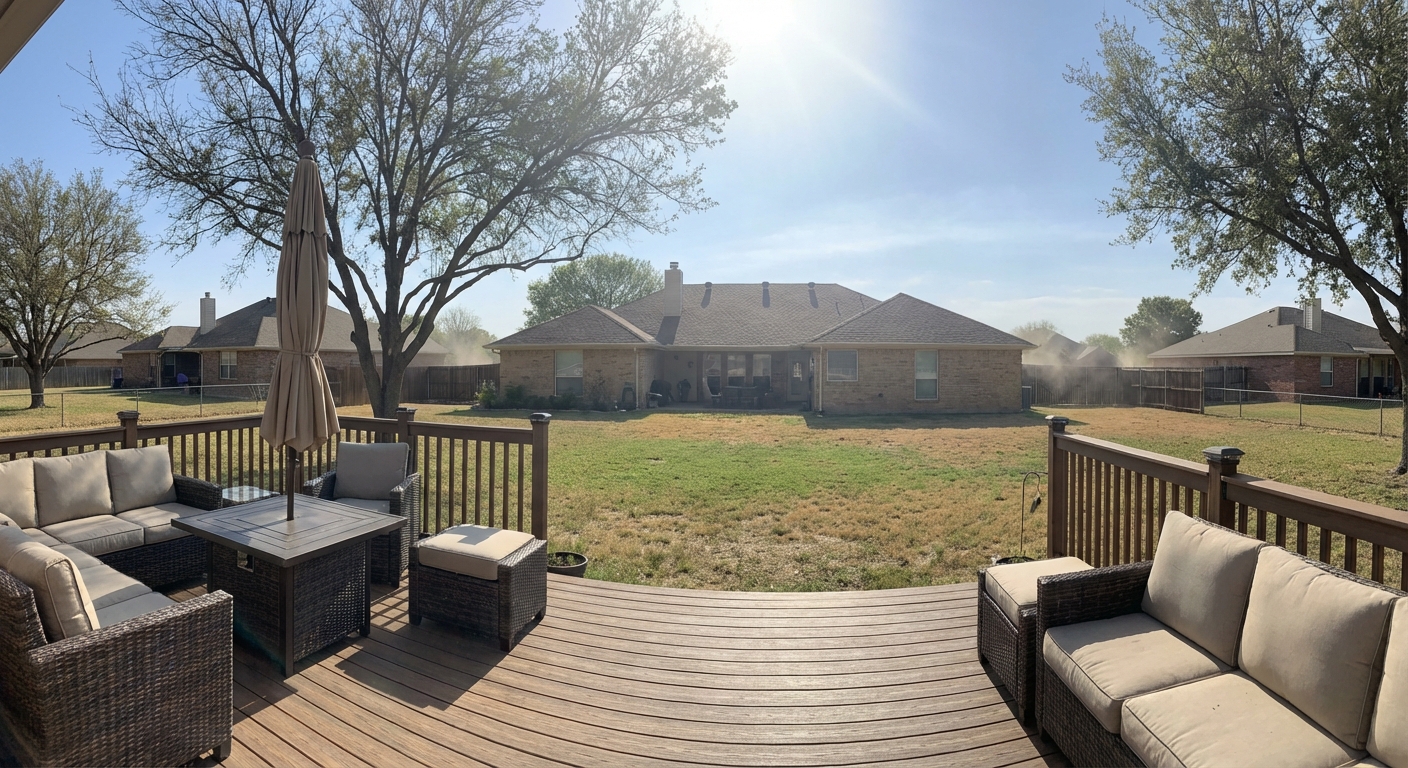
Building a new deck in Texas can significantly enhance your outdoor living space. But before you start planning that dream deck, you need a realistic understanding of the costs involved. This guide provides a comprehensive overview of deck pricing in Texas for 2026, covering everything from materials and labor to permits and regional variations. Because Texas has no state income tax, many homeowners choose to invest that extra income in home improvements like decks. Let's break down the numbers so you can budget accurately for your project.
🧮 Tool Alert: Deck Cost Calculator
Estimate your project costs in seconds based on local pricing bands for your area.
Calculate My Cost →Average Deck Costs in Texas: By Material
Looking for more regional information? Check out our Texas State Decking Hub.
🏗️ Planning a deck project?
Get a free manual project review, or visualize your dream deck with AI before requesting quotes.
The biggest factor influencing your deck's price is the material you choose. Here's a breakdown of typical installed costs per square foot in Texas:
- Pressure-Treated Wood: $25 - $45 per sqft
- Cedar: $35 - $55 per sqft
- Composite: $45 - $75 per sqft
- Trex (Composite): $50 - $80 per sqft
- Ipe (Exotic Hardwood): $60 - $100 per sqft
Keep in mind that these are *average* costs. Prices can fluctuate based on market conditions, contractor rates, and the complexity of your design. Let's explore these options in more detail.
Pressure-Treated Wood Decks
Pressure-treated lumber is the most budget-friendly option. It's readily available and relatively easy to work with, making it a popular choice for simple, ground-level decks. However, it requires regular maintenance (staining and sealing) to prevent warping, cracking, and insect damage, especially given the intense Texas sun. See Pressure-Treated Deck Cost in Texas: Budget-Friendly Guide for a deeper dive.
Cedar Decks
Cedar offers a natural beauty and is more resistant to rot and insects than pressure-treated wood. It also requires less maintenance, though you'll still need to stain or seal it periodically to preserve its color and prevent weathering. It's a mid-range option in terms of cost. Check out Cedar Deck Cost in Texas: Is It Worth the Premium? for more details.
Composite Decks
Composite decking is made from a blend of wood fibers and recycled plastic. It's extremely durable, low-maintenance, and resistant to fading, staining, and scratching. It's also splinter-free, making it a great choice for families with children. However, it's more expensive than wood. A major consideration in Texas is heat: composite surface temperatures can easily reach 150°F+ in direct sunlight, so choose lighter colors. Explore Composite Deck Cost in Texas: What to Expect in 2026 for more on this.
Trex Decks
Trex is a leading brand of composite decking, known for its high quality and wide range of colors and styles. It offers excellent durability and resistance to the elements, but it comes at a premium price compared to other composite options. Review Trex Deck Cost in Texas: Pricing, Options & Real Examples for a detailed cost breakdown. Consider comparing Trex vs TimberTech in Texas: Which Composite Deck Is Better? to see which brand fits your needs.
Ipe Decks
Ipe is a dense, exotic hardwood that's incredibly strong and naturally resistant to rot, insects, and fire. It's the most expensive decking material, but its exceptional durability and longevity can make it a worthwhile investment. It requires specialized installation techniques due to its hardness.
Here's a handy table summarizing the material costs:
| Material | Average Cost per Sqft (Installed) | Pros | Cons |
|----------------------|--------------------------------------|----------------------------------------------------------------------|--------------------------------------------------------------------------|
| Pressure-Treated | $25 - $45 | Budget-friendly, readily available | High maintenance, prone to warping/cracking |
| Cedar | $35 - $55 | Natural beauty, more rot-resistant than pressure-treated | Requires staining/sealing, moderate cost |
| Composite | $45 - $75 | Low-maintenance, durable, resists fading/staining, splinter-free | Higher cost, can get very hot in direct sun |
| Trex | $50 - $80 | High-quality composite, wide range of colors/styles | Premium price, can get very hot in direct sun |
| Ipe | $60 - $100 | Extremely durable, rot/insect/fire-resistant, long-lasting | Highest cost, requires specialized installation |
<!-- slot:after-intro -->
For a broader look at deck pricing across different materials and regions, see our complete deck cost guide for Texas. Timing your build right can also save thousands — check our guide on the best time to build a deck.
Factors Affecting Deck Costs in Texas
Beyond the decking material itself, several other factors can significantly impact the overall cost of your deck project in Texas.
Deck Size and Complexity
The larger your deck, the more materials and labor will be required, naturally increasing the cost. Complex designs with multiple levels, curves, or intricate railing systems will also add to the price.
Labor Costs
Labor costs vary depending on the contractor's experience, location, and the complexity of the job. Get quotes from multiple contractors to compare pricing.
Deck Features and Add-ons
Adding features like built-in benches, stairs, railings, lighting, or a pergola will increase your deck's cost. Popular Texas deck features include:
- Covered Decks: Providing shade and protection from the elements.
- Outdoor Kitchens: Integrating grills, counters, and sinks for outdoor cooking.
- Pool Decks: Creating a seamless transition between your pool and deck area.
- Shade Structures: Pergolas, gazebos, or awnings to provide relief from the Texas sun.
Permits and Inspections
Most Texas cities require permits for decks over 200 sqft or 30 inches above grade. Permit fees vary by location. Here's a quick rundown of permit processes in major Texas cities:
- Houston: No zoning, but permits are required from the City of Houston Permitting Center. See Houston Deck Permit: Requirements, Costs & How to Apply.
- Dallas: Permits are obtained through Dallas Development Services, with fees ranging from $200 - $500. Consult Dallas Deck Permit Guide: What You Need Before Building.
- Austin: Permits are processed through Austin Development Services, which is known for being slow (8-12 weeks). Get more info in Austin Deck Permit: Everything Homeowners Need to Know.
- San Antonio: Permits are obtained through the Development Services Dept, which is generally faster than Austin's process. Review San Antonio Deck Permit: Rules, Fees & Process.
Failing to obtain the necessary permits can result in fines and delays. Check out Do You Need a Deck Permit in Texas? State & City Rules Explained for a statewide overview.
Site Preparation
If your yard requires significant grading, leveling, or removal of existing structures, this will add to the overall cost.
Location, Location, Location
Material and labor costs can vary depending on your specific location within Texas. Coastal areas, like around Houston, may have higher prices due to increased demand and the challenges of working in a humid environment.
Frost Line Depth
While the frost line is only 6-12 inches in most of Texas, compared to 36-48 inches in northern states, proper footings are still essential for a stable deck. This shallower frost line does contribute to slightly lower foundation costs.
Designing Your Texas Deck: Considerations for the Climate
Texas summers are brutal, with temperatures often reaching 95-105°F. UV exposure is also intense. When designing your deck, consider these factors:
- Material Selection: Choose materials that can withstand the heat, humidity, and UV radiation. Lighter-colored composite decking will stay cooler than darker colors. Explore Best Decking Material for Texas Heat: What Won't Warp or Fade.
- Shade: Incorporate shade structures like pergolas, awnings, or umbrellas to make your deck more comfortable during the summer months.
- Ventilation: Ensure adequate ventilation under the deck to prevent moisture buildup and promote airflow.
- Termite and Moisture Control: In Gulf Coast areas, take extra precautions to protect your deck from termites and moisture damage.
Use PaperPlan (paperplan.app) to visualize your deck with PaperPlan design with different materials and layouts before committing to a contractor. Experiment with colors, features, and configurations to find the perfect design for your Texas home.
<!-- slot:mid-content -->
Cost-Saving Tips for Your Texas Deck Project
Building a deck is a significant investment, but there are ways to save money without compromising quality:
- Choose a Simpler Design: Opting for a basic rectangular deck will be less expensive than a complex, multi-level design.
- Consider Pressure-Treated Wood: If budget is a major concern, pressure-treated lumber is the most affordable option, as covered in Pressure-Treated Deck Cost in Texas: Budget-Friendly Guide.
- DIY Some of the Work: If you're handy, you can save money by handling some of the simpler tasks yourself, such as demolition of an old deck or staining/sealing the new one. However, structural work is best left to professionals.
- Shop Around for Materials: Get quotes from multiple lumberyards and suppliers to find the best prices on decking materials.
- Build During the Off-Season: Contractors may offer lower rates during the off-season (October-April) when demand is lower. This is also ideal to avoid the peak summer heat.
- Get Multiple Quotes: Obtain at least three quotes from different contractors before making a decision.
Finding a Reputable Deck Builder in Texas
Choosing the right contractor is crucial for a successful deck project. Here are some tips for finding a reputable deck builder in Texas:
- Get Referrals: Ask friends, family, or neighbors for recommendations.
- Check Online Reviews: Read reviews on sites like Google, Yelp, and the Better Business Bureau.
- Verify Licensing and Insurance: Ensure the contractor is licensed and insured in Texas.
- Ask for References: Contact previous clients to inquire about their experience with the contractor.
- Get a Detailed Contract: The contract should clearly outline the scope of work, materials, timeline, and payment schedule.
<!-- slot:before-faq -->
🎨 Not sure which material to pick?
Upload a photo of your backyard and see exactly how Trex, TimberTech, or cedar would look — free and instant.
Frequently Asked Questions
How long does it take to build a deck in Texas?
The timeframe for building a deck can vary depending on the size and complexity of the project, as well as the permitting process in your city. A simple, ground-level deck might take a few days to a week to build, while a larger, more complex deck could take several weeks. Remember that Austin permits can take 8-12 weeks *before* construction even begins.
What are the Texas deck building codes I need to know?
Texas follows the International Residential Code (IRC) for deck construction. Key requirements include proper footing depth, beam and joist sizing, railing height, and stair construction. It's important to consult with a qualified contractor who is familiar with the local building codes. Texas Deck Building Codes: Key Requirements for 2026 has more details.
How close to my property line can I build a deck in Texas?
Deck setback requirements vary by city and even by neighborhood. Generally, you'll need to maintain a certain distance from your property line, which could be anywhere from 5 to 10 feet or more. Consult your local zoning ordinances or contact your city's planning department for specific requirements. Read more in Deck Setback Requirements in Texas: How Close to the Property Line?.
What height requires a railing on a deck in Texas?
In Texas, a railing is typically required for decks that are 30 inches or more above grade. The railing must be at least 36 inches high. See Deck Height Regulations in Texas: When Permits & Railings Are Required for a detailed explanation.
How do I protect my deck from the Texas heat?
Choose light-colored decking materials that reflect heat, install shade structures, and ensure adequate ventilation under the deck. Regular cleaning and maintenance can also help prolong the life of your deck.
<!-- slot:end -->
By understanding the various factors that influence deck costs in Texas and carefully planning your project, you can create a beautiful and functional outdoor space that you'll enjoy for years to come.
📋 Planning a deck project?
Get a free manual project review from our team — no obligation, no spam.
Get Free Project Review →Upload a backyard photo and preview real decking materials with AI — free, instant, no sign-up.
Permits, costs, material comparisons, and questions to ask before requesting quotes — delivered to your inbox.