
Best Decking Material for Texas Heat (2026)
Building a deck in Texas? Find the best decking material that can withstand the intense heat, UV rays, and humidity. Explore options that resist warping and fading.
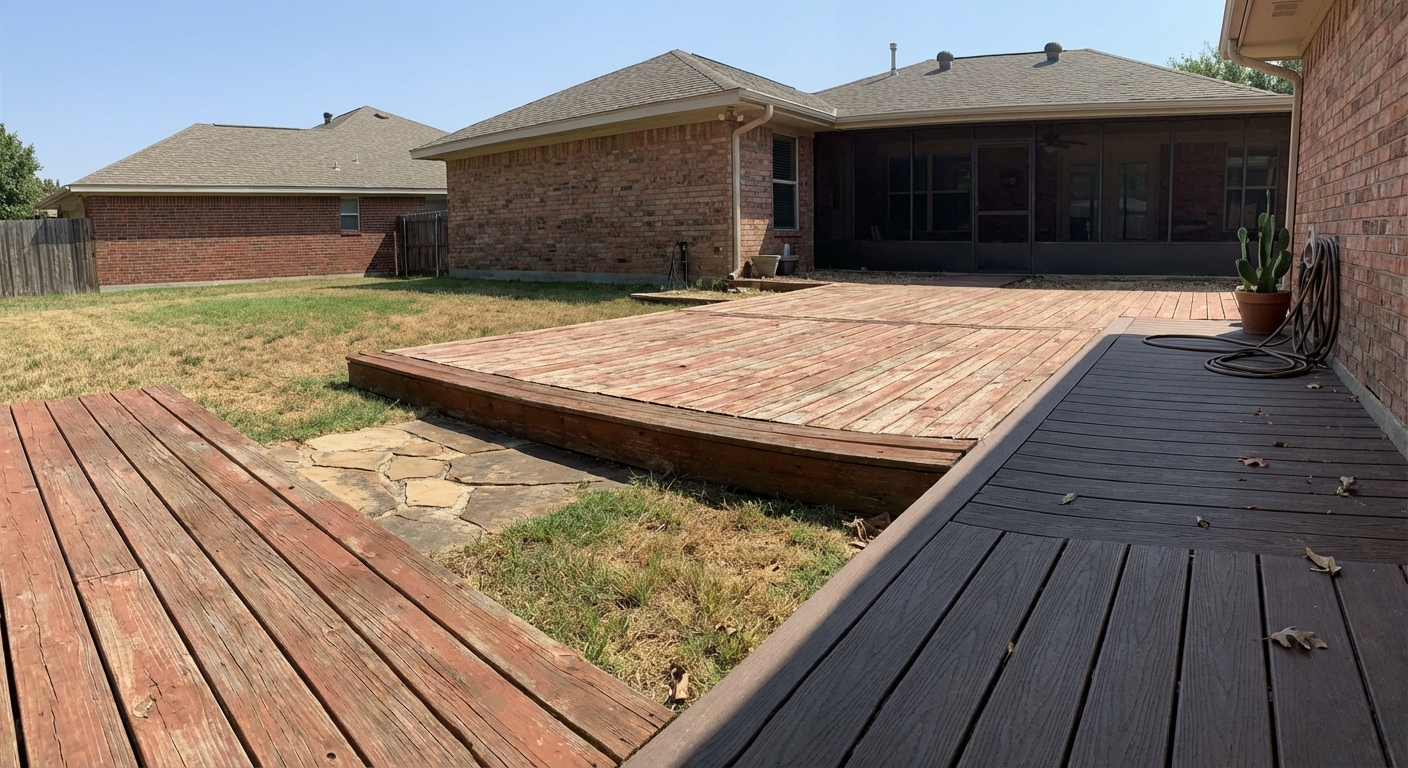
Building a deck in Texas comes with unique challenges. The intense summer heat, often reaching 95-105°F, combined with relentless UV exposure, can quickly degrade many common decking materials. You need a material that won't warp, fade, or become unbearably hot underfoot. Fortunately, several options are up to the task.
🌳 Tool Alert: Material Comparison
PT vs Composite vs Cedar. Compare 25-year total cost of ownership including maintenance.
Compare Materials →Understanding Texas Decking Challenges
Looking for more regional information? Check out our Texas State Decking Hub.
🏗️ Planning a deck project?
Get a free manual project review, or visualize your dream deck with AI before requesting quotes.
Texas's climate demands a lot from decking materials. The extreme heat isn't the only factor. In coastal areas like Houston, moisture and termites are significant concerns. Even inland, temperature fluctuations can cause expansion and contraction, leading to warping and cracking over time. Because Texas has no state income tax, many homeowners choose to reinvest those dollars into home improvements like decks. Protecting that investment means selecting the right materials.
<!-- slot:after-intro -->
Choosing between composite and wood? Our composite vs wood decking breaks down the real costs over 10 years. For full installed pricing by material type, see our complete deck cost guide for Texas.
Key Considerations for Texas Decks
- Heat Resistance: Can the material withstand surface temperatures exceeding 150°F without becoming soft or pliable?
- UV Resistance: Will the color fade or the material degrade under constant sun exposure?
- Moisture Resistance: Will the material rot, warp, or attract mold in humid conditions?
- Termite Resistance: Is the material naturally resistant to termites, or will it require ongoing treatment?
- Maintenance: How much effort is required to keep the deck looking its best?
- Cost: What is the initial investment, and what are the long-term maintenance costs?
Top Decking Material Options for Texas
Here’s a look at some of the most popular decking materials for Texas, weighing their pros and cons in the face of the Texas climate:
Pressure-Treated Pine
Pressure-treated pine is a budget-friendly option, with installed costs ranging from $25-45 per square foot. It's readily available and relatively easy to work with.
- Pros: Affordable, widely available, resists rot and insect infestation (when properly treated).
- Cons: Prone to warping and cracking in the Texas heat. Requires regular staining and sealing to maintain its appearance and prevent moisture damage. Can splinter over time. Not as visually appealing as other options.
- Texas Tip: Choose kiln-dried after treatment (KDAT) lumber to minimize warping.
Cedar
Cedar offers a more natural aesthetic than pressure-treated pine and is naturally resistant to rot and insects. Expect to pay $35-55 per square foot installed.
- Pros: Beautiful natural wood grain, naturally resistant to rot and insects, less prone to warping than pine (though still susceptible).
- Cons: More expensive than pressure-treated pine. Requires regular staining and sealing to maintain its color and prevent weathering. Can still warp, crack, and fade in the Texas sun.
- Texas Tip: Consider a sealant with UV inhibitors to protect the wood's color.
Composite Decking
Composite decking, made from a blend of wood fibers and recycled plastic, is a popular choice for its durability and low maintenance. Installed costs typically range from $45-75 per square foot.
- Pros: Highly resistant to rot, insects, and warping. Low maintenance – no staining or sealing required. Available in a wide range of colors and styles.
- Cons: Can get very hot in direct sunlight (surface temperatures can exceed 150°F). Some cheaper composites can fade or stain. More expensive than wood options.
- Texas Tip: Look for lighter-colored composites and consider adding shade structures to reduce surface temperatures. Use PaperPlan (paperplan.app) to visualize your deck with PaperPlan design with different materials and layouts before committing to a contractor. Experiment with different composite colors and shade options to find the perfect balance of aesthetics and comfort for your Texas backyard.
Trex Decking
Trex is a leading brand of composite decking known for its durability and wide range of options. Installed costs range from $50-80 per square foot.
- Pros: Excellent resistance to rot, insects, and fading. Low maintenance. Long lifespan. Offers a wide variety of colors, styles, and price points.
- Cons: Higher upfront cost than wood or some other composites. Can still get hot in direct sunlight, although Trex offers cooler options.
- Texas Tip: Trex Transcend is a popular choice for its enhanced fade and stain resistance. Explore Trex's lighter color options specifically designed to reflect heat.
Ipe (Brazilian Walnut)
Ipe is a hardwood known for its exceptional durability and resistance to rot, insects, and fire. It's the most expensive option, with installed costs ranging from $60-100 per square foot.
- Pros: Extremely durable and long-lasting. Naturally resistant to rot, insects, and fire. Beautiful, rich color.
- Cons: Very expensive. Difficult to work with due to its hardness. Requires specialized fasteners and tools. Can fade to a silver-gray color if not oiled regularly.
- Texas Tip: Ipe is a great choice for high-end decks and areas with heavy foot traffic. Consider oiling it regularly to maintain its original color or embrace the natural silvering process.
Cost Comparison Table
| Material | Installed Cost (per sq ft) | Maintenance Needs | Heat Resistance | UV Resistance | Termite Resistance |
| ------------------ | --------------------------- | ----------------------------------- | --------------- | ------------- | ------------------ |
| Pressure-Treated | $25-45 | Staining/Sealing every 1-2 years | Low | Low | Good |
| Cedar | $35-55 | Staining/Sealing every 2-3 years | Medium | Medium | Good |
| Composite | $45-75 | Occasional cleaning | Medium | Good | Excellent |
| Trex | $50-80 | Occasional cleaning | Medium | Excellent | Excellent |
| Ipe | $60-100 | Oiling (optional) every 1-2 years | High | High | Excellent |
<!-- slot:mid-content -->
Design Considerations for Texas Decks
Beyond material selection, consider these design elements to enhance your Texas deck:
Shade Structures
Adding a covered porch, pergola, or awning can significantly reduce the amount of direct sunlight on your deck, making it more comfortable to use during the hottest months.
Pool Decks
If you have a pool, choose a decking material that is slip-resistant and can withstand constant exposure to water and chemicals. Composite and Ipe are excellent choices.
Outdoor Kitchens
Many Texas homeowners incorporate outdoor kitchens into their decks. If you plan to do so, ensure your deck can support the weight of appliances and that the decking material is fire-resistant.
Deck Height and Permits
Most Texas cities require permits for decks over 200 square feet or 30 inches above grade. The frost line in most of Texas is only 6-12 inches, which means footings don't need to be as deep as in colder climates, reducing construction costs. Be sure to check your local building codes before starting your project. Here’s a quick look at permitting in some major cities:
- Houston: No zoning, but permits are required from the City of Houston Permitting Center.
- Dallas: Permits are issued through Dallas Development Services, with fees ranging from $200-500.
- Austin: Permits are obtained through Austin Development Services, but the process can be notoriously slow, often taking 8-12 weeks.
- San Antonio: Permits are handled by the Development Services Department, and the process is generally faster than in Austin.
Best Time to Build
The best time to build a deck in Texas is during the cooler months, from October to April, to avoid the peak summer heat.
Installation and Maintenance Tips
- Proper Spacing: Allow for proper spacing between deck boards to accommodate expansion and contraction due to temperature changes.
- Quality Fasteners: Use high-quality, corrosion-resistant fasteners to prevent loosening and rust.
- Regular Cleaning: Clean your deck regularly to remove dirt, debris, and mildew.
- Sealing/Staining: If you choose a wood deck, seal or stain it regularly to protect it from the elements.
- Professional Installation: Consider hiring a professional deck builder to ensure your deck is built to code and will withstand the Texas climate.
Choosing the right decking material for your Texas home is a crucial decision that will impact its longevity, appearance, and your enjoyment of your outdoor space. By considering the challenges of the Texas climate and the pros and cons of each material, you can create a beautiful and durable deck that will last for years to come. Learn more about Deck Cost Per Square Foot in Texas: 2026 Pricing Breakdown to help you better budget for your project.
<!-- slot:before-faq -->
🎨 Not sure which material to pick?
Upload a photo of your backyard and see exactly how Trex, TimberTech, or cedar would look — free and instant.
Frequently Asked Questions
What is the coolest decking material for Texas heat?
While no decking material stays completely cool in direct sunlight, lighter-colored composite decking tends to be cooler than darker options. Trex offers specific lines designed to reflect more heat. Ipe, while dark, doesn't retain heat as much as composites.
How often should I seal my wood deck in Texas?
The frequency of sealing depends on the type of wood and the sealant used. Generally, you should reseal your wood deck every 1-2 years for pressure-treated pine and every 2-3 years for cedar.
Is composite decking worth the investment in Texas?
Yes, composite decking is often worth the investment in Texas due to its durability, low maintenance, and resistance to rot, insects, and warping. While the initial cost is higher than wood, the long-term savings on maintenance and replacement can make it a worthwhile choice.
Will my composite deck fade in the Texas sun?
Cheaper composite decking can fade over time. However, high-quality composite decking like Trex is designed to resist fading and comes with warranties to protect against it. Choose a product with good UV inhibitors.
Do I need a permit to build a deck in Texas?
Most Texas cities require permits for decks over 200 square feet or 30 inches above grade. Always check with your local building department to ensure you comply with all regulations. For more information, check out our guide on Do You Need a Deck Permit in Texas? State & City Rules Explained.
<!-- slot:end -->
📋 Planning a deck project?
Get a free manual project review from our team — no obligation, no spam.
Get Free Project Review →Upload a backyard photo and preview real decking materials with AI — free, instant, no sign-up.
Permits, costs, material comparisons, and questions to ask before requesting quotes — delivered to your inbox.