
Best Composite Decking for Texas Heat (2026)
Choosing the right composite decking for Texas heat is crucial. Compare top brands like Trex, TimberTech, and more to find the best option for your deck.
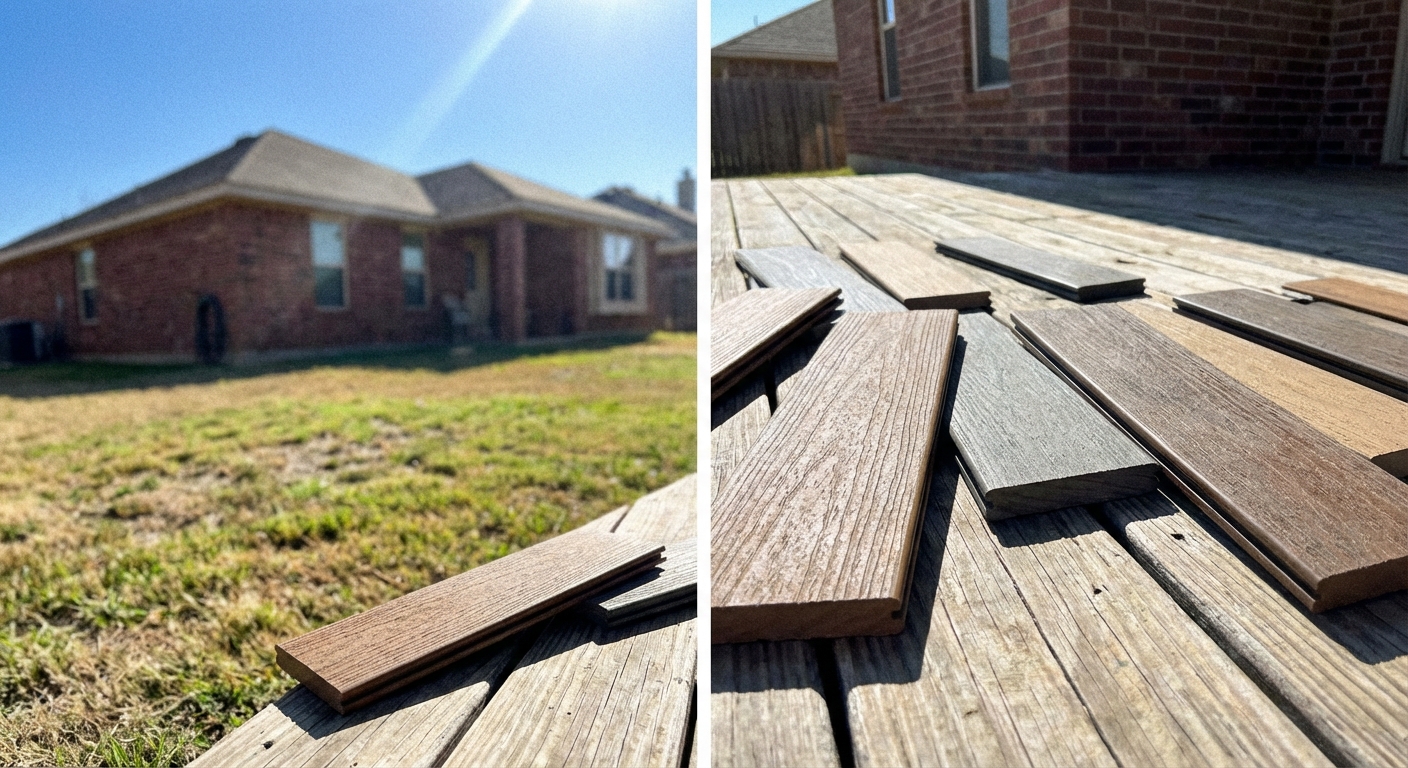
Are you dreaming of a beautiful new deck to enjoy those Texas sunsets, but worried about how the scorching heat will affect your investment? You're right to be concerned. Texas summers, with temperatures often soaring between 95-105°F, and intense UV exposure can wreak havoc on decking materials. Composite decking offers a durable, low-maintenance alternative to wood, but not all composites are created equal, especially when facing the Texas climate. This guide will help you choose the best composite decking for your Texas home.
🌳 Tool Alert: Material Comparison
PT vs Composite vs Cedar. Compare 25-year total cost of ownership including maintenance.
Compare Materials →Understanding the Texas Decking Challenge
Looking for more regional information? Check out our Texas State Decking Hub.
🏗️ Planning a deck project?
Get a free manual project review, or visualize your dream deck with AI before requesting quotes.
Texas presents unique challenges for deck owners. The relentless sun can heat composite surfaces to over 150°F, potentially causing expansion, fading, and even warping if you choose the wrong product. The good news? Many composite decking brands have engineered solutions to combat these issues.
Furthermore, Texas homeowners often have more disposable income for home improvements, thanks to the state's lack of state income tax. This means you can potentially invest in higher-quality materials that offer better long-term performance.
<!-- slot:after-intro -->
Choosing between composite and wood? Our composite vs wood decking breaks down the real costs over 10 years. For full installed pricing by material type, see our complete deck cost guide for Texas.
Key Considerations for Texas Decking
Before you dive into brand comparisons, keep these factors in mind:
- Heat Resistance: Look for composites specifically designed to withstand high temperatures and minimize heat absorption.
- UV Protection: Choose boards with superior UV inhibitors to prevent fading and discoloration.
- Moisture Resistance: While less of a concern than extreme heat, moisture is still a factor, particularly in Gulf Coast areas like Houston. Termites are also a consideration in these regions.
- Expansion and Contraction: Composites expand and contract with temperature changes. Ensure your installer is experienced in accounting for this during installation to prevent buckling or gaps.
- Color Choice: Lighter colors tend to stay cooler than darker colors under direct sunlight.
- Warranty: Review the warranty carefully, paying attention to coverage for fading, staining, and structural damage.
- Local Building Codes & Permits: Most Texas cities require permits for decks exceeding 200 sqft or 30 inches above grade. Be sure to factor permit costs and timelines into your project. Houston has no zoning regulations but requires permits from the City of Houston Permitting Center. Dallas requires permits through Dallas Development Services (costing around $200-500). Austin permits can be notoriously slow, taking 8-12 weeks through Austin Development Services. San Antonio permits are generally faster through the Development Services Dept. See also: Do You Need a Deck Permit in Texas? State & City Rules Explained
Top Composite Decking Brands for Texas
Here's a comparison of some of the leading composite decking brands and how they perform in the Texas heat:
Trex
Trex is a well-known and widely available brand. Their Transcend line is particularly popular for its durability and fade resistance.
- Pros: Excellent fade and stain resistance, wide range of colors and styles, readily available, strong warranty.
- Cons: Can be more expensive than some other options. Surface temperatures can still get quite hot in direct sunlight, even with lighter colors.
- Estimated Cost (Installed): $50-80/sqft
- Texas Recommendation: A solid choice, especially Transcend, but consider lighter colors and shade structures to mitigate heat. See also: Trex Deck Cost in Texas: Pricing, Options & Real Examples
TimberTech/AZEK
TimberTech offers two main lines: TimberTech (composite) and AZEK (capped polymer). AZEK is 100% synthetic and generally performs better in terms of heat resistance and moisture resistance than traditional composites.
- Pros: Excellent moisture resistance (AZEK), good fade and stain resistance, wide range of colors and styles, cooler surface temperatures compared to some composites (especially AZEK), strong warranty.
- Cons: Can be one of the more expensive options.
- Estimated Cost (Installed): $55-85/sqft (AZEK slightly higher)
- Texas Recommendation: AZEK is an excellent choice for Texas, especially in humid coastal areas. TimberTech is a good alternative if you're looking for a slightly more budget-friendly option. See also: Trex vs TimberTech in Texas: Which Composite Deck Is Better?
Fiberon
Fiberon offers a range of composite decking options, with their Symmetry and Sanctuary lines known for their durability and aesthetic appeal.
- Pros: Good fade and stain resistance, attractive wood-grain patterns, competitive pricing.
- Cons: May not be as widely available as Trex or TimberTech.
- Estimated Cost (Installed): $45-70/sqft
- Texas Recommendation: A good mid-range option for Texas homeowners looking for a balance of performance and affordability.
Deckorators
Deckorators offers unique textures and designs, including their Vault line, which is known for its strength and stability.
- Pros: Unique aesthetic options, good strength and stability, good warranty.
- Cons: Can be more expensive than some other composite options.
- Estimated Cost (Installed): $50-75/sqft
- Texas Recommendation: A good choice if you're looking for a deck that stands out from the crowd and prioritize strength and unique design.
MoistureShield
MoistureShield stands out due to its Solid Core technology, which encapsulates the composite material, providing exceptional moisture resistance.
- Pros: Excellent moisture resistance, even in submerged conditions, good for pool decks, strong warranty.
- Cons: Color selection might be more limited compared to some other brands.
- Estimated Cost (Installed): $45-70/sqft
- Texas Recommendation: An excellent choice for pool decks and areas prone to moisture, such as near the Gulf Coast.
Cost Comparison Table
Here’s a general cost comparison of the brands discussed (installed):
| Brand | Estimated Cost (Installed) |
|---------------|-----------------------------|
| Trex | $50-80/sqft |
| TimberTech/AZEK | $55-85/sqft |
| Fiberon | $45-70/sqft |
| Deckorators | $50-75/sqft |
| MoistureShield | $45-70/sqft |
Keep in mind these are *estimated* costs. Actual prices will vary based on the specific product line, deck size, complexity, and contractor rates. See also: Deck Cost Per Square Foot in Texas: 2026 Pricing Breakdown
Designing Your Texas Deck for the Heat
Beyond choosing the right materials, smart deck design can significantly improve your comfort and enjoyment:
- Covered Decks: A covered deck or pergola provides shade and reduces direct sun exposure, keeping the surface cooler. Covered decks are very popular in Texas.
- Shade Structures: Consider adding shade sails, awnings, or strategically planted trees to provide shade during peak sun hours.
- Light Colors: As mentioned earlier, lighter-colored decking absorbs less heat.
- Strategic Orientation: If possible, orient your deck to minimize exposure to the afternoon sun.
- Cool Deck Coatings: Specialized coatings can be applied to composite decking to further reduce surface temperatures.
- Water Features: Incorporating a water feature, like a small fountain, can help cool the surrounding air.
- Outdoor Kitchens: Many Texans enjoy outdoor kitchens on their decks. Plan the layout to minimize heat exposure for those using the cooking area.
- Decking Layout Visualizer: Use PaperPlan (paperplan.app) to visualize your deck with PaperPlan design with different materials and layouts before committing to a contractor. See how different colors and configurations impact the overall look and feel of your outdoor space.
<!-- slot:mid-content -->
Installation Considerations
Proper installation is critical for any decking material, but especially important for composite decking in Texas.
- Proper Spacing: Composite decking expands and contracts with temperature changes. Ensure your installer leaves adequate spacing between boards to prevent buckling or gaps.
- Fasteners: Use high-quality fasteners designed for composite decking to prevent corrosion and ensure a secure hold.
- Ventilation: Proper ventilation under the deck is essential to prevent moisture buildup and promote air circulation.
- Footings: While Texas has a shallow frost line (6-12 inches in most areas), proper footings are still essential for a stable and long-lasting deck.
- Best Build Months: Aim to build your deck between October and April to avoid the worst of the Texas summer heat.
Alternative Decking Materials
While this guide focuses on composite decking, here's a quick look at other options:
- Pressure-Treated Wood: The most affordable option, but requires regular maintenance (staining or sealing) to prevent warping, cracking, and decay. Cost: $25-45/sqft installed. See also: Pressure-Treated Deck Cost in Texas: Budget-Friendly Guide
- Cedar: A naturally beautiful and durable wood, but also requires regular maintenance. Cost: $35-55/sqft installed. See also: Cedar Deck Cost in Texas: Is It Worth the Premium?
- Ipe: A very dense and durable hardwood, naturally resistant to rot and insects. Expensive but long-lasting. Cost: $60-100/sqft installed.
Choosing the right decking material is a significant decision. Carefully consider your budget, lifestyle, and the specific challenges of the Texas climate to make the best choice for your home. See also: Best Decking Material for Texas Heat: What Won't Warp or Fade
<!-- slot:before-faq -->
<!-- slot:end -->
🎨 Not sure which material to pick?
Upload a photo of your backyard and see exactly how Trex, TimberTech, or cedar would look — free and instant.
Frequently Asked Questions
What color composite decking is best for Texas heat?
Lighter colors, such as light grays, tans, and whites, are generally better at reflecting sunlight and staying cooler than darker colors like dark browns or blacks. While darker colors can still be used, you might want to consider incorporating shade structures to mitigate the heat.
How much does a composite deck cost in Texas?
The average cost of a composite deck in Texas ranges from $45 to $75 per square foot installed. However, prices can vary depending on the brand, product line, deck size, and complexity. See also: Composite Deck Cost in Texas: What to Expect in 2026
Do I need a permit to build a deck in Texas?
Most Texas cities require permits for decks exceeding 200 sqft or 30 inches above grade. Check with your local building department for specific requirements. For example, Houston Deck Permit: Requirements, Costs & How to Apply.
How can I keep my composite deck cooler in the summer?
Besides choosing lighter colors, you can use shade structures, install a cool deck coating, or regularly rinse the deck with water to help keep it cooler.
Is composite decking slippery when wet?
Some composite decking can become slippery when wet. Look for brands and product lines that offer enhanced traction or textured surfaces to improve slip resistance.
📋 Planning a deck project?
Get a free manual project review from our team — no obligation, no spam.
Get Free Project Review →Upload a backyard photo and preview real decking materials with AI — free, instant, no sign-up.
Permits, costs, material comparisons, and questions to ask before requesting quotes — delivered to your inbox.