
Composite Deck Cost in Texas (2026)
Planning a composite deck in Texas? Learn about 2026 costs, factors affecting price, popular features, permits, and tips for choosing the right materials.
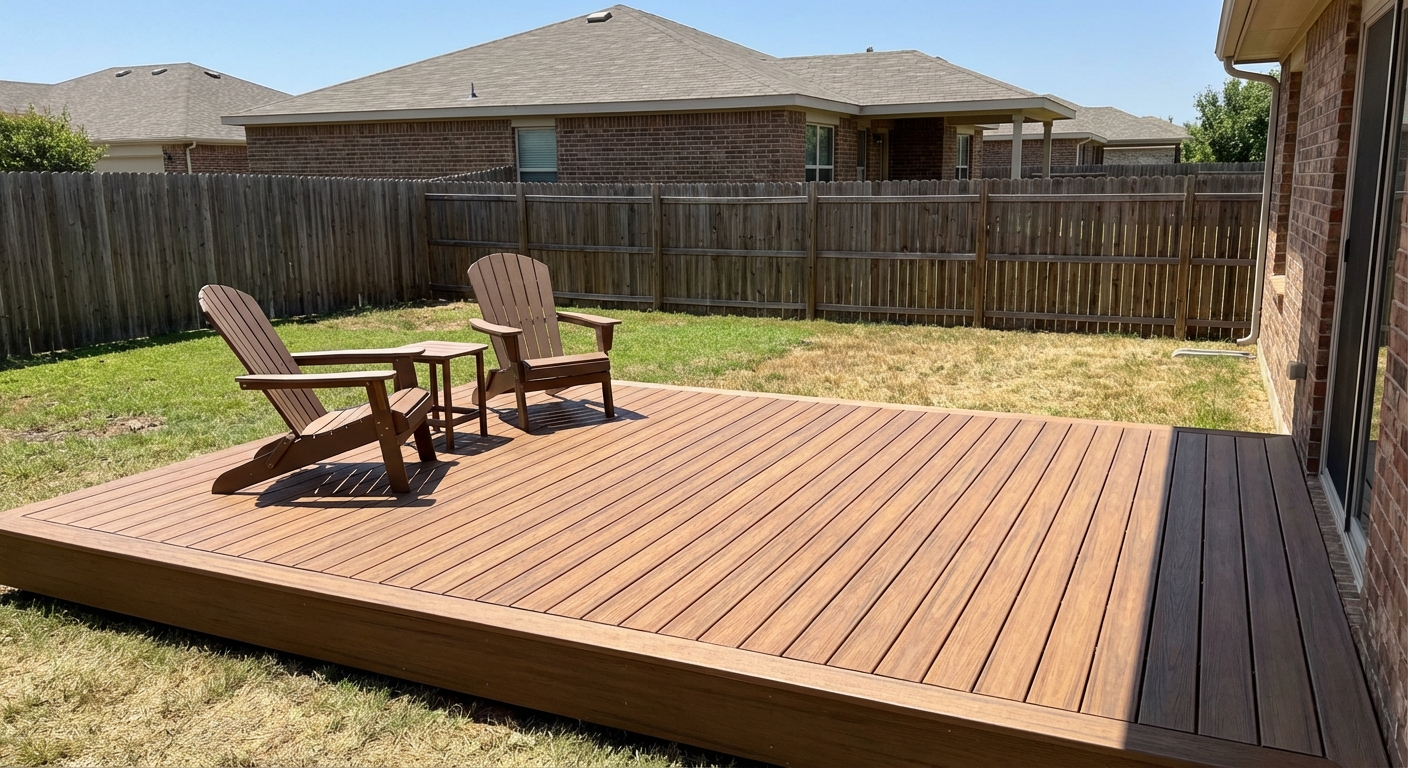
Dreaming of a new deck where you can grill, relax, and enjoy the Texas sunshine? If you're considering composite decking, you're likely wondering about the cost. This guide provides a detailed breakdown of composite deck costs in Texas for 2026, covering everything from materials to labor to permits. We'll help you understand what to expect so you can plan your budget and get the best value for your investment.
🧮 Tool Alert: Deck Cost Calculator
Estimate your project costs in seconds based on local pricing bands for your area.
Calculate My Cost →What Affects the Cost of a Composite Deck in Texas?
Looking for more regional information? Check out our Texas State Decking Hub.
🏗️ Planning a deck project?
Get a free manual project review, or visualize your dream deck with AI before requesting quotes.
Several factors influence the final price of your composite deck project. Understanding these will help you accurately estimate your budget.
- Deck Size: This is the most obvious factor. The larger the deck (measured in square feet), the more materials and labor will be required, driving up the cost.
- Decking Material: Different composite brands and product lines come with varying price tags. Premium brands like Trex generally cost more than entry-level options.
- Railing Type: Railing choices range from basic composite railings to more elaborate options with metal balusters or glass panels, significantly impacting the overall expense.
- Deck Design Complexity: A simple rectangular deck will be cheaper to build than a multi-level deck with curves, built-in seating, or custom features.
- Permits: Most Texas cities require permits for decks exceeding a certain size or height. Permit fees vary by location.
- Labor Costs: Labor rates depend on the contractor's experience, location, and the complexity of the project.
- Site Conditions: Uneven terrain, difficult access, or the need for extensive site preparation can increase labor costs.
- Additional Features: Adding features like stairs, benches, pergolas, outdoor kitchens, or lighting will add to the total cost.
- Location: Material and labor costs can vary depending on whether you're in a major metro area like Houston, Dallas, Austin, or San Antonio, or a more rural area.
- Removal of Existing Deck: If you need to remove an old deck before building the new one, factor in the demolition and disposal costs.
<!-- slot:after-intro -->
For a broader look at deck pricing across different materials and regions, see our complete deck cost guide for Texas. Timing your build right can also save thousands — check our guide on the best time to build a deck.
Composite Decking Costs vs. Other Materials in Texas
Composite decking offers durability and low maintenance, but it's important to compare its cost to other decking materials popular in Texas. Here's a general cost comparison, including installation:
| Material | Cost per Square Foot (Installed) | Pros | Cons |
| -------------------- | --------------------------------- | --------------------------------------------------------------------- | ------------------------------------------------------------------- |
| Pressure-Treated Wood | $25 - $45 | Most affordable option, readily available. | Requires regular staining/sealing, prone to rot/insect damage. |
| Cedar | $35 - $55 | Naturally insect-resistant, aesthetically pleasing. | More expensive than pressure-treated, requires some maintenance. |
| Composite | $45 - $75 | Low maintenance, durable, resists fading/staining. | Higher upfront cost, can get hot in direct sunlight. |
| Trex (Composite) | $50 - $80 | Premium composite, excellent durability and warranty. | One of the most expensive composite options. |
| Ipe (Exotic Hardwood) | $60 - $100 | Extremely durable, naturally resistant to rot/insects. | Very expensive, requires specialized installation. |
Keep in mind that these are average costs, and your actual price may vary. Texas homeowners often find the long-term value of composite decks outweigh the initial investment due to lower maintenance costs and longer lifespans. And remember, Texas has no state income tax, meaning homeowners often have more disposable income to invest in home improvements like decks.
Breaking Down Composite Deck Costs: Materials & Labor
Let's examine the individual components of a composite deck project to give you a clearer picture of where your money goes.
Material Costs
- Decking Boards: The primary cost component. Prices vary depending on the brand, color, and thickness. Expect to pay between $8 and $15 per linear foot for composite decking.
- Framing Lumber: Typically pressure-treated lumber is used for the deck frame. Costs range from $3 to $7 per linear foot, depending on the size and grade.
- Railing: Composite railing systems can cost from $30 to $100 per linear foot, depending on the style and material.
- Fasteners: Screws, hidden fasteners, and other hardware can add up to $100 - $300 or more, depending on the deck size and complexity.
- Footings: Concrete footings are essential for a stable deck. The cost depends on the number and depth of the footings. Fortunately, the frost line in Texas is relatively shallow (6-12 inches in most areas), which can reduce footing costs compared to northern states.
- Permits: Deck permits in Texas typically cost between $200 and $500, depending on the city and the scope of the project.
Labor Costs
Labor costs typically account for 40-60% of the total deck cost. Factors influencing labor rates include:
- Contractor Experience: Experienced contractors generally charge more but offer higher quality workmanship.
- Project Complexity: Intricate designs and challenging site conditions will increase labor hours.
- Location: Labor rates vary across Texas, with higher costs in major metropolitan areas.
Expect to pay between $15 and $30 per square foot for labor to install a composite deck in Texas.
<!-- slot:mid-content -->
Popular Composite Deck Features in Texas
Texas homeowners are increasingly adding custom features to their decks to enhance their outdoor living spaces. Here are some popular trends:
- Covered Decks: Providing shade from the intense Texas sun is a must. Covered decks with roofs or pergolas are highly desirable.
- Outdoor Kitchens: Built-in grills, countertops, and storage create a functional outdoor cooking and dining area.
- Pool Decks: Composite decking is an excellent choice for pool decks due to its water resistance and slip-resistant properties.
- Shade Structures: In addition to covered decks, homeowners are adding shade sails, awnings, and umbrellas to create comfortable outdoor spaces.
- Built-in Seating: Benches and other built-in seating options maximize space and provide comfortable seating for guests.
- Lighting: Deck lighting enhances safety and ambiance, allowing you to enjoy your deck long after sunset.
Composite Deck Design Considerations for Texas Heat
Texas summers are brutal, with temperatures often reaching 95-105°F. UV exposure is also intense, which can damage and fade some decking materials. Composite decking is a good choice because it resists fading, but it's important to consider these factors:
- Color Selection: Lighter-colored composite decking boards will absorb less heat than darker colors. Darker boards can reach surface temperatures of 150°F+ in direct sunlight, making them uncomfortable to walk on barefoot.
- Ventilation: Proper ventilation under the deck is crucial to prevent moisture buildup and warping.
- Shade: Incorporating shade structures or strategically planting trees can help reduce the deck's surface temperature.
- Moisture: While composite is water-resistant, proper drainage is still essential to prevent water from pooling and causing problems, especially in Gulf Coast areas prone to humidity and heavy rainfall.
Use PaperPlan (paperplan.app) to visualize your deck with PaperPlan design with different materials and layouts before committing to a contractor. This can help you see how different colors and shade options will affect the overall look and feel of your deck.
Navigating Deck Permits in Texas
Most Texas cities require permits for decks that are over 200 square feet in area or 30 inches above grade. Permit requirements vary by city, so it's essential to check with your local building department.
Here's a brief overview of permit processes in some major Texas cities:
- Houston: Houston has no zoning, but you still need permits from the City of Houston Permitting Center.
- Dallas: Permits are obtained through Dallas Development Services. Expect to pay between $200 and $500 for a permit.
- Austin: Austin permits are notoriously slow. Expect a wait time of 8-12 weeks to get your permit approved through Austin Development Services.
- San Antonio: Permits are issued through the Development Services Department and are generally processed relatively quickly.
Failing to obtain the necessary permits can result in fines, delays, and even the removal of your deck.
Tips for Saving Money on Your Composite Deck Project
- Get Multiple Quotes: Obtain bids from at least three different contractors to compare prices and services.
- Choose a Simple Design: Opting for a basic rectangular deck will reduce material and labor costs.
- Consider Off-Season Installation: Deck builders are often less busy during the off-season (October-April), which may translate to lower labor rates. Building during these months also helps you avoid the peak summer heat.
- Purchase Materials Wisely: Shop around for the best prices on composite decking and other materials. Consider buying in bulk to save money.
- DIY Some of the Work (If Possible): If you're handy, you can save money by handling some of the simpler tasks, such as demolition of an existing deck or painting.
- Negotiate with Your Contractor: Don't be afraid to negotiate the price with your contractor.
<!-- slot:before-faq -->
Conclusion
Building a composite deck in Texas is a significant investment, but with careful planning and budgeting, you can create a beautiful and functional outdoor space that you'll enjoy for years to come. By understanding the factors that influence cost, comparing materials, and navigating the permit process, you can make informed decisions and get the best value for your money. Remember to consider the Texas heat when selecting your decking materials and designing your deck to ensure a comfortable and long-lasting outdoor living space.
<!-- slot:end -->
🎨 Not sure which material to pick?
Upload a photo of your backyard and see exactly how Trex, TimberTech, or cedar would look — free and instant.
Frequently Asked Questions
How long will a composite deck last in Texas?
A well-maintained composite deck can last 25-30 years or even longer in Texas. The lifespan depends on the quality of the materials, the installation, and the level of maintenance. Regular cleaning and proper drainage are essential to maximize the lifespan of your deck.
Is composite decking worth the investment in Texas?
For many Texas homeowners, composite decking is worth the investment. While the upfront cost is higher than pressure-treated wood, composite decking offers superior durability, low maintenance, and resistance to fading, staining, and insect damage. This translates to long-term savings and a longer lifespan compared to traditional wood decks.
What is the best time of year to build a deck in Texas?
The best time of year to build a deck in Texas is during the cooler months, from October to April. This avoids the extreme heat of the summer, making the project more comfortable for both you and the construction crew. You might also find better deals on materials and labor during the off-season.
Can I build a deck myself in Texas?
Yes, you can build a deck yourself in Texas, but it's important to have the necessary skills and knowledge. Building a deck requires carpentry skills, knowledge of building codes, and the ability to obtain the necessary permits. If you're not comfortable with any of these aspects, it's best to hire a professional contractor.
How do I choose the right composite decking color for my Texas home?
Consider the amount of sunlight your deck receives. Lighter colors reflect more heat and will stay cooler than darker colors. Also, think about the overall aesthetic of your home and choose a color that complements your existing siding and landscaping. Sample boards are invaluable for seeing how colors look in different lighting conditions.
How Much Does a Deck Cost in Texas? Complete 2026 Guide
Deck Cost Per Square Foot in Texas: 2026 Pricing Breakdown
Best Composite Decking for Texas Heat: Top Brands Compared
Do You Need a Deck Permit in Texas? State & City Rules Explained
📋 Planning a deck project?
Get a free manual project review from our team — no obligation, no spam.
Get Free Project Review →Upload a backyard photo and preview real decking materials with AI — free, instant, no sign-up.
Permits, costs, material comparisons, and questions to ask before requesting quotes — delivered to your inbox.