
Trex vs TimberTech in Texas (2026)
Trex vs TimberTech in Texas: A head-to-head comparison of cost, durability, aesthetics, and warranties to help you choose the best composite deck.
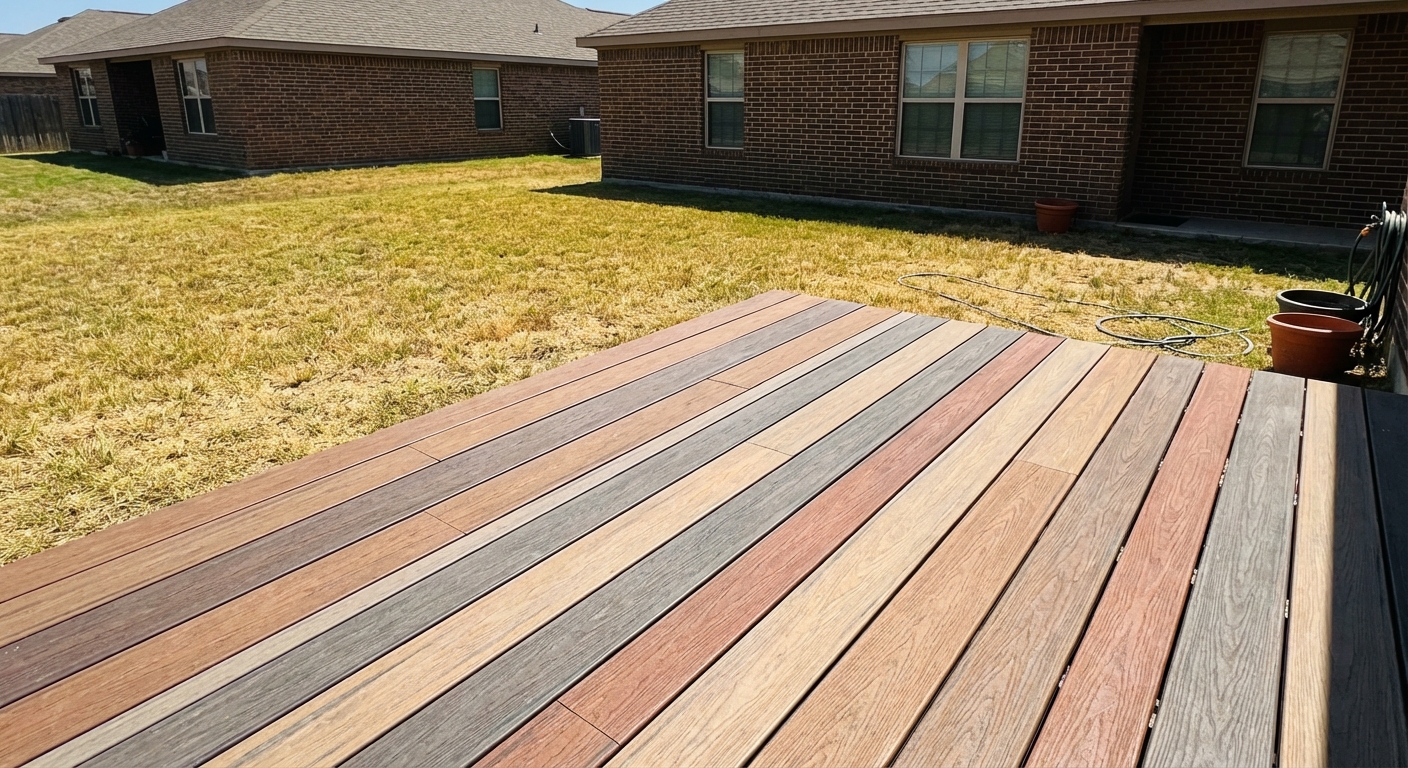
Are you planning a new deck or upgrading an existing one in Texas? Choosing the right decking material is crucial, especially with the intense Texas heat. Two leading composite decking brands often top the list: Trex and TimberTech. But which one is the better choice for your Texas home? This guide breaks down the key differences between Trex and TimberTech to help you make an informed decision.
🌳 Tool Alert: Material Comparison
PT vs Composite vs Cedar. Compare 25-year total cost of ownership including maintenance.
Compare Materials →Trex vs. TimberTech: A Texas-Sized Comparison
Looking for more regional information? Check out our Texas State Decking Hub.
🏗️ Planning a deck project?
Get a free manual project review, or visualize your dream deck with AI before requesting quotes.
Texas homeowners often prioritize home improvements because the state has no state income tax, freeing up funds for projects like decks. But before you invest, it’s important to understand how these materials perform in the Texas climate. Let's examine how Trex and TimberTech stack up in terms of cost, durability, aesthetics, and other critical factors for Texas homeowners.
<!-- slot:after-intro -->
Choosing between composite and wood? Our composite vs wood decking breaks down the real costs over 10 years. For full installed pricing by material type, see our complete deck cost guide for Texas.
Cost Considerations in the Lone Star State
Deck costs in Texas vary depending on the material. Here's a general cost breakdown per square foot, *installed*:
- Pressure-Treated: $25-45/sqft
- Cedar: $35-55/sqft
- Composite (general): $45-75/sqft
- Trex: $50-80/sqft
- TimberTech: $55-85/sqft
- Ipe: $60-100/sqft
As you can see, both Trex and TimberTech fall within the higher end of the decking material spectrum. TimberTech typically has a slightly higher upfront cost than Trex. However, both brands offer a range of product lines at different price points.
Key Takeaway: Factor in long-term maintenance costs. While the initial investment for composite decking is higher, you'll save money on staining, sealing, and repairs compared to wood decks.
Durability and Texas Weather Resistance
Texas decks face brutal conditions: scorching summer temperatures often hitting 95-105°F, intense UV radiation, and potential for moisture damage, especially along the Gulf Coast. Composite decking is designed to withstand these challenges better than traditional wood.
- Heat Resistance: Both Trex and TimberTech are more heat-resistant than wood, but composite surfaces can still get hot in direct sunlight. Expect surface temperatures to exceed 150°F on dark-colored composite boards during peak summer days. Consider lighter colors to mitigate heat absorption.
- UV Resistance: Both brands offer UV inhibitors to prevent fading and degradation. However, some fading is inevitable over time. Higher-end product lines from both Trex and TimberTech generally offer superior UV protection.
- Moisture Resistance: Composite decking is highly resistant to moisture, preventing rot and decay. This is particularly important in humid areas like Houston and other Gulf Coast cities. Termites are also a major concern in Texas, and composite decking eliminates the food source for these pests.
- Warranty: Both Trex and TimberTech offer warranties against material defects, fading, and staining. Review the specific warranty details for each product line to understand the coverage.
Aesthetics: Achieving Your Desired Look
Both Trex and TimberTech offer a wide range of colors, textures, and styles to complement your home's architecture and personal preferences.
- Trex: Trex offers a wide variety of colors and wood-grain patterns, ranging from traditional to modern. Their Transcend line is known for its realistic wood-grain appearance.
- TimberTech: TimberTech also boasts an impressive selection of colors and textures, with a focus on mimicking the look of natural wood. Their AZEK line, made from capped polymer, offers exceptional realism and durability.
Tip: Use PaperPlan (paperplan.app) to visualize your deck with PaperPlan design with different materials and layouts before committing to a contractor. Seeing the various Trex and TimberTech options in a realistic rendering can help you choose the perfect aesthetic for your outdoor space.
Installation Considerations in Texas
- Permits: Most Texas cities, including Houston, Dallas, Austin, and San Antonio, require permits for decks exceeding 200 sqft or 30 inches above grade. Check your local building codes before starting your project.
* Houston: No zoning laws, but permits are required from the City of Houston Permitting Center.
* Dallas: Permits are obtained through Dallas Development Services, with fees ranging from $200-500.
* Austin: Permits are notoriously slow to process through Austin Development Services (expect 8-12 weeks).
* San Antonio: Permits are typically processed relatively quickly through the Development Services Department.
- Footings: Texas has a shallow frost line, typically only 6-12 inches deep. This means you can use shallower (and less expensive) footings compared to northern states.
- Best Time to Build: The best months for deck building in Texas are typically October through April, avoiding the extreme summer heat.
Trex Product Lines: A Quick Overview
Trex offers several distinct product lines, each with its own price point and features:
- Trex Transcend: Their premium line, offering the most realistic wood-grain appearance, superior durability, and the best warranty.
- Trex Enhance: A mid-range option that provides a good balance of price and performance.
- Trex Select: An entry-level option that's more budget-friendly but still offers the benefits of composite decking.
TimberTech Product Lines: A Quick Overview
TimberTech also offers a range of product lines to suit different budgets and preferences:
- TimberTech AZEK: Made from capped polymer, offering exceptional durability, moisture resistance, and realistic wood-grain aesthetics. This is their premium line.
- TimberTech PRO: A high-performance composite decking line with enhanced durability and fade resistance.
- TimberTech EDGE: Their entry-level composite decking line, offering a more affordable option without compromising on quality.
<!-- slot:mid-content -->
Head-to-Head Comparison Table
| Feature | Trex | TimberTech |
|-------------------|-------------------------------------------|--------------------------------------------|
| Material | Composite (wood fibers & recycled plastic) | Composite (wood fibers & recycled plastic) or Capped Polymer (AZEK) |
| Price (Installed) | $50-80/sqft | $55-85/sqft |
| Aesthetics | Wide range of colors & wood-grain patterns | Wide range of colors & wood-grain patterns, AZEK offers exceptional realism |
| Durability | Excellent | Excellent (AZEK is exceptional) |
| Warranty | 25-50 year limited warranty | 25-50 year limited warranty |
| Heat Resistance | Good | Good |
| UV Resistance | Good | Good (AZEK is exceptional) |
| Moisture Resistance| Excellent | Excellent (AZEK is exceptional) |
| Maintenance | Low | Low |
| Popularity | Highly popular | Highly popular |
Choosing the Right Decking for Your Texas Lifestyle
Consider these popular Texas deck features when making your decision:
- Covered Decks: Providing shade from the intense Texas sun is a must for many homeowners.
- Outdoor Kitchens: Creating an outdoor cooking and entertaining space is a popular trend.
- Pool Decks: Durable, slip-resistant decking is essential for pool areas.
- Shade Structures: Pergolas, arbors, and other shade structures can enhance your outdoor living space.
Which brand is right for you?
- Choose Trex if: You're looking for a well-established brand with a wide range of options and a slightly lower price point.
- Choose TimberTech if: You prioritize exceptional realism and durability, particularly with the AZEK line, and are willing to invest a bit more.
Ultimately, the best choice depends on your individual needs, budget, and aesthetic preferences. Consulting with a reputable deck builder in your area is highly recommended. They can assess your specific site conditions, discuss your design goals, and provide expert advice on the best decking material for your project. Consider reviewing Best Composite Decking for Texas Heat: Top Brands Compared and Best Decking Material for Texas Heat: What Won't Warp or Fade for more in-depth information.
<!-- slot:before-faq -->
Remember to budget for permits and other associated costs. You can find information about obtaining permits in your city by researching Houston Deck Permit: Requirements, Costs & How to Apply, Dallas Deck Permit Guide: What You Need Before Building, San Antonio Deck Permit: Rules, Fees & Process, or Austin Deck Permit: Everything Homeowners Need to Know.
🎨 Not sure which material to pick?
Upload a photo of your backyard and see exactly how Trex, TimberTech, or cedar would look — free and instant.
Frequently Asked Questions
How much more expensive is composite decking compared to wood in Texas?
Composite decking typically costs $45-75 per square foot installed, while pressure-treated wood costs $25-45 per square foot installed. While the initial investment is higher, composite decking requires less maintenance and lasts longer, potentially saving you money in the long run. See more about costs with Deck Cost Per Square Foot in Texas: 2026 Pricing Breakdown and Composite Deck Cost in Texas: What to Expect in 2026.
Will my composite deck get too hot to walk on in the Texas sun?
Dark-colored composite decking can get very hot in direct sunlight, exceeding 150°F. Lighter colors absorb less heat. Consider using outdoor rugs or shoes during peak sun hours.
Do I need a permit to build a deck in Texas?
Most Texas cities require a permit for decks over 200 square feet or 30 inches above grade. Check with your local building department for specific requirements. Make sure you are also aware of Texas Deck Building Codes: Key Requirements for 2026 and Deck Setback Requirements in Texas: How Close to the Property Line?.
How long will a Trex or TimberTech deck last in Texas?
With proper installation and maintenance, a Trex or TimberTech deck can last 25-50 years or even longer.
Are Trex and TimberTech resistant to termites?
Yes, because they are made of composite material, both Trex and TimberTech decking are resistant to termite damage, a significant advantage in Texas.
<!-- slot:end -->
📋 Planning a deck project?
Get a free manual project review from our team — no obligation, no spam.
Get Free Project Review →Upload a backyard photo and preview real decking materials with AI — free, instant, no sign-up.
Permits, costs, material comparisons, and questions to ask before requesting quotes — delivered to your inbox.