
Deck Permits in Baltimore (2026)
Need a deck permit in Baltimore? Learn 2026 requirements, fees, setback rules, and how to apply. Avoid fines and delays with this complete local guide.
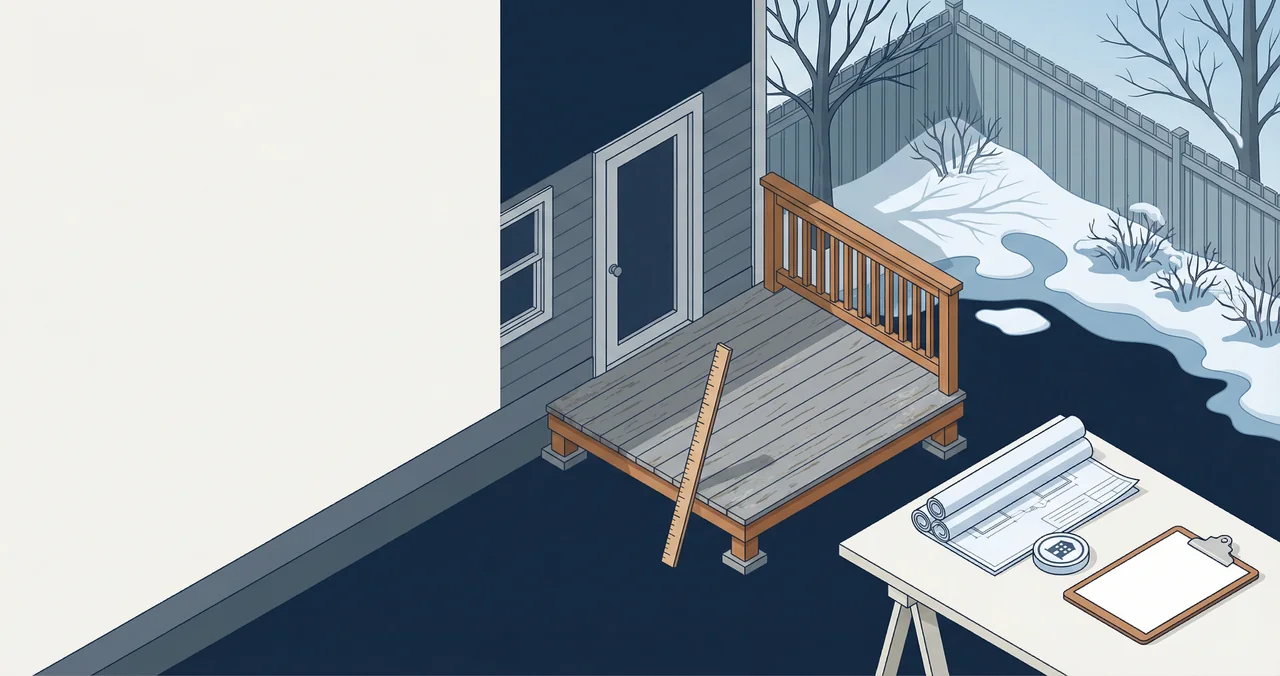
Do You Need a Deck Permit in Baltimore?
Short answer: yes, most likely. Baltimore requires a building permit for any deck that's over 200 square feet or more than 30 inches above grade. That covers the vast majority of backyard deck projects.
🏗️ Planning a deck project?
Get a free manual project review, or visualize your dream deck with AI before requesting quotes.
📋 Tool Alert: Permit Checker
Do you really need a permit? Check the exact rules for your city or township.
Check Permits →Even if your planned deck is small, there are situations where you'll still need a permit — like if you're attaching the deck to your house, adding electrical wiring for lighting, or building near a property line. Baltimore's Department of Housing and Community Development oversees residential building permits, and they don't take kindly to unpermitted construction.
If you're building a simple ground-level platform under 200 square feet that sits less than 30 inches off the ground and isn't attached to your home, you *might* be exempt. But "might" isn't a word you want to bet your investment on. A quick call to Baltimore's Permits & Code Enforcement division at (410) 396-3575 can save you thousands in potential fines.
<!-- slot:after-intro -->
When a Permit Is Required
Here's a clear breakdown of what triggers permit requirements in Baltimore:
You need a permit if your deck:
- Exceeds 200 square feet in total area
- Is more than 30 inches above grade at any point
- Attaches to your home's structure (ledger board connection)
- Includes electrical work (outlets, built-in lighting, fans)
- Involves plumbing (outdoor kitchen sink, gas line for a grill)
- Falls within a floodplain zone (parts of Fells Point, Canton waterfront, and areas near the Patapsco River)
You likely don't need a permit if:
- The deck is under 200 square feet, freestanding, and under 30 inches above grade
- You're replacing decking boards on an existing permitted structure without changing the footprint or structural members
A gray area worth noting: Freestanding decks that meet size and height thresholds technically require permits too. Some homeowners assume "freestanding" means "no permit needed." That's not how Baltimore code works. The threshold is about size and height, not attachment method.
Historic District Considerations
Baltimore has several historic districts — Federal Hill, Mount Vernon, Fell's Point, Bolton Hill, and others. If your property falls within a Commission for Historical and Architectural Preservation (CHAP) district, you'll need additional approval beyond the standard building permit. This review evaluates how your deck's design, materials, and visibility align with the neighborhood's historic character.
Expect the CHAP review to add 2–4 weeks to your timeline. Plan for it.
Permit Fees & Processing Time
Baltimore's permit fees are based on the estimated construction cost of your project. Here's what to budget for in 2026:
Fee Structure
| Project Cost | Permit Fee (Approximate) |
|---|---|
| Under $5,000 | $75–$150 |
| $5,000–$15,000 | $150–$350 |
| $15,000–$50,000 | $350–$600 |
| Over $50,000 | $600+ (scaled to project value) |
Additional fees may apply for:
- Plan review: $50–$150
- Electrical sub-permit: $75–$125 (if adding outlets or lighting)
- Plumbing sub-permit: $75–$125 (if running gas or water lines)
- CHAP review (historic districts): varies, typically $0–$100
How Long Does It Take?
For a straightforward residential deck, expect:
- Standard review: 2–4 weeks from submission to approval
- Expedited review: Available for some projects, roughly 1–2 weeks, with an additional fee
- Historic district review: Add 2–4 weeks on top of standard processing
Spring is Baltimore's busiest building season. If you submit your permit application in February or early March, you'll beat the rush. Submitting in April or May? Budget extra time — the department gets slammed.
Pro tip: Fall builds (September–November) often mean faster permit processing *and* better contractor pricing. Baltimore's climate supports building well into November most years, so you're not sacrificing much by waiting.
For a sense of what your full deck project might cost, check out our guide on composite deck builders in Baltimore, which covers installed pricing for different materials.
<!-- slot:mid-content -->
Building Codes & Setback Rules
Baltimore follows the International Residential Code (IRC) with local amendments. Here are the specific requirements that affect deck construction:
Structural Requirements
- Frost line depth: Footings must extend at least 30 inches below grade in Baltimore. This is non-negotiable — footings above the frost line will heave, shift, and eventually compromise your deck's structure.
- Post size: Minimum 6x6 posts for most residential decks; 4x4 posts are only acceptable for railings and low decks under specific conditions
- Beam and joist sizing: Must meet IRC span tables based on species, grade, and spacing
- Ledger board attachment: Must use lag screws or through-bolts with proper flashing. Nails are never acceptable for ledger connections.
Railing Requirements
- Height: Minimum 36 inches for residential decks (42 inches if the deck is used commercially or is unusually high)
- Baluster spacing: No more than 4 inches between balusters (the classic "4-inch sphere" test)
- Required when: The deck surface is 30 inches or more above grade at any point
Setback Rules
Baltimore's zoning code sets minimum distances from property lines:
- Side yard setback: Typically 3 feet minimum, but varies by zoning district
- Rear yard setback: Usually 15–25 feet, depending on lot size and zoning
- Front yard: Decks are rarely permitted in front yards
Important: Your zoning district determines your exact setback requirements. Row homes in neighborhoods like Patterson Park, Hampden, or Pigtown have different lot configurations than detached homes in Roland Park or Mount Washington. Pull your property's zoning designation from Baltimore's EGIS mapping system before you start designing.
If your deck encroaches on a setback, you'll need a zoning variance from the Board of Municipal and Zoning Appeals — a process that adds months and isn't guaranteed to succeed.
Stairway Requirements
- Width: Minimum 36 inches
- Rise: Maximum 7¾ inches per step
- Run: Minimum 10 inches per tread
- Handrail: Required on at least one side for stairs with four or more risers
How to Apply for a Deck Permit in Baltimore
Here's the step-by-step process:
Step 1: Gather Your Documents
Before you visit the permit office or go online, assemble:
- Site plan showing your property boundaries, the house footprint, and the proposed deck location with dimensions and distances to property lines
- Deck plans including framing layout, footing details, post locations, railing design, and materials list
- Elevation drawings showing the deck height, stair placement, and railing heights
- Proof of property ownership (deed or tax bill)
- Contractor license number (if using a licensed contractor — Baltimore requires contractors to hold a Home Improvement License)
Your plans don't need to be architect-drawn, but they must be clear, dimensioned, and to scale. Many contractors handle this as part of their service. If you're going the DIY route, consider using a deck design tool. Use PaperPlan to visualize different decking materials on your own home before committing — it can also help you produce cleaner plans for your submission.
Step 2: Submit Your Application
You have two options:
- Online: Baltimore's ePlans portal allows digital submission. Upload your documents as PDFs.
- In person: Visit the Permits and Code Enforcement office at 417 E. Fayette Street, Suite 100. Bring two sets of printed plans.
Step 3: Plan Review
A plan reviewer examines your submission for code compliance. They'll check:
- Structural adequacy (footings, framing, connections)
- Setback compliance
- Railing and stair code adherence
- Floodplain considerations (if applicable)
If there are issues, you'll receive correction comments. Address them and resubmit. Most residential decks pass review in one or two rounds.
Step 4: Receive Your Permit & Schedule Inspections
Once approved, you'll receive your building permit. Post it visibly at the job site — it's required by law.
You'll need to schedule inspections at these stages:
1. Footing inspection — after holes are dug, before pouring concrete
2. Framing inspection — after the structure is built, before decking boards go on
3. Final inspection — completed deck with railings, stairs, and all components
Don't skip inspections. Each one must pass before you move to the next phase. If your contractor suggests skipping an inspection "to save time," find a different contractor.
If you're curious about the risks of skipping the permit process entirely, we cover that in detail in our article on building a deck without a permit.
What Happens If You Build Without a Permit
Building without a permit in Baltimore isn't just a minor oversight — it carries real consequences:
- Stop-work order: If a code enforcement officer spots unpermitted construction, they'll halt your project immediately
- Fines: Baltimore can levy fines of $500–$1,000 per violation per day for unpermitted work
- Forced removal: In serious cases, you may be ordered to demolish the deck entirely at your own expense
- Insurance issues: Your homeowner's insurance may deny claims for injuries or damage related to an unpermitted structure
- Sale complications: When you sell your home, the buyer's inspector will flag unpermitted work. It can delay or kill a deal, and you'll likely need to retroactively permit the deck — which means it must pass inspection as-is, or you'll need to modify it
Retroactive Permits
If you already have an unpermitted deck, Baltimore does allow you to apply for a retroactive permit. The process is similar to a standard application, but:
- You may face additional fees or penalties
- The existing deck must meet current code — not the code from when it was built
- An inspector will examine the structure, and if it doesn't comply, you'll need to bring it up to code before the permit is issued
It's almost always cheaper and easier to get the permit first.
What About Material Choices and Climate?
Baltimore's climate — moderate seasons with winter frost, occasional ice, and humid summers — affects which decking materials perform best long-term. Here's a quick comparison:
| Material | Installed Cost (per sq ft) | Best For | Climate Notes |
|---|---|---|---|
| Pressure-treated | $25–$45 | Budget builds | Requires sealing every 2–3 years; handles frost well |
| Cedar | $35–$55 | Natural look | Naturally rot-resistant; needs annual maintenance |
| Composite | $45–$75 | Low maintenance | Excellent for humidity; won't splinter or rot |
| Trex (composite) | $50–$80 | Premium composite | Strong warranty; handles freeze-thaw cycles well |
| Ipe (hardwood) | $60–$100 | Luxury builds | Extremely durable; very heavy, needs specialized install |
All materials work in Baltimore's climate. The choice comes down to your budget, maintenance tolerance, and aesthetic preference. If you want a deeper dive into material options, our post on pool deck builders in Baltimore covers material performance around water exposure, which is relevant for humid conditions too.
For cost estimates specific to Baltimore-area projects, see our [deck cost breakdown for Baltimore](/decks/blog/deck-cost-baltimore).
<!-- slot:before-faq -->
🎨 Not sure which material to pick?
Upload a photo of your backyard and see exactly how Trex, TimberTech, or cedar would look — free and instant.
Frequently Asked Questions
How much does a deck permit cost in Baltimore?
Most residential deck permits in Baltimore cost between $75 and $600, depending on your project's estimated construction value. A typical backyard deck project in the $10,000–$20,000 range will run about $200–$400 in permit fees. Add $50–$150 for plan review. If you're in a historic district, expect a small additional fee for CHAP review.
How long does it take to get a deck permit in Baltimore?
Standard processing takes 2–4 weeks. If you submit in late winter (February–early March), you'll typically see faster turnaround. Spring submissions can take longer due to volume. Expedited review is sometimes available for an additional fee, cutting the timeline to 1–2 weeks.
Can I build a deck myself in Baltimore, or do I need a contractor?
Homeowners can pull their own permits and build their own decks in Baltimore. You don't need a licensed contractor for work on your own primary residence. However, your deck still must meet all code requirements and pass all inspections. If you hire someone, make sure they hold a valid Baltimore City Home Improvement Contractor License — ask to see it before signing anything. For guidance on the DIY route, check out can I build my own deck.
Do I need a permit to replace deck boards in Baltimore?
If you're doing a board-for-board replacement without changing the deck's footprint, height, or structural members, you generally don't need a permit. But if you're replacing joists, beams, posts, or altering the structure in any way, a permit is required. When in doubt, call the permits office — a five-minute call beats a potential fine.
What is the frost line depth in Baltimore for deck footings?
Baltimore's frost line depth is approximately 30 inches. Your deck footings must extend at least to this depth to prevent frost heave — the upward movement caused by freezing soil expanding beneath a shallow footing. Most Baltimore-area contractors dig footings to 36 inches as a safety margin, which is smart practice given occasional deep-freeze winters. This is a key detail inspectors check during the footing inspection.
<!-- slot:end -->
📋 Planning a deck project?
Get a free manual project review from our team — no obligation, no spam.
Get Free Project Review →Upload a backyard photo and preview real decking materials with AI — free, instant, no sign-up.
Permits, costs, material comparisons, and questions to ask before requesting quotes — delivered to your inbox.