
Deck Permits in Cambridge (2026)
Need a deck permit in Cambridge, Ontario? Learn requirements, fees, setback rules, and how to apply. Avoid fines and delays with this 2026 guide.
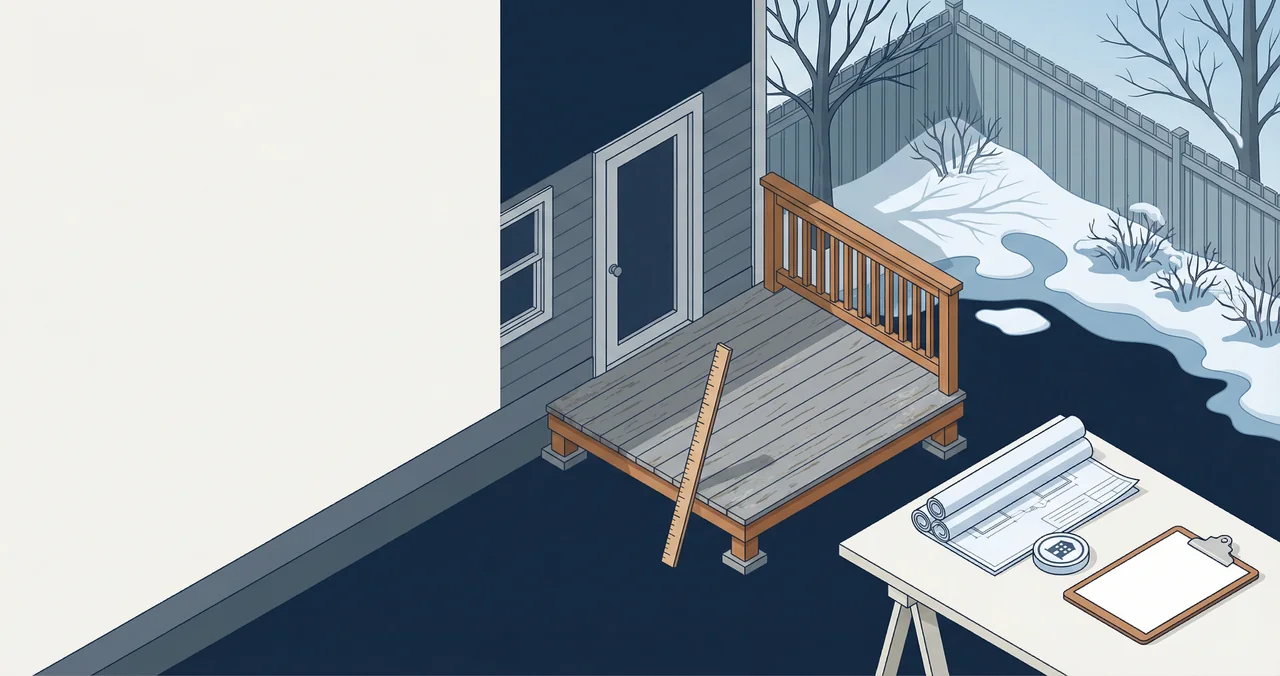
Planning to build a deck at your Cambridge home? Before you price out materials or call a contractor, there's one step you can't afford to skip: figuring out whether you need a deck permit. Getting it wrong can mean fines, forced removal, or serious headaches when you try to sell your home.
Looking for more regional information? Check out our Ontario Decking Hub.
Cambridge falls under the City of Cambridge Building Services Department, which enforces the Ontario Building Code (OBC). The rules aren't complicated once you understand them — but they are strict.
Here's everything you need to know about deck permits in Cambridge for 2026, including what triggers a permit, how much it costs, and how to apply.
📋 Tool Alert: Permit Checker
Do you really need a permit? Check the exact rules for your city or township.
Check Permits →Do You Need a Deck Permit in Cambridge?
Yes, in most cases. The City of Cambridge requires a building permit for deck construction under the Ontario Building Code. The general thresholds are:
🏗️ Planning a deck project?
Get a free manual project review, or visualize your dream deck with AI before requesting quotes.
- Height above grade: Any deck more than 24 inches (0.6 m) above finished grade requires a permit
- Size: Decks over 100 square feet (10 sq m) typically require a permit
- Attached structures: Any deck attached to your house requires a permit regardless of size, because it affects the building envelope
A small, ground-level platform under 100 sq ft that sits less than 24 inches off the ground may be exempt — but don't assume. If your deck requires footings, has stairs, or connects to your home's structure, you almost certainly need a permit.
When in doubt, call Cambridge Building Services at 519-621-0740 before you start. A five-minute phone call is far cheaper than a stop-work order.
Attached vs. Freestanding Decks
This distinction matters more than most homeowners realize. An attached deck ties into your home's ledger board and foundation, which means the permit process involves verifying your home's structural capacity. A freestanding deck sits on its own footings and doesn't touch the house.
Both can require permits in Cambridge, but the attached vs. freestanding permit requirements differ in terms of documentation and inspection scope.
When a Permit Is Required
Here's a quick breakdown of common deck projects and whether they trigger a permit in Cambridge:
| Project | Permit Required? |
|---|---|
| Deck over 24" above grade | Yes |
| Deck over 100 sq ft | Yes |
| Deck attached to house | Yes |
| Ground-level deck under 100 sq ft, under 24" high | Usually no |
| Adding stairs or railings to existing deck | Depends on scope |
| Replacing deck boards only (no structural changes) | No |
| Rebuilding an existing deck (new footings/framing) | Yes |
| Adding a roof or pergola over a deck | Yes |
| Hot tub on a deck | Yes (structural load requirements) |
The City of Cambridge follows the Ontario Building Code 2024 edition, which sets the provincial minimum standards. Cambridge may also have local zoning bylaws that add additional restrictions on lot coverage, setbacks, and height.
Seasonal Timing Matters
Cambridge's building season runs roughly May through October. Permit applications spike in early spring, and processing times stretch accordingly. If you want your deck built by summer, submit your permit application no later than March. Contractors' schedules in the Kitchener-Waterloo-Cambridge area fill up fast because of the short season — waiting until May to start the process means you might not be enjoying your deck until late summer or even fall.
For a detailed walkthrough of the application itself, see our Cambridge deck permit application step-by-step guide.
Permit Fees & Processing Time
How Much Does a Deck Permit Cost in Cambridge?
Deck permit fees in Cambridge are based on the estimated construction value of your project. As of 2026, expect:
- Residential deck permit fee: Approximately $200–$500 CAD for a typical backyard deck
- Minimum permit fee: Around $150 CAD (even for small projects)
- Plan review fees may apply for complex designs
For context, a standard 12x16 pressure-treated deck with an estimated construction value of $8,000–$12,000 would typically fall in the $250–$350 range for the permit fee alone. A larger 16x20 composite deck with a construction value of $20,000+ could push permit fees toward $400–$500.
Permit fees are non-refundable, even if your application is denied or you decide not to build.
How Long Does It Take?
- Standard processing time: 10–15 business days for straightforward residential deck permits
- Complex projects: 3–6 weeks if engineering drawings or variances are needed
- Peak season (February–April): Processing times can double as the department handles a surge of spring applications
Pro tip: Submit a complete application with all required documents the first time. Incomplete submissions get sent back, and you go to the end of the line.
Building Codes & Setback Rules
Ontario Building Code Requirements for Decks
Every deck in Cambridge must comply with the OBC. Here are the key structural and safety requirements:
Footings and foundations:
- Footings must extend below the frost line, which in the Cambridge area is 48 inches (1.2 m) minimum
- Concrete footings are standard — Sonotubes filled with concrete are the most common approach
- Frost heave is a real concern in Cambridge. Shallow footings will shift and crack. This isn't optional.
Structural requirements:
- Joists, beams, and posts must be sized according to OBC span tables
- Deck framing must support a minimum live load of 1.9 kPa (40 psf) plus dead loads
- Snow load requirements in Cambridge add significant structural demands — the ground snow load for the region is approximately 1.1 kPa (23 psf)
- Ledger boards (for attached decks) must be properly flashed and fastened with lag bolts or structural screws
Railings and guards:
- Required on any deck surface 24 inches or more above grade
- Minimum railing height: 36 inches for residential decks (42 inches if the deck is more than 5.9 feet above grade)
- Baluster spacing: Maximum 4 inches between balusters (a 4-inch sphere cannot pass through)
- Guards must resist a horizontal load of 0.5 kN/m applied at the top
Stairs:
- Maximum riser height: 7.87 inches (200 mm)
- Minimum tread depth: 9.84 inches (250 mm)
- Handrails required on at least one side for stairs with 3 or more risers
- Consistent rise and run throughout the staircase
Zoning Setback Rules
Cambridge's zoning bylaws dictate how close your deck can be to property lines and other structures:
- Rear yard setback: Typically 7.5 m (about 25 feet) from the rear property line for the main structure, but decks may project into this setback depending on your zone
- Side yard setback: Usually 1.2 m (4 feet) minimum from the side property line
- Lot coverage: Your deck counts toward the maximum lot coverage percentage for your zone — typically 40–50% in residential areas
- Easements: If you have a utility easement on your property, you cannot build within it
These numbers vary by zone. A property in Hespeler may have different setback requirements than one in Galt or Preston. Check your specific zoning designation on Cambridge's online zoning map or call the Planning Division.
Climate-Specific Building Considerations
Cambridge's climate is tough on decks. Harsh winters with repeated freeze-thaw cycles, heavy snow loads, ice buildup, and road salt tracked onto deck surfaces all take a toll.
- Footings: Must go deep enough to avoid frost heave — 48 inches minimum, though 60 inches is safer in exposed areas
- Materials: Composite and PVC decking handle Cambridge winters far better than wood. Pressure-treated lumber works but requires annual sealing to prevent moisture damage and salt deterioration
- Drainage: Design your deck with proper slope (1/8 inch per foot minimum) to prevent water pooling and ice formation
- Flashing: Critical on attached decks to prevent ice dams from forcing water behind the ledger board
Use PaperPlan to visualize different decking materials on your own home before committing — it's especially useful for comparing how composite vs. wood options look against your siding and trim.
How to Apply for a Deck Permit in Cambridge
What You'll Need
Before you visit or submit online, gather these documents:
- Completed application form — Available from the City of Cambridge Building Services or their website
- Site plan showing:
- Property boundaries and dimensions
- Location of all existing structures
- Proposed deck location with dimensions
- Setback distances from all property lines
- Location of easements and right-of-ways
- Construction drawings including:
- Floor plan of the deck with dimensions
- Cross-section showing footings, posts, beams, joists, and decking
- Footing details (depth, diameter, reinforcement)
- Railing and stair details
- Connection details (especially ledger board attachment for attached decks)
- Proof of property ownership or authorization from the owner
- Estimated construction value
The Application Process
Step 1: Confirm your zoning. Call Cambridge Planning at 519-621-0740 or check online to verify your property's zone and applicable setbacks.
Step 2: Prepare your drawings. For a straightforward deck, many contractors will prepare these as part of their quote. For complex designs, you may need a structural engineer — expect to pay $500–$1,500 CAD for engineered drawings.
Step 3: Submit your application. You can apply:
- In person at the Cambridge City Hall, 50 Dickson Street
- Online through the City of Cambridge's building permit portal
Step 4: Pay the permit fee.
Step 5: Wait for approval. You'll receive your permit once the plans examiner has reviewed and approved your submission.
Step 6: Schedule inspections. Cambridge typically requires:
- Footing inspection — Before pouring concrete
- Framing inspection — After framing is complete, before decking is installed
- Final inspection — After the deck is fully complete
Do not proceed to the next stage until each inspection is passed. Pouring concrete before a footing inspection is approved means you might have to dig it all up.
Hiring a Contractor vs. DIY
You're legally allowed to build your own deck in Ontario as a homeowner. The permit process is the same whether you do it yourself or hire a professional. However, the permit is always the homeowner's responsibility — even if your contractor says they'll handle it, make sure it actually gets done.
If you're hiring out, check our list of top-rated deck builders in Cambridge to find licensed contractors familiar with local permit requirements.
What Happens If You Build Without a Permit
This is not a theoretical risk. Cambridge bylaw enforcement does follow up on complaints, and unpermitted structures get flagged during home sales.
Consequences Include:
- Stop-work order: The city can shut down your project immediately
- Fines: Penalties under the Ontario Building Code can reach $50,000 for individuals and $100,000 for corporations per offence
- Retroactive permit fees: You'll pay the regular permit fee plus a surcharge (often double the original fee)
- Mandatory inspection: The city may require you to expose structural elements for inspection — meaning tearing up finished decking to verify footings and framing
- Forced removal: If the deck doesn't meet code, you may be ordered to demolish it at your own expense
- Insurance issues: Your homeowner's insurance may not cover injuries or damage related to an unpermitted structure
- Real estate complications: Unpermitted decks show up during home inspections and can derail or delay a sale
The risks far outweigh the cost and effort of getting a permit. For a detailed breakdown, read our guide on building a deck without a permit in Ontario.
What If Your Existing Deck Has No Permit?
If you bought a home with a deck that was never permitted, contact Cambridge Building Services. They can advise on how to retroactively permit the structure. It's better to address it proactively than to have it surface during a sale.
What a Deck Costs in Cambridge (2026 Pricing)
Understanding costs helps you estimate the construction value for your permit application — and budget for the full project.
| Material | Installed Cost (CAD/sq ft) | Best For |
|---|---|---|
| Pressure-treated wood | $30–$55 | Budget-friendly builds |
| Cedar | $40–$65 | Natural look, moderate durability |
| Composite | $50–$85 | Low maintenance, long lifespan |
| Trex (brand composite) | $55–$90 | Premium composite option |
| Ipe (hardwood) | $70–$120 | Maximum durability and aesthetics |
For a typical 12x16 deck (192 sq ft), that translates to:
- Pressure-treated: $5,760–$10,560 CAD
- Composite: $9,600–$16,320 CAD
- Trex: $10,560–$17,280 CAD
These prices include labour, materials, footings, and basic railings. Permits, stairs, and design upgrades are extra. For detailed cost breakdowns by size, see our 12x16 deck cost guide or 20x20 deck cost guide.
🎨 Not sure which material to pick?
Upload a photo of your backyard and see exactly how Trex, TimberTech, or cedar would look — free and instant.
Frequently Asked Questions
How much does a deck permit cost in Cambridge, Ontario?
A deck permit in Cambridge typically costs $200–$500 CAD, depending on the estimated construction value of your project. The minimum permit fee is approximately $150 CAD. Fees are non-refundable, so make sure your application is complete before submitting.
Can I build a small deck without a permit in Cambridge?
Possibly. A freestanding deck that is under 24 inches above grade and under 100 square feet may be exempt from a building permit. However, you still need to comply with zoning bylaws (setbacks, lot coverage). Always confirm with Cambridge Building Services before assuming you're exempt.
How long does it take to get a deck permit approved in Cambridge?
Standard residential deck permits take 10–15 business days for review. During peak season (February through April), processing times can stretch to 3–4 weeks. Complex projects requiring engineering or variances may take 6 weeks or more. Submit your application early — by March at the latest if you want to build in spring.
What inspections are required for a deck in Cambridge?
Cambridge typically requires three inspections: a footing inspection (before pouring concrete), a framing inspection (after structural framing is complete), and a final inspection (after the deck is finished). You must schedule each inspection and receive approval before proceeding to the next construction phase.
Can my neighbour complain about my deck in Cambridge?
Yes. Neighbours can file complaints with the city if they believe your deck violates zoning bylaws, was built without a permit, or affects their property. Common triggers include decks that are too close to the property line, too tall, or create privacy concerns. Having a valid permit and meeting all setback requirements is your best protection. Learn more about neighbour complaints and your rights.
📋 Planning a deck project?
Get a free manual project review from our team — no obligation, no spam.
Get Free Project Review →Upload a backyard photo and preview real decking materials with AI — free, instant, no sign-up.
Permits, costs, material comparisons, and questions to ask before requesting quotes — delivered to your inbox.