
Can My Neighbour Complain About My Deck in Ontario?
Yes—your neighbour can complain about your deck in Ontario if it violates setbacks, privacy, or safety codes. Here's what triggers complaints and how to avoid them.
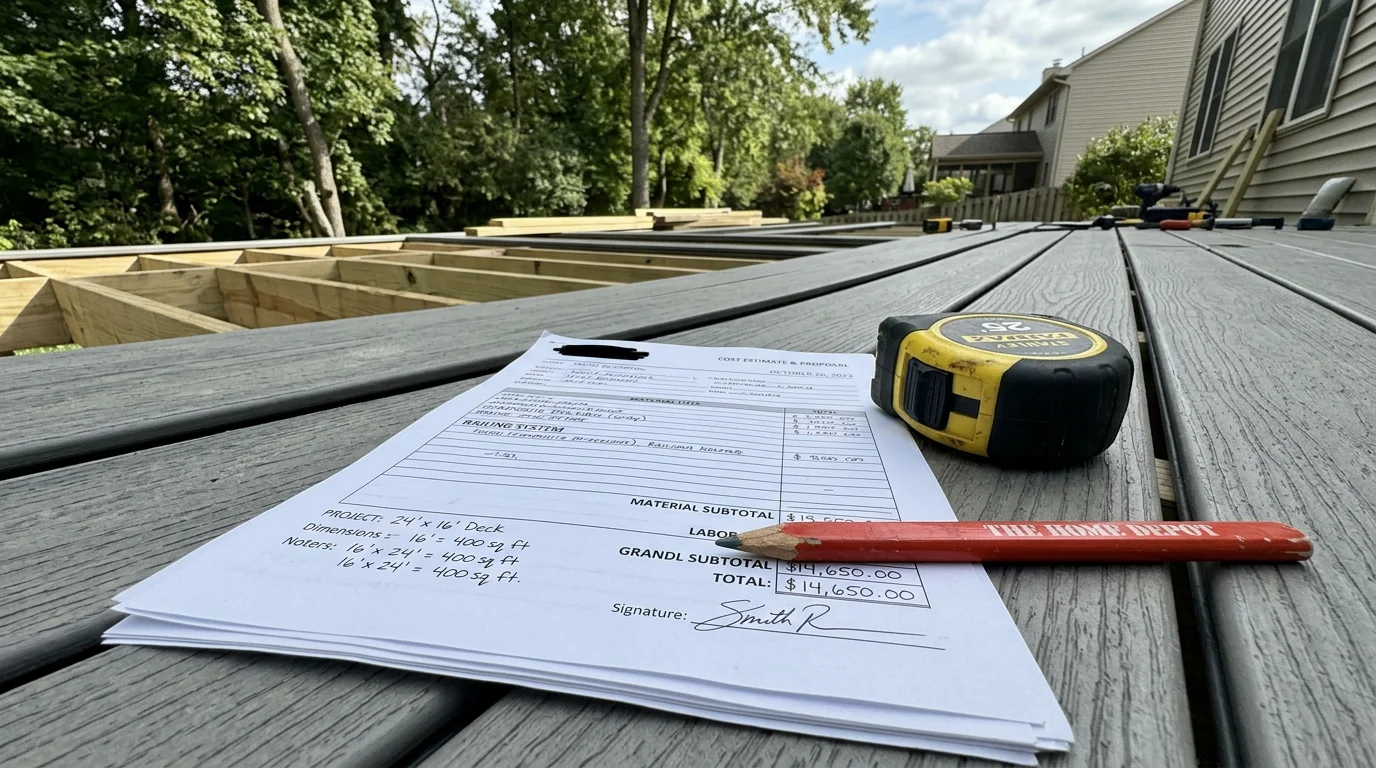
Yes, your neighbour can absolutely complain about your deck in Ontario—and depending on what's wrong, the municipality can force you to modify it or tear it down.
Neighbour complaints typically fall into three categories: building code violations (unpermitted work, unsafe construction), zoning violations (setback encroachment, height limits), and nuisance issues (privacy invasion, drainage problems). Understanding what triggers complaints and how municipalities respond can save you from costly disputes and retrofit work.
What Can Your Neighbour Legally Complain About?
Not every complaint carries legal weight. Here's what municipalities in Kitchener-Waterloo-Cambridge actually investigate:
🏗️ Planning a deck project?
Get a free manual project review, or visualize your dream deck with AI before requesting quotes.
Building Code Violations
If your deck was built without a permit or doesn't meet Ontario Building Code (OBC) requirements, your neighbour's complaint will trigger a municipal inspection. Common violations include:
- Missing or inadequate footings below the 48-inch (1.2 m) frost line
- Guardrail height under 42 inches on elevated decks
- Improper ledger board attachment to the house
- Insufficient joist spans or spacing that compromise structural integrity
- Missing or failed inspections during construction
When a building inspector confirms a violation, you'll receive a compliance order. You typically have 30-90 days to correct the issue or face fines starting at $500-1,000 per day until resolved. In extreme cases, the municipality can order demolition at your expense.
Setback and Property Line Encroachment
Every municipality in KWC has minimum setback requirements—the distance your deck must maintain from property lines. Standard setbacks:
- Kitchener: 0.6 m (2 feet) from side/rear property lines for structures under 0.6 m high; 1.2 m (4 feet) for elevated decks
- Waterloo: 0.6 m (2 feet) for ground-level decks; 1.5 m (5 feet) for decks over 0.6 m high
- Cambridge: 0.6 m (2 feet) minimum; some zones require 1.0 m (3.3 feet) or more
If your deck encroaches on the required setback, your neighbour can file a formal complaint. The municipality will measure and issue a violation notice if confirmed. Your options:
1. Apply for a minor variance ($1,500-2,500 application fee, 4-8 week process, requires neighbour notification)
2. Rebuild the deck within compliant setbacks ($8,000-15,000+ depending on size)
3. Remove the encroaching portion (partial demolition and rebuild)
Minor variances aren't automatic. If your neighbour objects at the Committee of Adjustment hearing, approval becomes less likely—especially if the encroachment significantly impacts their property use.
Learn more about local requirements: Deck Setback Rules in Kitchener-Waterloo-Cambridge
Privacy and Overlooking Issues
While Ontario doesn't have explicit "right to privacy" laws for residential outdoor spaces, municipalities can address unreasonable overlooking through nuisance bylaws or variance conditions.
If your elevated deck directly overlooks your neighbour's windows, private yard space, or hot tub area from close range, they can complain. Municipalities rarely order deck removal for privacy alone, but they may:
- Require privacy screening (lattice, frosted glass panels, plantings)
- Impose height restrictions on future additions or pergolas
- Deny permits for deck expansions that worsen the privacy impact
In practice, most privacy disputes are resolved through negotiation rather than enforcement. Adding a $400-800 privacy screen often satisfies both parties without legal intervention.
Drainage and Water Runoff
If your deck construction redirected water onto your neighbour's property or caused basement flooding, they have grounds to complain under municipal drainage bylaws.
Common deck-related drainage problems:
- Improper grading around footings that channels water toward neighbouring lots
- Roof runoff from covered decks or pergolas flowing onto adjacent property
- Blocked natural drainage paths that cause water pooling
Municipalities can order you to install proper drainage solutions like French drains, downspout extensions, or grading corrections. Costs typically range from $800-3,500 depending on complexity.
Read more: Deck Drainage and Under-Deck Water Management in Ontario
Noise and Nuisance Bylaws
Standard residential deck use—occasional gatherings, conversations, barbecues—isn't a bylaw violation. However, excessive noise during restricted hours (typically 11 PM - 7 AM in KWC) can trigger noise complaints.
Your deck itself isn't the issue; it's the activity. If bylaw officers receive repeated noise complaints tied to your deck use, you'll receive warnings and potential fines ($200-500 per offense). This doesn't result in deck modification requirements unless the deck was built specifically to facilitate commercial activity (like an illegal Airbnb patio).
What Happens When Your Neighbour Files a Complaint?
The complaint process follows a standard sequence in Kitchener-Waterloo-Cambridge:
1. Complaint submission: Your neighbour contacts municipal building or bylaw enforcement (phone, email, or online form). They don't need proof—just a credible concern.
2. Initial review: The municipality reviews the complaint and checks permit records. If no permit was issued for your deck and one was required, an inspector schedules a site visit.
3. Inspection: A building inspector or bylaw officer visits your property (with or without advance notice) to assess the complaint. They'll measure setbacks, check structural elements, and document violations.
4. Violation notice: If violations exist, you receive a written notice detailing the issues and required corrections. Timelines vary:
- Minor violations (missing railing, improper fasteners): 30-60 days
- Major violations (setback encroachment, structural failure): 60-90 days
- Immediate hazards (collapse risk): 7-14 days
5. Compliance or appeal: You can comply with the order, request an extension, or appeal to the municipal Property Standards Committee. Appeals require supporting documentation (engineering reports, survey certificates) and typically cost $500-1,500 in professional fees.
6. Enforcement: Failure to comply results in escalating fines ($500-1,000/day) and potential legal action. In extreme cases, the municipality performs the work and bills you for costs plus administrative fees (often 150-200% of actual costs).
How to Prevent Neighbour Complaints Before Building
Most complaints are preventable through proper planning and communication:
Get the Required Permits
If your deck requires a permit in Kitchener (over 0.6 m / 24 inches high), Waterloo (over 0.6 m high or attached to the house), or Cambridge (over 0.6 m high), get one before starting construction.
Permit fees in KWC range from $150-400 depending on deck size and complexity. The permit process includes plan review and inspections that catch code violations before they become complaint-worthy.
Step-by-step guides:
- Kitchener Deck Permit Application 2026
- Waterloo Deck Permit Application 2026
- Cambridge Deck Permit Application 2026
Verify Your Property Lines and Setbacks
Don't assume your fence marks the actual property line. Before finalizing your deck design:
1. Review your property survey (from your purchase documents or title insurance)
2. Measure required setbacks from the actual property lines
3. Design your deck with a buffer zone—going right to the minimum setback increases dispute risk
If your property hasn't been surveyed recently, consider a new survey ($800-1,500) before building. It's cheaper than rebuilding a non-compliant deck later.
More details: KWC Deck Zoning Setbacks: How to Check Your Property
Talk to Your Neighbours First
This sounds obvious, but proactively discussing your deck plans with adjacent neighbours prevents most disputes. Share your design, timeline, and finished height. Address their concerns before construction starts.
If your deck will be elevated and close to their property line, offer to install privacy screening as part of the original build. Spending $600-1,200 on screening upfront is vastly cheaper than dealing with complaints and forced modifications later.
Hire a Licensed Contractor with Insurance
A professional deck builder familiar with local codes and setback requirements reduces violation risk. Verify:
- Ontario builder's license or registration (not legally required but indicates professionalism)
- Liability insurance (minimum $2 million coverage)
- Recent local deck projects in KWC that passed inspection
Contractor costs range from $45-65/sqft for pressure-treated decks to $65-95/sqft for composite in the 2026 KWC market, as outlined in our Ontario deck cost guide. Cutting costs by hiring unlicensed builders often leads to code violations that neighbours will notice.
Questions to ask: Deck Quote Checklist for Kitchener-Waterloo
What If You Already Built Without a Permit?
If your deck was built without a required permit and your neighbour complains, you have limited options:
Option 1: Apply for a retroactive permit
Some municipalities allow retroactive permits if the deck meets current code requirements. You'll need:
- Professional drawings showing as-built dimensions and construction details
- Engineering report (if required) confirming structural adequacy ($800-1,500)
- Permit fees plus penalties (often 2-3x standard permit cost)
Not all municipalities offer retroactive permits. Kitchener and Cambridge are more flexible than Waterloo on this issue.
Option 2: Modify the deck to meet code
If your deck violates setbacks or height limits, you can:
- Remove sections that encroach on setbacks
- Lower the deck height below the permit threshold (0.6 m in KWC)
- Rebuild with compliant dimensions
Modification costs vary widely: $2,000-8,000 for minor changes, $8,000-15,000+ for major reconstruction.
Option 3: Apply for a minor variance
If your deck can't meet setback requirements due to lot size or house placement, apply for a minor variance through the Committee of Adjustment. Success isn't guaranteed—especially if your neighbour (the complainant) objects during the public hearing.
Variance applications cost $1,500-2,500 and take 4-8 weeks. You'll need a survey, site plan, and often neighbour consent forms.
Can You Ignore a Neighbour Complaint?
Ignoring a municipality-issued violation notice isn't an option. Ontario municipalities have broad enforcement powers under the Building Code Act and municipal bylaws.
If you don't respond to a compliance order:
1. Escalating fines start after the correction deadline ($500-1,000 per day)
2. Court summons if fines remain unpaid or violations persist
3. Municipal lien placed on your property for unpaid fines and correction costs
4. Demolition order for unsafe or severely non-compliant structures
Fines and liens attach to your property title, preventing sale or refinancing until resolved. Even if your deck was built years ago, municipalities can still order corrections when violations come to light through complaints.
When Neighbour Complaints Are Unfounded
Not every complaint results in enforcement action. If your deck:
- Has proper permits and passed inspections
- Meets setback requirements (confirmed by survey)
- Complies with OBC structural and safety standards
- Doesn't create drainage or nuisance issues
...then your neighbour's complaint will be dismissed after municipal review. Inspectors close complaints with no violations found.
Keep records of your permit approvals, inspection certificates, and contractor invoices. If a complaint is filed, this documentation proves compliance immediately.
Property Value and Resale Implications
Neighbour disputes over decks can impact your home's marketability. If you're selling:
- Undisclosed unpermitted work must be revealed to buyers (Ontario's disclosure requirements)
- Active bylaw complaints appear in municipal records buyers' lawyers review
- Outstanding compliance orders must be resolved before closing or deducted from sale price
Buyers often walk away from properties with unresolved deck violations. Expect to either fix the issues before listing or accept $10,000-30,000 price reductions depending on the severity.
Conversely, a properly permitted, code-compliant deck with no neighbour disputes adds value: typically 50-80% of construction cost for composite decks in good condition.
Working with Difficult Neighbours
Some neighbour complaints stem from personal conflicts rather than legitimate code violations. If your neighbour is complaining despite your deck being fully compliant:
Document everything: Keep records of all communications, permit approvals, inspection certificates, and survey documents.
Respond professionally: Don't escalate conflicts through angry conversations or retaliatory complaints.
Involve mediators if needed: Some municipalities offer free mediation services for neighbour disputes. Cambridge provides this through their bylaw department.
Consult a lawyer: If complaints become harassment or interfere with your property use, a real estate lawyer can send a formal cease-and-desist letter ($500-800) or pursue legal remedies.
Ontario's Occupiers' Liability Act and nuisance laws protect reasonable property use. A lawyer can assess whether your neighbour's complaints cross into unreasonable interference.
🎨 Not sure which material to pick?
Upload a photo of your backyard and see exactly how Trex, TimberTech, or cedar would look — free and instant.
Common Questions
Can my neighbour stop me from building a deck in Ontario?
No—your neighbour can't prevent you from building a compliant deck on your property. However, they can object to minor variance applications if your deck violates setbacks, and they can file complaints if your deck doesn't meet building code or zoning requirements. If your deck is properly permitted and compliant, their personal objections don't carry legal weight.
How close to my neighbour's property line can I build a deck in KWC?
Standard minimums are 0.6 m (2 feet) for ground-level decks under 0.6 m high in most KWC zones, and 1.2-1.5 m (4-5 feet) for elevated decks. Waterloo typically requires 1.5 m for elevated structures. Check your specific zoning with municipal planning departments—requirements vary by zone and neighbourhood. Going right to the minimum increases complaint risk; consider adding a buffer zone.
What happens if I built a deck without a permit and my neighbour reports it?
The municipality will inspect your property and assess code compliance. If violations exist, you'll receive a compliance order requiring corrections within 30-90 days. Your options: apply for a retroactive permit (if eligible), modify the deck to meet code, apply for a minor variance, or demolish the non-compliant structure. Ignoring the order results in daily fines starting at $500-1,000 and potential legal action.
Can my neighbour complain about my deck blocking their view?
Ontario law doesn't protect residential views. Your neighbour can't force you to modify a code-compliant deck solely because it blocks their view of a park, lake, or landscape. However, if your deck violates height restrictions or setback requirements, view blockage can strengthen their complaint. Municipalities focus on code compliance, not aesthetic preferences.
Do I need my neighbour's permission to build a deck in Ontario?
No—you don't need neighbour permission to build a code-compliant deck on your property. However, you must notify adjacent neighbours if you apply for a minor variance due to setback violations. Their objections can affect variance approval. Proactively discussing your plans prevents disputes, but legal permission isn't required for compliant construction.
Upload a backyard photo and preview real decking materials with AI — free, instant, no sign-up.
Permits, costs, material comparisons, and questions to ask before requesting quotes — delivered to your inbox.