
Deck Demolition Cost in Ontario: Removal, Hauling, Dump Fees
Deck demolition in Ontario costs $500-$3,500 depending on size, materials, and access. Learn removal pricing, dump fees, and what affects your total cost.
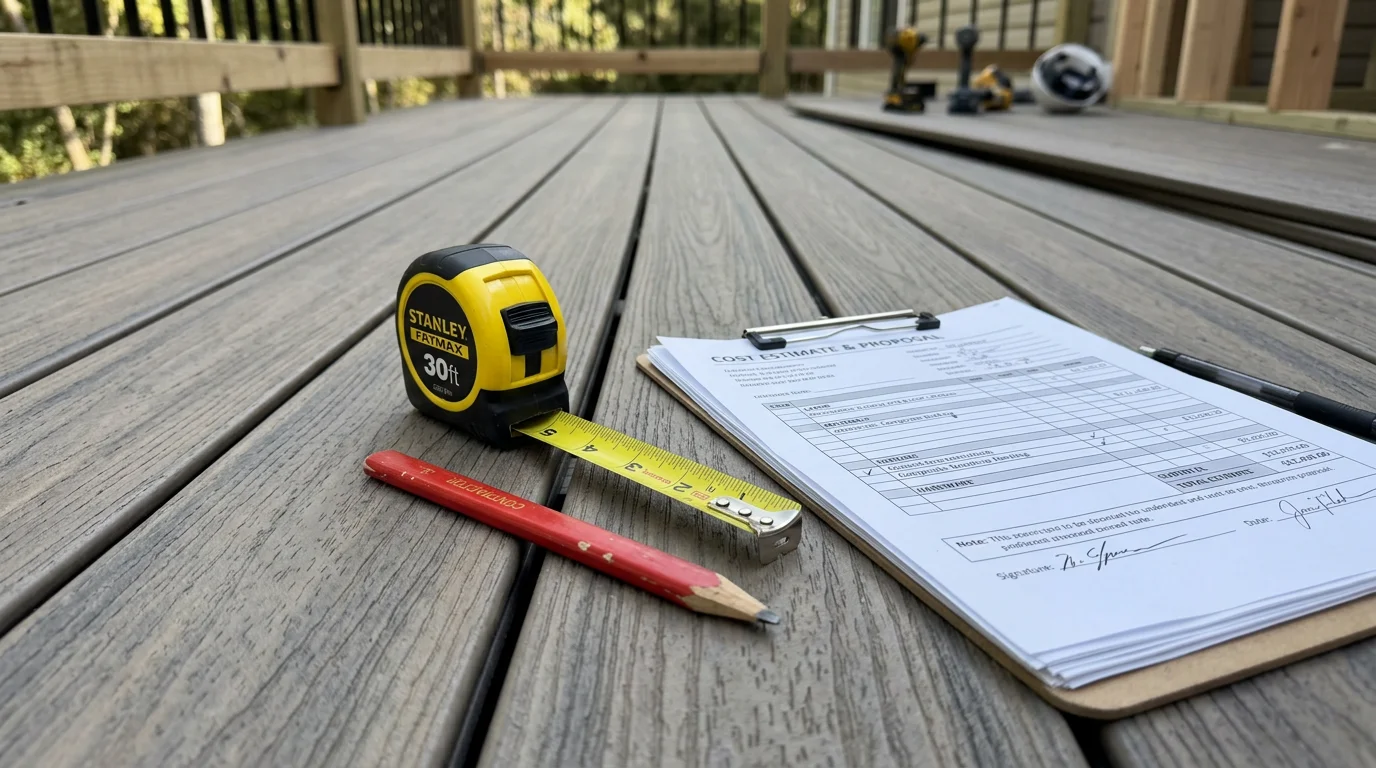
Removing an old deck isn't just about ripping out boards. You're paying for labour, hauling, disposal fees, and sometimes surprises buried under years of paint and weather damage. Here's what deck demolition actually costs in Ontario and what drives those numbers up or down. Planning a rebuild? Our complete Ontario deck cost guide covers new construction pricing.
Average Deck Demolition Cost in Ontario
Most homeowners in the KWC region pay $1,200 to $2,500 to demolish and dispose of a typical residential deck. That includes tearing out the structure, loading debris, hauling it away, and dump fees.
🏗️ Planning a deck project?
Get a free manual project review, or visualize your dream deck with AI before requesting quotes.
Cost breakdown by deck size:
- 100 sqft deck: $500-$1,200
- 200 sqft deck: $1,000-$2,000
- 300 sqft deck: $1,500-$2,800
- 400+ sqft deck: $2,200-$3,500+
These prices assume ground-level or low-elevation decks with standard access. Multi-level decks, elevated structures, or decks with built-in features (pergolas, planters, hot tub platforms) cost more.
What You're Actually Paying For
Deck demolition isn't a flat rate. You're paying for several distinct tasks:
Labour — Most contractors charge $40-$70 per hour for a 2-3 person crew. A straightforward 200 sqft deck takes 4-8 hours to demo depending on fastener type, wood condition, and how it's attached to your house.
Hauling — Getting debris from your backyard to the truck matters. If your deck is behind a fenced yard with no gate access, expect $200-$400 extra for hand-carrying material to the street.
Dump fees — Ontario landfills charge by weight. Wood waste runs $80-$120 per tonne at regional facilities. A typical 200 sqft pressure-treated deck generates 1.5-2.5 tonnes of debris. Composite decking is lighter but often costs the same to dispose of.
Disposal surcharges — Pressure-treated lumber disposed before 2004 may contain arsenic and requires special handling. Some facilities charge $150-$250 extra for treated wood disposal.
Factors That Increase Demolition Cost
Deck height and accessibility — Elevated decks require more careful disassembly to avoid injury and property damage. Second-storey decks cost 30-50% more than ground-level teardowns. Limited access (narrow side yard, no gate, landscaping in the way) adds $150-$400 in labour.
Fastener type — Decks built with screws come apart faster than nailed structures. Hidden fastener systems (common on composite decks) slow down removal. Expect demolition to take 20-40% longer on decks with ring-shank nails or lag bolts every 12 inches.
Concrete footings — Most quotes include cutting posts at grade level. If you want footings removed entirely (common when rebuilding a deck), add $50-$150 per footing for excavation and concrete disposal. Helical piles are easier to extract but still add cost.
Ledger board removal — Detaching the ledger from your house and patching siding runs $200-$500 depending on how it was flashed and whether you're exposing rot damage underneath. If the ledger was improperly installed without flashing, budget for siding repair or replacement.
Attached structures — Pergolas, privacy screens, built-in benches, and skirting all add time. Plan on $150-$400 extra for integrated features that require separate disassembly.
Hazardous materials — Lead paint on older decks (pre-1990s) requires containment and certified disposal. Asbestos in old deck coatings is rare but possible. Testing runs $200-$400, and abatement can double your demo cost.
DIY Deck Demolition: Worth It?
Tearing out your own deck saves $800-$1,800 in labour but leaves you with disposal logistics. You'll still pay dump fees, and you'll need a truck or trailer to haul debris.
What you'll need:
- Reciprocating saw or circular saw
- Pry bar and hammer
- Impact driver (for screw-fastened decks)
- Work gloves and safety glasses
- Dumpster rental or dump runs
Dumpster rental in KWC runs $350-$550 for a 10-yard bin (suitable for a 150-200 sqft deck). Larger decks need a 20-yard bin at $450-$650. Most rentals include 1-2 tonnes of weight; overage fees are $75-$100 per additional tonne.
Dump runs — If you have a truck, taking debris to the landfill yourself costs just the tipping fee ($80-$120/tonne). You'll make 3-6 trips for a typical deck depending on truck capacity.
Permit considerations — Demolition-only projects rarely require permits in Ontario, but check with your municipality. If you're rebuilding immediately, get your construction permit before starting demo so you're ready to pour footings as soon as the old deck is gone.
DIY makes sense if your deck is small (under 200 sqft), ground-level, and you have disposal access. For elevated decks or structures with rot and structural issues, hire a pro. Falling lumber from a second-storey demo isn't worth the savings.
When You Need a Structural Assessment First
If your deck is attached to your house and you're seeing sag, bounce, or visible rot, get a structural inspection before demolition. The ledger board might be compromised, and if water has been wicking into your rim joist or band board, you're looking at house repairs on top of deck removal.
Signs you need an assessment:
- Deck pulls away from the house when you push on the railing
- Soft spots on the ledger or rim joist
- Water stains on interior walls below the deck attachment point
- Rotted siding or trim around the ledger area
A structural inspection runs $300-$500 and tells you whether you're dealing with a simple demo or a larger repair project. It's cheaper to know upfront than to discover compromised framing mid-demolition.
How to Get Accurate Demolition Quotes
Most contractors will quote deck demolition over the phone if you provide measurements and photos, but an on-site visit catches variables that increase cost. Here's what to share when requesting quotes:
- Deck dimensions (length, width, height above grade)
- Material type (pressure-treated, cedar, composite)
- Fastener type (if you know it — screws, nails, hidden clips)
- Access notes (gate width, fencing, landscaping obstacles)
- Disposal preference (contractor hauls vs. you keep lumber)
Get quotes from at least three contractors. Watch for vague line items like "removal and disposal" without specifying dump fees separately. A good quote breaks out labour, hauling, and disposal so you know exactly what you're paying for.
Ask whether the quote includes site cleanup and grading. Some contractors leave the area broom-clean; others stop after hauling debris away. Clarify what "complete removal" means in their scope.
Deck Demolition and Rebuilding Together
Bundling demolition with new deck construction often saves 10-20% compared to hiring separate crews. Deck builders want the work, and they'll discount the teardown to secure the install contract.
If you're rebuilding, schedule demolition 2-3 weeks before your planned construction start date. This gives you time to assess the site, handle any ledger or footing issues, and get your permit approved. Don't demo too early — leaving your house without a deck for months exposes the ledger area to weather.
When comparing deck replacement quotes, look for line-item breakouts that show demolition separately from construction. This transparency helps you compare apples-to-apples when one contractor includes demo and another doesn't.
Salvaging and Recycling Deck Materials
Some lumber is worth keeping. Cedar decking in good condition, even if the substructure is shot, can be reused for garden beds, fencing, or small projects. Composite boards are harder to repurpose but can sometimes be resold locally.
What's worth salvaging:
- Cedar boards with no rot or deep cracks
- Composite decking in decent shape (limited resale market)
- Metal hardware (joist hangers, brackets) if not corroded
- Railing sections if modular and undamaged
What goes to the dump:
- Pressure-treated lumber (rarely reusable due to chemical treatment)
- Rotted or insect-damaged wood
- Fasteners embedded in lumber
- Concrete rubble from footings
If you're demolishing yourself and want to recycle, contact local mills or woodworking shops. Some take clean cedar or hardwood decking. Pressure-treated wood isn't accepted for recycling and must go to landfill.
Timing Your Demolition
Deck demo can happen year-round in Ontario, but spring and fall are easiest. Frozen ground in winter makes footing removal harder (if you're going that route), and summer bookings fill fast if you're hiring a contractor who also builds decks.
If you're bundling demo with construction, align your teardown with deck building season. Most builders prefer to demo in April-May and start construction immediately after permits clear.
Winter demolition works if you're only removing the structure and leaving footings in place. Snow and ice slow the process but don't stop it. Expect 10-20% longer timelines in December-February due to cold and shorter daylight hours.
🎨 Not sure which material to pick?
Upload a photo of your backyard and see exactly how Trex, TimberTech, or cedar would look — free and instant.
Common Questions
How long does deck demolition take?
Most residential decks are fully demolished in 4-10 hours depending on size and complexity. A 200 sqft ground-level deck takes a 2-person crew about half a day. Elevated or multi-level decks take 1-2 full days. If you're removing concrete footings, add another half day for excavation.
Do I need a permit to demolish a deck in Ontario?
Generally no. Demolition-only work doesn't require permits in most KWC municipalities, but verify with your local building department. If you're rebuilding immediately, you'll need a construction permit before you start — some homeowners get the permit first, then demo as the first phase of the project.
Can I leave the footings in the ground?
Yes, unless you're rebuilding and want them in different locations. Most contractors cut posts at grade level and leave concrete footings buried. Removing them costs extra ($50-$150 per footing) and is only necessary if they interfere with new construction, landscaping, or grading plans.
What if my deck has rot or structural damage?
Let your contractor know before they start. Rotted ledgers can crumble during removal, exposing damage to your house rim joist or siding. Structural issues don't increase demolition cost much, but they do increase the likelihood of surprise repairs once the deck is gone. Budget an extra $500-$1,500 as contingency if you're seeing soft spots or sag.
Should I remove the deck before getting quotes for a new one?
No. Most deck builders prefer to see the existing structure during their site visit. It helps them assess ledger attachment, footing locations, and access challenges. Get quotes for the full project — demo plus new construction — so you can compare total costs accurately.
For local pricing, see Deck Cost in Kamloops: What Homeowners Are Paying in 2026.
You may also find Deck Building Cost Breakdown: Where Your Money Goes in Ontario helpful.
Upload a backyard photo and preview real decking materials with AI — free, instant, no sign-up.
Permits, costs, material comparisons, and questions to ask before requesting quotes — delivered to your inbox.