
Best Decking Materials for Ontario's Freeze-Thaw Climate
Compare pressure-treated, composite, and cedar decking for Ontario winters. Which materials survive freeze-thaw cycles, ice, and snow best?
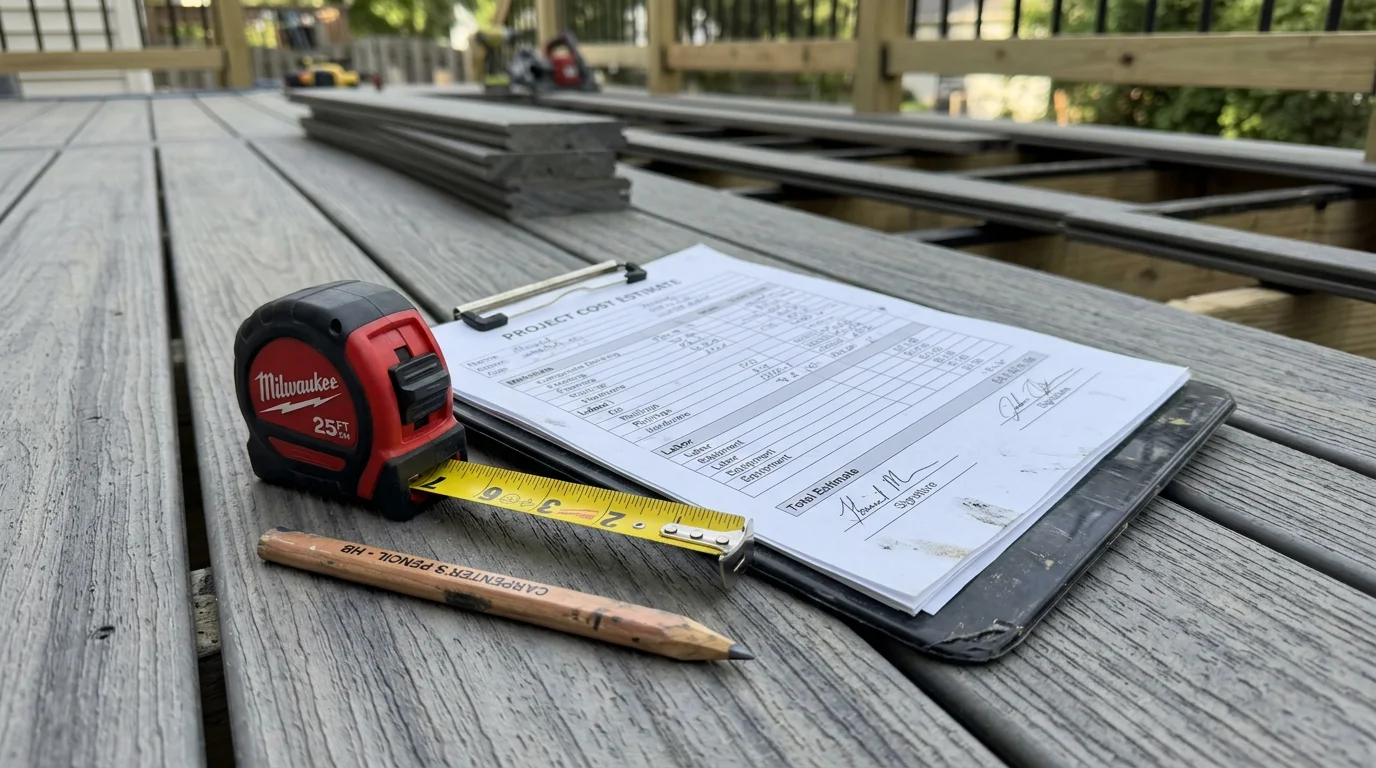
Ontario's freeze-thaw cycles are brutal on outdoor structures. Your deck can go from -25°C in January to +30°C in July, with constant moisture shifts from snow, ice, rain, and summer humidity. Add in the region's heavy clay soils that shift and heave, and you need materials that can handle serious punishment.
Not all decking materials are built for this climate. Some crack, warp, or rot within a few seasons. Others hold up for decades with minimal maintenance. Here's what actually works in KWC's climate—and what to avoid.
Why Ontario's Climate Is Hard on Decks
Freeze-thaw cycles cause water to expand and contract inside wood fibers and composite materials. When temperatures hover around 0°C in early spring and late fall, this happens repeatedly—sometimes daily. The result: cracking, splintering, and structural damage.
🏗️ Planning a deck project?
Get a free manual project review, or visualize your dream deck with AI before requesting quotes.
Ontario's clay soil adds another layer of complexity. Clay expands when wet and contracts when dry, causing footings and support posts to shift. Your deck needs to be built on proper frost-protected footings at 48 inches (1.2 m) minimum depth—but the decking material itself also needs to flex with seasonal movement without failing.
Snow load is another factor. A heavy March snowfall can add hundreds of pounds per square foot to your deck surface. Materials need to resist moisture absorption while maintaining structural integrity under weight.
Pressure-Treated Lumber: The Ontario Standard
Pressure-treated pine or spruce is the most common deck material in Ontario for good reason: it's affordable, locally available, and performs well if properly maintained.
Pros:
- Excellent freeze-thaw resistance when properly sealed
- Handles moisture without immediate rot (treated with copper-based preservatives)
- Can be repaired easily—replace individual boards as needed
- Accepts stain and sealant well for UV and moisture protection
- Installed cost: $45-65/sqft in KWC (see full Ontario deck pricing breakdown and our deck costs across Ontario guide)
Cons:
- Requires annual or biannual maintenance (cleaning, sealing, staining)
- Can warp, twist, or cup over time if not properly dried before installation
- Splinters develop as wood ages
- Color fades to grey without regular sealing
In Ontario, pressure-treated decking should be rated for ground contact (minimum 0.60 PCF retention level for deck boards, 2.5 PCF for posts and beams in ground). After installation, wait 6-12 months for the wood to dry and stabilize before applying stain or sealant. This prevents trapped moisture from causing premature rot.
For better freeze-thaw performance, choose boards with tight grain and minimal knots. Wide growth rings and large knots create weak points where water can penetrate and cause splitting.
Pressure-treated deck maintenance is critical in Ontario's climate. Skip a few seasons of sealing and you'll see accelerated wear, especially on horizontal surfaces that take the full brunt of snow and ice.
Composite Decking: Low Maintenance, High Performance
Composite decking (typically a wood-fiber and plastic blend) has become increasingly popular in Ontario for its durability and minimal upkeep. Premium brands like Trex, TimberTech, and Fiberon are engineered specifically for freeze-thaw environments.
Pros:
- No staining, sealing, or annual maintenance required
- Won't rot, splinter, or warp like wood
- Excellent moisture resistance (closed-cell formulations resist water absorption)
- 25-30 year warranties from major manufacturers
- Doesn't crack from freeze-thaw cycles when properly installed
- Installed cost: $65-95/sqft in KWC
Cons:
- Higher upfront cost than pressure-treated
- Can expand and contract with temperature swings—requires proper gapping
- Surface can get hot in direct summer sun (lighter colors stay cooler)
- Some early-generation composites had mold issues (modern formulations have improved)
- Difficult to repair—damaged boards often need full replacement
Ontario homeowners should look for capped composite decking with a plastic shell that fully encases the wood-fiber core. This prevents moisture absorption at cut ends and provides better UV protection. Brands like Trex Transcend and TimberTech AZEK Edge offer this technology.
Composite decking maintenance in Ontario is minimal but not zero. You'll still need to clean dirt, pollen, and organic debris a couple times per year to prevent surface mold. Use a deck cleaner designed for composites—never a pressure washer on high settings, which can damage the protective cap.
When installing composite in Ontario's climate, follow manufacturer gapping requirements carefully. Most brands require 3/16" to 1/4" gaps between boards to allow for thermal expansion. Deck board spacing becomes critical in freeze-thaw zones—boards installed too tight in summer will buckle when they expand in winter moisture.
For a detailed cost breakdown, see our composite deck cost guide for Waterloo.
Cedar Decking: Natural Beauty with Trade-Offs
Western Red Cedar is prized for its natural rot resistance and rich color. It's a solid mid-range option for Ontario, but requires more attention than composite and more upfront investment than pressure-treated.
Pros:
- Naturally resistant to rot and insects (contains oils that repel decay)
- Lighter weight than pressure-treated (easier to work with)
- Beautiful natural color that ages to silver-grey if left untreated
- Less prone to warping than pressure-treated pine
- Accepts stain and sealant extremely well
- Installed cost: $55-80/sqft in KWC
Cons:
- Requires regular sealing (every 2-3 years) to maintain color and water resistance
- More expensive than pressure-treated, less durable than composite
- Can develop surface cracks and checks over time
- Softer wood—more prone to dents and scratches than composites
- Limited availability—most cedar comes from BC, adding to cost
Cedar performs well in freeze-thaw conditions if you keep up with maintenance. The natural oils provide some moisture resistance, but you'll still need to apply a penetrating sealer or semi-transparent stain every few years to prevent greying and water damage.
Choose clear or "Select" grade cedar for decking—lower grades (knotty cedar) are fine for railings and trim but won't hold up as well underfoot. Look for vertical grain boards, which are more stable than flat grain.
PVC Decking: Maximum Durability, Premium Price
Pure PVC decking (brands like AZEK, Veranda) contains no wood fiber—just 100% cellular PVC. It's the most expensive option but also the most durable in harsh climates.
Pros:
- Completely impervious to moisture—zero water absorption
- Won't rot, crack, or warp from freeze-thaw cycles
- Extremely low maintenance (occasional cleaning only)
- Lifetime warranties on many products
- Excellent performance on snow and ice—no moisture penetration
- Resists mold and mildew better than wood-composite blends
Cons:
- Premium pricing: $80-110/sqft installed in KWC
- Can expand/contract more than capped composites (requires careful installation)
- Surface can get very hot in direct sun
- Limited color options compared to composites
- Feels "plastic" underfoot to some homeowners
PVC is overkill for most Ontario decks, but makes sense in specific scenarios: poolside decks (constant moisture exposure), low-maintenance vacation properties, or high-end builds where budget isn't a constraint.
What About Exotic Hardwoods?
Tropical hardwoods like Ipe, Tigerwood, and Cumaru are occasionally used for Ontario decks. They're extremely dense, naturally rot-resistant, and beautiful—but come with significant drawbacks:
- Very expensive: $90-140/sqft installed
- Difficult to work with: Requires pre-drilling, specialized fasteners, carbide saw blades
- Long lead times: Not stocked locally, must be ordered in bulk
- Environmental concerns: Harvesting practices vary widely
- Maintenance: Still requires annual oiling to prevent greying
Unless you're building a showpiece deck and money is no object, stick with composite, pressure-treated, or cedar for Ontario's climate.
Aluminum Decking: Emerging Option
Aluminum decking is gaining traction in Ontario for its extreme durability and unique benefits:
Pros:
- Completely fireproof (useful near fire pits, grills)
- Impervious to water—no rot, warping, or freeze-thaw damage
- Lightweight but strong
- Non-slip textured surface even when wet
- No maintenance required
Cons:
- Expensive: $75-100/sqft installed
- Limited availability—few local contractors experienced with it
- Gets cold underfoot in winter, hot in summer
- Industrial aesthetic may not suit traditional homes
Aluminum makes sense for rooftop decks, commercial applications, or situations where fire resistance is critical. For residential ground-level decks, composite or pressure-treated remain better value.
Material Comparison Table
| Material | Installed Cost/sqft (KWC 2026) | Freeze-Thaw Performance | Maintenance | Expected Lifespan |
|----------|-------------------------------|------------------------|-------------|-------------------|
| Pressure-Treated | $45-65 | Good with sealing | Annual sealing/staining | 15-20 years |
| Composite (capped) | $65-95 | Excellent | Minimal cleaning | 25-30 years |
| Cedar | $55-80 | Good with sealing | Seal every 2-3 years | 20-25 years |
| PVC | $80-110 | Excellent | Minimal cleaning | 30+ years |
| Exotic Hardwood | $90-140 | Excellent | Annual oiling | 25-40 years |
| Aluminum | $75-100 | Excellent | None | 40+ years |
Installation Considerations for Ontario's Climate
Material choice is only part of the equation. How you build the deck matters just as much as what you build it with.
Footing depth: Ontario Building Code requires footings below the frost line—48 inches (1.2 m) minimum. In KWC's heavy clay soil, consider helical piles for superior stability and less soil disturbance.
Joist protection: Use joist tape or membrane on top of all framing lumber. This prevents standing water from causing rot where deck boards sit on joists. In freeze-thaw climates, trapped moisture between boards and joists accelerates decay.
Ledger flashing: If your deck attaches to the house, proper ledger board flashing is critical. Ice dams and snow melt can drive water behind the ledger, rotting both the deck and house framing. Use through-wall flashing and sealant rated for freeze-thaw conditions.
Drainage: Ensure proper slope (1/8" per foot minimum) for water runoff. In Ontario's spring thaw, standing water on your deck surface will freeze overnight and cause damage. Deck drainage solutions become especially important with impermeable surfaces like composite.
Fasteners: Use hot-dipped galvanized or stainless steel fasteners rated for exterior use. Cheap screws will rust out in 5-7 years, causing boards to loosen and creating trip hazards.
For detailed structural requirements, see our guide on deck joist spans in Ontario.
Which Material Should You Choose?
If you want lowest upfront cost and don't mind maintenance: Pressure-treated lumber. Budget $45-65/sqft installed and plan on annual sealing. Best choice if you're handy and enjoy maintaining outdoor spaces.
If you want lowest total cost over 25 years: Capped composite decking. Higher upfront cost ($65-95/sqft) but minimal maintenance saves money long-term. Factor in eliminated staining, sealing, and replacement costs.
If you want natural wood aesthetics: Cedar, with proper maintenance. Expect $55-80/sqft installed and commit to sealing every 2-3 years. Choose this if you love wood's look and feel but want better durability than pressure-treated.
If you want maximum durability and don't mind premium pricing: PVC or aluminum. These materials will outlast everything else but cost $80-110/sqft.
For most Ontario homeowners, capped composite decking offers the best balance of performance, longevity, and total cost. Brands like Trex, TimberTech, and Fiberon are engineered specifically for climates like ours and backed by 25-30 year warranties.
Still deciding between wood and composite? Read our detailed comparison: Composite vs. Wood Decking in Ontario.
Permit Requirements for KWC
Regardless of material choice, most decks in Kitchener, Waterloo, and Cambridge require building permits. Permit fees typically run $150-400 depending on municipality and deck size.
Inspectors will focus on footing depth, structural framing, and railing safety—not on your choice of decking material. However, using materials rated for exterior use and following manufacturer installation guidelines will help you pass inspection on the first try.
For full permit cost breakdowns, see deck permit costs in KWC.
🎨 Not sure which material to pick?
Upload a photo of your backyard and see exactly how Trex, TimberTech, or cedar would look — free and instant.
Common Questions
Does composite decking crack in Ontario winters?
Modern capped composite decking does not crack from freeze-thaw cycles when properly installed. The plastic shell prevents water absorption, and the material flexes rather than cracks under stress. Early-generation composites (pre-2010) had cracking issues, but current products from major brands are engineered for Canadian climates and backed by 25-30 year warranties that cover freeze-thaw damage.
Can I install a deck in winter in Ontario?
Yes, but with limitations. Pressure-treated and cedar installations are difficult below -10°C because wood becomes brittle and fasteners harder to drive. Composite decking should not be installed below 4°C (40°F)—the boards are too rigid and won't achieve proper spacing. Most Ontario deck guides builders work March through November. If you need winter installation, consider scheduling foundation work (footings, framing) in fall, then completing decking in early spring. Read more about optimal deck building timing in Ontario.
How long does pressure-treated decking last in Ontario?
With proper maintenance, pressure-treated decking lasts 15-20 years in Ontario's climate. Neglected pressure-treated decks can fail in 8-12 years due to rot, especially where water pools or drainage is poor. The key is annual cleaning and sealing to prevent moisture penetration. Structural framing (posts, beams, joists) typically outlasts the deck boards by 5-10 years if properly treated and protected.
Is composite decking slippery when wet or icy?
Modern composite decking has textured surfaces designed to provide traction when wet. Most brands meet slip-resistance standards for residential use. However, ice is ice—any deck surface becomes slippery with ice accumulation, whether wood or composite. The advantage of composite is that it won't absorb meltwater and refreeze as readily as wood. Use calcium chloride ice melt (not rock salt) on composite decks, and avoid metal shovels that can scratch the surface. See our guide on winter deck care in Ontario.
Do I need to seal composite decking?
No. Composite and PVC decking do not require sealing, staining, or waterproofing. The material is manufactured to resist moisture and UV damage without additional treatment. You should clean composite decks twice yearly to remove dirt, pollen, and organic debris that can cause surface mold, but no sealants are needed or recommended. Applying deck sealants to composite can actually void your warranty.
Upload a backyard photo and preview real decking materials with AI — free, instant, no sign-up.
Permits, costs, material comparisons, and questions to ask before requesting quotes — delivered to your inbox.