
Best Deck Builders in Toronto (2026)
Looking for reliable deck builders in Toronto? Learn what to look for, 2026 pricing, permit rules, and how to avoid bad contractors in the GTA.
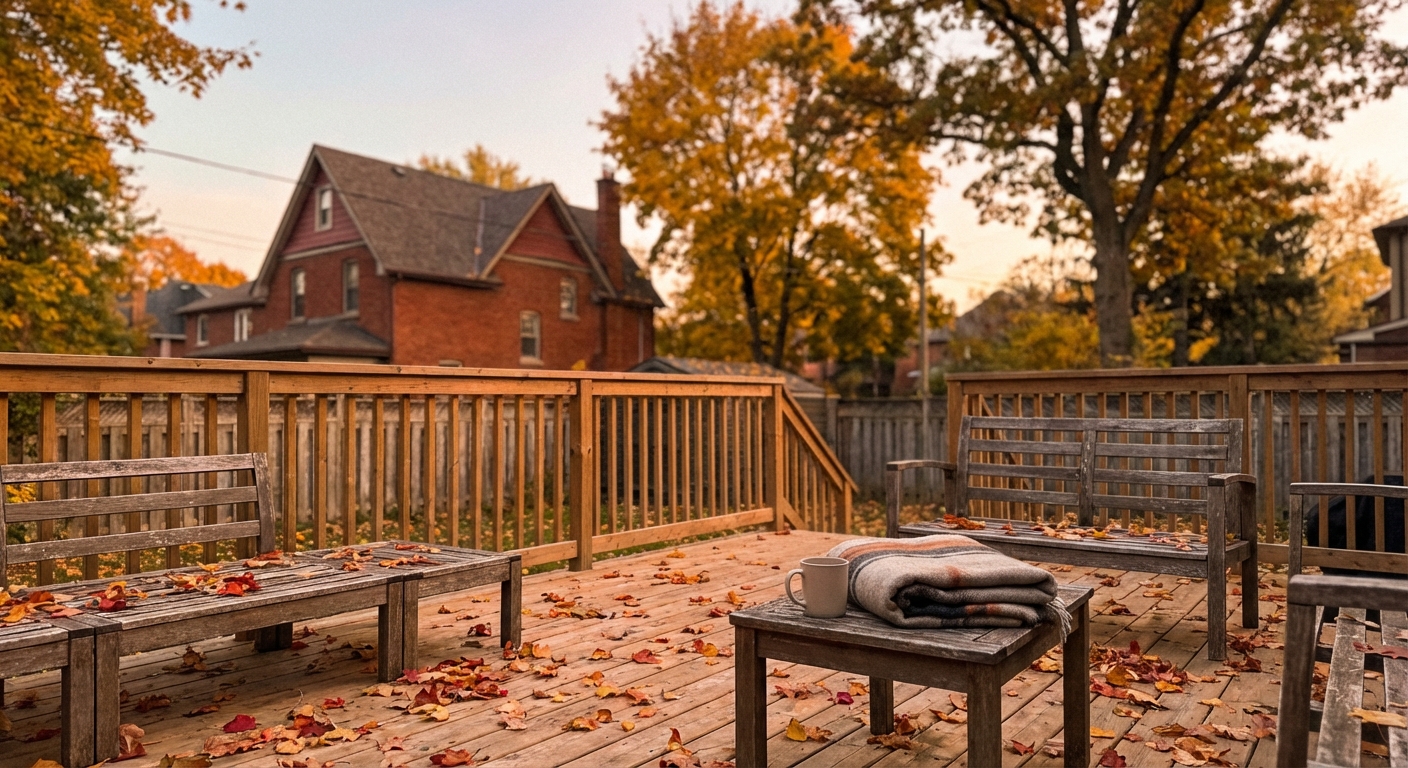
Finding a good deck builder in Toronto is harder than it should be. You post on a neighbourhood Facebook group, get twelve recommendations, and still have no idea who to trust. Some contractors ghost after the deposit. Others cut corners on footings that shift during the first freeze-thaw cycle. And with Toronto's short building season, the best crews book up months in advance.
Looking for more regional information? Check out our Ontario Decking Hub.
This guide breaks down exactly what separates a solid Toronto deck contractor from one who'll leave you with problems — plus real 2026 pricing, permit requirements, and the questions that actually matter before you sign anything.
For a broader look at deck pricing across different materials and regions, see our complete deck cost guide. Timing your build right can also save thousands — check our guide on the best time to build a deck.
What to Look for in a Toronto Deck Builder
Not every contractor who calls themselves a "deck builder" has the experience to handle Toronto's climate. Here's what actually matters when you're vetting someone.
🏗️ Planning a deck project?
Get a free manual project review, or visualize your dream deck with AI before requesting quotes.
Licensing and Insurance
In Ontario, contractors aren't required to hold a provincial licence for deck building — which means anyone with a truck and a nail gun can take your money. That makes your due diligence more important, not less.
At minimum, verify:
- WSIB (Workplace Safety and Insurance Board) coverage — protects you from liability if a worker gets injured on your property
- General liability insurance — at least $2 million, which is standard in the GTA
- A registered business — check the Ontario Business Registry to confirm they're legit
Experience With Toronto's Climate
Toronto's freeze-thaw cycles are brutal on decks. Temperatures can swing from -20°C to +5°C within a single week in January. A contractor who builds decks in milder climates won't understand the specific demands here.
Ask about their approach to:
- Frost line depth — footings in the Toronto area need to reach 48 to 60 inches below grade to get below the frost line. Anything shallower risks frost heave, which cracks concrete pads and shifts your entire deck structure.
- Snow load engineering — Toronto decks need to handle significant snow accumulation, especially second-storey walkout decks in neighbourhoods like High Park, Leaside, or the Danforth.
- Drainage and water management — standing water accelerates rot and makes composite decking dangerously slippery. Proper slope and joist flashing tape are non-negotiable.
Portfolio and References
Ask for photos of completed projects in Toronto specifically — not cottage country, not Barrie. You want to see decks that have survived at least one full winter. Better yet, ask for references from homeowners whose decks are 3+ years old. That's when poor workmanship starts showing up.
Written Contracts and Warranty
Any reputable Toronto deck builder will provide:
- A detailed written contract specifying materials, dimensions, timeline, payment schedule, and warranty terms
- A structural warranty of at least 5 years on labour and workmanship
- Manufacturer warranties passed through on decking materials (composite brands like Trex and TimberTech offer 25-year limited warranties)
Average Deck Building Costs in Toronto (2026)
Toronto deck prices are higher than much of Ontario — that's just the reality of doing business in the GTA. Labour rates are steeper, parking and access can be tricky in older neighbourhoods like the Annex or Riverdale, and material delivery to tight urban lots costs more.
Here's what you can expect to pay per square foot, fully installed, in 2026 CAD:
| Material | Cost Per Sq Ft (CAD, Installed) | Best For |
|---|---|---|
| Pressure-treated wood | $30–$55 | Budget-friendly builds |
| Cedar | $40–$65 | Natural look, moderate durability |
| Composite | $50–$85 | Low maintenance, long lifespan |
| Trex (specifically) | $55–$90 | Premium composite option |
| Ipe (hardwood) | $70–$120 | Ultra-durable, high-end finish |
What Does a Typical Toronto Deck Cost?
For a standard 12x16 deck (192 sq ft), here's what you're looking at:
- Pressure-treated: $5,760–$10,560
- Composite: $9,600–$16,320
- Trex: $10,560–$17,280
Planning a larger build? Check out detailed breakdowns for 16x20 deck costs in Ontario or 20x20 deck costs.
These ranges include footings, framing, decking, basic railing, and labour. They don't include:
- Permits (typically $300–$1,000+ in Toronto depending on scope)
- Stairs (add $1,500–$4,000 depending on height and material)
- Built-in features like benches, planters, or pergolas
- Demolition and removal of an old deck ($1,000–$3,000 for most Toronto lots)
Why Toronto Prices Run Higher
A few factors push GTA pricing above provincial averages:
- Shorter building season means contractors compress more jobs into May–October, and demand outpaces supply
- Urban lot access — narrow driveways, shared laneways, and limited staging areas slow down builds
- Soil conditions — clay-heavy soil in many Toronto neighbourhoods (Scarborough, North York, Etobicoke) requires deeper, more expensive footings
Questions to Ask Before Hiring a Deck Builder
Skip the generic "how long have you been in business?" questions. These are the ones that actually reveal whether a contractor knows what they're doing.
About Their Process
- "What's your footing method, and how deep will you go?" — The right answer for Toronto: Sono tubes or helical piles, minimum 48 inches deep. If they say "concrete pads on grade," walk away.
- "Do you pull the permit, or do I?" — A professional contractor handles the permit process. Period.
- "What joist spacing do you use?" — Standard is 16 inches on centre for most residential decks. Some composite materials require 12-inch spacing — they should know this without checking.
About Materials
- "What do you recommend for Toronto weather, and why?" — A good builder will steer you toward composite or PVC decking for low maintenance, or explain the annual sealing commitment if you prefer natural wood. They shouldn't just push whatever's cheapest.
- "Where do you source your lumber?" — Local suppliers mean they can get replacements quickly if there's an issue. It also means they have established relationships, which says something about their reputation.
Use PaperPlan to visualize different decking materials on your own home before committing — it's a lot easier to compare composite vs. cedar when you can see it on your actual house.
About the Build
- "What happens if it rains for a week?" — Toronto spring weather is unpredictable. A solid contractor has a contingency plan and communicates delays proactively.
- "Who's actually doing the work?" — Some companies sub out everything. You want to know whether the crew that shows up is the one you vetted.
- "Can I see the engineer's stamp on the structural drawings?" — Required for most permitted decks in Toronto. If they look confused by this question, that's your answer.
Red Flags to Watch Out For
Hiring the wrong deck builder can cost you thousands — or leave you with a structure that fails inspection. Watch for these warning signs.
Immediate deal-breakers:
- No written estimate — verbal quotes are worthless when disputes arise
- Asking for more than 10-15% upfront — a deposit of 10% is standard in the GTA. Anyone asking for 50% before breaking ground is a risk
- No WSIB or liability insurance — or they claim to have it but won't provide a certificate
- Pressure to skip the permit — this is a massive liability for you, not them. If they suggest building without a permit, it's a red flag about their entire approach
Subtler warning signs:
- They don't mention footings or frost line — any Toronto builder worth hiring will proactively discuss footing depth. It's the most critical part of the build in our climate.
- The quote is significantly lower than others — if one quote is 30%+ below the rest, they're either cutting corners on materials, not including permit costs, or planning to hit you with change orders
- No physical address or permanent signage — fly-by-night operations are common in the GTA contracting world
- They can't name specific material brands — "composite" isn't a brand. Trex, TimberTech, Fiberon — a real builder knows exactly what they're installing
Permits and Building Codes in Toronto
When Do You Need a Permit?
In Toronto, you need a building permit for a deck if:
- It's more than 24 inches (0.6 m) above grade at any point, OR
- It's larger than 100 square feet (about 10 sq m), OR
- It's attached to your house
In practice, most Toronto decks need a permit. Even a modest backyard deck on a walkout basement easily exceeds the 24-inch threshold.
How to Get a Deck Permit in Toronto
You'll submit your application through the City of Toronto's Building Division. Here's what you'll typically need:
- Site plan showing your lot, property lines, setbacks, and deck location
- Construction drawings — including structural details, joist sizing, footing specs, and railing heights
- Engineer's stamp for structural elements (especially elevated or cantilevered decks)
Permit fees vary based on project value, but budget $300–$1,000 for a standard residential deck. Processing time is typically 10–20 business days, though it can stretch longer during peak season.
Key Code Requirements
Toronto follows the Ontario Building Code (OBC), which mandates:
- Guard rails required on any deck surface 24 inches or more above grade
- Guard rail height: minimum 36 inches for decks, 42 inches for decks more than 1,800 mm (about 5'11") above grade
- Baluster spacing: maximum 4 inches between pickets (a 4-inch sphere cannot pass through)
- Stair requirements: consistent riser height, minimum tread depth, and a graspable handrail
- Lateral bracing — especially important for elevated decks and those in areas with higher wind exposure near the lake
For details on how permit rules differ between attached and freestanding decks, that's worth reading before you decide on your design.
Best Time to Build a Deck in Toronto
The Short Answer
Book your contractor by March. Build between May and October.
Toronto's construction season is compressed. The ground is frozen until mid-to-late April most years, and by November, conditions are unreliable at best. That gives you roughly a six-month window — and every deck builder in the GTA is fighting for the same months.
Month-by-Month Breakdown
- January–March: Research, get quotes, and sign contracts. The best builders fill their summer schedule by early spring. This is also the time to plan your timeline and finalize your design.
- April: Permits submitted, materials ordered. Ground may still be soft or frozen — not ideal for digging footings.
- May–June: Prime building time. Longest days, most consistent weather. Expect the highest demand and least flexibility on scheduling.
- July–August: Still excellent building weather, but afternoon thunderstorms can cause delays. Slightly more availability than spring since the first wave of projects is wrapping up.
- September–October: Great for building — cooler temperatures are actually easier on crews. Staining and sealing perform best in moderate weather. Smart homeowners who booked late can sometimes snag better pricing.
- November–December: Most builders avoid new starts. Winter building is technically possible but adds cost and complexity — frozen ground makes footing work difficult and expensive.
Material Timing Tip
Composite and PVC decking hold up best in Toronto's climate because they resist moisture absorption, won't crack from freeze-thaw cycling, and don't need the annual sealing that cedar or pressure-treated wood requires. If you go with natural wood, factor in an additional $200–$500 per year for stain and sealant — plus the time to do it.
🎨 Not sure which material to pick?
Upload a photo of your backyard and see exactly how Trex, TimberTech, or cedar would look — free and instant.
Frequently Asked Questions
How much does it cost to build a deck in Toronto in 2026?
A standard 200 sq ft pressure-treated deck runs $6,000–$11,000 CAD fully installed. Composite decks for the same size cost $10,000–$17,000 CAD. These include footings, framing, decking, and basic railing. Permits, stairs, and demolition of an old deck are extra. For a detailed cost breakdown, see our guide to 12x16 deck costs in Ontario.
Do I need a permit to build a deck in Toronto?
Almost certainly yes. Toronto requires a building permit for any deck that's over 24 inches above grade, larger than 100 sq ft, or attached to your house. Most residential decks meet at least one of these criteria. Contact the City of Toronto Building Division at 416-397-5330 to confirm requirements for your specific project.
How deep do deck footings need to be in Toronto?
Deck footings in Toronto must extend below the frost line, which is 48 to 60 inches depending on your specific location within the city. This prevents frost heave — where expanding frozen ground pushes your footings upward and causes the deck to shift, crack, or become uneven. Never accept a quote that specifies anything less.
What's the best decking material for Toronto's climate?
Composite and PVC decking are the top choices for Toronto. They handle freeze-thaw cycles without cracking, resist moisture absorption, and won't splinter or warp the way wood can after a harsh winter. Wood is still a viable option — cedar offers natural beauty and pressure-treated is budget-friendly — but both require annual sealing and maintenance to survive Toronto's salt, snow, and ice.
When should I start looking for a deck builder in Toronto?
Start getting quotes in January or February and aim to have a signed contract by March. Toronto's building season runs May through October, and top-rated contractors fill their schedules fast. Waiting until spring often means either settling for a less experienced builder or pushing your project to the following year.
📋 Planning a deck project?
Get a free manual project review from our team — no obligation, no spam.
Get Free Project Review →Upload a backyard photo and preview real decking materials with AI — free, instant, no sign-up.
Permits, costs, material comparisons, and questions to ask before requesting quotes — delivered to your inbox.