
Best Month to Stain Your Deck in Ontario
When should you stain your deck in Ontario? May and September deliver ideal conditions. Temperature, humidity, and weather windows explained.
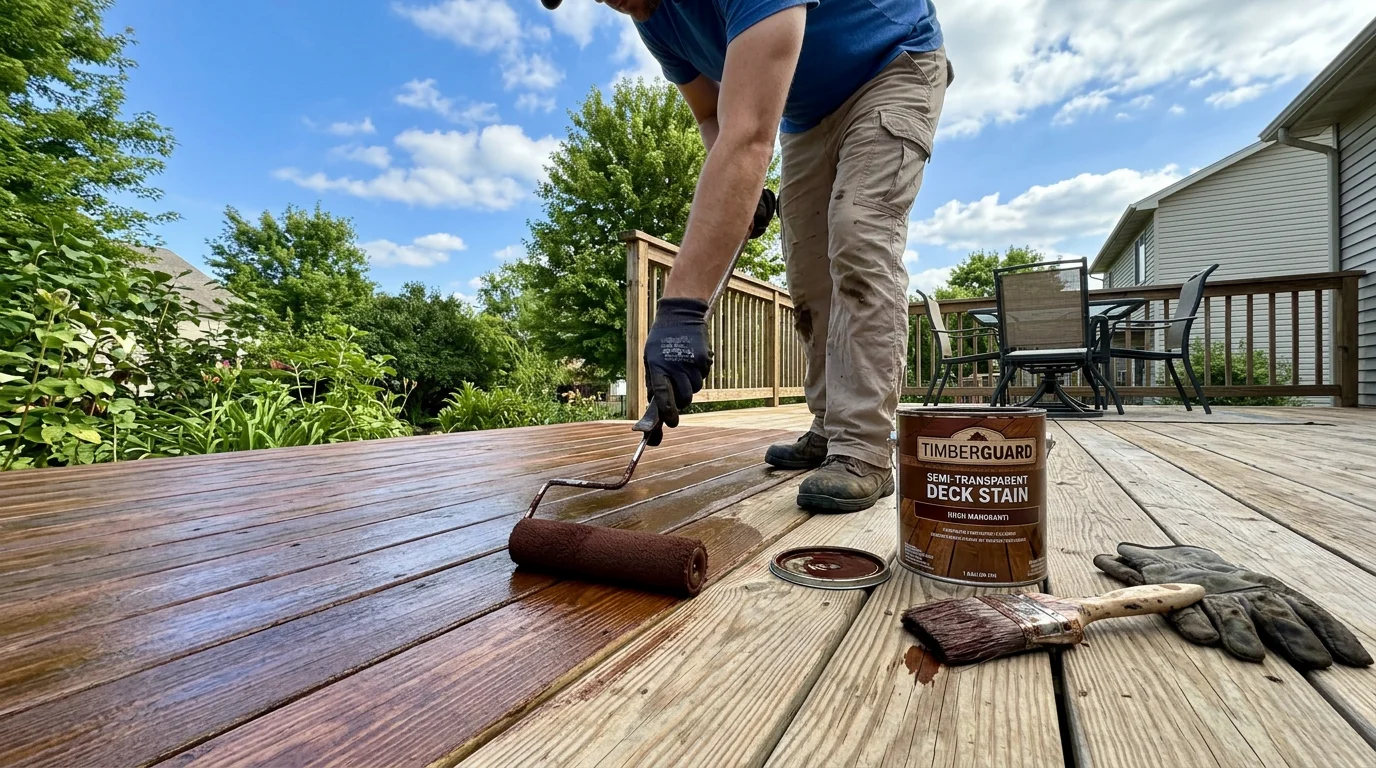
You want your deck stain to last. That means applying it when Ontario's weather cooperates—not when you happen to have a free weekend.
May and September are the best months to stain your deck in Ontario. Both offer the stable temperatures, moderate humidity, and predictable weather windows that stain needs to cure properly. June through August can work, but you'll fight high humidity and sudden thunderstorms. April and October are risky—nighttime temperatures often drop below the minimum required for most stains.
Here's how to pick the right window and avoid the most common timing mistakes.
Why Temperature Matters More Than You Think
Most deck stains require temperatures between 10°C and 30°C (50°F to 86°F) during application and for 24-48 hours afterward. Ontario's shoulder seasons hit this range consistently.
🏗️ Planning a deck project?
Get a free manual project review, or visualize your dream deck with AI before requesting quotes.
Spring Application (Late April to May)
Best window: May 15 to June 10
Spring offers rising temperatures and lower humidity than summer. Wood that survived winter is dry and ready to absorb stain. You'll also have longer daylight hours to complete the work.
Watch for:
- Nighttime lows — Even if it's 18°C at 2 PM, a 6°C overnight will ruin freshly applied stain. Check the 7-day forecast, not just today's high.
- Spring rain — May brings showers. You need 48 hours of dry weather after staining. A light rain on day three won't matter; a downpour on day one will.
Fall Application (September to Early October)
Best window: September 10 to October 5
Fall is the secret weapon. Lower pollen counts mean fewer airborne particles sticking to wet stain. Cooler temperatures slow drying, which helps stain penetrate deeper into wood fibers.
Watch for:
- Falling leaves — They'll stick to wet stain. Sweep before you start and check every hour during application.
- Shortened daylight — You lose about 3 minutes of daylight per day in September. Start early.
Summer Application (June to August)
Workable but challenging: June 15 to August 20
Summer works if you can control the variables. The wood is bone-dry, which is good. But high humidity slows drying, and direct sun can cause stain to dry too fast on the surface before penetrating.
Work around:
- Stain in shade — Follow the sun. Stain the shaded side of your deck in the morning, the sunny side after 4 PM.
- Humidity — If it feels muggy, check the forecast. You want relative humidity below 70% during application and drying.
Expect to pay $3.50-6.50/sqft for professional staining in Ontario—a recurring expense worth factoring into your overall deck investment in Ontario. DIY material costs run $1.20-2.80/sqft depending on stain quality. Summer bookings fill fast—most contractors charge their standard rates year-round, but availability drops.
Moisture Content Is the Hidden Variable
Temperature gets the attention, but moisture content determines whether stain actually bonds to your deck.
The Water Drop Test
Sprinkle water on your deck boards. If it beads up, the wood isn't ready—there's still old stain, sealant, or natural oils blocking absorption. If water soaks in within 5-10 minutes, you're good to go.
Wood needs to be below 15% moisture content for most oil-based stains. You can buy a moisture meter for $25-60 at any hardware store in Kitchener-Waterloo, or rent one for $15/day.
After Pressure Washing
If you pressure wash (which you should—it removes dirt, mildew, and failed stain), wait 48-72 hours before staining. Wood soaks up water during washing and needs time to dry out. This is why "I'll wash on Saturday and stain on Sunday" fails so often.
Spring wood dries slower than fall wood because of higher ambient humidity. In May, plan 72 hours. In September, 48 hours is usually enough if weather cooperates.
See our guide on pressure-treated deck maintenance for year-round care schedules.
What Happens When You Stain at the Wrong Time
Too Cold (Below 10°C)
Stain doesn't cure—it just sits on the surface. You'll see:
- Tacky finish that never fully dries
- Poor adhesion that peels within months
- Blotchy coverage where stain pooled instead of penetrating
Most contractors won't stain if overnight lows dip below 10°C, even if daytime temps are fine. The curing process needs sustained warmth.
Too Hot (Above 30°C)
Stain dries before it penetrates. You get:
- Lap marks where sections overlap
- Surface film that wears off quickly
- Reduced penetration into wood grain
Some high-quality stains (like Sikkens or Cabot) are formulated to handle higher temps, but they're not magic. If it's 32°C in direct sun, reschedule.
Too Humid (Above 70% RH)
Moisture in the air slows solvent evaporation. Stain takes 2-3x longer to dry, increasing the window for dust, pollen, or insects to ruin the finish.
Ontario summers regularly hit 75-85% humidity. That's why September often outperforms July for staining, even though July is warmer.
How to Pick Your Exact Staining Date
Don't just block off a weekend and hope. Work backward from weather requirements.
1. Check the 10-Day Forecast
You need:
- Day 0 (application day): 10-30°C, no rain, humidity below 70%
- Days 1-2: Same conditions, especially no rain
- Days 3-7: Ideal if dry, acceptable if light rain only
Ontario weather shifts fast. If you see a cold front or rain system approaching, postpone. A perfect forecast for Saturday can turn into 8°C and drizzle by Sunday morning.
2. Confirm Wood Moisture
Even if the forecast looks great, wet wood won't take stain. Do the water drop test 48 hours before your planned date. If water beads up, you need to strip old finish first—that's another 1-2 days of work.
3. Plan for Prep Time
Most homeowners underestimate prep. A 300 sqft deck requires:
- Pressure washing: 2-3 hours
- Drying time: 48-72 hours
- Sanding (if needed): 3-5 hours
- Staining: 4-6 hours (two coats)
That's a full week from start to finish, not a weekend project. Schedule your staining date, then work backward to set your prep dates.
4. Monitor Conditions Day-Of
Even with a solid forecast, check conditions the morning you stain:
- Temperature: Use a thermometer, not just how it "feels"
- Humidity: Weather apps show this; aim for below 65% if possible
- Wind: Light breeze is fine; strong wind kicks up dust and debris
If conditions are off, don't push it. Redoing a failed stain job costs more than rescheduling.
Regional Timing: KWC Microclimates
Kitchener-Waterloo-Cambridge sees slight variations depending on where you live.
Waterloo (north): Runs 1-2°C cooler than Cambridge in spring and fall. Add 3-5 days to your safe staining window. If Cambridge can stain May 10, wait until May 13-15 in Waterloo.
Cambridge (south): Warms up first in spring, stays warm longer in fall. You get an extra week on both ends of the season—mid-April is sometimes viable, and you can push into mid-October in warm years.
Kitchener (central): Splits the difference. Follow the May 15 and September 15 guidelines without adjustment.
All three cities share Ontario's 48-inch frost line and clay soil, which matters for deck footings but not for staining. What does matter: urban heat islands. Decks in downtown Kitchener stay 2-3°C warmer at night than rural decks outside New Hamburg, extending the safe staining window.
Stain Type Changes the Rules Slightly
Oil-Based Stain
Ideal temp range: 10-27°C
Drying time: 24-48 hours
Oil-based stains penetrate deeper and last longer (3-5 years), but they're pickier about temperature. Below 10°C, they won't cure. Above 27°C, they skin over before penetrating.
Best months: May 15-June 5, September 10-October 5
Water-Based Stain
Ideal temp range: 13-32°C
Drying time: 4-6 hours
Water-based stains tolerate heat better and dry faster, which sounds great until you realize fast drying means less penetration. They also raise wood grain, requiring light sanding between coats.
Best months: May 1-June 15, August 20-October 10
Water-based stains handle Ontario's temperature swings better, but they don't last as long—expect to restain every 2-3 years instead of 3-5.
Solid Stain vs. Semi-Transparent
Solid stains sit on the surface like thin paint. They're more forgiving with timing because penetration matters less. You can apply them in slightly cooler or warmer weather.
Semi-transparent and clear stains rely on penetration. Temperature and moisture content are critical. Stick to the ideal windows.
Most Ontario deck owners prefer semi-transparent oil-based stains—they show wood grain, last longer, and handle freeze-thaw cycles better than solid stains.
What About New vs. Old Decks?
New Pressure-Treated Decks
Wait 6-12 months before staining. Fresh pressure-treated lumber is soaked with preservatives that need to evaporate. If you stain too early, nothing will penetrate.
Build your deck in summer, let it weather through fall and winter, then stain the following May or September. Yes, this means a full year of waiting. No, there's no shortcut that works reliably.
Check when to build a deck in Ontario for new construction timelines.
Previously Stained Decks
If your deck was stained 3-5 years ago and the finish is failing (peeling, flaking, grey patches), you need to strip old stain before applying new. That adds time:
- Chemical stripper application: 2-3 hours
- Dwell time: 15-30 minutes
- Pressure washing: 2-3 hours
- Drying time: 48-72 hours
You're looking at 4-5 days before you even start staining. Plan accordingly.
Cedar and Exotic Hardwood Decks
Cedar can be stained immediately after installation if it's kiln-dried. Exotic hardwoods (ipe, cumaru) often come pre-oiled and should weather 3-6 months before staining.
Both handle temperature extremes better than pressure-treated lumber, giving you more flexibility. You can sometimes stain cedar in early April or late October if conditions cooperate.
Composite decks don't require staining, but if you're comparing materials, factor in this 3-5 year maintenance cycle when calculating total cost.
Professional vs. DIY: Does Timing Change?
Professionals: Book them for May or September. Their schedules fill 4-6 weeks in advance during peak season. If you call in April asking for a May 15 staining, you'll likely get pushed to late May or June.
Cost: $3.50-6.50/sqft including prep, stain, and two coats. A 300 sqft deck runs $1,050-1,950.
DIY: You have more flexibility because you're not fighting contractor schedules. But you also can't pivot as fast—if weather turns bad, a pro crew just moves to the next job. You're stuck redoing evenings and weekends.
DIY material cost: $1.20-2.80/sqft depending on stain brand. A 300 sqft deck needs 3-4 gallons of stain ($180-360) plus stripper, cleaner, brushes, and rollers ($50-100).
Time investment: 15-20 hours spread across 7-10 days for a 300 sqft deck.
If you're DIYing, prioritize the May window. September works too, but daylight hours shrink fast—you'll lose usable work time every day you delay.
Common Mistakes Ontario Homeowners Make
Staining Too Early in Spring
March and early April look tempting after a long winter, but overnight lows still dip to 2-5°C. Even if it hits 15°C during the day, your stain won't cure properly overnight.
Wait until May 15 unless you have seven straight days forecasted above 10°C, day and night.
Ignoring Humidity
"It's 22°C and sunny—perfect!" Not if humidity is 80%. Your stain will take twice as long to dry, and every extra hour increases the chance of dust, pollen, or bugs ruining the finish.
Check the humidity reading on your weather app. Below 65% is good. Below 50% is ideal.
Staining Right Before Rain
You saw the forecast showed rain on Thursday, so you stained on Wednesday morning. Bad move. Most stains need 24-48 hours of dry weather. A light rain 12 hours after staining will wash away stain that hasn't cured.
If rain is in the 3-day forecast, reschedule.
Not Testing a Small Section First
Stain looks different on your deck than it does on the store's sample board. Wood species, age, and sun exposure all affect final color.
Stain a hidden section (under stairs, behind a planter) and let it dry 48 hours. If you don't like it, you've wasted $15 of stain and one board. If you hate it after staining the whole deck, you've wasted $300 and a week of work.
How Weather Patterns Affect Your Timeline
Ontario's weather has shifted over the past decade. Springs are arriving earlier, but they're also wetter. Falls are lasting longer, but with more temperature swings.
What This Means for Staining
May: Still the most reliable month, but watch for multi-day rain events that weren't common 15 years ago. Have a backup date ready.
September: Increasingly stable. October used to be too cold by week two; now we regularly see staining-friendly weather into mid-October.
June-August: More humid than historical averages. If you're staining in summer, target late August over July.
Multi-Year Planning
If you're restaining every 3-5 years, keep records. Note the date you stained, weather conditions, and how long the finish lasted. Ontario's climate varies enough that "I stained in May last time" isn't enough—you need to know if it was early May or late May, and what the weather actually did.
A deck stained May 8 in a cool, dry year might last 5 years. The same stain applied May 8 in a warm, humid year might fail in 3 years.
Month-by-Month Breakdown
April
Risk level: High
Why it's risky: Nighttime lows average 2-8°C across KWC. You might get a perfect week, but odds are against you.
When it works: Late April (after the 20th) in Cambridge, if the 10-day forecast shows consistent 10°C+ lows.
May
Risk level: Low
Why it's ideal: Temps stabilize, humidity is moderate, rain is manageable.
Sweet spot: May 15-June 5. Wood is dry, temperatures are rising, and you have long daylight hours.
June
Risk level: Medium
Why it's okay: Warm enough, but humidity climbs. Thunderstorms pop up with less warning than spring rain systems.
Sweet spot: June 1-15, before peak summer humidity.
July
Risk level: Medium-High
Why it's challenging: High humidity, intense sun, unpredictable storms.
When it works: Early morning application on overcast days. Not ideal for most homeowners.
August
Risk level: Medium
Why it's better than July: Humidity starts dropping after mid-month, temps are still warm.
Sweet spot: August 20-31. You're transitioning into fall conditions without the cold-weather risk.
September
Risk level: Low
Why it's ideal: Stable temps, lower humidity, predictable weather.
Sweet spot: September 10-October 5. The best overall month for staining in Ontario.
October
Risk level: Medium-High
Why it's risky: Temps drop fast. Early October can be perfect; late October often dips below 10°C at night.
Sweet spot: October 1-10 in Cambridge, October 1-5 in Waterloo.
November-March
Risk level: Extreme
Don't do it. Temps are too low, wood is too wet, and stain won't cure. Period.
Final Timing Checklist
Before you commit to a staining date:
- [ ] 10-day forecast shows 10-30°C and no rain for 48 hours after application
- [ ] Humidity will be below 70% during application and drying
- [ ] Wood moisture content is below 15% (water drop test or moisture meter)
- [ ] Prep work is scheduled 48-72 hours before staining (if pressure washing)
- [ ] Backup date is identified in case weather changes
- [ ] Stain and supplies are purchased and ready (don't scramble day-of)
- [ ] Test section is complete and you like the color
If you can't check every box, postpone. A week's delay beats a failed stain job that costs you time, money, and another full prep cycle.
🎨 Not sure which material to pick?
Upload a photo of your backyard and see exactly how Trex, TimberTech, or cedar would look — free and instant.
Common Questions
Can I stain my deck in the winter if we get a warm week?
No. Even if temps hit 15°C for three days in January, wood moisture content is too high from snow melt and freeze-thaw cycles. Stain won't penetrate or cure reliably. Wait until May.
How long does deck stain last in Ontario's climate?
Oil-based semi-transparent stain: 3-5 years
Water-based stain: 2-3 years
Solid stain: 4-6 years, but it hides wood grain
Ontario's freeze-thaw cycles and UV exposure are hard on finishes. Decks with full southern exposure need restaining on the shorter end of these ranges. See composite deck maintenance for low-maintenance alternatives.
Should I stain before or after installing new deck railings?
After. Railings create shade and block access, making it harder to apply stain evenly. Install railings, then stain the entire deck and railings together. If your railings are already installed, stain what you can reach and accept that some spots near posts will be tricky. Check deck railing costs if you're planning a railing project.
What if it rains 24 hours after I stain?
It depends on the stain and conditions. Most oil-based stains are rain-safe after 24 hours in ideal drying conditions (low humidity, warm temps). But if humidity was high or temps were borderline, you might not be fully cured. Light rain probably won't cause major damage; heavy rain could cause spotting or blotchy areas. Water-based stains cure faster and are usually safe after 12-18 hours.
Do I need to strip old stain before restaining?
If the old stain is peeling, flaking, or forming a film, yes—strip it completely. If it's just faded but still adhering well, you can clean thoroughly and apply a new coat without stripping. Use a deck cleaner or brightener, pressure wash, let dry 48-72 hours, then restain. Mixing stain types (oil over water-based or vice versa) requires stripping.
Upload a backyard photo and preview real decking materials with AI — free, instant, no sign-up.
Permits, costs, material comparisons, and questions to ask before requesting quotes — delivered to your inbox.