
Best Deck Builders in Waterloo (2026)
Looking for reliable deck builders in Waterloo? Learn what to look for, local costs, permit rules, and the right questions to ask before hiring in 2026.
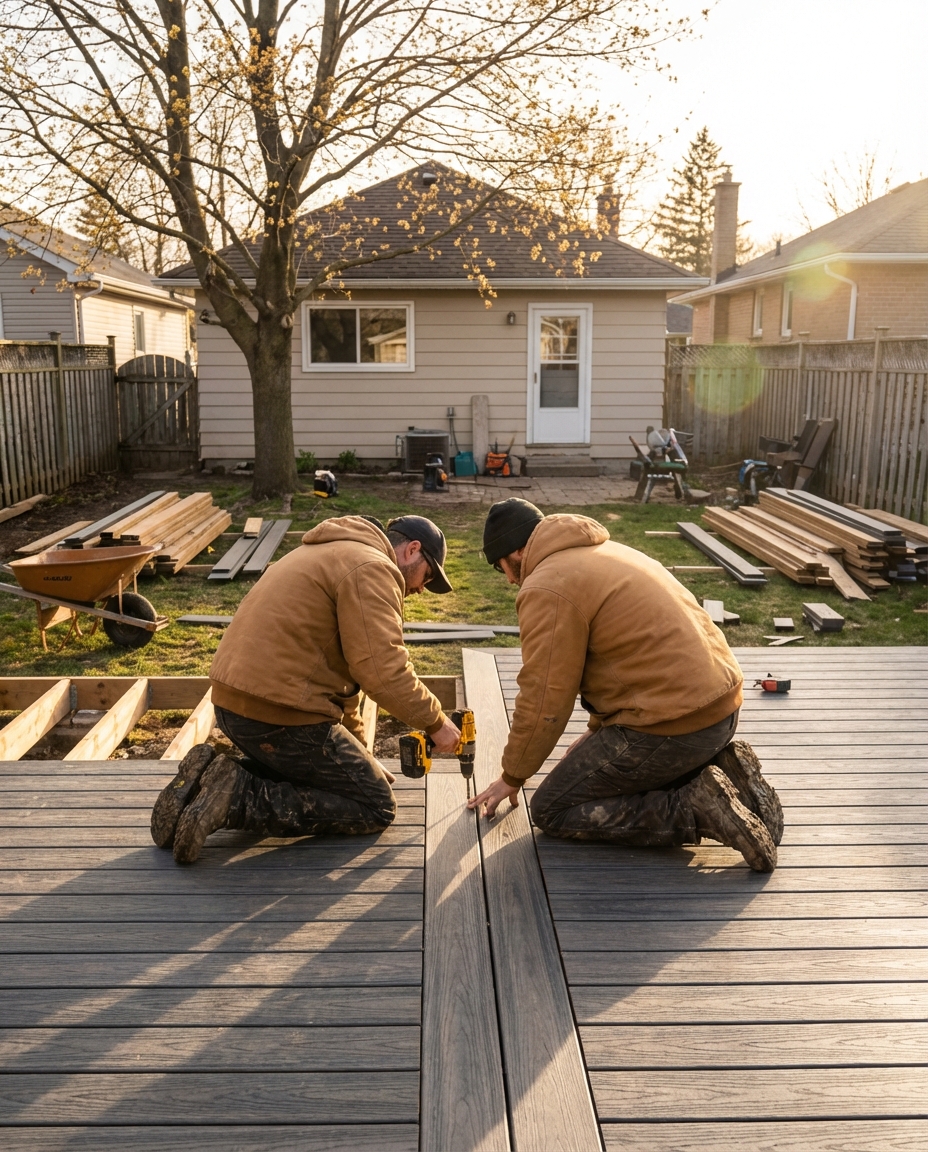
Finding a Deck Builder in Waterloo You Can Actually Trust
Hiring a deck builder in Waterloo isn't like hiring one in Vancouver or even Toronto. Your contractor needs to understand what 36 to 60 inches of frost line depth does to footings, how freeze-thaw cycles crack poorly sealed wood in a single winter, and why cutting corners on snow load capacity is a recipe for structural failure.
🏗️ Planning a deck project?
Get a free manual project review, or visualize your dream deck with AI before requesting quotes.
Looking for more regional information? Check out our Ontario Decking Hub.
The problem? Waterloo's short building season — roughly May through October — means good contractors book up fast. If you wait until spring to start looking, you may be stuck choosing from whoever's left.
This guide breaks down exactly how to evaluate deck builders in Waterloo, what you should expect to pay in 2026, and the specific questions that separate skilled local contractors from the ones who'll leave you with a sagging deck by year three.
For a broader look at deck pricing across different materials and regions, see our complete deck cost guide. Timing your build right can also save thousands — check our guide on the best time to build a deck.
What to Look for in a Waterloo Deck Builder
Not every contractor who builds decks understands Waterloo's climate demands. Here's what actually matters when you're vetting builders in the Region of Waterloo.
Proper Licensing and Insurance
At minimum, your contractor should carry:
- General liability insurance (at least $2 million)
- WSIB coverage for their crew
- A valid business license for the Region of Waterloo
Ask for proof. A legitimate contractor won't hesitate to provide certificates. If they dodge the question, move on.
Freeze-Thaw Experience
This is non-negotiable in Waterloo. Your builder should be able to explain — without prompting — how they handle:
- Footing depth below the frost line (minimum 4 feet in most of the region)
- Frost heave prevention through proper drainage and compacted gravel beds
- Joist spacing and fastener selection that accounts for expansion and contraction cycles
- Flashing and ledger board waterproofing to prevent ice dam damage where the deck meets your home
A contractor who's built decks in Kitchener-Waterloo for several years will have direct experience with these issues. Someone who mostly works in milder climates won't. For more on how local builders in the tri-city area approach these challenges, see our guide on the best deck builders in Kitchener.
Portfolio and References
Ask to see completed projects in Waterloo specifically — not just photos from other regions. Better yet, ask if you can visit a deck they built two or three winters ago. That tells you more than any fresh photo ever will.
Look for variety in their portfolio: multi-level decks, wraparounds, builds on sloped lots (common in areas like Beechwood, Lakeshore, and parts of Westmount). If they've only built simple rectangular platforms, they may struggle with your project's complexity.
Material Knowledge
A good Waterloo deck builder should have strong opinions about materials — because not everything holds up equally here. They should be able to walk you through the trade-offs between pressure-treated lumber, cedar, and composite options suited to Ontario's freeze-thaw conditions without defaulting to whatever's cheapest or whatever earns them the highest margin.
Average Deck Building Costs in Waterloo (2026)
Deck costs in Waterloo run slightly lower than Toronto but higher than many rural Ontario communities. Labour rates reflect the competitive Kitchener-Waterloo market, and material costs include delivery to the region.
Here's what you can expect to pay per square foot, fully installed, in 2026 CAD:
| Material | Cost per Sq Ft (CAD, Installed) | Best For |
|---|---|---|
| Pressure-Treated Wood | $30–$55 | Budget-friendly builds |
| Cedar | $40–$65 | Natural look, moderate durability |
| Composite | $50–$85 | Low maintenance, long lifespan |
| Trex (brand-name composite) | $55–$90 | Proven performance, strong warranty |
| Ipe (tropical hardwood) | $70–$120 | Premium, extremely durable |
What Does That Mean for a Typical Waterloo Deck?
For a standard 12x16 deck (192 sq ft), here's the total installed cost range:
- Pressure-treated: $5,760–$10,560
- Composite: $9,600–$16,320
- Trex: $10,560–$17,280
For a larger 16x20 deck (320 sq ft):
- Pressure-treated: $9,600–$17,600
- Composite: $16,000–$27,200
- Trex: $17,600–$28,800
These ranges account for standard builds with railings and basic stairs. Multi-level designs, built-in benches, pergolas, or electrical work for lighting will push costs higher. For detailed breakdowns on popular sizes, check our 12x16 deck cost guide or the 16x20 deck cost breakdown.
Why Prices Vary So Much
The spread within each material category comes down to:
- Site conditions — Sloped yards, difficult access, or the need to remove an old deck add labour
- Substructure complexity — Deeper footings (required in Waterloo) and engineered beams cost more than surface-level builds
- Railing style — Basic wood railings might add $15–$25/linear foot; glass or cable systems run $40–$80+
- Contractor demand — Prices spike in June and July when every builder in the region is booked solid
Questions to Ask Before Hiring a Deck Builder
Don't just ask for a quote and pick the cheapest number. These questions will reveal whether a contractor actually knows what they're doing in Waterloo's climate.
1. "How deep will you set the footings?"
The right answer for Waterloo: at least 4 feet below grade, below the frost line. If they say "2 feet" or "it depends," they either don't know the local code or they're planning to cut corners. Frost heave will shift your entire deck within a couple of winters.
2. "What's your approach to moisture management?"
You want to hear about:
- Proper flashing at the ledger board
- Joist tape or membrane to prevent rot
- Adequate ventilation underneath the deck
- Sloped framing for water runoff
In Waterloo, moisture isn't seasonal — between spring melt, summer rain, and fall freeze-up, your deck's substructure is under constant assault.
3. "Will you pull the permit, or do I need to?"
A reputable builder handles the permit process. If they suggest skipping it, that's a dealbreaker. More on this in the permits section below — or read about what happens when you build without a permit in Ontario.
4. "Can I see your last three projects?"
Not their best three. Their last three. This shows consistency, not cherry-picked highlights.
5. "What's included in your quote — and what isn't?"
Get clarity on:
- Demolition and removal of an existing deck
- Permit fees and engineering drawings if required
- Railings, stairs, and hardware
- Post-build cleanup
- Warranty terms — both on materials and labour
6. "What material do you recommend for my situation, and why?"
This is a test. A good builder will ask about your budget, how much maintenance you want to do, and how you plan to use the space before recommending anything. If they push a single material without asking questions, they're selling, not advising.
Use PaperPlan to visualize different decking materials on your own home before committing — it's a practical way to see how composite versus cedar will actually look against your siding and landscaping.
Red Flags to Watch Out For
Some warning signs are obvious. Others are subtle. Here's what should make you walk away.
Immediate dealbreakers:
- No written contract — Everything should be documented: scope, materials, timeline, payment schedule, warranty
- Demands full payment upfront — Standard practice is a deposit (10–30%), progress payments, and a final payment on completion
- No insurance or won't provide proof — You're personally liable if an uninsured worker gets hurt on your property
- Pressures you to skip the permit — This creates legal problems, insurance issues, and can tank your resale value
Subtler red flags:
- Quote is dramatically lower than others — If one quote is 40% below the rest, something's missing. Cheaper footings, thinner lumber, no joist tape, no flashing — the savings come from somewhere
- Vague timeline — "We'll start sometime in June" isn't a plan. You need a start date, milestone dates, and an expected completion date
- Won't specify material brands — "Composite decking" isn't specific enough. You need to know the brand, product line, and colour so you can verify pricing and warranty terms independently
- No local references — If they can't point you to a single Waterloo-area project, they're either new to the region or they've burned bridges
Permits and Building Codes in Waterloo
When Do You Need a Permit?
In the City of Waterloo, Ontario, a building permit is typically required for decks that are:
- More than 24 inches (0.6 m) above finished grade, or
- Larger than 100 square feet (10 sq m)
If your deck is attached to your house, is near a property line, or includes structural elements like a roof or pergola, you'll almost certainly need a permit regardless of size. Requirements can vary slightly — always confirm with the City of Waterloo Building Department directly.
What the Permit Process Looks Like
- Submit a site plan showing the deck's location relative to property lines, setbacks, and easements
- Provide construction drawings — including footing details, framing plans, and railing specifications
- Pay the permit fee — typically a few hundred dollars depending on project value
- Schedule inspections — usually a footing inspection before pouring concrete and a final inspection
Your contractor should manage this entire process. If they tell you permits aren't needed for your project, verify independently. The consequences of building without one — including forced removal — aren't worth the risk. For a step-by-step look at how the permit process works nearby, see our Cambridge deck permit guide.
Setback and Zoning Rules
Waterloo's zoning bylaws dictate how close your deck can be to:
- Side lot lines (commonly 1.2 m minimum)
- Rear lot lines (varies by zone)
- Easements and right-of-ways — building near an easement adds a layer of complexity
These aren't suggestions. Violating setbacks can result in stop-work orders and mandatory modifications.
Best Time to Build a Deck in Waterloo
The Building Season
Waterloo's realistic outdoor building window runs from May through October. Here's how each month stacks up:
- May–June: Ground has thawed, temperatures are workable. This is peak booking season — most contractors are already committed if you haven't booked by March.
- July–August: Warmest months, longest days. Great building weather, but expect higher demand and potentially higher prices.
- September–October: Temperatures cool but remain workable. Some contractors offer slight discounts to fill their remaining schedule. Staining and sealing are still possible into early October if temperatures stay above 10°C.
- November–April: Not recommended for most outdoor deck work. Frozen ground makes footing excavation difficult and expensive. Concrete doesn't cure properly in freezing temperatures.
When to Start Planning
If you want your deck built in summer 2026, start contacting builders in January or February. By March, the best contractors in Waterloo will have limited availability. Here's a practical timeline:
- January–February: Research contractors, request quotes, check references
- March: Sign contract, submit permit application
- April: Permit approval, materials ordered
- May–June: Construction begins
Waiting until May to start the process means you likely won't be sitting on your new deck until August or September — if you can find a good builder with availability at all.
Seasonal Material Considerations
Waterloo's climate directly affects material choices. Composite and PVC decking handle freeze-thaw cycles, snow load, and moisture far better than wood without ongoing maintenance. Pressure-treated lumber and cedar are viable, but they need annual sealing to protect against moisture absorption, salt damage, and UV degradation. If you skip a year of maintenance, Ontario winters will punish you. Our guide on the best low-maintenance decking options in Canada breaks down the long-term cost comparison.
For homeowners committed to wood, invest in a quality sealer — we've tested and reviewed the best deck sealers for Ontario conditions.
🎨 Not sure which material to pick?
Upload a photo of your backyard and see exactly how Trex, TimberTech, or cedar would look — free and instant.
Frequently Asked Questions
How much does it cost to build a deck in Waterloo in 2026?
A standard 12x16 pressure-treated deck costs roughly $5,760–$10,560 CAD installed in Waterloo. Composite decks of the same size run $9,600–$16,320 CAD. Costs vary based on site conditions, design complexity, railing choices, and whether you're replacing an existing structure. Get at least three detailed quotes from local builders to compare accurately.
Do I need a permit to build a deck in Waterloo, Ontario?
Most likely, yes. The City of Waterloo generally requires building permits for decks over 24 inches above grade or over 100 square feet. Attached decks, decks near property lines, and decks with overhead structures typically require permits regardless. Contact the City of Waterloo Building Department to confirm requirements for your specific project.
What is the best decking material for Waterloo's climate?
Composite and PVC decking are the top performers in Waterloo's freeze-thaw climate. They resist moisture absorption, won't crack from ice expansion, and don't require annual sealing. Brands like Trex, TimberTech, and Fiberon all offer products rated for Canadian winters. Pressure-treated wood and cedar work well too, but they demand consistent annual maintenance — miss a year and you'll see cracking, warping, and greying.
When should I book a deck builder in Waterloo?
Book by March if you want construction during the peak May–August window. Waterloo's short building season creates intense competition for good contractors. Starting your search in January or February gives you time to get multiple quotes, check references, and handle the permit process before ground conditions are ready for construction.
Can I build my own deck in Waterloo to save money?
You can, but it's not as simple as it sounds. You still need permits, inspections, and compliance with the Ontario Building Code. Footing depth in Waterloo must reach below the frost line — that's 4 feet or deeper — which requires proper excavation equipment. Mistakes in the substructure won't show up immediately but will cause serious problems after a few freeze-thaw cycles. Read our breakdown of building your own deck in Ontario to understand what's actually involved before committing.
📋 Planning a deck project?
Get a free manual project review from our team — no obligation, no spam.
Get Free Project Review →Upload a backyard photo and preview real decking materials with AI — free, instant, no sign-up.
Permits, costs, material comparisons, and questions to ask before requesting quotes — delivered to your inbox.