
Deck Cost in Niagara Falls (2026)
What does a deck cost in Niagara Falls? Get 2026 pricing per square foot for composite, wood, and Trex decks — plus local tips to save on your build.
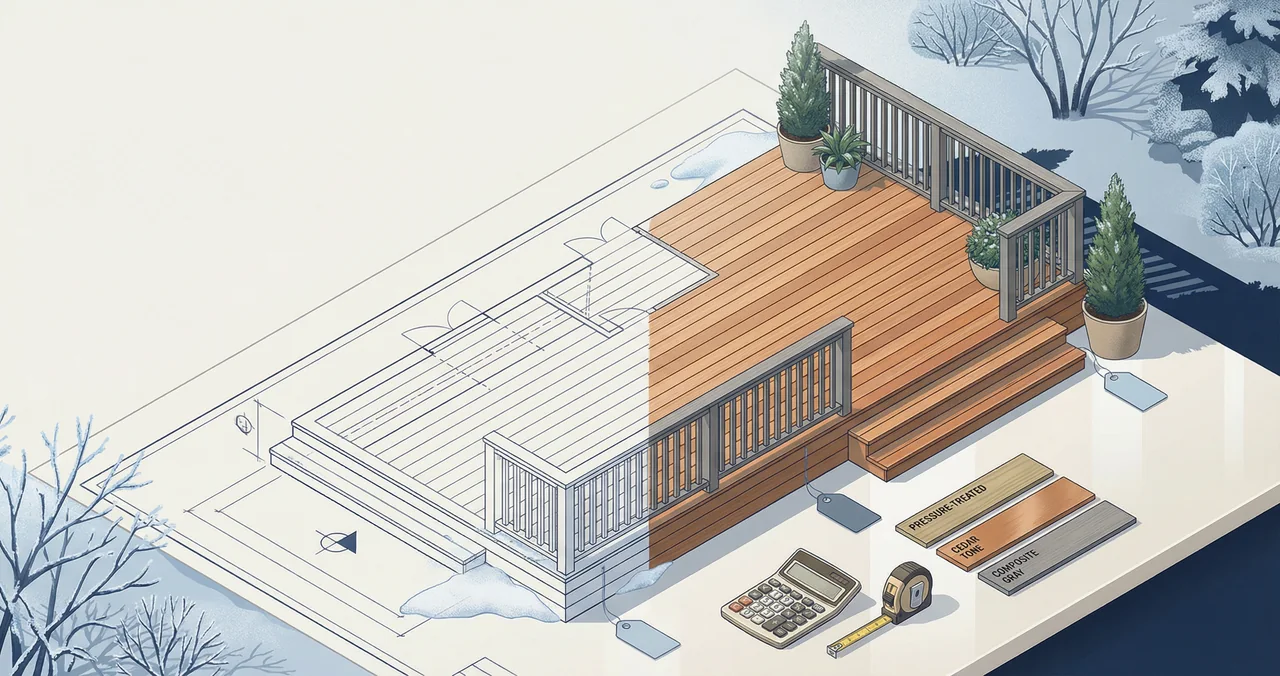
How much should you actually pay for a new deck in Niagara Falls? The short answer: most homeowners spend between $15,000 and $45,000 CAD for a standard-sized deck, fully installed. But that range is massive — and the final number depends on your material choice, deck size, site conditions, and when you book your contractor.
Niagara Falls sits in one of Ontario's toughest climate zones for outdoor structures. Freeze-thaw cycles, heavy snow loads, and moisture from the gorge and river corridor all take a toll. That means your material and construction choices matter more here than in milder parts of the province.
Looking for more regional information? Check out our Ontario Decking Hub.
Here's what Niagara Falls homeowners are actually paying in 2026 — broken down by material, size, and scope.
🧮 Tool Alert: Deck Cost Calculator
Estimate your project costs in seconds based on local pricing bands for your area.
Calculate My Cost →For a broader look at deck pricing across different materials and regions, see our complete deck cost guide.
Average Deck Cost in Niagara Falls by Material
Material is the single biggest factor in your total cost. Here's what you can expect to pay per square foot, fully installed, in the Niagara Falls area:
🏗️ Planning a deck project?
Get a free manual project review, or visualize your dream deck with AI before requesting quotes.
| Material | Installed Cost (CAD/sq ft) | Best For |
|---|---|---|
| Pressure-treated wood | $30–$55 | Budget builds, large decks |
| Cedar | $40–$65 | Natural look, moderate budgets |
| Composite | $50–$85 | Low maintenance, long-term value |
| Trex (brand-name composite) | $55–$90 | Premium aesthetics, warranty coverage |
| Ipe (tropical hardwood) | $70–$120 | Maximum durability, high-end projects |
For a typical 12x16 deck (192 sq ft), that translates to:
- Pressure-treated: $5,760–$10,560
- Cedar: $7,680–$12,480
- Composite: $9,600–$16,320
- Trex: $10,560–$17,280
- Ipe: $13,440–$23,040
These are installed prices — materials, labour, hardware, and basic railings included. Stairs, custom railings, multi-level designs, and permit fees add more. If you're planning a larger 16x20 build, expect costs to scale roughly proportionally, though you may get a slightly better per-square-foot rate on bigger projects.
Cost Per Square Foot Breakdown
Understanding what goes into that per-square-foot number helps you negotiate smarter.
Materials typically account for 40–50% of total cost. Here's a rough breakdown for a mid-range composite deck at $65/sq ft installed:
- Decking boards: $22–$30/sq ft
- Substructure (joists, beams, posts): $8–$12/sq ft
- Hardware and fasteners: $2–$4/sq ft
- Railings: $5–$10/sq ft (standard aluminum)
- Labour: $18–$25/sq ft
These numbers shift depending on your specific situation. A second-storey deck above a walkout basement costs more per square foot than a ground-level platform deck — more posts, more structural engineering, more hours.
What Size Deck Do Most Niagara Falls Homeowners Build?
The most popular sizes locally are 12x16 and 12x20. These give enough room for a dining set and a few loungers without overwhelming a standard Niagara Falls lot. Homes in the Stamford, Lundy's Lane, and Chippawa neighbourhoods often have deeper lots that can handle a 20x20 deck, but in the older areas closer to the tourist district, space is tighter.
A 12x16 deck is the sweet spot for most budgets — large enough to be functional, small enough to keep costs under control.
Labour Costs in Niagara Falls
Labour rates in Niagara Falls run $18–$30 per square foot, depending on the contractor's experience, project complexity, and timing.
A few things drive labour costs locally:
- Short building season. Niagara Falls contractors realistically build from May through October. That compressed window means demand is high during peak months (June–August), which can push labour rates up 10–15%.
- Frost line depth. Footings in the Niagara region need to reach 48–60 inches below grade to get below the frost line. Deeper footings mean more excavation, more concrete, and more hours.
- Site access. Many Niagara Falls properties — especially in established areas like the Drummond Hill neighbourhood or near Victoria Avenue — have narrow side yards. If a contractor can't get equipment to the backyard easily, expect a surcharge for manual material handling.
Book by March. Seriously. The best contractors in the Niagara region fill their spring and summer schedules by early spring. If you wait until May to start calling around, you'll either pay a premium or wait until late summer for a start date.
How to Vet Labour Quotes
Get at least three written quotes. Each should break out:
- Materials (brand and product line specified)
- Labour hours or flat labour rate
- Permit costs
- Footing/foundation work
- Demolition of existing structure (if applicable)
- Cleanup and disposal
If a quote just gives you one lump number with no breakdown, keep looking. Reputable Niagara Falls deck builders will itemize everything.
What Affects Your Total Price
Beyond material and size, several factors can push your Niagara Falls deck project higher or lower.
Deck Height and Structure
A deck that's 24 inches or more above grade requires a building permit in Niagara Falls and needs a proper structural design. Higher decks need larger posts, beams, and potentially engineered drawings — all of which add cost. A simple ground-level deck on sono tubes is far cheaper than a raised deck with stairs off the back of a split-level home.
Permits and Inspections
In Niagara Falls, Ontario, deck permits are typically required for structures over 24 inches above grade or exceeding 100 sq ft. Permit fees vary, but expect to pay $200–$500 depending on the scope. Contact the City of Niagara Falls Building Department for your specific requirements — rules can vary, and the last thing you want is a stop-work order or forced teardown.
Frost Heave and Footings
This is the big one in Niagara Falls. The freeze-thaw cycle here is relentless. If your footings aren't deep enough or aren't properly drained, frost heave will shift your entire deck structure over time. Helical piles are increasingly popular locally because they bypass the frost line issue entirely — but they add $150–$300 per pile compared to standard sono tube footings.
Railings and Stairs
Standard pressure-treated railings are the cheapest option at $15–$25 per linear foot installed. Aluminum railings run $30–$60 per linear foot, and glass panel systems can hit $80–$150+. For a deck with 40 linear feet of railing, that's a swing of $600 to $6,000 just on railings alone. Check out the best railing systems available in Canada to compare options.
Extras That Add Up
- Built-in benches: $500–$1,500
- Deck lighting: $300–$2,000 (see lighting kit options)
- Skirting: $5–$15/linear foot
- Pergola or shade structure: $3,000–$10,000+
- Hot tub reinforcement: $500–$2,000 (structural upgrade for the added weight)
Composite vs Wood: Cost Comparison
This is the decision most Niagara Falls homeowners wrestle with. Here's an honest comparison.
| Factor | Pressure-Treated Wood | Composite |
|---|---|---|
| Upfront cost (installed, per sq ft) | $30–$55 | $50–$85 |
| Annual maintenance | $200–$500 (stain/seal) | $0–$50 (occasional wash) |
| Lifespan | 15–20 years (with maintenance) | 25–30+ years |
| 10-year total cost (200 sq ft deck) | $8,000–$15,000 | $10,000–$17,000 |
| Freeze-thaw resistance | Moderate (needs sealing) | Excellent |
| Snow/ice performance | Can splinter, warp | Stays stable |
| Slip resistance when wet/icy | Moderate | Good (textured options) |
In the Niagara Falls climate, composite and PVC decking hold up significantly better than wood. Pressure-treated wood needs annual sealing against moisture and road salt (if you're near main roads that get salted heavily in winter). Skip a year of sealing and you'll see checking, warping, and greying.
The real math: a pressure-treated deck that costs $8,000 upfront but needs $400/year in maintenance costs you $12,000 over 10 years. A composite deck at $14,000 with almost zero maintenance costs you $14,000 over the same period. By year 12 or 13, composite pulls ahead financially — and it still looks good while the wood deck is showing its age.
Use PaperPlan to visualize different decking materials on your own home before committing — it's much easier to justify the composite premium when you can see exactly how it'll look against your siding and landscaping.
For a deeper dive into materials that handle Ontario winters best, read our guide on the best decking materials for freeze-thaw climates.
How to Save Money on Your Niagara Falls Deck
You don't have to cut corners to bring costs down. Smart timing and planning go a long way.
Build in the Shoulder Season
September and October builds can save you 10–20% on labour. Contractors are trying to fill their last slots before winter, and they're more willing to negotiate. The weather is still workable, and material suppliers often run fall clearance sales. Early spring (April–May) can also work, though the ground may still be soft from thaw.
Choose a Simple Design
Every corner, angle, and level change adds cost. A rectangular deck with straight runs is the most efficient shape to build. Multi-level decks with curves and built-in planters look great but can cost 30–50% more than a straightforward rectangle of the same total square footage.
Do Your Own Demo
If you're replacing an existing deck, removing the old one yourself saves $500–$2,000 in demolition and disposal costs. Rent a dumpster, grab a pry bar, and spend a weekend on it. Just make sure you don't damage the ledger board area on your house.
Compare Material Tiers
Not all composite is premium-priced. Entry-level composite lines from brands like Fiberon or MoistureShield run $50–$60/sq ft installed — significantly less than top-tier Trex Transcend or TimberTech Premium at $70–$90/sq ft. The differences are mainly in colour variation and surface texture, not durability.
Get Winter Quotes
Some contractors will quote and lock in pricing during January–March for spring builds. You get a better rate, they get a guaranteed job on their schedule. It's a win-win — and it solves the "book by March" problem at the same time.
Explore the Best Time to Build in Ontario
Timing your project right can mean the difference between a smooth build and weeks of weather delays. Our seasonal guide breaks down the pros and cons of each window.
🎨 Not sure which material to pick?
Upload a photo of your backyard and see exactly how Trex, TimberTech, or cedar would look — free and instant.
Frequently Asked Questions
How much does a 12x16 deck cost in Niagara Falls?
A 12x16 deck (192 sq ft) in Niagara Falls costs between $5,760 and $17,280 CAD installed, depending on your material. Pressure-treated wood sits at the low end, composite and Trex in the middle, and exotic hardwoods at the top. Most homeowners building a 12x16 deck in Ontario land somewhere around $10,000–$14,000 with a mid-range composite.
Do I need a permit to build a deck in Niagara Falls?
Yes, in most cases. The City of Niagara Falls requires a building permit for decks that are over 24 inches above grade or exceed 100 sq ft. Even if your deck doesn't technically require a permit, it still needs to meet Ontario Building Code requirements for structural integrity, railings, and setbacks. Getting a permit protects you — especially at resale.
What is the best decking material for Niagara Falls winters?
Composite or PVC decking handles Niagara Falls winters best. The freeze-thaw cycles, heavy snow, and moisture exposure make untreated or poorly maintained wood a liability. Composite doesn't rot, warp, or splinter, and it stands up to ice and road salt without needing annual sealing. If you prefer real wood, cedar is the better choice over pressure-treated — but plan on sealing it every year without fail. Read our comparison of the best low-maintenance decking in Canada for specific product recommendations.
When is the cheapest time to build a deck in Niagara Falls?
Late September through October offers the best pricing, since contractors are looking to fill their schedules before winter shutdown. You can also lock in lower rates by getting quotes in January–March for spring installation. Avoid booking in June or July if budget is your priority — that's peak season and rates reflect it.
How deep do deck footings need to be in Niagara Falls?
Deck footings in the Niagara Falls area need to extend 48 to 60 inches below grade to sit below the frost line. This is deeper than many parts of southern Ontario due to the region's exposure to lake-effect weather and temperature extremes. Shallow footings will shift with frost heave, causing structural damage over time. Helical piles are a popular alternative that eliminate the frost depth concern entirely.
📋 Planning a deck project?
Get a free manual project review from our team — no obligation, no spam.
Get Free Project Review →Upload a backyard photo and preview real decking materials with AI — free, instant, no sign-up.
Permits, costs, material comparisons, and questions to ask before requesting quotes — delivered to your inbox.