
Deck Cost in Sugar Land (2026)
What does a deck cost in Sugar Land in 2026? Get real pricing by material, labor rates, and money-saving tips for Sugar Land homeowners building this year.
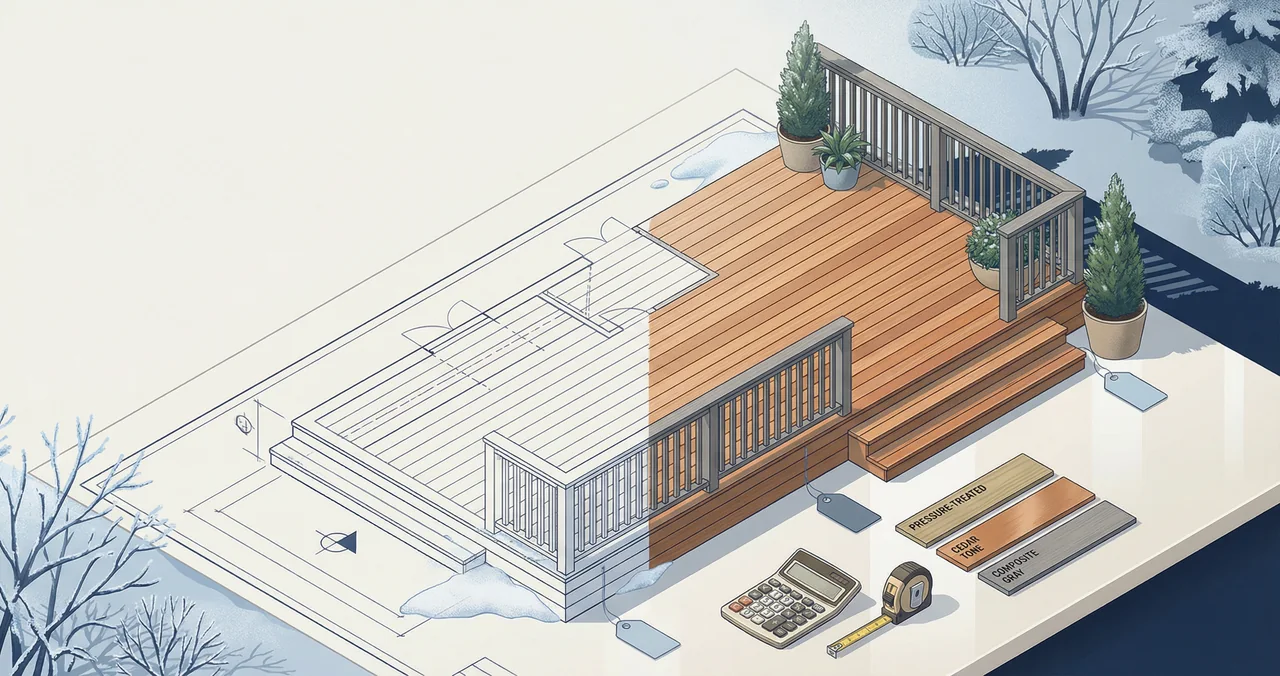
How Much Does a Deck Cost in Sugar Land Right Now?
You've been pricing out a new deck and the numbers are all over the place. One contractor quotes $8,000, another says $22,000 for what sounds like the same project. That spread isn't unusual in Sugar Land — your final cost depends heavily on the material you pick, the size of the build, and how complex the design gets.
🏗️ Planning a deck project?
Get a free manual project review, or visualize your dream deck with AI before requesting quotes.
🧮 Tool Alert: Deck Cost Calculator
Estimate your project costs in seconds based on local pricing bands for your area.
Calculate My Cost →Looking for more regional information? Check out our Texas State Decking Hub.
Here's where most Sugar Land homeowners land in 2026: a standard 300-square-foot deck runs between $7,500 and $22,500 installed, depending on material. A basic pressure-treated pine deck sits at the low end. A premium composite or hardwood deck pushes toward the top.
The good news? Sugar Land's year-round building season means contractors stay busy but available, and you often have more negotiating room than homeowners in seasonal markets up north.
<!-- slot:after-intro -->
For a broader look at deck pricing across different materials and regions, see our complete deck cost guide for Texas. Timing your build right can also save thousands — check our guide on the best time to build a deck.
Average Deck Cost in Sugar Land by Material
Material choice is the single biggest factor in your total price. Here's what Sugar Land homeowners are paying per square foot in 2026, fully installed:
| Material | Installed Cost (per sq ft) | 300 sq ft Deck | 500 sq ft Deck |
|---|---|---|---|
| Pressure-Treated Pine | $25–$45 | $7,500–$13,500 | $12,500–$22,500 |
| Cedar | $35–$55 | $10,500–$16,500 | $17,500–$27,500 |
| Composite | $45–$75 | $13,500–$22,500 | $22,500–$37,500 |
| Trex (brand-name composite) | $50–$80 | $15,000–$24,000 | $25,000–$40,000 |
| Ipe (Brazilian Hardwood) | $60–$100 | $18,000–$30,000 | $30,000–$50,000 |
A few things jump out. Pressure-treated wood is still the most popular choice in Sugar Land neighborhoods like New Territory, Telfair, and Sweetwater — it's affordable and widely available from local lumber yards. But in this climate, "affordable" comes with a catch: you'll be re-sealing every 1–2 years to fight moisture, UV damage, and mold.
Composite decking costs more upfront but eliminates most of that maintenance. For a material breakdown across different deck sizes, check out our guide to 16x20 deck costs or 20x20 deck pricing for larger builds.
Cost Per Square Foot Breakdown
That per-square-foot number includes more than just boards. Here's how the money typically breaks down:
- Decking boards: 40–50% of total cost
- Substructure (joists, beams, posts, footings): 15–20%
- Hardware and fasteners: 5–8%
- Railing system: 10–15%
- Labor: 25–35%
- Permits and inspections: 1–3%
Why Square Footage Isn't the Whole Story
A 300-square-foot deck with a simple rectangular layout costs significantly less per square foot than the same area with multiple levels, angles, or curves. Every corner, every direction change, every built-in bench adds labor time.
Stairs are another cost driver. A single set of stairs from deck to grade might add $500–$1,500. Wraparound stairs or extended staircase runs can push past $3,000.
Labor Costs in Sugar Land
Sugar Land labor rates for deck building typically run $8–$22 per square foot in 2026, depending on complexity and the contractor's experience level. That puts labor at roughly 25–35% of your total project cost.
Here's what pushes labor costs up or down:
- Simple, ground-level rectangular deck: $8–$12/sq ft labor
- Elevated deck (30+ inches) with stairs: $12–$18/sq ft labor
- Multi-level or custom design with built-ins: $15–$22/sq ft labor
The Sugar Land Contractor Market
Sugar Land sits in the greater Houston metro, which gives you access to a deep pool of deck builders. That competition generally works in your favor. Unlike northern markets where contractors pack their schedules into a five-month window, Sugar Land builders work year-round — though most homeowners and contractors prefer the October through April window to avoid working in brutal summer heat.
That said, don't choose strictly on price. In Fort Bend County, deck failures from improper footing depth or inadequate beam sizing aren't uncommon. Ask to see a contractor's recent permit history and check their standing with Sugar Land's Building/Development Services department. For guidance on finding reputable pros, our best deck builders in Houston and San Antonio guides cover what to look for in Texas contractors.
<!-- slot:mid-content -->
What Affects Your Total Price
Beyond material and size, several Sugar Land-specific factors move your number:
Deck Height and Foundation Requirements
Sugar Land's frost line depth is only 6–12 inches, which keeps footing costs lower than in northern states. But if your yard slopes — common in neighborhoods near Oyster Creek or the Brazos River — you may need taller posts and deeper footings, adding $1,000–$4,000 to your project.
Decks over 30 inches above grade require a permit in Sugar Land (as do decks over 200 square feet). They also need code-compliant railings at minimum 36 inches high, which adds material and labor cost.
Permits and Code Compliance
In Sugar Land, deck permits are typically required for structures over 200 sq ft or 30 inches above grade. Contact Sugar Land's Building/Development Services department before starting work. Permit fees usually run $200–$500 depending on project scope.
Skipping the permit is a gamble that rarely pays off. If the city flags an unpermitted structure during a future home sale or neighbor complaint, you could face fines, mandatory removal, or a forced rebuild to code. For more on why permits matter, read about the risks of building without a permit.
Climate and Weather Factors
Sugar Land's climate is hard on decks. Summer temperatures regularly hit the mid-90s with humidity above 80%. That combination accelerates:
- Mold and mildew growth on untreated or poorly sealed wood
- UV degradation — sun-facing boards can fade and crack within a single season without protection
- Termite activity — subterranean termites are a real concern in Fort Bend County
- Expansion and contraction from heat cycling, which loosens fasteners over time
If you're in a coastal-adjacent area, contractors may recommend hurricane-rated fasteners and connectors, adding modest cost but significant wind resistance.
Railings, Stairs, and Add-Ons
Common upgrades and their approximate costs:
| Feature | Estimated Cost |
|---|---|
| Wood railing (per linear ft) | $15–$30 |
| Composite railing (per linear ft) | $25–$50 |
| Cable railing (per linear ft) | $40–$70 |
| Glass railing (per linear ft) | $60–$100+ |
| Built-in bench seating | $500–$2,000 |
| Deck lighting package | $300–$1,500 |
| Pergola addition | $2,500–$8,000 |
| Under-deck storage/ceiling | $1,500–$5,000 |
In Sugar Land's heat, a pergola or shade structure isn't just decorative — it's almost essential for daytime use from May through September. Budget for it upfront rather than retrofitting later.
Composite vs Wood: Cost Comparison
This is the decision most Sugar Land homeowners wrestle with. Here's an honest comparison.
Upfront Cost
Pressure-treated wood wins on day one. For a 350-square-foot deck:
- Pressure-treated pine: $8,750–$15,750 installed
- Mid-range composite: $15,750–$26,250 installed
That's a $7,000–$10,500 gap at installation.
10-Year Cost of Ownership
Wood decks in Sugar Land's climate need annual cleaning and re-sealing every 1–2 years. Each treatment runs $300–$800 depending on deck size and product quality. Over a decade, that adds $3,000–$8,000 in maintenance costs — plus your time every spring.
Composite needs occasional soap-and-water cleaning. That's it.
Over 10 years, the total cost of ownership gap narrows to roughly $2,000–$5,000 — and composite decks typically last 25–50 years versus 10–15 years for pressure-treated wood in this climate.
The Sugar Land Verdict
If you're building your forever home in communities like Sienna, Riverstone, or Commonwealth — composite makes financial sense long-term. If you're on a tight budget or planning to sell within five years, pressure-treated wood delivers good value. Cedar splits the difference nicely: more naturally rot-resistant than pine, warmer aesthetic, but still requires periodic maintenance.
For a deeper look at the best composite decking brands and how they perform in warm, humid climates, that guide covers the major manufacturers.
How to Save Money on Your Sugar Land Deck
Real ways to reduce costs without cutting corners:
1. Build During the Off-Season (Summer)
Most Sugar Land homeowners avoid summer builds for obvious comfort reasons. That means contractors have lighter schedules from June through August. If you can tolerate the disruption and let the crew work early mornings, you may negotiate 5–15% off standard pricing.
2. Keep the Design Simple
Every angle, curve, and level change adds labor. A straightforward rectangular deck with a single staircase is the most cost-effective layout. You can always add visual interest with railing style, lighting, and furniture rather than structural complexity.
3. Use Pressure-Treated for the Substructure
Even if you want composite deck boards, the joists, beams, and posts underneath can be pressure-treated lumber. This is standard practice and saves $2–$5 per square foot versus using composite or aluminum framing. Just make sure the framing lumber is rated for ground contact where it meets footings.
4. Source Materials Yourself
Some Sugar Land contractors will reduce their labor-only rate if you purchase materials separately. This works best if you have a truck and can pick up from local suppliers. Be aware: you'll own the material warranty, not the contractor.
5. Compare at Least Three Bids
Get detailed, line-item quotes from a minimum of three contractors. Not just a bottom-line number — ask for material quantities, labor hours, and per-item pricing. This lets you compare apples to apples and spot padding.
6. Visualize Before You Commit
Use PaperPlan to visualize different decking materials on your own home before committing. Seeing composite versus wood in your specific backyard — with your siding, your landscaping, your lighting — prevents expensive regret.
7. Phase Your Project
Build the main deck platform now. Add the pergola, built-in planters, or fire pit area next year. Phasing spreads the financial hit and lets you live with the space before committing to extras.
<!-- slot:before-faq -->
🎨 Not sure which material to pick?
Upload a photo of your backyard and see exactly how Trex, TimberTech, or cedar would look — free and instant.
Frequently Asked Questions
How much does a 12x16 deck cost in Sugar Land?
A 12x16 deck (192 sq ft) in Sugar Land runs approximately $4,800–$8,640 in pressure-treated wood or $8,640–$14,400 in composite, fully installed. Since this size falls under 200 square feet, you may not need a permit — but confirm with Sugar Land's building department, especially if the deck will be elevated. For detailed pricing on this popular size, see our 12x16 deck cost breakdown.
Do I need a permit to build a deck in Sugar Land?
Yes, in most cases. Sugar Land typically requires permits for decks exceeding 200 square feet or 30 inches above grade. Even smaller decks may need a permit depending on placement relative to property lines and easements. Contact Sugar Land's Building/Development Services department before starting. The permit process usually takes 1–3 weeks and costs $200–$500.
What is the best decking material for Sugar Land's climate?
Composite decking is the top performer in Sugar Land's hot, humid environment. It resists moisture, won't rot, doesn't attract termites, and holds up under intense UV with minimal fading (especially capped composite products). Pressure-treated pine works on a budget but demands consistent sealing. Cedar is a solid middle ground. Ipe is nearly indestructible but expensive. Whatever you choose, avoid untreated softwoods — they'll deteriorate within a few seasons here.
How long does it take to build a deck in Sugar Land?
Most residential decks in Sugar Land take 1–3 weeks from the start of construction, assuming permits are already secured. A simple ground-level, 200-square-foot pressure-treated deck might finish in 3–5 days. A larger composite deck with multiple levels, stairs, and a pergola could take 3–4 weeks. Permit approval adds 1–3 weeks to the front end of your timeline.
Is it cheaper to build a deck or a patio in Sugar Land?
A basic concrete patio typically costs $6–$15 per square foot — significantly less than even the most affordable deck option. But patios don't work well on sloped lots, can't be elevated, and offer less design flexibility. Decks also tend to return more at resale in Sugar Land's market. The right choice depends on your yard's grade, your budget, and how you plan to use the space.
<!-- slot:end -->
📋 Planning a deck project?
Get a free manual project review from our team — no obligation, no spam.
Get Free Project Review →Upload a backyard photo and preview real decking materials with AI — free, instant, no sign-up.
Permits, costs, material comparisons, and questions to ask before requesting quotes — delivered to your inbox.