
Deck Permits in Buffalo (2026)
Need a deck permit in Buffalo? Learn requirements, fees, building codes, setback rules, and how to apply. Updated for 2026 with local costs and timelines.
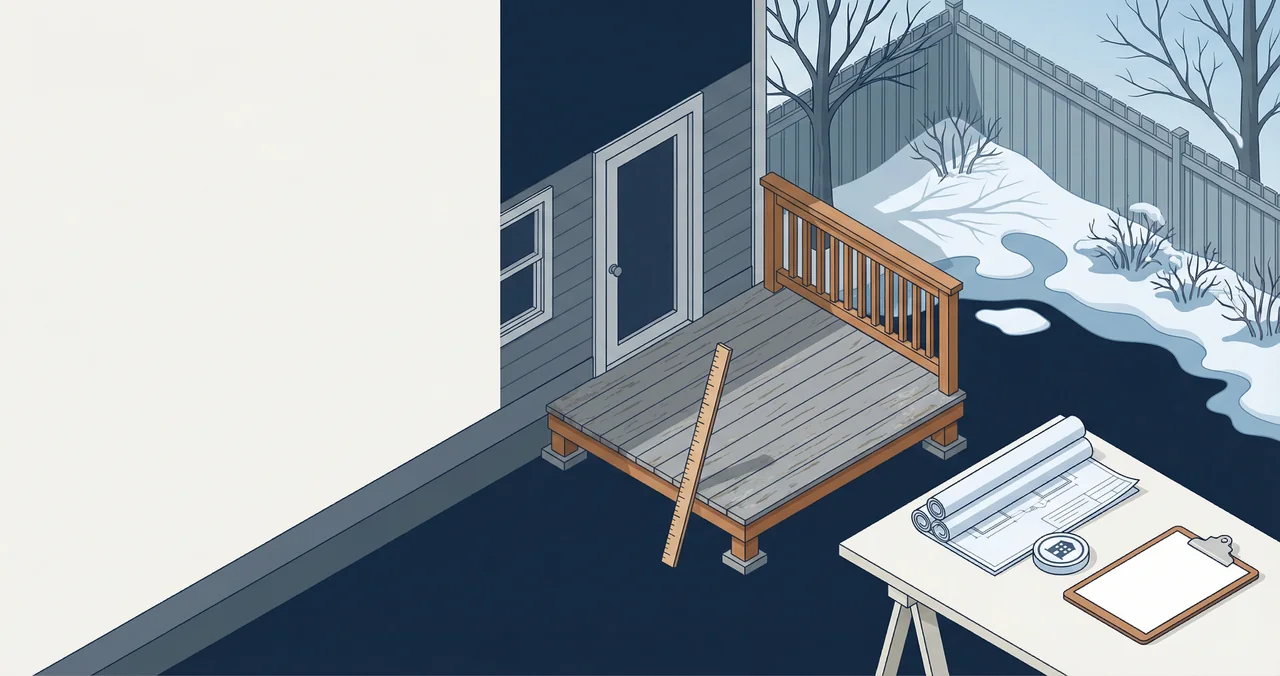
If you're planning to build a deck in Buffalo, the permit question is probably one of the first things on your mind — and for good reason. Skip this step, and you could face fines, forced removal, or serious headaches when you try to sell your home. Here's exactly what Buffalo requires, what it costs, and how to get through the process without delays.
📋 Tool Alert: Permit Checker
Do you really need a permit? Check the exact rules for your city or township.
Check Permits →Do You Need a Deck Permit in Buffalo?
Yes, in most cases. The City of Buffalo requires a building permit for decks that are over 200 square feet or more than 30 inches above grade. That 30-inch threshold catches most homeowners off guard — once you factor in a sloped yard or a raised foundation (common in neighborhoods like Elmwood Village, North Park, and South Buffalo), you're often above that line before you realize it.
🏗️ Planning a deck project?
Get a free manual project review, or visualize your dream deck with AI before requesting quotes.
Even if your deck falls below both thresholds, you still need to comply with zoning setback requirements. And if your deck is attached to the house, Buffalo's Building/Development Services department will almost always require a permit because the connection affects your home's structural integrity.
Quick rule of thumb: If your deck is anything more than a small, ground-level platform, assume you need a permit.
<!-- slot:after-intro -->
When a Permit Is Required
Buffalo follows the New York State Residential Code, with local amendments. Here's when you definitely need a permit:
- Deck surface area exceeds 200 square feet (a modest 10×20 deck already hits this)
- Any part of the deck is more than 30 inches above grade
- The deck is attached to your home's structure
- You're adding a roof, pergola, or screened enclosure over the deck
- The project involves electrical work (outlets, lighting circuits, hot tub wiring)
- You're building near a property line and need a zoning variance
When You Might Not Need a Permit
A permit is generally not required for:
- Freestanding, ground-level decks under 200 square feet that sit less than 30 inches above grade
- Basic repairs or board replacements that don't alter the deck's structure or footprint
- Cosmetic work like staining, sealing, or adding furniture
Even for "no permit needed" projects, call Buffalo's Department of Permit and Inspection Services at (716) 851-4925 to confirm. A five-minute phone call beats a code violation notice.
Permit Fees & Processing Time
Buffalo's permit fees are based on the estimated construction cost of your project. Here's what to expect in 2026:
| Project Cost | Approximate Permit Fee |
|---|---|
| Under $5,000 | $50–$75 |
| $5,000–$15,000 | $100–$200 |
| $15,000–$50,000 | $200–$400 |
| Over $50,000 | $400+ (scaled by project value) |
A few things to keep in mind:
- Plan review fees may be charged separately, typically $25–$75
- Zoning review fees apply if your project needs a variance
- Fees are non-refundable, even if your application is denied
How Long Does It Take?
Standard residential deck permits in Buffalo typically take 2–4 weeks for review and approval. During peak building season (May through August), expect the longer end of that range. Complex projects requiring zoning variances or designs that deviate from prescriptive code can take 6–8 weeks or more.
Buffalo's building season is short. With reliable construction weather running roughly May through October, you want your permit in hand before contractors get booked up. Submit your application by late February or March to stay ahead of the rush. Waiting until May means you might not break ground until July — and that's a tight timeline before Buffalo's first freeze.
Building Codes & Setback Rules
Buffalo enforces the New York State Residential Code alongside local zoning ordinances. These aren't suggestions — they're the minimum your deck must meet to pass inspection.
Structural Requirements
- Frost line depth: Footings must extend at least 42 inches below grade in Buffalo. This is non-negotiable. Buffalo's freeze-thaw cycles will heave shallow footings right out of the ground, cracking your deck structure within a year or two. Some areas of Western New York require depths up to 48 inches depending on soil conditions.
- Snow load rating: Your deck must be engineered for a ground snow load of 50 psf (pounds per square foot) or more per local requirements. Buffalo averages over 90 inches of snow annually — your deck needs to handle the weight.
- Ledger board attachment: If your deck attaches to the house, the ledger must be lag-bolted or through-bolted into the rim joist with proper flashing. This is the single most common point of failure in deck construction, and inspectors in Buffalo scrutinize it closely.
- Joist sizing and spacing: Typically 2×8 or 2×10 joists at 16 inches on center for most residential decks, though your specific span tables may require larger lumber.
Setback and Zoning Rules
- Side yard setback: Typically 3–5 feet from the property line, depending on your zoning district
- Rear yard setback: Usually minimum 5 feet, but verify with your specific lot's zoning classification
- Lot coverage: Your deck counts toward your lot's maximum impervious surface coverage. In many Buffalo residential zones, this is 35–40% of your lot area
- Height restrictions: Deck railings and any overhead structures must comply with your zone's maximum height allowance
Railing and Safety Codes
- Railings are required on any deck surface 30 inches or more above grade
- Minimum railing height: 36 inches (42 inches for areas more than 30 inches above grade, per current NYS code)
- Baluster spacing: No more than 4 inches between balusters (the "4-inch sphere rule")
- Stair requirements: Risers no taller than 7¾ inches, treads at least 10 inches deep, with a graspable handrail on at least one side
For a deeper look at how freeze-thaw cycles affect your material choices, check out the best decking materials for freeze-thaw climates. The principles apply directly to Buffalo's climate.
<!-- slot:mid-content -->
How to Apply for a Deck Permit in Buffalo
The application process is straightforward, but incomplete submissions are the number-one cause of delays. Here's how to get it right the first time.
Step 1: Gather Your Documents
Before you visit or submit online, prepare:
- A completed building permit application (available from Buffalo's Department of Permit and Inspection Services or their website)
- A site plan showing your property boundaries, the house footprint, the proposed deck location, and distances to all property lines. This doesn't need to be professionally drafted, but it must be to scale and clearly labeled.
- Construction drawings including a framing plan, footing details, cross-section views, and materials specifications. Many contractors provide these as part of their proposal.
- Proof of property ownership or written authorization from the property owner
- Contractor information including their New York State license and insurance certificates (if you're not doing it yourself)
Step 2: Submit Your Application
You can submit your permit application to:
City of Buffalo — Department of Permit and Inspection Services
65 Niagara Square, Room 101
Buffalo, NY 14202
Some applications can be initiated online through the city's permitting portal. Call ahead to confirm which submission method works for your project type.
Step 3: Plan Review
A plans examiner will review your submission for compliance with the NYS Residential Code and Buffalo's local zoning. If anything's missing or doesn't meet code, you'll receive a correction notice. Respond promptly — delays here can push your project into mid-summer.
Step 4: Receive Your Permit and Schedule Inspections
Once approved, you'll receive your building permit. Post it visibly at the job site — this is required by law.
Buffalo typically requires two inspections for deck construction:
1. Footing/foundation inspection — before pouring concrete or backfilling. The inspector verifies depth, diameter, and soil conditions.
2. Final inspection — after the deck is complete. The inspector checks structural connections, railing heights, baluster spacing, stair dimensions, and overall compliance.
Some projects may require additional inspections (electrical, for example, if you're wiring outlets or lighting). Your permit will specify exactly which inspections are needed.
Tips to Avoid Delays
- Double-check your setback measurements. Even a 6-inch error can trigger a redesign.
- Include material specifications. Don't just write "composite decking" — specify the brand, profile, and span rating.
- Get your survey if needed. If you're building close to a property line, the city may require a recent survey. Budget $300–$600 for this.
If you're considering doing it yourself, understand what's involved in building your own deck — the permit process is the same whether you hire a contractor or DIY.
What Happens If You Build Without a Permit
It's tempting to skip the permit process, especially for what seems like a simple project. Don't.
The consequences in Buffalo are real:
- Stop-work orders: The city can shut down your project immediately.
- Fines: Violations can result in fines of $250–$1,000 per day the violation continues.
- Forced removal: In serious cases, the city can require you to tear down the unpermitted structure at your expense.
- Insurance problems: Your homeowner's insurance may deny claims for injuries or damage related to an unpermitted deck.
- Sale complications: When you sell your home, the buyer's inspector and lender will flag unpermitted work. This can kill deals, reduce your sale price, or force you into retroactive permitting — which costs more and isn't guaranteed to be approved.
A retroactive permit (applying after the fact) is possible in some cases but involves higher fees, potentially opening up walls or deck surfaces for inspection, and no guarantee of approval. Read more about the risks of building without a permit — the financial exposure is significant.
Bottom line: The permit costs a few hundred dollars. Skipping it can cost thousands.
Choosing the Right Deck Material for Buffalo
Buffalo's climate is one of the harshest in the Northeast for outdoor structures. Your material choice matters more here than in milder regions.
| Material | Installed Cost (per sq ft) | Durability in Buffalo | Maintenance |
|---|---|---|---|
| Pressure-treated wood | $25–$45 | Good with annual maintenance | Stain/seal every 1–2 years |
| Cedar | $35–$55 | Good, naturally rot-resistant | Seal every 1–2 years |
| Composite (Trex, TimberTech) | $45–$75 | Excellent | Occasional cleaning |
| Trex (premium lines) | $50–$80 | Excellent | Minimal |
| PVC | $50–$80 | Excellent | Minimal |
| Ipe (hardwood) | $60–$100 | Outstanding | Annual oiling optional |
Composite and PVC hold up best in Buffalo's freeze-thaw environment. Wood decks need annual sealing to resist moisture penetration and road salt tracked onto the surface — skip a year, and you'll see cracking and splintering by the next spring.
Use PaperPlan to visualize different decking materials on your own home before committing — it's a useful way to see how composite vs. wood actually looks against your siding and yard before you spend a dime.
For a breakdown of what composite costs look like on a full-size project, see composite deck builders in Buffalo for local pricing.
Planning Your Buffalo Deck Project: Timeline
Given the short building season, here's a realistic timeline for a permitted deck build in Buffalo:
- January–February: Research materials, get contractor quotes, finalize design
- March: Submit permit application, book your contractor (schedules fill fast in Buffalo — waiting until spring is too late)
- April: Permit approval, materials ordering
- May–June: Construction begins
- July–October: Buffer window for delays, inspections, finishing touches
If you're weighing an attached vs. freestanding deck, the permit requirements differ — freestanding decks under the thresholds may save you time and paperwork.
Planning your overall backyard renovation? A renovation timeline guide can help you coordinate the deck with fencing, landscaping, and other projects.
<!-- slot:before-faq -->
🎨 Not sure which material to pick?
Upload a photo of your backyard and see exactly how Trex, TimberTech, or cedar would look — free and instant.
Frequently Asked Questions
How much does a deck permit cost in Buffalo?
Most residential deck permits in Buffalo cost between $50 and $400, depending on the estimated construction value of your project. Plan review fees of $25–$75 may apply separately. Total permitting costs for a typical backyard deck run $100–$300 — a small fraction of your overall build cost.
How long does it take to get a deck permit in Buffalo, NY?
Standard deck permits take 2–4 weeks for review and approval. During peak season (May–August), lean toward 4 weeks. If your project requires a zoning variance, add another 4–6 weeks. Submit early — ideally by March — to start building in May.
Can I build a deck without a permit in Buffalo?
Technically, ground-level decks under 200 square feet and less than 30 inches above grade may not require a building permit. But you still need to meet zoning setback requirements. For anything else, you need a permit. Building without one risks fines up to $1,000 per day, forced removal, and complications when selling your home.
Do I need a survey to get a deck permit in Buffalo?
Not always, but if your deck is near a property line or you're requesting a variance, the city may require a current property survey. These typically cost $300–$600 in the Buffalo area. Even if not required, having a survey prevents expensive mistakes with setback violations.
What inspections are required for a deck in Buffalo?
Buffalo typically requires two inspections: a footing inspection before concrete is poured (verifying depth below the frost line — at least 42 inches in Buffalo) and a final inspection after construction is complete. Electrical work triggers an additional inspection. Your permit document will list exactly what's needed for your project.
<!-- slot:end -->
📋 Planning a deck project?
Get a free manual project review from our team — no obligation, no spam.
Get Free Project Review →Upload a backyard photo and preview real decking materials with AI — free, instant, no sign-up.
Permits, costs, material comparisons, and questions to ask before requesting quotes — delivered to your inbox.