
Deck Permits in Lexington (2026)
Need a deck permit in Lexington, KY? Learn requirements, fees, setback rules, and how to apply through LFUCG Building Inspection in 2026.
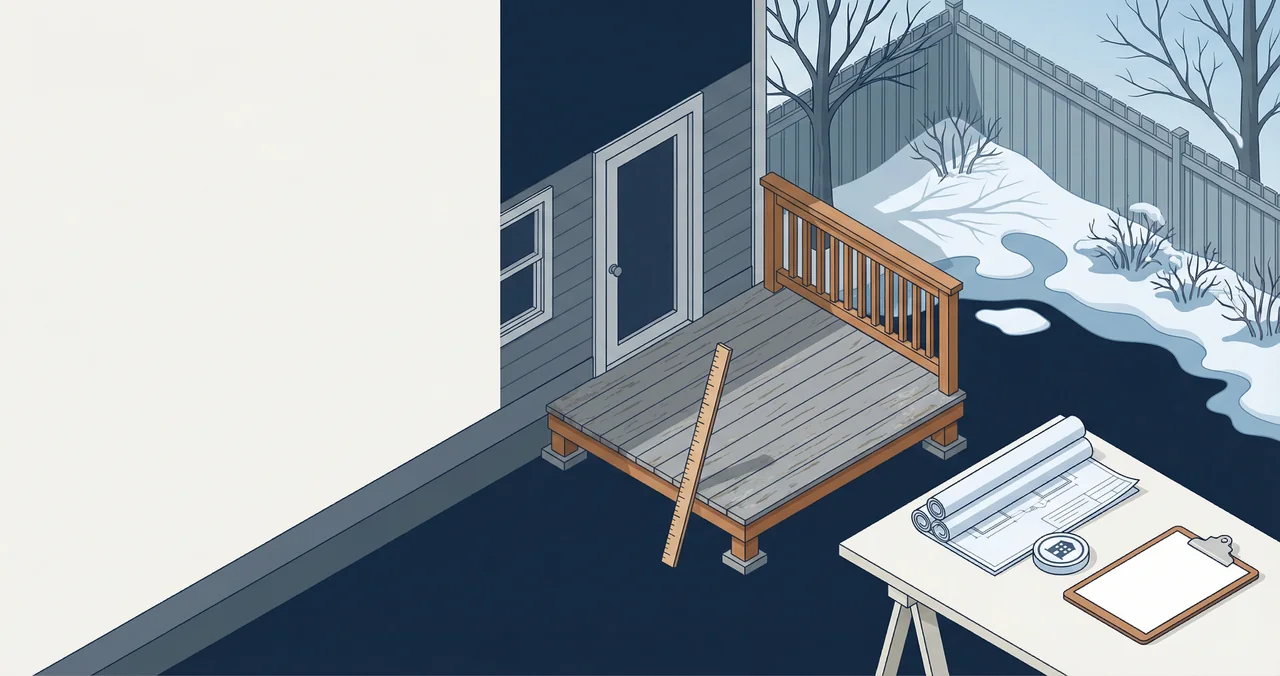
Deck Permits in Lexington: Requirements, Costs & How to Apply in 2026
Planning a new deck in Lexington? Before you pick out decking boards or call a contractor, you need to figure out one thing first: do you need a permit?
🏗️ Planning a deck project?
Get a free manual project review, or visualize your dream deck with AI before requesting quotes.
📋 Tool Alert: Permit Checker
Do you really need a permit? Check the exact rules for your city or township.
Check Permits →The short answer for most Lexington homeowners — yes, probably. The Lexington-Fayette Urban County Government (LFUCG) requires building permits for most deck projects, and skipping this step can cost you far more than the permit itself.
Here's everything you need to know about Lexington deck permits in 2026, from requirements and fees to the actual application process.
<!-- slot:after-intro -->
Do You Need a Deck Permit in Lexington?
In Lexington, Kentucky, deck permits are typically required for structures over 200 square feet or more than 30 inches above grade. That 30-inch threshold is measured from the ground to the top of the deck surface.
So what does that mean in practice?
- A ground-level patio deck under 200 sq ft sitting just a few inches off the ground? You likely don't need a permit.
- A 12x20 deck (240 sq ft) attached to the back of your home? Permit required.
- A raised deck off a walkout basement, even if it's small? Permit required — because it's over 30 inches high.
Most deck projects in Lexington need a permit. The average backyard deck runs 300–500 square feet, which puts it well above the 200 sq ft threshold. And if your home has any grade change at all — common in neighborhoods like Hartland, Beaumont, or the Hamburg area — your deck will likely exceed the 30-inch height limit too.
What About Freestanding Decks?
A common misconception: freestanding (detached) decks don't need permits. That's not how it works in Lexington. The permit requirement is based on size and height, not whether the deck is attached to your house. A freestanding deck over 200 sq ft or 30 inches above grade still needs a permit.
The distinction between attached and freestanding does matter for some code requirements — attached vs. freestanding decks have different structural rules — but the permit requirement applies either way.
When a Permit Is Required
Here's a quick breakdown of what triggers a permit in Lexington:
| Scenario | Permit Required? |
|----------|-----------------|
| Deck over 200 sq ft | Yes |
| Deck over 30 inches above grade | Yes |
| Attached deck with ledger board | Yes |
| Ground-level deck under 200 sq ft | Usually no |
| Replacing deck boards on existing frame | Usually no |
| Adding stairs or railings to existing deck | Possibly |
| Adding a roof or screened enclosure to a deck | Yes |
| Hot tub on an existing deck (structural changes) | Yes |
Repairs vs. new construction: Replacing rotted deck boards on an existing, previously permitted structure generally doesn't require a new permit. But if you're replacing the entire frame, changing the footprint, or adding structural elements, you're back in permit territory.
When in doubt, call LFUCG's Division of Building Inspection at (859) 258-3770. A quick phone call can save you from a code violation down the road.
Permit Fees & Processing Time
How Much Does a Deck Permit Cost in Lexington?
Deck permit fees in Lexington are based on the estimated project cost and are set by LFUCG's fee schedule. For a typical residential deck project:
- Basic residential deck permit: $75–$200 for most standard projects
- Plan review fee: Included in permit cost for simple residential projects
- Re-inspection fee: $50–$75 if your deck fails an inspection and needs a follow-up
For a standard 300–400 sq ft pressure-treated deck with an installed cost of $7,500–$18,000, your permit fee will typically fall in the $100–$150 range.
Building a larger or more complex deck — say a multi-level composite deck running $20,000–$40,000+ — expect permit fees closer to $150–$250.
These fees are modest compared to the total project cost. On a $15,000 deck build, the permit is roughly 1% of your budget. Not worth skipping.
How Long Does It Take to Get a Deck Permit?
Processing times at LFUCG vary depending on the season:
- Standard residential deck permits: 5–15 business days for plan review
- Simple projects with complete applications: Can sometimes be processed in 3–5 business days
- Spring rush (March–May): Expect the longer end — this is when every contractor in Lexington is pulling permits
Pro tip: Submit your permit application in January or February for a spring build. You'll face shorter review times and your contractor can start as soon as the weather cooperates — typically by mid-March in Lexington.
<!-- slot:mid-content -->
Building Codes & Setback Rules
Lexington follows the Kentucky Residential Code, which is based on the International Residential Code (IRC). Here are the key code requirements that affect deck construction:
Structural Requirements
- Footings must extend below the frost line: In Lexington, that's 18–36 inches deep depending on your specific location. Most inspectors require a minimum of 24 inches for deck footings.
- Post size: Minimum 4x4 posts for decks under 8 feet tall; 6x6 posts recommended for taller decks or heavy loads
- Beam and joist sizing: Must meet span tables in the Kentucky Residential Code — your contractor or engineer will calculate these based on your specific design
- Ledger board attachment: If attaching to your house, the ledger must be bolted (not nailed) to the rim joist with ½-inch lag screws or through-bolts spaced per code
Railing Requirements
- Railings are required on any deck surface 30 inches or more above grade
- Minimum railing height: 36 inches for residential decks
- Baluster spacing: No more than 4 inches between balusters (the "4-inch sphere rule" — a 4-inch ball shouldn't pass through)
- Railings must withstand 200 pounds of force applied in any direction at the top
Stair Requirements
- Minimum stair width: 36 inches
- Maximum riser height: 7¾ inches
- Minimum tread depth: 10 inches
- Handrails required on stairs with 4 or more risers
- Handrail height: 34–38 inches measured from the stair nosing
Setback Rules
Setbacks determine how close your deck can be to your property lines. In Lexington:
- Rear setback: Typically 20–25 feet from the rear property line in most residential zones (R-1, R-2)
- Side setback: Usually 5–10 feet depending on zoning district
- Front setback: Decks are rarely built in front yards, but the setback is typically 25+ feet
Important: Setbacks vary by zoning district. Neighborhoods like Chevy Chase, which are in older zoning areas, may have different requirements than newer subdivisions in Hamburg or Masterson Station. Always verify your specific zoning with LFUCG's Division of Planning before finalizing your deck design.
If your property has an easement — common in many Lexington subdivisions — you generally cannot build within the easement area. Check your property survey or plat map.
Climate Considerations for Lexington Decks
Lexington's moderate four-season climate is actually favorable for deck building, but you still need to account for:
- Frost heave: Footings below the frost line prevent seasonal movement. This is non-negotiable in Lexington.
- Humidity and moisture: Summers can be humid. Proper ventilation under the deck and adequate joist spacing help prevent moisture-related issues.
- Temperature swings: Lexington can see temperature ranges from single digits to the upper 90s. Composite decking handles this well with minimal expansion and contraction. Pressure-treated lumber is the most affordable option at $25–$45/sq ft installed but requires regular sealing.
Use PaperPlan to visualize different decking materials on your own home before committing — it's especially helpful for comparing how composite vs. wood options look against your siding and landscaping.
For a deeper comparison of materials that handle seasonal shifts well, see our guide on materials that perform best through freeze-thaw cycles.
How to Apply for a Deck Permit in Lexington
Here's the step-by-step process for getting your deck permit through LFUCG:
Step 1: Gather Your Documents
Before you apply, you'll need:
- Site plan / plot plan showing your property boundaries, the house footprint, and the proposed deck location with dimensions and setback measurements
- Construction drawings including a plan view (top-down), elevation view (side), and structural details (footing depth, joist spacing, beam sizes, ledger attachment)
- Property survey (recommended, especially if you're building near a property line)
- HOA approval if your neighborhood has a homeowners association — neighborhoods like Andover, Beaumont, and Griffin Gate often require architectural review before you can even apply for a permit
Step 2: Submit Your Application
You can apply through:
- In person: LFUCG Division of Building Inspection, 101 East Vine Street, Lexington, KY 40507
- Online: Check the LFUCG website for their online permitting portal — availability of online submission varies
Bring your completed application form, construction drawings, site plan, and permit fee payment.
Step 3: Plan Review
LFUCG reviews your plans for code compliance. For a straightforward deck project, this typically takes 5–15 business days. If revisions are needed, the clock resets — so getting your plans right the first time matters.
Hiring a contractor who regularly pulls permits in Lexington speeds this up considerably. They know what the local inspectors look for and submit plans that don't get kicked back.
Step 4: Receive Your Permit & Schedule Inspections
Once approved, you'll receive your building permit. Post it visibly at the job site — inspectors will look for it.
You'll need inspections at key stages:
1. Footing inspection — after holes are dug, before pouring concrete
2. Framing inspection — after the structure is built, before decking is installed
3. Final inspection — after everything is complete, including railings and stairs
Don't cover up work before it's inspected. If your contractor pours footings before the footing inspection, the inspector may require them to dig up and redo the work.
Step 5: Final Approval
After passing the final inspection, you'll receive a Certificate of Completion. Keep this document — you'll need it if you ever sell your home or refinance.
What Happens If You Build Without a Permit
Building a deck without the required permit in Lexington is risky. Here's what you're facing:
Immediate Consequences
- Stop-work order: If LFUCG discovers unpermitted construction, they can order all work to stop immediately
- Fines: Penalties for building without a permit can range from $100 to $500+ per violation
- Forced removal: In extreme cases, you may be required to tear down the deck entirely
Long-Term Problems
- Selling your home: Title searches and home inspections will flag unpermitted structures. Buyers may demand you obtain a retroactive permit, make modifications, or reduce the sale price. This is one of the biggest risks of building without a permit.
- Insurance issues: If someone is injured on an unpermitted deck, your homeowner's insurance may deny the claim
- Property taxes: An undisclosed deck won't reduce your taxes, but discovery could trigger reassessment plus back penalties
- Retroactive permitting: Getting a permit after the fact is harder and more expensive. The inspector can't see what's under the decking, so they may require you to remove boards for inspection or even require structural modifications.
The permit fee is $75–$200. The cost of dealing with an unpermitted deck can easily run into thousands. It's not a close call.
Can Neighbors Report an Unpermitted Deck?
Yes. Any Lexington resident can file a complaint with LFUCG's code enforcement division. Neighbors do sometimes raise concerns about deck projects, particularly if the deck is close to a shared property line or affects their sight lines.
<!-- slot:before-faq -->
🎨 Not sure which material to pick?
Upload a photo of your backyard and see exactly how Trex, TimberTech, or cedar would look — free and instant.
Frequently Asked Questions
How much does a deck permit cost in Lexington, KY?
Most residential deck permits in Lexington cost between $75 and $200, depending on the estimated project value. The fee is set by LFUCG's fee schedule and is based on construction cost. For a typical 300–400 sq ft deck costing $10,000–$20,000, expect to pay around $100–$150 for your permit.
Do I need a permit for a small deck in Lexington?
It depends on the size and height. Decks under 200 square feet and under 30 inches above grade generally don't require a permit in Lexington. But if your deck exceeds either threshold, a permit is required regardless of how "small" it feels. A quick call to LFUCG's Building Inspection division at (859) 258-3770 can confirm your specific situation.
How long does it take to get a deck permit in Lexington?
Plan for 5–15 business days for plan review, though simple projects with complete applications can sometimes be processed faster. During the spring rush (March–May), processing times tend to be on the longer end. Submitting your application in winter gives you the best chance of a quick turnaround and a spring start date.
What is the frost line depth in Lexington, Kentucky?
The frost line in Lexington ranges from 18 to 36 inches, with most inspectors requiring deck footings to be set at a minimum of 24 inches deep. Footings that don't extend below the frost line can shift during winter freezes, causing structural problems. Your contractor should be well aware of this — if they're not, that's a red flag. For more on how cold weather affects material choice, check out our guide to low-maintenance decking options.
Should I hire a contractor or build my own deck in Lexington?
You can legally build your own deck in Lexington as a homeowner — you'll still need a permit, and the work still needs to pass inspections. The question is whether it's practical. If your deck is a straightforward, ground-level design, DIY is feasible. For raised decks, multi-level designs, or anything requiring engineered plans, hiring a licensed contractor is the safer and often more cost-effective route. Experienced Lexington deck builders already know the local code requirements and inspection process, which saves time and avoids costly mistakes.
<!-- slot:end -->
📋 Planning a deck project?
Get a free manual project review from our team — no obligation, no spam.
Get Free Project Review →Upload a backyard photo and preview real decking materials with AI — free, instant, no sign-up.
Permits, costs, material comparisons, and questions to ask before requesting quotes — delivered to your inbox.