
Deck Permits in Massachusetts: 2026 Rules
Navigating MA deck permits: state & town rules. Ensure your deck project is legal & safe. Understand height, size, & inspections.
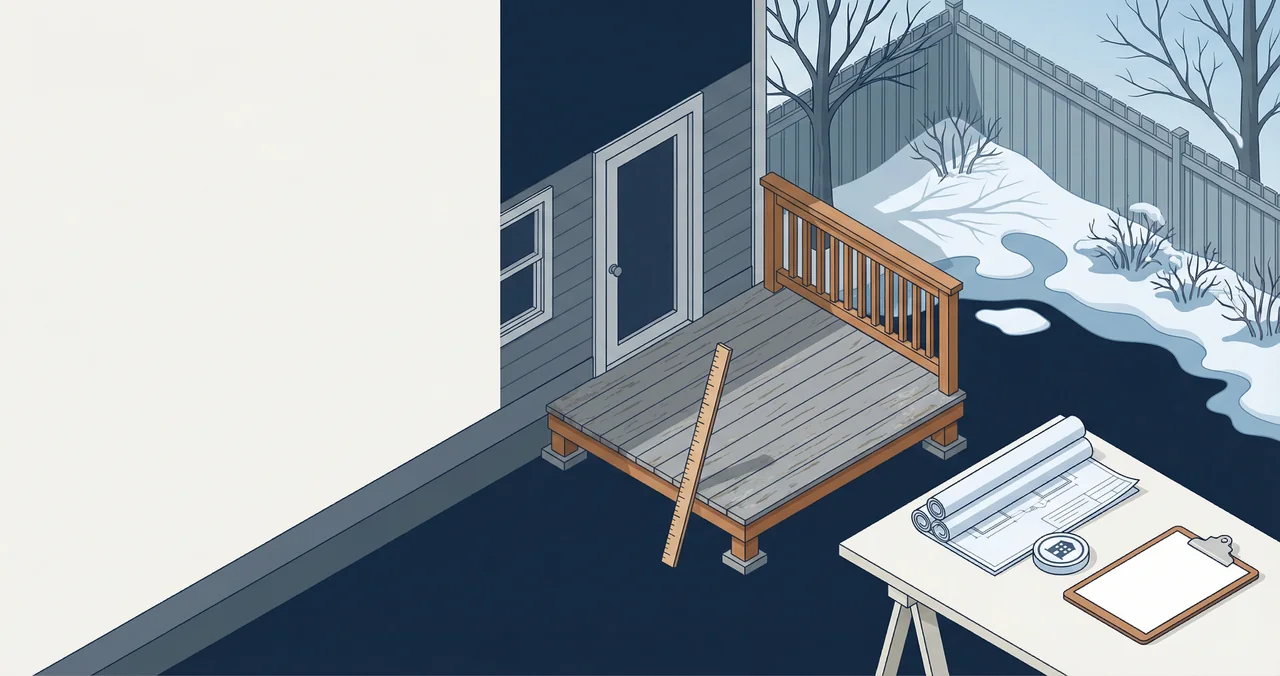
Do You Need a Deck Permit in Massachusetts? State & Town Rules
Building a new deck or renovating an existing one can significantly enhance your Massachusetts home's value and outdoor living space. However, before you start hammering away, it's crucial to understand the permitting requirements in Massachusetts. Failing to obtain the necessary permits can lead to costly fines, construction delays, and even forced demolition. This comprehensive guide will walk you through the state and local regulations, helping you determine if you need a deck permit and how to navigate the process smoothly.
🏗️ Planning a deck project?
Get a free manual project review, or visualize your dream deck with AI before requesting quotes.
📋 Tool Alert: Permit Checker
Do you really need a permit? Check the exact rules for your city or township.
Check Permits →Looking for more regional information? Check out our Massachusetts State Decking Hub.
Understanding the Massachusetts Building Code and Deck Permits
Massachusetts adheres to the Massachusetts State Building Code (MSBC), which is largely based on the International Building Code (IBC) and International Residential Code (IRC). The MSBC sets the minimum standards for building construction, including decks. While the MSBC provides a baseline, individual cities and towns in Massachusetts can adopt stricter regulations, so understanding both levels is essential.
The primary reason for requiring deck permits is to ensure structural safety. Decks, like any other structure, must be built to withstand specific load requirements, including live loads (people and furniture) and dead loads (the weight of the deck itself). Permits and inspections help verify that your deck meets these requirements and won't collapse.
When is a Deck Permit Required in Massachusetts?
Generally, a deck permit is required in Massachusetts when:
- The deck is more than 30 inches above grade (ground level). This is a common threshold; decks exceeding this height are considered more structurally complex and require more stringent oversight.
- The deck is attached to the house. Attached decks are considered an extension of the house and require permits to ensure they are properly connected and don't compromise the building's structural integrity.
- The deck covers more than 200 square feet. Some municipalities have size limitations that trigger permit requirements.
- The deck will have a roof or other overhead structure. Covered decks are subject to additional wind and snow load considerations.
- The deck will support a hot tub or spa. These structures add significant weight and require specific structural reinforcement.
Even if your deck seems small or simple, it's always best to check with your local building department to confirm whether a permit is needed. Don't assume anything!
Navigating Local Town and City Regulations in Massachusetts
While the MSBC provides a foundation, each city and town in Massachusetts has its own building department and may have specific amendments to the state code. This means that the requirements for deck permits can vary significantly from one town to the next.
How to Find Your Local Building Department
The first step is to identify your local building department. You can usually find this information on your town or city's website. Search for "[Your Town/City Name] Building Department" on Google. The website should provide contact information, including phone numbers and email addresses.
Contacting Your Local Building Department
Once you've found the contact information, reach out to the building department and inquire about their specific deck permit requirements. Be prepared to provide information about your project, such as the size of the deck, its height above ground, and whether it will be attached to the house. Ask about:
- Specific permit application requirements: What documents do you need to submit?
- Inspection schedules: How many inspections are required, and at what stages of construction?
- Permit fees: What is the cost of the permit?
- Local amendments to the MSBC: Are there any specific regulations that apply in your town?
- Setback requirements: How far must the deck be from property lines?
Don't hesitate to ask questions. Building department staff are there to help you navigate the process.
Examples of Town-Specific Regulations
To illustrate the variability, consider these examples:
- Boston: Boston has strict zoning regulations that can impact deck design and placement. The city also emphasizes historical preservation, so decks on older homes may face additional scrutiny.
- Cambridge: Cambridge is known for its compact lots, which can make setback requirements particularly challenging. The city also has a strong focus on sustainability, so you may need to consider environmentally friendly decking materials.
- Worcester: Worcester's building department may have specific requirements related to snow load, given the city's colder climate.
- Smaller Towns: Even smaller towns like Concord or Lexington may have unique regulations related to historical character and neighborhood aesthetics.
It's critical to research the specific rules in your town, rather than relying on general assumptions.
The Deck Permit Application Process in Massachusetts
The deck permit application process typically involves the following steps:
1. Project Planning and Design: Before applying for a permit, you need to have a clear plan for your deck. This includes the dimensions, materials, and construction methods.
2. Site Plan: You'll likely need to submit a site plan showing the location of the deck relative to your house, property lines, and any other relevant features.
3. Construction Drawings: Detailed construction drawings are essential. These drawings should show the structural details of the deck, including the size and spacing of posts, beams, joists, and decking. If you're unsure how to create these drawings, consider hiring a qualified architect or engineer.
4. Permit Application Form: Complete the permit application form provided by your local building department.
5. Submission and Review: Submit the application form, site plan, and construction drawings to the building department. The department will review your application to ensure it complies with the MSBC and local regulations.
6. Permit Approval: If your application is approved, you'll receive a permit. Post the permit in a visible location on your property during construction.
7. Inspections: Schedule inspections at various stages of construction, as required by your local building department. Common inspection points include:
* Footing inspection: Before pouring concrete for the footings.
* Framing inspection: After the deck framing is complete but before decking is installed.
* Final inspection: After the deck is complete and ready for use.
Common Deck Permit Requirements in Massachusetts
Regardless of your specific town, some common requirements often apply to deck permits in Massachusetts:
- Footings: Footings must be properly sized and installed to support the weight of the deck. The depth of the footings must be below the frost line to prevent heaving in the winter. This depth varies across Massachusetts.
- Post Spacing: Posts must be spaced appropriately to support the beams and joists. The spacing will depend on the size and type of lumber used.
- Beam Size and Span: Beams must be sized to support the load of the deck over the given span.
- Joist Spacing: Joists must be spaced appropriately to support the decking.
- Decking Material: The decking material must be durable and weather-resistant.
- Guardrails: Decks that are 30 inches or more above grade must have guardrails that are at least 36 inches high.
- Stairways: Stairways must meet specific requirements for rise, run, and handrails.
- Attachment to House: Attached decks must be properly connected to the house using approved methods. This typically involves using lag screws or bolts to attach the deck ledger board to the house's framing.
Consequences of Building a Deck Without a Permit
Building a deck without a permit in Massachusetts can have serious consequences:
- Fines: You may be subject to fines for violating building codes.
- Stop-Work Orders: The building department can issue a stop-work order, halting construction until you obtain the necessary permits.
- Forced Demolition: In extreme cases, the building department may require you to demolish the deck if it doesn't meet code requirements and cannot be brought into compliance.
- Difficulty Selling Your Home: A deck built without a permit can create problems when you try to sell your home. Potential buyers may be wary of unpermitted structures, and you may be required to obtain a permit retroactively or remove the deck.
- Insurance Issues: Your homeowner's insurance may not cover damages related to an unpermitted deck.
Tips for a Smooth Deck Permit Process in Massachusetts
- Start Early: Begin the permit process well in advance of your planned construction start date.
- Be Prepared: Gather all the necessary documents and information before submitting your application.
- Communicate with the Building Department: Ask questions and seek clarification on any requirements you don't understand.
- Hire Qualified Professionals: Consider hiring a licensed architect, engineer, or contractor to help with the design and construction of your deck. A qualified professional can ensure that your deck meets code requirements and that the permit process goes smoothly.
- Follow the Plans: Build your deck according to the approved plans and specifications.
- Schedule Inspections: Schedule inspections at the required stages of construction and address any issues identified by the inspector promptly.
If you're considering different decking material options, be sure to explore the benefits of composite decking. It's a low-maintenance and durable option that can withstand the harsh Massachusetts weather. If you're located in Indiana, you might find our article on Composite [Deck Cost in Indiana: Complete Breakdown for 2026](/decks/blog/composite-deck-cost-indiana) helpful for budgeting purposes, even though prices will vary by region.
Finding a Qualified Deck Builder in Massachusetts
Navigating the permit process and building a safe, code-compliant deck can be challenging. Hiring a qualified deck builder can make the process much easier. Look for a contractor who is licensed, insured, and experienced in building decks in Massachusetts.
When choosing a contractor, get multiple bids and check references. Ask about their experience with local building codes and their process for obtaining permits. A reputable contractor will be familiar with the requirements in your town and can guide you through the permit process. They can also help you choose the right materials and design a deck that meets your needs and budget. If you happen to be in Indiana, we also have a guide to help you find the Best Deck Builders in Indianapolis: Find Trusted Contractors.
🎨 Not sure which material to pick?
Upload a photo of your backyard and see exactly how Trex, TimberTech, or cedar would look — free and instant.
Frequently Asked Questions
Question here?
How long does it take to get a deck permit in Massachusetts?
The timeline for obtaining a deck permit can vary depending on the complexity of the project and the workload of your local building department. It can take anywhere from a few weeks to a few months to get a permit. It's best to apply early to avoid delays.
Question here?
How much does a deck permit cost in Massachusetts?
The cost of a deck permit varies depending on the size and complexity of the project, as well as the fees charged by your local building department. Permit fees can range from a few hundred dollars to over a thousand dollars. Contact your local building department for specific fee information.
Question here?
What happens if I fail an inspection?
If you fail an inspection, the inspector will provide you with a list of items that need to be corrected. You'll need to make the necessary corrections and schedule a re-inspection. There may be additional fees for re-inspections.
Question here?
Do I need a permit to replace decking boards?
Generally, replacing decking boards without altering the existing structure does not require a permit. However, if you are replacing the entire deck or making structural changes, you will likely need a permit. Always check with your local building department to confirm.
Question here?
Can I build my own deck in Massachusetts?
Yes, you can build your own deck in Massachusetts, but you will still need to obtain the necessary permits and follow the building codes. If you're not experienced in construction, it's best to hire a qualified contractor to ensure that the deck is built safely and correctly.
Question here?
What are common reasons for deck permit denials?
Common reasons for deck permit denials include incomplete applications, failure to meet setback requirements, inadequate structural design, and failure to comply with zoning regulations. Ensure you have all required documentation and a structurally sound design before submitting your application.
📋 Planning a deck project?
Get a free manual project review from our team — no obligation, no spam.
Get Free Project Review →Upload a backyard photo and preview real decking materials with AI — free, instant, no sign-up.
Permits, costs, material comparisons, and questions to ask before requesting quotes — delivered to your inbox.