
Deck Cost in Boston: Local Pricing Guide for…
Boston deck cost guide for 2026. Prices for materials, labor, permits, & design. Plan your budget and find local builders.
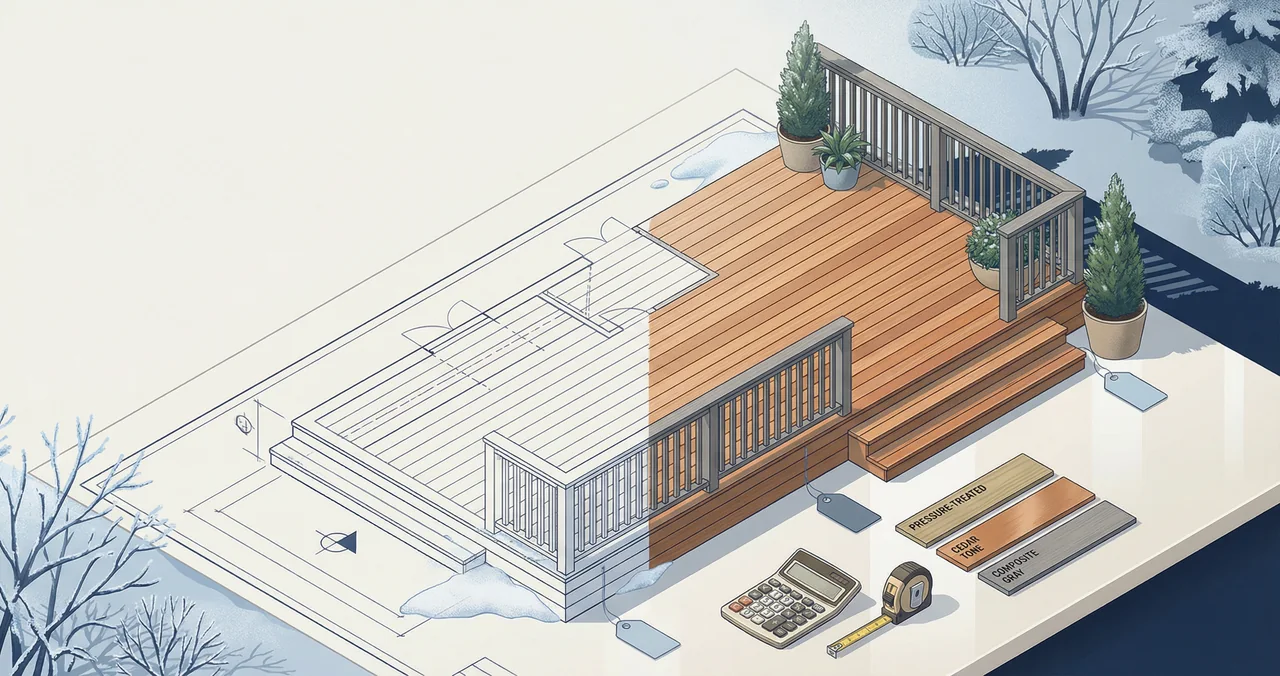
Deck Cost in Boston: Local Pricing Guide for 2026
Planning a new deck build or remodel in Boston? Understanding the costs involved is crucial for a successful project. This comprehensive guide breaks down the factors influencing deck pricing in Boston, covering materials, labor, permits, design considerations, and neighborhood-specific variations. We'll provide you with realistic budget estimates for 2026, helping you make informed decisions and find the best value for your investment.
🏗️ Planning a deck project?
Get a free manual project review, or visualize your dream deck with AI before requesting quotes.
🧮 Tool Alert: Deck Cost Calculator
Estimate your project costs in seconds based on local pricing bands for your area.
Calculate My Cost →Looking for more regional information? Check out our Massachusetts State Decking Hub.
Understanding Boston's Deck Building Landscape
Boston's unique climate, strict building codes, and diverse neighborhoods all impact deck construction costs. Let's explore these factors:
- Climate Considerations: Boston experiences harsh winters with heavy snow and ice, followed by hot, humid summers. This necessitates durable materials resistant to moisture, rot, and temperature fluctuations. Pressure-treated lumber and composite decking are popular choices.
- Building Codes and Permits: Boston has stringent building codes enforced by the Inspectional Services Department (ISD). Obtaining the necessary permits is essential and can impact your project timeline and budget. Factors such as deck height, proximity to property lines, and structural integrity are closely scrutinized.
- Neighborhood Variations: Deck costs can vary depending on the neighborhood due to factors like property values, accessibility, and contractor demand. Back Bay and Beacon Hill, for example, may command higher labor rates due to limited access and stricter HOA requirements.
- Material Availability: The availability and price of building materials can fluctuate based on market conditions and supply chain dynamics. Checking with local lumber yards and suppliers is crucial for accurate cost estimates.
Key Factors Influencing Deck Cost in Boston
Several factors contribute to the overall cost of your deck project. Understanding these will help you refine your budget:
1. Decking Material: The Biggest Cost Driver
The choice of decking material significantly impacts the overall cost. Here's a breakdown of common options and their approximate prices per square foot installed in Boston for 2026:
- Pressure-Treated Lumber: The most affordable option, ranging from $15 to $25 per square foot installed. Requires regular maintenance (staining and sealing) to prevent rot and warping.
- Cedar: A naturally durable and aesthetically pleasing option, costing $25 to $35 per square foot installed. Requires less maintenance than pressure-treated lumber but is more expensive upfront.
- Composite Decking: A low-maintenance option made from recycled plastic and wood fibers, ranging from $35 to $55 per square foot installed. Offers excellent durability and resistance to weathering. Consider visiting Composite Deck Cost in Indiana: Complete Breakdown for 2026 for a comparable cost breakdown to give you an idea of the different types of composite decking.
- PVC Decking: A premium option made entirely of plastic, costing $45 to $65 per square foot installed. Offers superior durability and resistance to moisture, making it ideal for Boston's climate.
- Exotic Hardwoods (Ipe, Mahogany): The most expensive option, ranging from $60 to $80+ per square foot installed. Offers exceptional beauty and durability but requires specialized installation and maintenance.
These prices include the cost of materials, labor, and fasteners. Keep in mind that these are estimates and can vary depending on the specific brand, grade, and complexity of the installation.
2. Deck Size and Complexity
The larger the deck, the higher the material and labor costs will be. Complex designs with multiple levels, curves, or custom features will also increase the price. A simple rectangular deck will be significantly cheaper than a multi-level deck with built-in seating and a pergola.
- Simple Rectangular Deck (10x12 ft): $1,800 - $7,800 (depending on material)
- Average Deck (12x16 ft): $2,880 - $12,480 (depending on material)
- Large Deck (16x20 ft): $4,800 - $20,800 (depending on material)
These are rough estimates and don't include additional features like railings, stairs, or permits.
3. Railing Options and Costs
Railings are essential for safety and can also enhance the aesthetic appeal of your deck. Common railing options include:
- Wood Railings: The most affordable option, costing $20 to $40 per linear foot installed. Requires regular maintenance.
- Composite Railings: A low-maintenance option that matches composite decking, costing $40 to $70 per linear foot installed.
- Aluminum Railings: A durable and rust-resistant option, costing $50 to $80 per linear foot installed.
- Cable Railings: A modern and minimalist option that offers unobstructed views, costing $70 to $120+ per linear foot installed.
- Glass Railings: An upscale option that provides a sleek and contemporary look, costing $100 to $200+ per linear foot installed.
4. Labor Costs in Boston
Labor costs in Boston are generally higher than the national average due to the high cost of living and strong demand for skilled tradespeople. Expect to pay $50 to $100+ per hour for experienced deck builders. The complexity of the project, the size of the crew, and the contractor's experience will all influence the overall labor cost. Getting multiple quotes from reputable contractors is crucial to ensure you're getting a fair price. You might find that some of the information in Best Deck Builders in Indianapolis: Find Trusted Contractors is helpful when vetting potential contractors.
5. Permits and Inspections
Obtaining the necessary permits is essential for ensuring your deck complies with Boston's building codes. The cost of permits can vary depending on the size and complexity of the project, but expect to pay $200 to $1,000 or more. The permit process typically involves submitting plans, paying fees, and scheduling inspections at various stages of construction. Failure to obtain the required permits can result in fines and delays. See if any of the information in Do You Need a Deck Permit in Indiana? State Rules Explained is helpful as you research your permit requirements.
6. Additional Features and Upgrades
Adding features like stairs, built-in seating, pergolas, lighting, and outdoor kitchens will increase the overall cost of your deck project.
- Stairs: $500 - $2,000+ per set (depending on material and complexity)
- Built-in Seating: $500 - $1,500+ (depending on material and design)
- Pergola: $2,000 - $10,000+ (depending on size and material)
- Deck Lighting: $300 - $1,000+ (depending on the number and type of lights)
- Outdoor Kitchen: $5,000 - $20,000+ (depending on features and appliances)
7. Demolition and Removal of Existing Deck
If you're replacing an existing deck, the cost of demolition and removal will need to be factored in. This can range from $500 to $2,000 or more, depending on the size and complexity of the old deck.
Boston Neighborhood Deck Cost Considerations
Deck costs can vary depending on the specific neighborhood in Boston. Factors like property values, accessibility, and contractor demand can all influence pricing.
- High-End Neighborhoods (Back Bay, Beacon Hill, South End): Expect to pay premium prices due to higher property values, stricter HOA requirements, and limited accessibility.
- Mid-Range Neighborhoods (Jamaica Plain, Dorchester, Roslindale): Prices are generally more moderate but can still vary depending on the specific location and contractor.
- Up-and-Coming Neighborhoods (East Boston, Mattapan): Prices may be slightly lower due to lower property values and less demand for high-end finishes.
It's always best to get quotes from local contractors who are familiar with the specific challenges and requirements of your neighborhood.
Example Deck Cost Scenarios in Boston (2026 Estimates)
Here are a few example scenarios to give you a better idea of potential deck costs in Boston:
- Scenario 1: Small Pressure-Treated Deck (10x10 ft) in Dorchester
* Decking Material: Pressure-Treated Lumber
* Railing: Wood Railing
* Permits: $300
* Labor: $2,500
* Total Estimated Cost: $4,300 - $5,800
- Scenario 2: Mid-Size Composite Deck (12x16 ft) in Jamaica Plain
* Decking Material: Composite Decking
* Railing: Composite Railing
* Permits: $500
* Labor: $4,000
* Total Estimated Cost: $10,280 - $14,480
- Scenario 3: Large PVC Deck (16x20 ft) with Pergola in Beacon Hill
* Decking Material: PVC Decking
* Railing: Cable Railing
* Pergola: $5,000
* Permits: $800
* Labor: $8,000
* Total Estimated Cost: $21,600 - $31,800
These are just examples, and your actual costs may vary depending on your specific project requirements.
Tips for Saving Money on Your Boston Deck Project
- Choose cost-effective materials: Pressure-treated lumber is the most affordable option, but consider the long-term maintenance costs.
- Keep the design simple: Avoid complex shapes and features that will increase labor costs.
- Get multiple quotes: Compare bids from at least three reputable contractors.
- Consider DIY options: If you're handy, you can save money by handling some of the simpler tasks yourself (e.g., demolition, staining).
- Schedule your project during the off-season: Contractors may offer discounts during the slower winter months.
- Negotiate with suppliers: Ask for discounts on materials, especially if you're buying in bulk.
🎨 Not sure which material to pick?
Upload a photo of your backyard and see exactly how Trex, TimberTech, or cedar would look — free and instant.
Frequently Asked Questions
How long does it take to build a deck in Boston?
Typically, a straightforward deck project takes between 1 to 3 weeks to complete, including permit acquisition and construction. More complex designs or larger decks can extend the timeline to 4 weeks or more. Weather delays can also impact the schedule, especially during the winter months.
What are the most common deck building code violations in Boston?
Common violations include improper footing depth, inadequate railing height, failure to obtain required permits, and non-compliance with setback requirements (distance from property lines). It's crucial to work with a licensed contractor who is familiar with Boston's building codes to avoid these issues.
What type of decking material is best for Boston's climate?
Both composite and PVC decking are excellent choices for Boston's climate due to their durability and resistance to moisture, rot, and temperature fluctuations. Pressure-treated lumber is a more affordable option but requires regular maintenance. The ideal choice depends on your budget and aesthetic preferences.
Do I need a permit to replace an existing deck in Boston?
Yes, in most cases, you will need a permit to replace an existing deck, even if you're using the same footprint. The Inspectional Services Department (ISD) requires permits for any structural modifications or replacements.
Can I build a deck myself in Boston?
Yes, you can build a deck yourself in Boston, but you will still need to obtain the necessary permits and comply with all building codes. If you're not experienced in deck construction, it's recommended to hire a licensed contractor to ensure the project is done safely and correctly.
What is the best time of year to build a deck in Boston?
The best time of year to build a deck in Boston is typically during the spring or fall months. The weather is generally milder, and contractors may be less busy than during the peak summer season. Building during the winter months can be challenging due to snow and ice.
📋 Planning a deck project?
Get a free manual project review from our team — no obligation, no spam.
Get Free Project Review →Upload a backyard photo and preview real decking materials with AI — free, instant, no sign-up.
Permits, costs, material comparisons, and questions to ask before requesting quotes — delivered to your inbox.