
Deck Permits in New Jersey: 2026 Rules
Planning a new deck in NJ? Avoid fines & delays! Learn NJ deck permit rules, costs, inspections, and when you absolutely need one. Your complete guide.
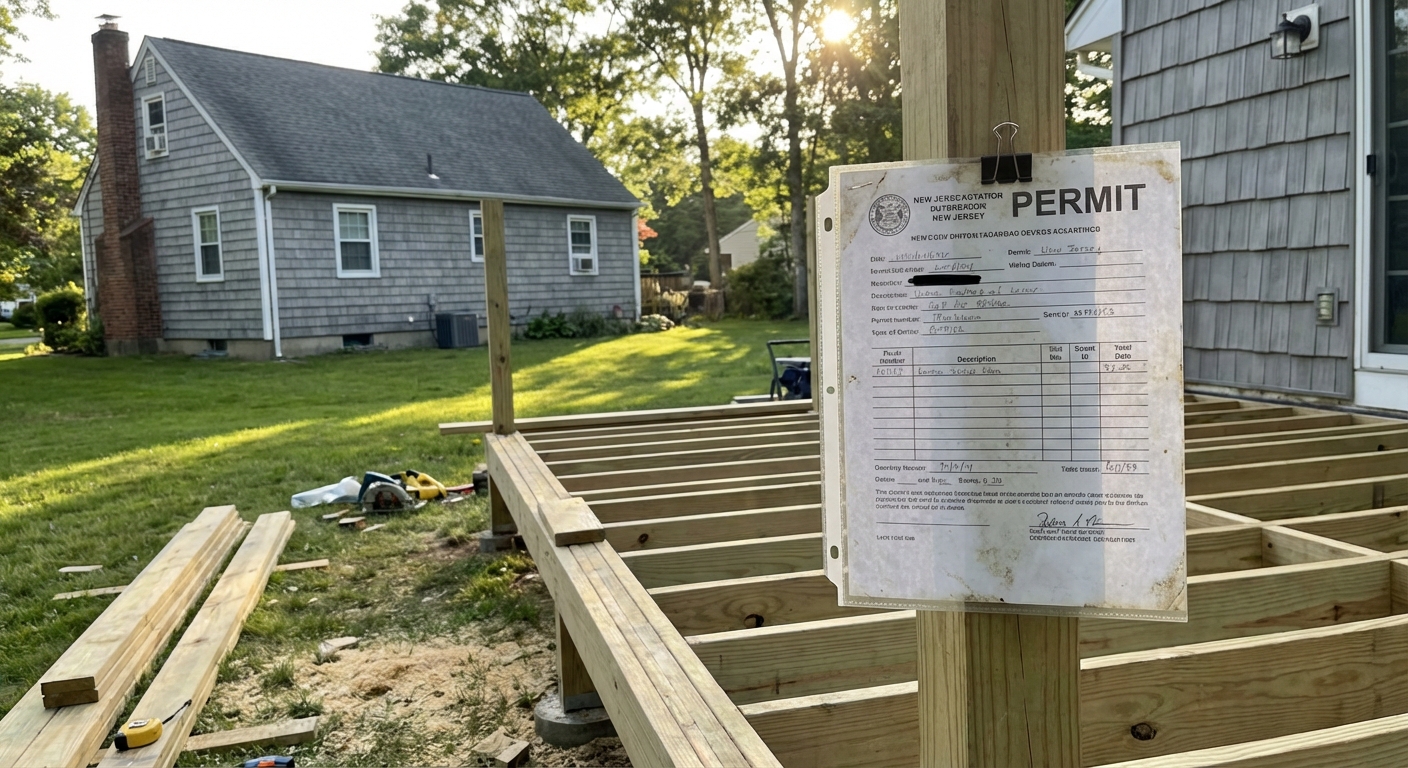
Building a deck in New Jersey? Before you even think about lumber, you need to know about permits. Navigating New Jersey's construction regulations can be tricky, and a deck project is no exception. This guide explains when you need a permit, how to get one, and what to expect during the process, so you can build your dream deck without the headache of fines or delays.
📋 Tool Alert: Permit Checker
Do you really need a permit? Check the exact rules for your city or township.
Check Permits →Do You Need a Deck Permit in New Jersey? The Key Rule
The short answer is: most likely, yes. New Jersey is a heavily regulated state when it comes to construction. The New Jersey Uniform Construction Code (UCC) is enforced statewide, but individual townships and cities have their own interpretations and enforcement styles.
🏗️ Planning a deck project?
Get a free manual project review, or visualize your dream deck with AI before requesting quotes.
Here's the crucial rule: **Any deck in New Jersey that is over 200 square feet in area *OR* more than 30 inches above grade (ground level) requires a permit.**
Let's break that down:
- Over 200 square feet: This is a moderate-sized deck. A 10' x 20' deck would trigger the permit requirement.
- More than 30 inches above grade: This is not very high. If your deck is attached to a raised ranch or a house with a walk-out basement, you'll almost certainly need a permit. Even some ground-level decks on sloped yards might require one.
<!-- slot:after-intro -->
Why Are Permits Required in New Jersey?
Permits ensure your deck is safe, structurally sound, and built to code. This protects you, your family, and future homeowners. In New Jersey, with its unique climate and dense population, this is especially important.
- Safety: Permits guarantee your deck can withstand the elements, including heavy snow loads in the winter and strong winds during nor'easters.
- Structural Integrity: Proper footings, framing, and connections are essential for a long-lasting and safe deck. The permit process ensures these are up to par.
- Code Compliance: The UCC covers everything from railing heights to stair construction. Permits ensure your deck meets these requirements.
- Property Value: A deck built to code adds value to your home. An unpermitted deck can create problems during a sale.
- Neighborly Relations: Permits often address setbacks and property line issues, preventing disputes with your neighbors.
The Cost of Permits and Decks in New Jersey
Building a deck in New Jersey comes with a cost, and that includes the permit fees. New Jersey has some of the highest construction costs in the US, due to labor rates, permitting complexity, and high property values.
Deck Material Costs
Here's a general cost range for different decking materials, installed:
| Material | Cost per sqft (Installed) |
|-------------------|---------------------------|
| Pressure-Treated | $30 - $50 |
| Composite | $50 - $85 |
| Cedar | $40 - $60 |
| Trex | $55 - $90 |
Permit Costs
Expect to pay anywhere from $200 to $800 for a deck permit in New Jersey. The exact cost depends on your township, the size and complexity of your deck, and the materials used. North Jersey, particularly Bergen County and Essex County, tends to have higher permit fees than Central or South Jersey.
Overall Deck Project Costs
Knowing the cost of materials and permits helps you budget for the entire project. For instance, a 200 sq ft composite deck could easily cost between $10,000 and $17,000 including materials, labor, and the permit.
Navigating the Permit Process: A Step-by-Step Guide
Getting a deck permit in New Jersey involves several steps:
1. Design and Planning: Create detailed plans for your deck, including dimensions, materials, and footing locations. Use PaperPlan (paperplan.app) to visualize your deck with PaperPlan design with different materials and layouts before committing to a contractor. Accurate plans are crucial for a smooth permit process.
2. Contact Your Local Construction Department: Each township or city has its own construction department. Contact them to obtain the specific permit application forms and information about local requirements.
3. Submit Your Application: Complete the application form and submit it along with your deck plans and any other required documents, such as a property survey.
4. Plan Review: The construction department will review your plans to ensure they meet all applicable codes and regulations. This may take several weeks.
5. Permit Approval and Issuance: If your plans are approved, you'll receive a permit. Post the permit in a visible location on your property during construction.
6. Inspections: You'll need to schedule inspections at various stages of the construction process, such as after the footings are poured and after the framing is complete.
7. Final Inspection: Once the deck is complete, schedule a final inspection to ensure it meets all code requirements.
Special Considerations for New Jersey Decks
New Jersey presents some unique challenges and considerations for deck building:
- Climate: New Jersey experiences hot, humid summers (85-95°F), cold winters with snow and ice, and the occasional nor'easter. Your deck needs to be built to withstand these conditions.
- Frost Line: New Jersey has a deep frost line of 36 inches. This means your deck footings need to extend at least 36 inches below ground to prevent frost heave.
- Coastal Areas (Jersey Shore): If you're building a deck near the Jersey Shore (e.g., Long Beach Island, Cape May, Asbury Park), you'll need to comply with additional coastal construction requirements, including flood zone regulations and Coastal Area Facility Review Act (CAFRA) permits if you are building close to waterways. Elevated decks and hurricane-rated hardware are often required.
- HOA Communities: Many New Jersey homes are located in Homeowner's Associations (HOAs). You'll likely need to obtain HOA approval before you can start building your deck.
- Environmental Regulations: The New Jersey Department of Environmental Protection (NJDEP) regulates construction near wetlands, streams, and flood plains. If your property is near one of these areas, you may need to obtain additional permits.
- Termites: Termite pressure is moderate in New Jersey. Consider subterranean termite treatment to protect your deck.
- Popular Features: New Jersey homeowners often incorporate screened porches (to combat mosquitoes), multi-level decks (for sloped lots), and pool decks into their outdoor living spaces.
- Build Timing: The best months for deck building in New Jersey are April-June and September-October, to avoid the summer humidity and winter frost.
<!-- slot:mid-content -->
Hiring a Contractor vs. DIY
While it's tempting to save money by building your deck yourself, hiring a qualified and licensed contractor is often the best option, especially in New Jersey. The permitting process and building codes can be complex, and a professional contractor can ensure your deck is built safely and to code. They will also handle the permit process, saving you time and frustration.
Finding a Reputable Contractor
- Get Multiple Bids: Obtain quotes from at least three different contractors.
- Check References: Ask for references and contact them to learn about the contractor's workmanship and reliability.
- Verify Licensing and Insurance: Ensure the contractor is licensed and insured in New Jersey.
- Review the Contract Carefully: Make sure the contract includes a detailed description of the work to be performed, the materials to be used, and the payment schedule.
What Happens if You Don't Get a Permit?
Building a deck without a permit in New Jersey can have serious consequences:
- Fines: You could be fined by your local construction department.
- Stop-Work Orders: The construction department can issue a stop-work order, halting construction until you obtain a permit.
- Removal Orders: In some cases, you may be required to remove the deck entirely if it doesn't meet code requirements.
- Problems Selling Your Home: An unpermitted deck can create problems when you try to sell your home, as it may not be insurable or meet appraisal standards.
It's always best to obtain the necessary permits before you start building your deck. The cost of the permit is small compared to the potential cost of fines, removal orders, and other problems.
<!-- slot:before-faq -->
Resources for New Jersey Homeowners
- New Jersey Uniform Construction Code (UCC): https://www.nj.gov/dca/divisions/codes/
- Your Local Township or City Construction Department: Contact information can be found on your municipality's website.
- New Jersey Department of Environmental Protection (NJDEP): https://www.nj.gov/dep/
Building a deck in New Jersey requires careful planning and attention to detail. By understanding the permit requirements and following the steps outlined in this guide, you can ensure your deck is built safely, legally, and to your satisfaction. Remember to research your local regulations and consult with professionals when needed.
<!-- slot:end -->
🎨 Not sure which material to pick?
Upload a photo of your backyard and see exactly how Trex, TimberTech, or cedar would look — free and instant.
Frequently Asked Questions
Do I need a permit to replace deck boards in New Jersey?
Generally, if you are only replacing deck boards and not altering the structure of the deck (footings, framing, railings), you likely do not need a permit. However, it's always best to check with your local construction department to confirm. If you are replacing railings or stairs, a permit will almost certainly be required to ensure they meet current safety codes.
What are the setback requirements for decks in New Jersey?
Setback requirements vary by township and city. They dictate how far your deck must be from property lines, wetlands, and other features. Contact your local construction department to determine the specific setback requirements for your property. These requirements are often included in the zoning ordinances.
How long is a deck permit valid in New Jersey?
The validity period for a deck permit varies by municipality, but it is typically between six months and one year. If your project takes longer than the permit's validity period, you may need to renew the permit. Check with your local construction department for specific details.
Can I build a deck over an easement in New Jersey?
Building a deck over an easement is generally not permitted, as easements grant access to utility companies or other parties to maintain infrastructure on your property. However, it's essential to review your property survey and consult with your local construction department to determine the specific restrictions on your property.
What are common reasons for deck permit application rejections in NJ?
Common reasons include incomplete or inaccurate plans, failure to meet setback requirements, non-compliance with building codes (especially regarding railing heights and stair dimensions), and lack of HOA approval (if applicable). Ensure your plans are thorough and accurate, and address all applicable codes and regulations before submitting your application.
How Much Does a Deck Cost in New Jersey? Complete 2026 Guide
Deck Cost Per Square Foot in New Jersey: 2026 Pricing Breakdown
New Jersey Deck Building Codes: Key Requirements for 2026
📋 Planning a deck project?
Get a free manual project review from our team — no obligation, no spam.
Get Free Project Review →Upload a backyard photo and preview real decking materials with AI — free, instant, no sign-up.
Permits, costs, material comparisons, and questions to ask before requesting quotes — delivered to your inbox.