
Deck Permits in Olathe (2026)
Need a deck permit in Olathe? Learn requirements, fees, setback rules, and how to apply through Olathe's Development Services department in 2026.
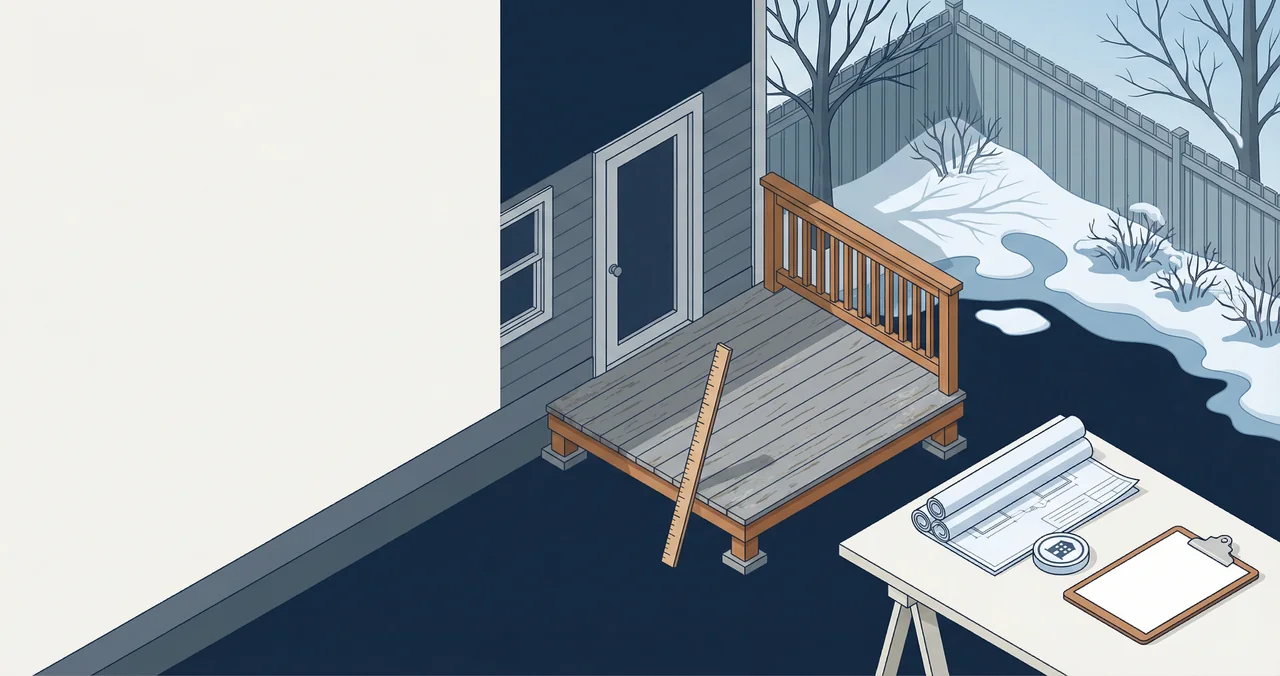
Deck Permits in Olathe: Requirements, Costs & How to Apply in 2026
Planning a new deck in Olathe? Before you pick out materials or schedule a contractor, there's one step you can't skip: figuring out whether you need a building permit. Getting this wrong can mean fines, forced removal, or problems when you sell your home.
🏗️ Planning a deck project?
Get a free manual project review, or visualize your dream deck with AI before requesting quotes.
📋 Tool Alert: Permit Checker
Do you really need a permit? Check the exact rules for your city or township.
Check Permits →Here's exactly what Olathe homeowners need to know about deck permits in 2026 — the requirements, costs, process, and what happens if you skip it.
<!-- slot:after-intro -->
Do You Need a Permit in Olathe?
Short answer: probably yes.
In Olathe, Kansas, the City's Development Services department requires a building permit for most deck projects. The general thresholds are:
- Decks over 200 square feet require a permit
- Decks more than 30 inches above grade require a permit
- Any deck attached to the house typically requires a permit, regardless of size
If your project falls below all three of those thresholds — say, a small freestanding ground-level platform under 200 square feet — you may be exempt. But here's the catch: even "exempt" projects still need to comply with Olathe's zoning setback requirements and building codes. When in doubt, call Olathe Development Services at (913) 971-8750 before you start.
A 12x16 deck is 192 square feet. A 14x16 is 224. That means most standard backyard decks in Olathe will cross the 200-square-foot threshold and need a permit.
When a Permit Is Required
Let's break this down by common project types:
Projects That Need a Permit
- New deck construction over 200 sq ft or 30 inches above grade
- Raised decks with stairs and railings (nearly always over 30 inches)
- Multi-level or second-story decks
- Attached decks that tie into your home's ledger board
- Screened-in deck enclosures or covered deck structures (may require additional permits)
- Major deck renovations that change the footprint, height, or structural elements
Projects That Typically Don't Need a Permit
- Ground-level freestanding platforms under 200 sq ft and under 30 inches high
- Resurfacing or re-decking an existing permitted structure with no structural changes
- Cosmetic repairs — replacing a few boards, staining, sealing
Even for smaller projects, Olathe's zoning rules around setbacks and lot coverage still apply. A permit-exempt deck built too close to your property line is still a code violation.
Permit Fees & Processing Time
How Much Does a Deck Permit Cost in Olathe?
Olathe's building permit fees are based on the total project valuation. For a typical residential deck, expect:
| Project Size | Estimated Value | Approximate Permit Fee |
|---|---|---|
| Small deck (under 200 sq ft) | $5,000–$9,000 | $75–$125 |
| Standard deck (200–400 sq ft) | $10,000–$30,000 | $125–$300 |
| Large/premium deck (400+ sq ft) | $30,000–$60,000+ | $300–$500+ |
Additional fees may apply for:
- Plan review fees (often included or around $50–$100)
- Zoning review if your lot has specific restrictions
- Re-inspection fees if work doesn't pass the first time (typically $50–$75 per re-inspection)
Keep in mind these are estimates. Olathe updates fee schedules periodically, so confirm current rates with Development Services when you apply.
How Long Does Permit Approval Take?
- Standard residential deck permits: 5–10 business days for plan review
- Simple projects: Sometimes faster, especially if plans are complete and straightforward
- Complex projects (multi-level decks, structural modifications): 2–4 weeks
During Olathe's peak building season — May through September — processing times can stretch. If you want your deck built before summer, submit your permit application by late February or early March. This also lines up with best time to build a deck, since Olathe's shorter building season means schedules fill up fast.
<!-- slot:mid-content -->
Building Codes & Setback Rules
Olathe follows the International Residential Code (IRC) as adopted by the State of Kansas, with local amendments. Here are the key requirements that affect deck construction:
Structural Requirements
- Footings must extend below the frost line: In the Olathe area, this means footings need to reach 36 inches deep minimum. Kansas frost line depths can range from 36 to 60 inches depending on the specific location, but 36 inches is the standard for the Kansas City metro area. Shallow footings are the number-one cause of deck failures in our climate — freeze-thaw cycles will heave them right out of the ground.
- Deck posts: Minimum 4x4 for decks under 8 feet in height; 6x6 posts recommended and often required for taller structures
- Beam and joist sizing: Must meet IRC span tables based on lumber species, grade, and spacing
- Ledger board attachment: Must be lag-bolted or through-bolted to the house rim joist with proper flashing to prevent water intrusion. This is critical in Olathe's climate — moisture trapped behind an improperly flashed ledger board leads to rot and structural failure.
Railing Requirements
- Guardrails required on any deck surface 30 inches or more above grade
- Minimum railing height: 36 inches for residential decks (42 inches if your local jurisdiction follows stricter standards — confirm with Olathe)
- Baluster spacing: No more than 4 inches between balusters (the "4-inch sphere rule")
- Stair railings: Required on any stairway with 4 or more risers, graspable handrail between 34 and 38 inches high
Setback Rules
Olathe's zoning code establishes minimum setbacks that your deck must meet:
- Rear yard setback: Typically 20–25 feet from the rear property line for the primary structure, but decks may be allowed closer — often within 5–10 feet depending on zoning district
- Side yard setback: Usually 5–8 feet minimum
- Lot coverage: Your deck counts toward your lot's maximum impervious surface coverage. In many Olathe residential zones, this is 30–40% of the lot
These vary by zoning district (R-1, R-2, R-3, etc.). Your specific setback requirements are on your property's plat or available from Olathe's Planning Division. Don't guess on setbacks — a deck built 6 inches into the setback can trigger a forced modification or removal.
Climate-Specific Code Considerations for Olathe
Olathe's climate demands more from your deck than cities with milder weather:
- Snow load: Decks must support the local ground snow load. For the Kansas City metro, this is typically 20–25 psf (pounds per square foot) on top of the standard 40 psf live load
- Freeze-thaw cycles: Kansas averages dozens of freeze-thaw cycles per winter. This stresses every connection point, footing, and fastener. Stainless steel or hot-dipped galvanized hardware is a must
- Ice dam potential: Where a deck attaches to the house, improper flashing can channel snowmelt behind siding. This leads to ice dams and interior water damage
Material choice matters here. Composite and PVC decking hold up best against Olathe winters — no annual sealing, no moisture absorption, no splintering from freeze-thaw. Pressure-treated wood works but needs annual sealing to resist moisture and deicing salt. If you're comparing options, here's what installed costs look like in 2026:
| Material | Installed Cost (per sq ft) | Maintenance Level |
|---|---|---|
| Pressure-treated wood | $25–$45 | High (annual sealing) |
| Cedar | $35–$55 | Medium-high |
| Composite | $45–$75 | Low |
| Trex (premium composite) | $50–$80 | Low |
| Ipe (tropical hardwood) | $60–$100 | Medium |
Use PaperPlan to visualize different decking materials on your own home before committing — it helps you see how color and texture choices look against your siding and landscaping.
For a deeper dive on materials that handle freeze-thaw well, check out our guide on the best decking materials for freeze-thaw climates.
How to Apply for a Deck Permit in Olathe
Step 1: Prepare Your Plans
Olathe requires a site plan and construction drawings with your permit application. At minimum, you'll need:
- Site plan showing your property boundaries, the house footprint, the proposed deck location, and distances to all property lines (setbacks)
- Deck plan with dimensions, including the size and spacing of joists, beams, and posts
- Elevation drawing showing the deck height above grade, railing heights, and stair details
- Footing details — diameter, depth (below frost line), and concrete specs
- Ledger board attachment details if the deck is attached to the house
- Material specifications — what lumber, fasteners, and hardware you're using
Most Olathe contractors will prepare these drawings as part of their bid. If you're building it yourself, you can draft plans to scale or use software. The plans don't need to be architect-stamped for a standard residential deck, but they need to be clear and complete.
Step 2: Submit Your Application
You can apply through:
- Online: Olathe's citizen portal for permit applications (check the City of Olathe website for current links)
- In person: Olathe City Hall, Development Services Department, 100 E. Santa Fe St., Olathe, KS 66061
You'll need:
- Completed permit application form
- Two sets of construction plans
- Site plan with setback dimensions
- Permit fee payment
Step 3: Plan Review
Olathe's plan reviewers check your submission against IRC codes and local zoning. Common reasons for rejection or revision requests:
- Footings not deep enough (must be below frost line)
- Missing setback dimensions
- Inadequate ledger board flashing details
- Railing height or baluster spacing not to code
- Incomplete structural calculations for large spans
If revisions are needed, you'll get written comments. Address them and resubmit. This back-and-forth is normal and usually adds a few days to the timeline.
Step 4: Construction & Inspections
Once your permit is approved, you'll receive an inspection schedule. Typical inspections for a deck in Olathe include:
1. Footing inspection — before pouring concrete. Inspector verifies hole depth and diameter
2. Framing inspection — after framing is complete but before decking boards go on. Inspector checks post connections, beam attachments, joist hangers, ledger board, and flashing
3. Final inspection — after everything is complete, including railings, stairs, and decking surface
Post your permit placard visibly at the job site during construction. Inspectors need to see it.
Step 5: Final Approval
After passing the final inspection, your permit is closed out and the work is recorded with the city. This documentation matters — it proves the deck was built to code, which protects you when you sell your home.
What Happens If You Build Without a Permit
Skipping the permit might seem tempting, especially for a straightforward deck. Here's why it's a bad idea in Olathe:
Fines and Penalties
Olathe can issue stop-work orders and fines for unpermitted construction. If a neighbor complains or a code enforcement officer spots the work, you'll be required to:
- Stop all construction immediately
- Apply for a permit retroactively (often with double the normal fee as a penalty)
- Expose completed work for inspection — this can mean tearing off deck boards so an inspector can see the framing and footings underneath
Problems When Selling Your Home
An unpermitted deck shows up during the buyer's home inspection or title search. It can:
- Kill a sale entirely
- Reduce your home's appraised value
- Require you to retroactively permit the deck (or remove it) before closing
- Create liability issues if the deck fails and someone is injured
Insurance Issues
If someone is injured on an unpermitted deck, your homeowner's insurance may deny the claim. The logic is simple: if the structure wasn't built to code and wasn't inspected, the insurer isn't liable.
For more on the risks of unpermitted construction, see our article on building a deck without a permit and the real risks involved.
How to Fix an Unpermitted Deck
If you already have an unpermitted deck — maybe the previous owner built it — contact Olathe Development Services. You can typically:
1. Apply for an after-the-fact permit
2. Have the deck inspected (which may require opening up sections for inspection)
3. Make any necessary repairs to bring it to code
4. Pay the permit fee plus any penalties
It's better to deal with this proactively than to have it surface during a home sale.
<!-- slot:before-faq -->
🎨 Not sure which material to pick?
Upload a photo of your backyard and see exactly how Trex, TimberTech, or cedar would look — free and instant.
Frequently Asked Questions
How much does a deck permit cost in Olathe, Kansas?
Most residential deck permits in Olathe cost between $75 and $500, depending on the project's total valuation. A standard 300-square-foot deck typically falls in the $125–$300 range for the permit fee. Additional costs may include plan review fees and potential re-inspection fees if work doesn't pass the first time.
Can I build a deck without a permit in Olathe?
You can build a small, freestanding, ground-level deck without a permit if it's under 200 square feet and less than 30 inches above grade. However, you still need to comply with Olathe's zoning setback requirements and building codes. For anything larger or higher, you need a permit. Building without one when required risks fines, forced removal, and problems with insurance and home sales.
How deep do deck footings need to be in Olathe?
Deck footings in Olathe must extend below the frost line, which is a minimum of 36 inches deep in the Kansas City metro area. This prevents frost heave — when frozen ground pushes footings upward and destabilizes your deck. Your inspector will verify footing depth before you pour concrete. Cutting corners here is the fastest way to a failed deck in Kansas winters.
How long does it take to get a deck permit in Olathe?
Plan on 5–10 business days for a standard residential deck permit. Complex projects can take 2–4 weeks. During peak building season (May through September), times may run longer. Submit your application by late February or early March if you want to build in spring. Getting your attached vs. freestanding decision sorted out early can streamline the application.
Do I need a permit to replace deck boards in Olathe?
No — if you're simply replacing decking boards on an existing permitted structure without changing the footprint, height, or structural components, you typically don't need a new permit. This is considered maintenance. But if you're changing the deck's size, adding a level, or modifying structural elements like posts, beams, or footings, that's new construction and requires a permit. If your deck is aging and you're weighing a full rebuild, compare composite decking brands to find the best long-term value for Olathe's climate.
What is the best time of year to build a deck in Olathe?
The prime building window in Olathe runs May through October. Ground conditions need to be workable for footing excavation, and temperatures should be consistently above freezing for concrete curing. That said, the permit process takes time, so start your application in February or March to be ready when building season opens. Contractors in the KC metro book up fast — early planning gives you the best selection and pricing.
<!-- slot:end -->
📋 Planning a deck project?
Get a free manual project review from our team — no obligation, no spam.
Get Free Project Review →Upload a backyard photo and preview real decking materials with AI — free, instant, no sign-up.
Permits, costs, material comparisons, and questions to ask before requesting quotes — delivered to your inbox.