
Deck Permits in Overland Park (2026)
Need a deck permit in Overland Park? Learn requirements, fees, setback rules, and how to apply through the city's Planning & Development Services in 2026.
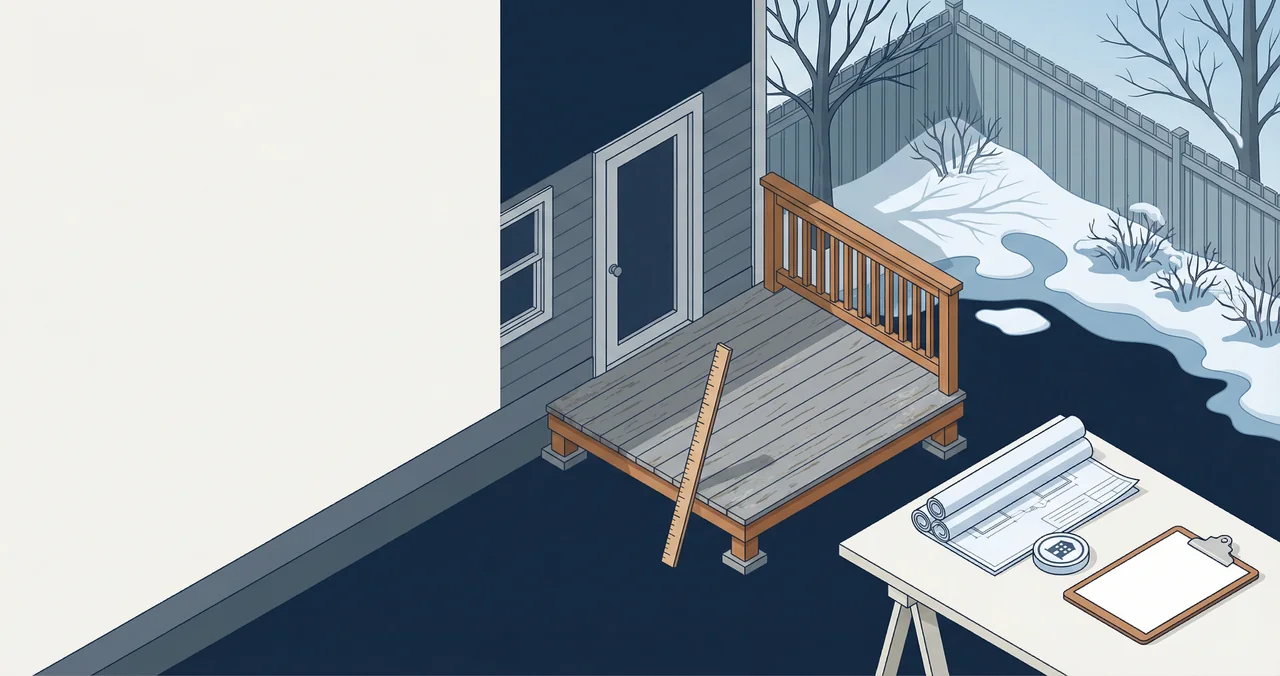
Deck Permits in Overland Park: Requirements, Costs & How to Apply in 2026
If you're planning a deck in Overland Park, the permit question is probably one of the first things on your mind. Skip it, and you risk fines, forced removal, or a nightmare when you try to sell your home. Get it right, and the process is straightforward — a few forms, a fee, and a couple of inspections.
🏗️ Planning a deck project?
Get a free manual project review, or visualize your dream deck with AI before requesting quotes.
📋 Tool Alert: Permit Checker
Do you really need a permit? Check the exact rules for your city or township.
Check Permits →Here's exactly what Overland Park requires in 2026.
<!-- slot:after-intro -->
Do You Need a Deck Permit in Overland Park?
Yes, in most cases. Overland Park's Planning & Development Services department requires a building permit for most residential deck projects. The city follows the International Residential Code (IRC) with local amendments, and the rules are clear:
- Decks over 200 square feet require a permit
- Decks more than 30 inches above grade require a permit
- Any deck attached to the house typically requires a permit, regardless of size
A small, ground-level platform under 200 square feet that sits independently from your home *may* be exempt — but even then, it still needs to meet setback requirements. When in doubt, call the city's Development Services office at (913) 895-6225 before you start building.
Bottom line: If you're building anything beyond a simple ground-level patio platform, plan on pulling a permit.
When a Permit Is Required
Not every outdoor project triggers the same requirements. Here's a quick breakdown:
| Project Type | Permit Required? |
|---|---|
| Deck over 200 sq ft | Yes |
| Deck over 30 inches above grade | Yes |
| Attached deck (any size) | Yes |
| Freestanding deck under 200 sq ft and under 30" high | Usually no — verify with the city |
| Deck repair (replacing boards, same footprint) | Typically no |
| Adding stairs or railings to existing deck | Yes |
| Structural changes to existing deck | Yes |
| Adding a roof or pergola over a deck | Yes (separate permit may apply) |
One thing Overland Park homeowners often miss: replacing an old deck isn't always permit-free. If you're changing the footprint, altering the structure, or replacing the ledger board connection, the city treats it as new construction.
Permit Fees & Processing Time
How Much Does a Deck Permit Cost in Overland Park?
Overland Park bases permit fees on the estimated project valuation. For a typical residential deck:
- Basic permit fee: $75–$200 for most residential decks
- Plan review fee: Often included, but complex projects may incur an additional $50–$100
- Inspection fees: Included with the permit
For a standard 300–400 square foot pressure-treated deck with an estimated project cost of $7,500–$18,000, expect total permit fees in the $100–$175 range. Larger composite or Trex builds valued at $20,000–$40,000+ will land closer to $150–$250.
These fees are a fraction of your total project cost. For reference, installed deck pricing in the Overland Park area runs:
| Material | Installed Cost (per sq ft) |
|---|---|
| Pressure-treated wood | $25–$45 |
| Cedar | $35–$55 |
| Composite | $45–$75 |
| Trex (premium composite) | $50–$80 |
| Ipe (hardwood) | $60–$100 |
If you're weighing material options, composite decking handles freeze-thaw cycles significantly better than wood in climates like ours. Worth factoring in before you finalize plans.
How Long Does Permit Approval Take?
- Standard residential deck permits: 5–10 business days for plan review
- Simple projects with complete applications: Sometimes faster, especially during slower months (November through February)
- Peak season (March through June): Expect delays. Every contractor in the metro is submitting permits at the same time
Pro tip: Submit your permit application in January or February. The city processes applications faster during winter, and you'll be first in line when building season opens in May. Overland Park's short building window — roughly May through October — means contractor schedules fill fast. Book your builder by March if you want a spring start.
<!-- slot:mid-content -->
Building Codes & Setback Rules
Overland Park follows the IRC (International Residential Code) with local amendments. Here are the key requirements that affect deck construction:
Structural Requirements
- Frost line depth: Footings must extend to a minimum of 36 inches below grade in the Overland Park area. This is non-negotiable — Kansas freeze-thaw cycles will heave shallow footings right out of the ground
- Post footings: Minimum 12-inch diameter concrete footings extending below the frost line
- Joist sizing and spacing: Must comply with IRC span tables. Most residential decks use 2x8 or 2x10 joists at 16 inches on center
- Ledger board attachment: Must be bolted (not nailed) to the house rim joist with proper flashing. This is the single most common point of deck failure — inspectors look at it carefully
- Beam sizing: Determined by span and load. Snow load requirements in Overland Park add to the engineering
Railing & Safety Requirements
- Guardrails required on any deck surface 30 inches or more above grade
- Minimum railing height: 36 inches for residential decks (42 inches for commercial)
- Baluster spacing: No more than 4 inches between balusters (the "4-inch sphere" rule — a 4-inch ball cannot pass through)
- Stair railings: Required on any stairway with 4 or more risers
- Stair rise/run: Maximum 7¾-inch rise, minimum 10-inch tread depth
Setback Requirements
Overland Park enforces setback rules that vary by zoning district. Typical residential setbacks:
- Rear setback: 25 feet from the rear property line (varies by subdivision)
- Side setback: 8–10 feet from side property lines
- Easements: Decks cannot encroach on drainage or utility easements — check your plat survey
Critical step: Pull your property's plat survey before designing your deck. Many Overland Park subdivisions — from neighborhoods near downtown to developments in western OP near Stilwell — have specific covenants that may impose additional restrictions beyond city code. Your HOA may also have rules about materials, colors, and maximum deck height.
Climate-Specific Code Considerations
Overland Park gets hit with everything — summer heat, winter ice storms, and freeze-thaw cycles that punish exposed structures. The building code reflects this:
- Snow load design: Decks must support ground snow loads per local requirements (typically 20–25 psf in the KC metro)
- Footing depth: Deep frost line requirements (36+ inches) protect against frost heave
- Flashing and waterproofing: Ledger board connections need proper flashing to prevent moisture intrusion, which accelerates rot during freeze-thaw cycles
- Material selection matters: Pressure-treated wood needs annual sealing against moisture and road salt tracked onto deck surfaces. Composite and PVC decking holds up better with far less maintenance in this climate
If you're investing in a new deck, low-maintenance decking options are worth serious consideration given what Overland Park winters do to exposed wood.
How to Apply for a Deck Permit in Overland Park
Step 1: Prepare Your Documents
You'll need:
- Site plan showing your property boundaries, the house footprint, and the proposed deck location with dimensions and distances to property lines
- Construction drawings — a plan view and cross-section showing footings, posts, beams, joists, decking, and railings with dimensions and material specs
- Elevation drawings showing the deck height above grade
- Property survey or plat showing easements and setbacks
- HOA approval letter (if applicable — many Overland Park neighborhoods require this)
Your drawings don't need to be architect-level, but they must be clear, to scale, and include all structural details. Many Overland Park deck contractors prepare permit drawings as part of their service.
Use PaperPlan to visualize different decking materials on your own home before committing — it helps you finalize design decisions before you lock in permit drawings.
Step 2: Submit Your Application
Overland Park accepts permit applications through:
- Online: The city's online permitting portal — search for building permits under Planning & Development Services
- In person: City Hall, 8500 Santa Fe Drive, Overland Park, KS 66212 — Planning & Development Services counter
The online portal is faster. Upload your documents, pay fees electronically, and track your application status without a trip downtown.
Step 3: Plan Review
A plans examiner reviews your submission for code compliance. For straightforward residential decks, this typically takes 5–10 business days. You'll be notified if revisions are needed.
Common reasons for revision requests:
- Missing footing depth specifications
- Inadequate ledger board connection details
- Setback violations
- Incomplete structural calculations for elevated decks
Step 4: Receive Your Permit & Build
Once approved, your permit is valid for 180 days (6 months). Post the permit card in a visible location at the job site — inspectors look for it.
Step 5: Schedule Inspections
Overland Park requires inspections at key stages:
1. Footing inspection — before pouring concrete (verify depth and diameter)
2. Framing inspection — after framing is complete but before decking is installed (verify structural connections, ledger board, joist hangers)
3. Final inspection — completed deck including railings, stairs, and all safety features
Don't skip inspections. Your contractor should schedule each one. If an inspection fails, you'll need corrections before the project can proceed.
If you're considering a DIY deck build, understand that you're still responsible for meeting every code requirement and passing every inspection. The permit is in your name as the homeowner.
What Happens If You Build Without a Permit
This is where homeowners get into real trouble. Building a deck without a required permit in Overland Park can result in:
- Stop-work orders — the city shuts down construction immediately
- Fines — Overland Park can levy daily penalties until the violation is resolved
- Forced removal — in extreme cases, the city can require you to tear down the unpermitted structure
- Insurance problems — your homeowner's insurance may deny claims for injuries or damage involving an unpermitted deck
- Sale complications — unpermitted work shows up during buyer inspections and title searches. It can kill a deal or force you to retroactively permit (and possibly rebuild to current code) at your expense
Can You Get a Retroactive Permit?
Sometimes. Overland Park may allow you to apply for an "after-the-fact" permit, but expect:
- Higher fees (often double the standard permit fee)
- Required inspections that may involve opening up finished work
- Possible reconstruction if the deck doesn't meet current code
It's always cheaper and simpler to get the permit first than to deal with enforcement after the fact.
HOA Enforcement
Many Overland Park subdivisions have active HOAs with their own architectural review processes. Even if you somehow avoid the city's attention, your HOA won't miss an unapproved deck. Fines, liens, and forced removal are all on the table.
<!-- slot:before-faq -->
🎨 Not sure which material to pick?
Upload a photo of your backyard and see exactly how Trex, TimberTech, or cedar would look — free and instant.
Frequently Asked Questions
How much does a deck permit cost in Overland Park?
Most residential deck permits in Overland Park run $100–$250, depending on your project's estimated valuation. The fee is based on a percentage of total construction cost. For a typical 300–400 square foot deck costing $10,000–$30,000 installed, budget $100–$200 for the permit. It's a small fraction of your total investment — and far cheaper than the fines for building without one.
How long does it take to get a deck permit approved in Overland Park?
Plan on 5–10 business days for standard residential deck permits, assuming your application is complete and doesn't need revisions. During peak season (March through June), processing can slow down. Submit your application during winter months for the fastest turnaround, so you're ready to build when the best time to build a deck arrive in May.
Do I need a permit for a small deck or ground-level patio deck?
If your deck is under 200 square feet, less than 30 inches above grade, and freestanding (not attached to your house), you may be exempt from a permit. However, you still need to meet setback requirements and local zoning rules. Ground-level platforms sitting directly on grade are often exempt, but always verify with Overland Park's Planning & Development Services office before building. One phone call can save you from a costly mistake.
What is the frost line depth in Overland Park for deck footings?
Deck footings in Overland Park must extend at least 36 inches below grade to get below the frost line. Some areas of Johnson County may require deeper footings depending on soil conditions. Your building inspector will verify footing depth during the footing inspection — it's one of the first things they check. Shallow footings in Kansas lead to frost heave, which can shift your entire deck structure within a few winters.
Can my contractor pull the deck permit for me?
Yes. Most licensed deck contractors in Overland Park handle the entire permit process — drawings, application, fees, and inspection scheduling. This is standard practice. However, the permit is ultimately tied to your property, so you're responsible for ensuring the work passes final inspection. Make sure your contractor is licensed and insured in Overland Park, and ask for a copy of the approved permit for your records. If you're comparing builders, understanding what to look for in a deck contractor helps you ask the right questions.
<!-- slot:end -->
📋 Planning a deck project?
Get a free manual project review from our team — no obligation, no spam.
Get Free Project Review →Upload a backyard photo and preview real decking materials with AI — free, instant, no sign-up.
Permits, costs, material comparisons, and questions to ask before requesting quotes — delivered to your inbox.