
Deck Permits in Portland (2026)
Need a deck permit in Portland? Learn requirements, fees, building codes, setback rules, and how to apply through Portland's BDS in 2026.
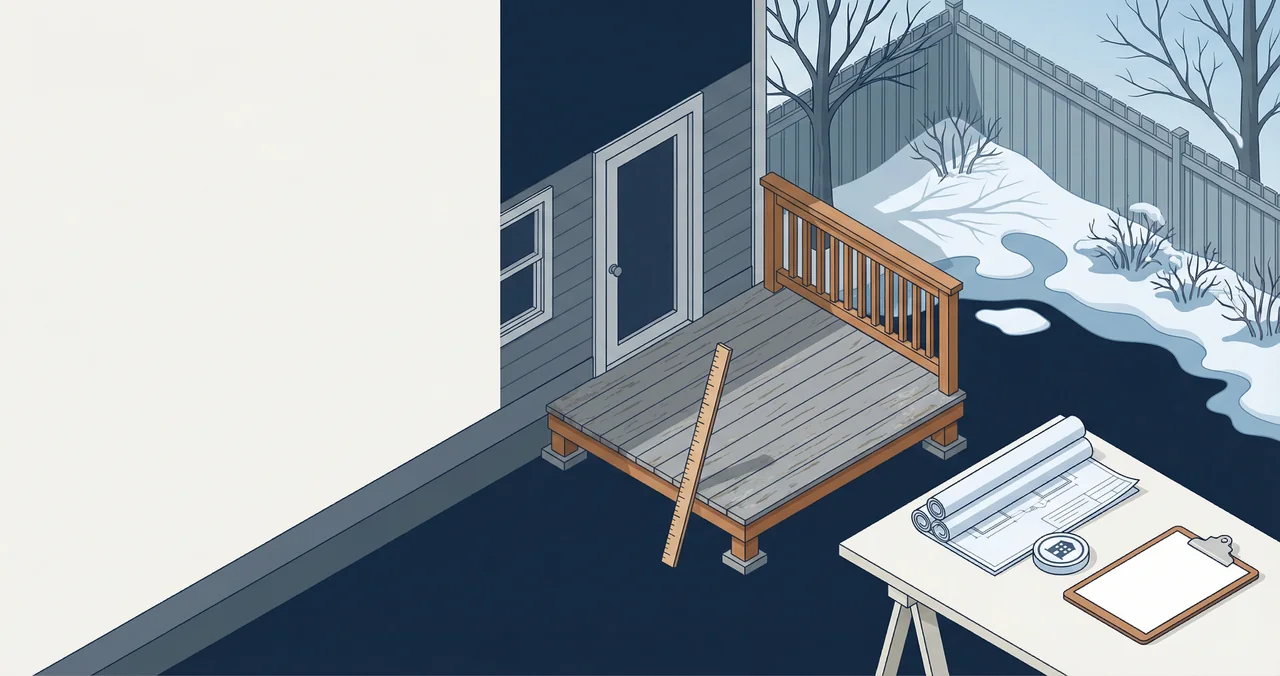
Do You Need a Deck Permit in Portland?
If you're planning to build a deck in Portland, the short answer is: probably yes. Portland's Bureau of Development Services (BDS) requires a building permit for most deck projects. The rules are straightforward, but ignoring them can cost you thousands down the road — in fines, forced teardowns, or problems when you sell your home.
🏗️ Planning a deck project?
Get a free manual project review, or visualize your dream deck with AI before requesting quotes.
📋 Tool Alert: Permit Checker
Do you really need a permit? Check the exact rules for your city or township.
Check Permits →Here's the quick breakdown:
- Decks over 200 square feet require a permit, regardless of height
- Decks more than 30 inches above grade require a permit, regardless of size
- Any deck attached to your house typically requires a permit because it affects the structure's lateral load path
- Freestanding decks under 200 sq ft AND under 30 inches above grade are generally exempt
Even if your project falls into the exempt category, it still needs to comply with all applicable building codes. "Exempt from a permit" doesn't mean "exempt from the rules."
<!-- slot:after-intro -->
When a Permit Is Required
Portland follows the Oregon Residential Specialty Code (ORSC), which aligns closely with the International Residential Code (IRC). The permit triggers are clear, but a few situations catch homeowners off guard.
You Definitely Need a Permit If:
- Your deck exceeds 200 square feet in total area
- Any part of the deck surface is more than 30 inches above finished grade
- The deck attaches to your home's structure (ledger board connection)
- You're adding a roof or pergola cover to an existing or new deck
- Your project includes electrical work for lighting or outlets (separate electrical permit required)
- You're building over or near a public easement or right-of-way
You Probably Don't Need a Permit If:
- The deck is freestanding (not attached to the house), under 200 sq ft, and under 30 inches above grade
- You're replacing deck boards only on an existing permitted deck without altering the structure
- You're building a ground-level platform that sits directly on grade
Gray Areas Worth a Phone Call
Some Portland neighborhoods — especially in the West Hills, Sellwood-Moreland, and areas along the Willamette — have overlay zones with additional restrictions. If your property is in a historic district, environmental zone, or flood-prone area, you may face extra review steps even for smaller projects.
When in doubt, call Portland BDS at (503) 823-7300 or visit the Development Services Center at 1900 SW 4th Avenue. A quick 15-minute conversation can save you months of headaches.
Permit Fees & Processing Time
Portland's deck permit fees are based on project valuation — the estimated total cost of your build, including materials and labor.
Typical Permit Fee Ranges (2026)
| Project Valuation | Approximate Permit Fee |
|---|---|
| Under $2,000 | $150–$250 |
| $2,000–$10,000 | $250–$500 |
| $10,000–$25,000 | $500–$900 |
| $25,000–$50,000 | $900–$1,500 |
| Over $50,000 | $1,500+ |
Additional fees you may encounter:
- Plan review fee: Roughly 65% of the building permit fee
- State surcharge: Small percentage added on top
- Mechanical/electrical permits: Separate fees if your deck includes lighting, heating, or plumbing
- System development charges (SDCs): Rare for decks, but possible if your project increases impervious surface area significantly
Processing Time
- Over-the-counter permits (simple projects): Same day to 3 business days
- Standard plan review: 4–8 weeks during peak season (spring and summer)
- Complex projects (environmental overlay, historic district): 8–16 weeks
Pro tip: Submit your permit application in January or February. Portland's dry building season runs June through September, and contractors book fast. If you wait until April to start the permit process, you could lose your summer build window entirely. Getting your permit squared away in winter means your contractor can break ground the moment the rain eases up.
<!-- slot:mid-content -->
Building Codes & Setback Rules
Portland's building codes for decks cover structural requirements, safety features, and property line setbacks. Here are the specifics you need to know.
Structural Requirements
- Footings must extend below the frost line — 12 to 24 inches deep in Portland, depending on your specific location and soil conditions
- Concrete footings are standard. Most Portland inspectors want to see a minimum 18-inch diameter footing for standard deck posts
- Joist spacing: Typically 16 inches on center for most decking materials; some composite brands allow 12-inch spacing for diagonal installations
- Ledger board connections must use lag screws or through-bolts with proper flashing. This is the number-one failure point inspectors flag in Portland — especially critical given the city's persistent rain
- Post-to-beam connections require approved hardware (Simpson Strong-Tie or equivalent)
Railing & Safety Codes
- Railings are required when any part of the deck surface is 30 inches or more above grade
- Minimum railing height: 36 inches (42 inches if the deck is used as a landing for an upper-story exit)
- Baluster spacing: No opening larger than 4 inches (the "4-inch sphere rule")
- Stairs need a minimum width of 36 inches, with risers between 4 and 7¾ inches and treads at least 10 inches deep
- Guardrails must resist 200 lbs of force applied at the top — this matters for composite railing systems that can flex more than wood
Setback Rules
Portland's setback requirements depend on your zoning designation. The most common residential zones:
| Zone | Side Setback | Rear Setback | Front Setback |
|---|---|---|---|
| R5 (Standard lot) | 5 feet | 5 feet | 15 feet |
| R2.5 (Narrow lot) | 3–5 feet | 5 feet | 10–15 feet |
| R7 (Larger lot) | 5 feet | 5 feet | 15–20 feet |
Important notes on setbacks:
- Uncovered decks under 30 inches may be allowed to encroach into setbacks — but verify with BDS for your specific zone
- Covered decks and pergolas are treated more like building additions, with stricter setback enforcement
- If your property backs up to an environmental zone (common near Johnson Creek, Forest Park, or any riparian corridor), you may have additional buffer requirements
- Corner lots have two front setbacks, which can significantly limit where you place a deck
You can look up your property's zoning at Portland Maps — search your address to see zone designations, overlay zones, and property boundaries.
Portland-Specific Climate Considerations for Code Compliance
Portland's rain changes how you need to think about code requirements:
- Flashing details matter more here than almost anywhere. Water intrusion at the ledger board is the leading cause of structural deck failure in the Pacific Northwest. Inspectors will look closely at your flashing, and you should too.
- Drainage: Ground-level decks need adequate ventilation and drainage underneath to prevent moisture buildup, mold, and rot. A minimum 6 inches of clearance between the ground and joist bottoms is recommended.
- Material choice directly affects longevity. Pressure-treated lumber holds up but requires regular sealing and maintenance. Composite and PVC decking resist Portland's constant moisture far better — they won't rot, warp, or grow algae the way untreated wood does.
Use PaperPlan to visualize different decking materials on your own home before committing — it helps you see how composite, wood, or PVC will actually look against your siding and landscaping in Portland's overcast light.
How to Apply for a Deck Permit in Portland
Portland's BDS has streamlined the permit process in recent years. Here's your step-by-step path.
Step 1: Gather Your Documents
Before you apply, prepare:
- Site plan showing your property boundaries, existing structures, and the proposed deck location with dimensions and setback measurements
- Construction drawings including a plan view, elevation views, and cross-section details
- Structural details: footing sizes, post sizes, beam spans, joist spans, ledger attachment method, railing design
- Material specifications for decking, framing, and hardware
Your contractor should handle most of this. If you're building yourself, BDS has pre-approved standard deck plans that simplify the process for common configurations. These prescriptive plans cover standard rectangular decks and can save you significant plan review time and cost.
Step 2: Submit Your Application
You have two options:
1. Online: Submit through Portland's Development Hub portal. Upload your plans digitally and track your application status online.
2. In person: Visit the Development Services Center at 1900 SW 4th Avenue, Suite 100. Staff can review simple projects over the counter, sometimes issuing permits the same day.
Step 3: Plan Review
- Simple decks using prescriptive standards may qualify for over-the-counter review
- More complex projects go through standard plan review (4–8 weeks)
- BDS may request revisions — respond promptly to keep things moving
Step 4: Pay Fees and Receive Your Permit
Once approved, pay your permit fees and you'll receive your building permit. Post the permit visibly at the job site before construction begins.
Step 5: Schedule Inspections
Portland typically requires two to three inspections for deck projects:
1. Footing/foundation inspection — before pouring concrete
2. Framing inspection — after framing is complete but before decking is installed
3. Final inspection — after everything is complete
Call BDS at (503) 823-7300 or schedule online through the Development Hub to book your inspections. Give at least 24 hours' notice.
Step 6: Close Out the Permit
After your final inspection passes, your permit is closed and the work is on record. This matters — it proves the deck was built to code, which protects you at resale.
What Happens If You Build Without a Permit
Skipping the permit might seem tempting, especially for a "simple" deck. It's not worth it. Here's what you're risking in Portland.
Financial Consequences
- Double fees: BDS can charge you double the normal permit fee for unpermitted work — that's the investigation fee on top of what you would have paid originally
- Fines: Additional penalties for code violations found during investigation
- Forced removal: If the deck doesn't meet code and can't be brought into compliance, you may have to tear it down entirely — at your expense
- Home sale complications: Title companies and buyers' inspectors flag unpermitted structures. You could face mandatory remediation before closing, lose buyers, or accept a significantly lower offer
Insurance Issues
Most homeowner's insurance policies have clauses about code compliance. An unpermitted deck that collapses or causes injury could give your insurer grounds to deny your claim. That's a catastrophic risk for the sake of saving a few hundred dollars in permit fees.
How Portland Finds Out
- Neighbor complaints — the most common trigger
- Aerial photography and satellite imagery — Portland updates these regularly
- When you sell — buyers' inspectors and appraisers compare built structures to permit records
- Other permit applications — if you pull a permit for something else, the inspector may notice the unpermitted deck
If you've already built without a permit, contact BDS proactively. Applying for an after-the-fact permit is expensive, but it's cheaper than the alternative. They'll require an inspection and potentially opening up parts of the structure to verify it meets code.
For a deeper look at unpermitted construction risks, see our guide on building a deck without a permit and why it's risky.
<!-- slot:before-faq -->
🎨 Not sure which material to pick?
Upload a photo of your backyard and see exactly how Trex, TimberTech, or cedar would look — free and instant.
Frequently Asked Questions
How much does a deck permit cost in Portland?
Most residential deck permits in Portland run between $250 and $900, depending on your project's total valuation. A standard 12×16 pressure-treated deck might cost around $300–$500 in permit fees, while a larger composite deck could push past $800. Add plan review fees (roughly 65% of the permit fee) and any electrical permits if you're adding lighting or outlets.
How long does it take to get a deck permit in Portland?
Simple projects using prescriptive plans can sometimes get over-the-counter approval in one visit. Standard plan review takes 4 to 8 weeks during busy season. In winter months (November through February), processing is usually faster — another reason to best time to build a deck and apply early.
Can I build a deck myself in Portland, or do I need a licensed contractor?
Oregon allows homeowners to build their own decks on property they own and occupy. You still need to pull the permit yourself, meet all code requirements, and pass all inspections. That said, Portland's rain and soil conditions make proper waterproofing and footing work critical — mistakes here lead to costly structural problems. If you're considering DIY, our article on whether you can build your own deck covers what you should know.
Do I need a permit to replace my existing deck boards?
If you're only replacing surface decking on an existing, previously permitted deck — and not altering the structure, footings, or framing — you typically don't need a permit. But if you're replacing joists, beams, posts, or changing the deck's footprint, that's structural work requiring a permit. When in doubt, call BDS.
What are the best decking materials for Portland's climate?
Portland's constant moisture is hard on wood. Composite and PVC decking are the top choices for low maintenance — they resist mold, algae, and rot without annual sealing. Here's how installed costs compare:
| Material | Installed Cost (per sq ft) |
|---|---|
| Pressure-treated wood | $25–$45 |
| Cedar | $35–$55 |
| Composite | $45–$75 |
| Trex (composite) | $50–$80 |
| Ipe (hardwood) | $60–$100 |
Pressure-treated wood is the budget option but demands regular cleaning and sealing — critical in Portland where moss and algae take hold fast. Cedar looks beautiful but needs even more upkeep. For most Portland homeowners, composite decking hits the best balance of durability, appearance, and long-term value. If you're comparing specific brands, check our guide to low-maintenance decking options.
<!-- slot:end -->
📋 Planning a deck project?
Get a free manual project review from our team — no obligation, no spam.
Get Free Project Review →Upload a backyard photo and preview real decking materials with AI — free, instant, no sign-up.
Permits, costs, material comparisons, and questions to ask before requesting quotes — delivered to your inbox.