
Deck Permits in Stockton (2026)
Need a deck permit in Stockton? Learn requirements, fees, processing times, building codes, and how to apply through Stockton's Development Services in 2026.
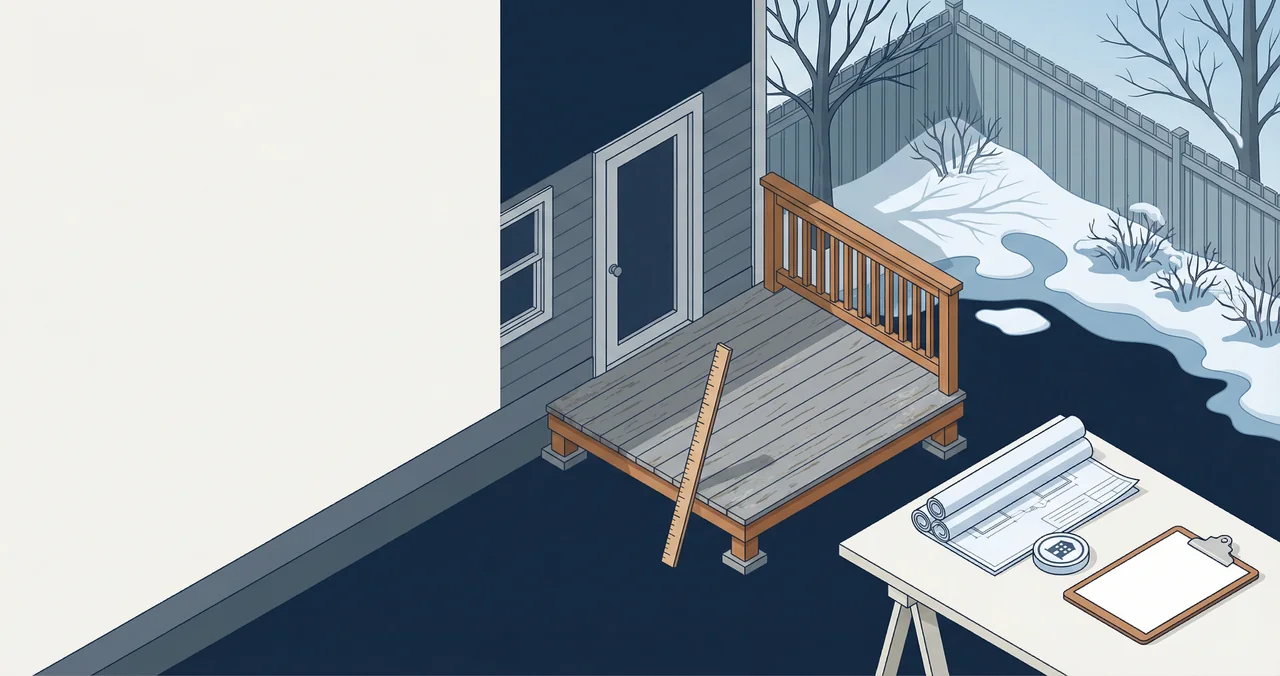
Deck Permits in Stockton: Requirements, Costs & How to Apply in 2026
Building a deck in Stockton without pulling a permit first? That's a gamble you don't want to take. The City of Stockton requires permits for most deck projects, and skipping the process can mean fines, forced removal, or serious headaches when you try to sell your home.
🏗️ Planning a deck project?
Get a free manual project review, or visualize your dream deck with AI before requesting quotes.
📋 Tool Alert: Permit Checker
Do you really need a permit? Check the exact rules for your city or township.
Check Permits →Looking for more regional information? Check out our California State Decking Hub.
Here's exactly what you need to know about Stockton's deck permit requirements, what it costs, and how to get through the process without delays.
<!-- slot:after-intro -->
Do You Need a Deck Permit in Stockton?
Yes, in most cases. The City of Stockton's Community Development Department requires a building permit for deck construction. The general rule:
- Decks over 200 square feet need a permit
- Decks more than 30 inches above grade need a permit
- Any deck attached to your house typically needs a permit, regardless of size
A small, ground-level platform deck under 200 square feet that sits less than 30 inches off the ground *may* be exempt. But "may" is doing heavy lifting in that sentence. Even for smaller projects, Stockton's building officials recommend checking with the Development Services department before you start. Zoning overlays, neighborhood-specific restrictions, or HOA rules in communities like Brookside, Spanos Park, or Lincoln Village can add requirements that catch homeowners off guard.
Bottom line: Call Stockton's Community Development Department at (209) 937-8561 or visit their office at 345 N. El Dorado Street before ordering materials.
When a Permit Is Required
Here's a quick breakdown of what triggers the permit requirement:
| Scenario | Permit Required? |
|----------|-----------------|
| Ground-level deck under 200 sq ft, not attached to house | Usually no |
| Deck over 200 sq ft at any height | Yes |
| Deck over 30 inches above grade at any size | Yes |
| Attached deck (ledger board to house) | Yes |
| Deck with a roof or pergola covering | Yes |
| Adding electrical or plumbing to a deck | Yes |
| Replacing deck boards on existing framing | Usually no |
| Changing deck footprint or height | Yes |
A few situations trip people up. Replacing your deck surface — swapping out old pressure-treated boards for composite, for example — generally doesn't require a permit if you're keeping the same footprint and structure. But if you're replacing joists, beams, or posts, that's structural work, and you'll need a permit.
Also worth noting: if your property falls within a flood zone (parts of Stockton near the San Joaquin River and Delta areas are in FEMA flood zones), additional requirements apply. Your deck design may need to account for flood elevation standards.
Permit Fees & Processing Time
Stockton's permit fees are based on the project's valuation — essentially, the total cost of your deck project. Here's what to expect in 2026:
Typical Fee Ranges
- Basic deck permit (under $5,000 project value): $150–$300
- Mid-size deck ($5,000–$15,000 project value): $300–$600
- Large or complex deck ($15,000–$30,000+ project value): $600–$1,200+
These fees typically include plan review and inspection fees. Additional charges may apply for:
- Plan check fees: Usually 65% of the building permit fee
- Technology/records surcharge: $15–$50
- State-mandated fees (SMIP, Building Standards): Small percentage added automatically
For a typical 300-square-foot pressure-treated deck at $25–$45 per square foot installed, you're looking at a project cost of $7,500–$13,500 and permit fees in the $300–$600 range.
Processing Time
- Over-the-counter permits (simple projects with complete documentation): Same day to 3 business days
- Standard plan review: 2–4 weeks
- Revised plans (if corrections are needed): Additional 1–2 weeks per cycle
Want to speed things up? Submit complete plans the first time. Incomplete applications are the number one reason for delays. Stockton's Development Services has been working to streamline their review process, but you're still at the mercy of their workload.
<!-- slot:mid-content -->
Building Codes & Setback Rules
Stockton follows the 2022 California Building Code (CBC), which is based on the International Residential Code with California-specific amendments. Here's what matters for your deck:
Structural Requirements
- Footings: Must extend to a minimum depth of 12 inches below grade. Stockton's frost line is shallow — 12–18 inches — thanks to the mild Central Valley climate, so you won't need the deep footings required in colder regions
- Joist spacing: Typically 16 inches on center for standard decking, though some composite products allow 12-inch spacing
- Beam sizing: Depends on span and load; your plans must show calculations
- Ledger board attachment: Must use approved fasteners (lag bolts or through-bolts) with proper flashing. This connection is the most common point of deck failure, so inspectors scrutinize it closely
- Post-to-beam connections: Require approved metal connectors — nailing alone isn't acceptable
Railing Requirements
- Guardrails required on any deck surface 30 inches or more above grade
- Minimum railing height: 42 inches (California is stricter than the IRC's 36-inch minimum)
- Baluster spacing: No more than 4 inches between balusters (the "4-inch sphere rule")
- Stair handrails: Required on stairs with four or more risers, must be graspable (34–38 inches high)
If you're considering cable railing or other modern railing systems, make sure they meet California's specific requirements. Some cable railing systems need engineering certification.
Setback Requirements
Stockton's zoning code sets minimum setbacks that your deck must respect:
- Rear yard setback: Typically 15–20 feet from the rear property line (varies by zone)
- Side yard setback: Usually 5–10 feet depending on your zoning district
- Front yard: Decks are generally not permitted in front yard setbacks
Important: These are general guidelines. Your specific setbacks depend on your zoning designation (R-1, R-2, PUD, etc.). Pull your property's zoning information from Stockton's online GIS map or call the Planning Division before finalizing your deck layout.
Properties in planned developments like Weston Ranch, Morada, or Spanos Park West may have additional CC&R restrictions that go beyond city code. Check with your HOA.
Climate Considerations for Stockton Decks
Stockton's climate works in your favor. With mild year-round temperatures and minimal freeze risk, you can build almost any time of year. A few things to keep in mind:
- Heat: Summer temperatures regularly hit 95–105°F. Dark-colored composite decking can get uncomfortably hot — consider lighter colors or materials with good heat dissipation
- UV exposure: The Central Valley gets intense sun. Choose materials and finishes rated for high UV exposure. Cedar and redwood are locally popular and hold up well when properly sealed
- Moisture: While Stockton doesn't get coastal salt air, the Delta-influenced humidity means good ventilation under your deck matters. Leave adequate spacing between boards for drainage
- Soil conditions: Some areas of Stockton have expansive clay soils. Your footing design may need to account for soil movement — another reason inspectors want to see your plans
Use PaperPlan to visualize different decking materials on your own home before committing — it helps you see how lighter or darker shades will actually look against your siding and landscaping.
How to Apply for a Deck Permit in Stockton
Here's the step-by-step process:
Step 1: Gather Your Documentation
You'll need:
- Site plan showing your property boundaries, existing structures, and proposed deck location with dimensions and setback measurements
- Construction drawings including a plan view, elevation views, and cross-section details
- Structural details — footing sizes, beam/joist sizing, post spacing, ledger attachment method, and railing details
- Materials list specifying lumber species, grades, and hardware
- Property owner authorization (if someone else is applying on your behalf)
For a straightforward deck, many contractors in Stockton provide permit-ready drawings as part of their service. If you're building the deck yourself, you can draft plans yourself or hire a designer — just make sure they're to scale and include all required details.
Step 2: Submit Your Application
You have two options:
1. In person: Visit Stockton's Permit Center at 345 N. El Dorado Street, Stockton, CA 95202. Simple projects may get over-the-counter approval the same day.
2. Online: Stockton has been expanding online permitting through their portal. Check the city's website for current e-permitting availability.
Step 3: Plan Review
Once submitted, a plan reviewer checks your drawings against California Building Code and Stockton's zoning requirements. If everything's in order, you'll receive your approved plans and permit.
If corrections are needed, you'll get a correction notice listing specific items to address. Respond to all items at once — partial corrections just create more review cycles.
Step 4: Pay Fees and Pick Up Your Permit
After approval, pay your fees and you'll receive your building permit. Post the permit visibly at the job site before starting work. Inspectors will look for it.
Step 5: Schedule Inspections
Stockton typically requires these inspections for deck projects:
1. Footing inspection — after holes are dug, before pouring concrete
2. Framing inspection — after structural framing is complete, before decking is installed
3. Final inspection — after the deck is fully complete, including railings and stairs
Schedule inspections through Stockton's automated inspection line or online portal. Give at least 24 hours' notice. Failed inspections mean corrections and re-inspection, so build it right the first time.
What Happens If You Build Without a Permit
This is where things get expensive. Building a deck without the required permit in Stockton can result in:
- Stop-work orders: The city can shut down your project immediately
- Double or triple permit fees: Retroactive permits in Stockton typically come with penalty fees of 2–4x the original permit cost
- Forced removal: If your deck doesn't meet code, you may have to tear it down. At $25–$45 per square foot for a pressure-treated deck or $45–$75 per square foot for composite, that's thousands of dollars demolished
- Insurance problems: Your homeowner's insurance may deny claims for injuries or damage related to an unpermitted structure
- Title issues: Unpermitted work shows up during home sales. Buyers will demand you remediate it, or they'll walk. In Stockton's competitive real estate market, this is a deal-killer
- Liability: If someone gets injured on your unpermitted deck, your legal exposure increases significantly
The permit process costs a few hundred dollars and a few weeks of patience. Skipping it can cost you tens of thousands. The math is simple.
Deck Cost Context for Stockton in 2026
Since you're already planning a permitted deck, here's what Stockton homeowners are paying for professional installation in 2026:
| Material | Installed Cost per Sq Ft | 300 Sq Ft Deck |
|----------|-------------------------|----------------|
| Pressure-treated | $25–$45 | $7,500–$13,500 |
| Cedar | $35–$55 | $10,500–$16,500 |
| Composite | $45–$75 | $13,500–$22,500 |
| Trex (brand) | $50–$80 | $15,000–$24,000 |
| Ipe (hardwood) | $60–$100 | $18,000–$30,000 |
Cedar and redwood are locally available in the Central Valley and remain popular choices in Stockton. They're naturally resistant to rot and insects, and they handle the dry summers well with proper sealing. Stockton's year-round building season also keeps contractor pricing competitive — you won't see the seasonal premiums that colder-climate cities deal with.
For more detailed breakdowns on deck project sizing, check out our 12x16 deck cost guide or 20x20 deck cost guide for reference points.
<!-- slot:before-faq -->
🎨 Not sure which material to pick?
Upload a photo of your backyard and see exactly how Trex, TimberTech, or cedar would look — free and instant.
Frequently Asked Questions
How much does a deck permit cost in Stockton?
Most residential deck permits in Stockton run $150–$600, depending on your project's total valuation. Simple ground-level decks on the lower end, large elevated decks or multi-level designs on the higher end. Plan check fees, technology surcharges, and state-mandated fees add a bit more. Budget $300–$500 for a typical backyard deck to be safe.
How long does it take to get a deck permit in Stockton?
Simple projects with complete documentation can sometimes get same-day or next-day approval through Stockton's over-the-counter process. Standard plan review takes 2–4 weeks. If your plans need corrections, add another 1–2 weeks per review cycle. The best thing you can do is submit thorough, complete plans from the start.
Can I build a deck without a permit in Stockton?
Only very small decks — generally under 200 square feet, less than 30 inches above grade, and not attached to your house — may be exempt from permit requirements. Even then, your deck still needs to comply with setback rules and building codes. For anything larger or elevated, you absolutely need a permit. The risks of skipping it — fines, forced removal, insurance issues — far outweigh the cost of doing it right.
Do I need an architect or engineer for my Stockton deck permit?
For most standard residential decks, no. You or your contractor can prepare the required plans. However, if your deck is elevated significantly, has complex geometry, uses unconventional materials, or sits on challenging soil, the city may require engineered plans. An attached vs. freestanding design also affects complexity — attached decks with ledger boards face more scrutiny.
What inspections are required for a deck in Stockton?
Stockton typically requires three inspections: footing (before pouring concrete), framing (before installing decking), and final (after complete construction including railings and stairs). Schedule each inspection at least 24 hours in advance through the city's inspection line. Don't cover up work before it's been inspected — you'll just have to uncover it again.
<!-- slot:end -->
📋 Planning a deck project?
Get a free manual project review from our team — no obligation, no spam.
Get Free Project Review →Upload a backyard photo and preview real decking materials with AI — free, instant, no sign-up.
Permits, costs, material comparisons, and questions to ask before requesting quotes — delivered to your inbox.