
Best Composite Decking for Georgia's Cl (2026)
Worried about rot, termites, or warping ruining your Georgia deck? Discover the best composite decking brands built to withstand Georgia's humid climate.
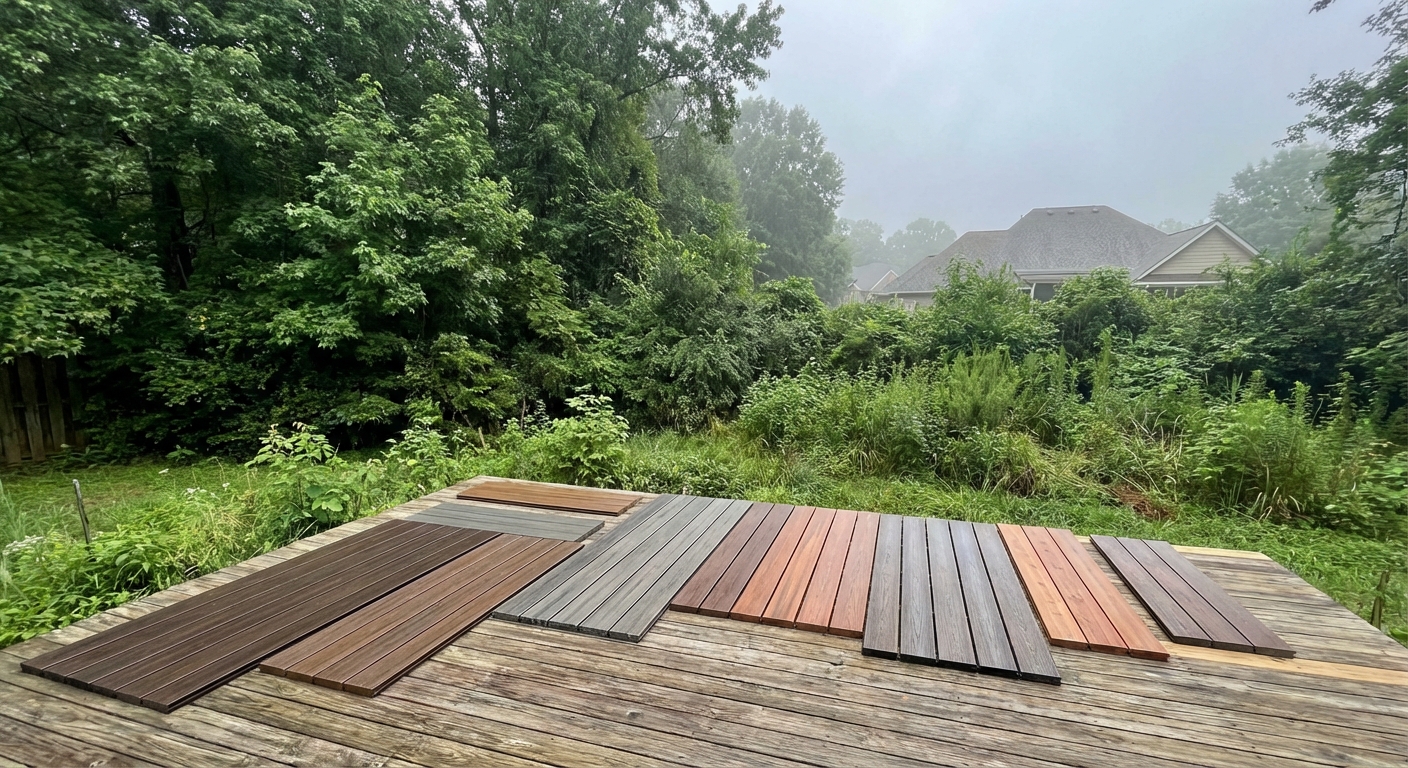
Are you planning a new deck or replacing an old one in Georgia? Choosing the right decking material is crucial to avoid constant maintenance and premature failure. Georgia's humid subtropical climate, with its hot, wet summers and mild winters, presents unique challenges. Wood decks are particularly vulnerable to mold, mildew, rot, and termites. That's why composite decking is an increasingly popular choice for Georgia homeowners looking for a durable and low-maintenance option. This guide will help you choose the best composite decking for your Georgia home, comparing top brands and highlighting factors specific to our state.
🌳 Tool Alert: Material Comparison
PT vs Composite vs Cedar. Compare 25-year total cost of ownership including maintenance.
Compare Materials →Why Composite Decking is a Smart Choice in Georgia
Looking for more regional information? Check out our Georgia State Decking Hub.
🏗️ Planning a deck project?
Get a free manual project review, or visualize your dream deck with AI before requesting quotes.
Georgia's climate isn't kind to traditional wood decks. The high humidity, especially in coastal cities like Savannah, creates a breeding ground for mold and mildew. Termites, particularly subterranean termites, are a constant threat statewide. Pressure-treated lumber offers some protection, but it still requires regular sealing and staining to prevent warping and cracking. Composite decking, on the other hand, is designed to resist these problems.
Here's a breakdown of why composite excels in Georgia:
- Moisture Resistance: Composite decking is made from a blend of wood fibers and recycled plastic, making it highly resistant to moisture absorption. This prevents rot, warping, and cracking caused by Georgia's humidity.
- Termite Resistance: The plastic component of composite decking is unappetizing to termites, offering superior protection compared to wood.
- Low Maintenance: Unlike wood, composite decking doesn't require regular staining, sealing, or painting. A simple cleaning with soap and water is usually all it takes to keep it looking its best.
- Durability: Composite decking is designed to withstand the elements, including Georgia's intense summer sun and occasional winter freezes.
- Variety of Styles: Composite decking comes in a wide range of colors, textures, and styles to match your home's aesthetic.
<!-- slot:after-intro -->
Understanding Composite Decking Costs in Georgia
While composite decking offers numerous advantages, it's important to consider the upfront cost. Composite decking typically costs more than pressure-treated lumber, but less than exotic hardwoods like Ipe. Here's a general cost comparison for installed decking in Georgia:
| Material | Cost per Square Foot (Installed) |
| ------------------- | ------------------------------- |
| Pressure-Treated | $22 - $40 |
| Composite | $40 - $70 |
| Cedar | $30 - $50 |
| Trex (Composite) | $45 - $75 |
| Ipe (Exotic Hardwood) | $55 - $95 |
Keep in mind that these are just estimates. The actual cost of your deck will depend on the size, complexity, and specific materials you choose. Factors like railing style, stairs, and any custom features will also affect the price. For a more detailed cost breakdown, see our guide on Composite [Deck Cost in Georgia: What to Expect in 2026](/decks/blog/composite-deck-cost-georgia). You can also get localized pricing information in our Deck Cost in Atlanta: Local Pricing Guide for 2026.
Top Composite Decking Brands for Georgia Homes
Here's a comparison of some of the most popular composite decking brands available in Georgia, considering their performance in our climate:
1. Trex
Trex is arguably the most well-known composite decking brand, and for good reason. They offer a wide range of products, from entry-level to high-end, all designed to withstand the elements.
- Key Features: Trex decking is made from recycled materials and is resistant to fading, staining, scratching, and mold. They offer a 25-year limited warranty for residential applications.
- Pros: Excellent durability, wide range of styles and colors, readily available in Georgia, strong brand reputation.
- Cons: Can be more expensive than some other composite decking brands. Some older Trex products had issues with staining and fading, but these have been largely addressed in newer lines.
- Best For: Homeowners looking for a reliable and long-lasting composite deck with a wide range of aesthetic options.
2. TimberTech
TimberTech, a division of AZEK, is another leading composite decking brand known for its high-quality and innovative products. They offer both composite and capped polymer decking options. Capped polymer decking provides even greater moisture resistance, making it an excellent choice for Georgia's humid climate.
- Key Features: TimberTech decking is made from recycled materials and features a protective cap that resists staining, scratching, and fading. They offer a 30-year limited warranty and a 50-year fade and stain warranty on some lines.
- Pros: Excellent durability, superior moisture resistance (especially with capped polymer options), realistic wood-grain textures, long warranties.
- Cons: Can be more expensive than Trex and other composite decking brands.
- Best For: Homeowners who prioritize long-term durability and low maintenance, and are willing to invest in a premium product.
3. Fiberon
Fiberon offers a variety of composite decking options at different price points, making it a good choice for budget-conscious homeowners. They also have a strong focus on sustainability, using recycled materials in their decking.
- Key Features: Fiberon decking is resistant to staining, fading, and cracking. They offer warranties ranging from 25 years to lifetime, depending on the product line.
- Pros: Wide range of price points, good selection of colors and textures, environmentally friendly.
- Cons: Durability may not be quite as high as Trex or TimberTech in some of their lower-priced lines.
- Best For: Homeowners looking for a balance of price, performance, and sustainability.
4. Deckorators
Deckorators offers a unique range of composite decking options with a focus on aesthetics and design. They have partnered with brands like Mineral-Based Composite (MBC) to create decking that is both durable and visually appealing.
- Key Features: Deckorators decking features unique wood-grain patterns and colors, often with a multi-tonal appearance. They offer a 25-year stain and fade warranty.
- Pros: Excellent aesthetics, innovative designs, durable and low-maintenance.
- Cons: Can be more expensive than some other composite decking brands.
- Best For: Homeowners who prioritize aesthetics and want a deck that stands out from the crowd.
5. MoistureShield
MoistureShield is a composite decking brand known for its unique Solid Core technology, which encapsulates the wood fibers in plastic, providing exceptional moisture resistance. This makes it a particularly good choice for areas with high humidity, like Savannah and other coastal regions of Georgia.
- Key Features: MoistureShield decking is fully encapsulated, making it virtually impervious to moisture. It's also resistant to termites and fungal decay. They offer a limited lifetime warranty.
- Pros: Exceptional moisture resistance, termite resistance, and long warranty.
- Cons: Limited color and style options compared to some other brands.
- Best For: Homeowners who live in areas with extremely high humidity or are particularly concerned about moisture damage.
Georgia-Specific Considerations for Composite Decking
Beyond choosing the right brand, here are some additional factors to consider when planning your composite deck in Georgia:
- Permits: Most Georgia counties require permits for decks over 200 square feet or 30 inches above grade. Check with your local building department for specific requirements. In Atlanta, you'll need to contact the Atlanta Department of City Planning. Permit costs typically range from $150-$400 in Atlanta. Savannah residents should contact the Chatham County/City of Savannah planning department, keeping in mind that the historic district has extra design review processes. Augusta residents need to work with the Augusta-Richmond County Planning & Development department. Review Do You Need a Deck Permit in Georgia? State & County Rules Explained for more details.
- Building Codes: Georgia follows the International Residential Code (IRC) 2018 with state amendments. Make sure your deck design complies with these codes.
- Footings: Georgia's frost line is relatively shallow at only 12 inches in most areas. This means you can use shallower (and therefore cheaper) footings than in colder climates. However, Georgia's red clay soil can affect drainage, so ensure proper drainage around your footings.
- Termite Protection: While composite decking is termite-resistant, it's still a good idea to take preventative measures, such as treating the soil around your deck footings with a termiticide.
- Design Considerations: Think about incorporating features that are popular in Georgia, such as screened porches to keep out mosquitoes, ceiling fans to provide cooling, and covered decks to provide shade and protection from rain.
- Best Time to Build: The best months to build a deck in Georgia are typically September through May, avoiding the peak summer heat and afternoon thunderstorms.
- Local Lumber Yards: While you're opting for composite, remember that pressure-treated Southern Yellow Pine is readily available and cheap locally. It's often used for the underlying frame even when using composite decking boards.
<!-- slot:mid-content -->
Tips for Choosing the Right Composite Decking
Here are some additional tips to help you choose the best composite decking for your Georgia home:
- Consider your budget: Composite decking prices vary widely. Determine your budget upfront and choose a product that fits your needs.
- Think about your style: Composite decking comes in a wide range of colors, textures, and styles. Choose a product that complements your home's architecture and your personal taste.
- Check the warranty: Make sure the decking you choose comes with a solid warranty that covers fading, staining, and structural defects.
- Read reviews: See what other homeowners have to say about the decking you're considering.
- Get samples: Order samples of different decking options and see how they look and feel in person.
- Talk to a professional: A qualified deck builder can help you choose the right decking material and design a deck that meets your needs and budget. You can find qualified professionals in our lists of Best Deck Builders in Atlanta: How to Find the Right Contractor, Best Deck Builders in Savannah: Local Guide for 2026, and Best Deck Builders in Augusta, GA: Trusted Local Contractors.
Visualizing Your Deck Design
Choosing the right composite decking is just one part of the process. You also need to plan the layout and design of your deck. Use PaperPlan (paperplan.app) to visualize your deck with PaperPlan design with different materials and layouts before committing to a contractor. This tool allows you to experiment with different decking colors, railing styles, and other features to create a deck that perfectly suits your needs and style.
<!-- slot:before-faq -->
Choosing the right composite decking is a significant investment, but it's one that can pay off in the long run by providing you with a beautiful, durable, and low-maintenance outdoor space that you can enjoy for years to come. By considering the factors outlined in this guide, you can make an informed decision and choose the best composite decking for your Georgia home.
🎨 Not sure which material to pick?
Upload a photo of your backyard and see exactly how Trex, TimberTech, or cedar would look — free and instant.
Frequently Asked Questions
What is the best way to clean composite decking in Georgia?
The best way to clean composite decking is with a mild soap and water solution. Use a soft-bristled brush to scrub the deck and then rinse thoroughly with a garden hose. Avoid using harsh chemicals or power washers, as these can damage the decking. For stubborn stains, you can try a composite deck cleaner specifically designed for the type of decking you have.
How long will composite decking last in Georgia's climate?
With proper installation and maintenance, composite decking can last for 25-50 years or more in Georgia's climate. The lifespan of your deck will depend on the quality of the materials, the installation techniques used, and the level of maintenance you provide.
Does composite decking get hot in the sun?
Yes, composite decking can get hot in the sun, especially darker colors. However, some newer composite decking products are designed to reflect more sunlight and stay cooler. Consider choosing a lighter color decking or installing a covered deck or pergola to provide shade.
Can I install composite decking myself?
While it's possible to install composite decking yourself, it's generally recommended to hire a professional deck builder. Installing composite decking requires specialized tools and knowledge, and improper installation can void the warranty. A professional deck builder will also be familiar with local building codes and permit requirements.
<!-- slot:end -->
📋 Planning a deck project?
Get a free manual project review from our team — no obligation, no spam.
Get Free Project Review →Upload a backyard photo and preview real decking materials with AI — free, instant, no sign-up.
Permits, costs, material comparisons, and questions to ask before requesting quotes — delivered to your inbox.