
Deck Cost in Georgia: 2026 Price Guide
Planning a new deck in Georgia? This 2026 guide breaks down deck costs per square foot, materials, permits, and factors impacting price.
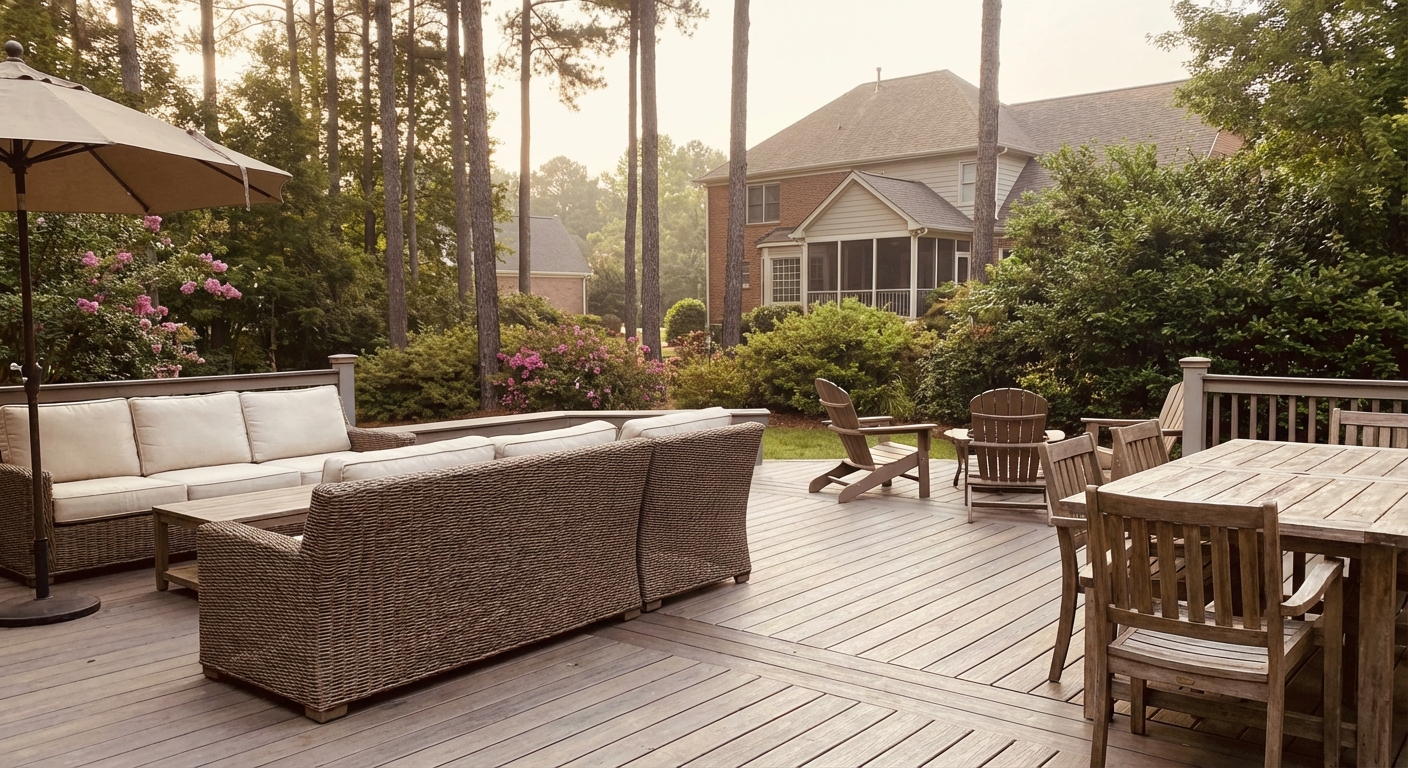
Building a deck in Georgia is a fantastic way to enjoy the outdoors, but figuring out the cost can be tricky. This guide will break down the factors influencing deck prices in Georgia so you can budget accurately for your project. We'll cover material costs, labor, permits, and regional differences across the state, from Atlanta to Savannah.
🧮 Tool Alert: Deck Cost Calculator
Estimate your project costs in seconds based on local pricing bands for your area.
Calculate My Cost →Understanding Georgia Deck Costs: A Quick Overview
Looking for more regional information? Check out our Georgia State Decking Hub.
🏗️ Planning a deck project?
Get a free manual project review, or visualize your dream deck with AI before requesting quotes.
The cost of a deck in Georgia varies significantly based on the materials you choose, the size of the deck, and the complexity of the design. Here's a general idea of what you can expect to pay per square foot for installed decks in 2026:
- Pressure-Treated Pine: $22-$40 per square foot. This is the most budget-friendly option, commonly used in Georgia.
- Cedar: $30-$50 per square foot. A natural wood option with better rot resistance than pine.
- Composite Decking: $40-$70 per square foot. Offers low maintenance and long lifespan.
- Trex Decking: $45-$75 per square foot. A popular brand of composite decking known for its durability.
- Ipe (Brazilian Hardwood): $55-$95 per square foot. A premium hardwood known for its exceptional strength and beauty.
Keep in mind these are just averages. A simple, ground-level deck will cost less than a multi-level deck with custom features.
<!-- slot:after-intro -->
Key Factors Affecting Deck Prices in Georgia
Several factors influence the final price of your deck project. Understanding these can help you make informed decisions and potentially save money.
1. Decking Material
As seen above, the decking material is a major cost driver.
- Pressure-Treated Pine: Southern Yellow Pine is readily available and affordable in Georgia. However, it requires regular staining and sealing to combat the humidity and prevent rot.
- Cedar: Offers natural resistance to decay and insects, but is more expensive than pressure-treated pine.
- Composite Decking (Trex, TimberTech, etc.): Made from recycled plastic and wood fibers, composite decking is low-maintenance and resists rot, fading, and staining. It's a popular choice in Georgia due to the humid climate. See also: Composite Deck Cost in Georgia: What to Expect in 2026.
- Ipe: A dense, durable hardwood that is naturally resistant to insects and rot. Ipe is a premium option that can last for decades but requires specialized installation and is more expensive.
2. Deck Size and Complexity
The larger the deck, the more materials and labor are required. Complex designs with multiple levels, curves, or built-in features will also increase costs.
3. Labor Costs
Labor costs vary depending on the contractor's experience, location, and the complexity of the project. Expect to pay more for experienced contractors with a proven track record. Labor costs are generally higher in metro areas like Atlanta compared to rural areas.
4. Permits and Inspections
Most Georgia counties require permits for decks exceeding a certain size or height. Typically, decks over 200 square feet or 30 inches above grade require a permit. Permit fees vary by location.
- Atlanta: Permits are obtained through the Atlanta Department of City Planning and typically cost between $150 and $400. See also: Atlanta Deck Permit: Requirements, Costs & How to Apply.
- Savannah: Permits are obtained through Chatham County/City of Savannah. If you live in the historic district, expect extra design review and potential restrictions.
- Augusta: Permits are obtained through Augusta-Richmond County Planning & Development.
Failing to obtain a permit can result in fines and even require you to tear down the deck. Always check with your local building department before starting construction. Also, remember that Georgia building code follows IRC 2018 with state amendments.
5. Site Conditions
Challenging site conditions, such as uneven terrain, rocky soil, or the presence of underground utilities, can increase labor costs and require specialized equipment. Georgia's red clay soil can also affect drainage and footing placement, potentially adding to the cost. Termites are a major concern statewide, so termite treatment may be necessary, adding to the overall expense.
6. Additional Features
Adding features like railings, stairs, lighting, built-in seating, or a screened porch will increase the cost of your deck. Screened porches are particularly popular in Georgia to combat mosquitoes. Ceiling fans and covered decks are also common additions to provide relief from the heat and rain.
7. Location, Location, Location
Deck-building costs can fluctuate across Georgia. Expect to pay higher prices in major metro areas like Atlanta and Savannah due to higher labor costs and material prices. Rural areas generally offer more competitive pricing.
Cost Breakdown: Example Deck Projects
Let's look at some example deck projects and their estimated costs in Georgia:
Example 1: Small Pressure-Treated Pine Deck
- Size: 10ft x 12ft (120 sq ft)
- Material: Pressure-Treated Pine
- Features: Basic railing, stairs (if needed)
- Estimated Cost: $2,640 - $4,800 ($22-$40/sq ft)
Example 2: Mid-Size Composite Deck
- Size: 16ft x 20ft (320 sq ft)
- Material: Composite Decking (e.g., Trex)
- Features: Standard railing, stairs (if needed), basic lighting
- Estimated Cost: $12,800 - $22,400 ($40-$70/sq ft)
Example 3: Large Ipe Deck with Custom Features
- Size: 20ft x 30ft (600 sq ft)
- Material: Ipe
- Features: Custom railing, built-in seating, covered area, lighting
- Estimated Cost: $33,000 - $57,000 ($55-$95/sq ft)
These are just estimates. To get an accurate quote, you'll need to consult with local deck builders.
<!-- slot:mid-content -->
Choosing the Right Decking Material for Georgia's Climate
Georgia's humid subtropical climate presents unique challenges for deck construction. High humidity, hot summers (85-95°F), and mild winters can take a toll on decking materials. Mold, mildew, and rot are major concerns. Best Decking Material for Georgia Humidity: What Won't Warp or Rot offers a deeper dive.
Here's a comparison of common decking materials and their suitability for Georgia's climate:
| Material | Pros | Cons | Ideal For |
| ------------------ | ------------------------------------------------------------------------------------------------------------ | ---------------------------------------------------------------------------------------------------------------------------------- | ----------------------------------------------------------------------------------------------------- |
| Pressure-Treated Pine | Affordable, readily available | Requires regular maintenance (staining, sealing), susceptible to rot and insects if not properly maintained. | Budget-conscious homeowners who are willing to perform regular maintenance. |
| Cedar | Naturally resistant to decay and insects, aesthetically pleasing | More expensive than pressure-treated pine, requires some maintenance (staining or sealing). | Homeowners who want a natural wood look with moderate maintenance. |
| Composite | Low-maintenance, resists rot, fading, and staining, long lifespan | More expensive than wood, can get hot in direct sunlight. | Homeowners who want a low-maintenance deck with long-term durability. |
| Trex | Durable, low-maintenance, wide range of colors and styles. A popular composite brand. | Higher cost than wood. Some find it less aesthetically pleasing than real wood. | Homeowners seeking a known and trusted brand of composite decking. |
| Ipe | Extremely durable, naturally resistant to insects and rot, beautiful appearance | Very expensive, requires specialized installation, can be difficult to work with. | Homeowners who want a premium deck with exceptional longevity and are willing to invest in the cost. |
The Importance of Proper Footings
Regardless of the material you choose, proper footings are crucial for a stable and long-lasting deck. In most of Georgia, the frost line is relatively shallow at 12 inches. This means the footings don't need to be as deep as in colder climates, which can save on excavation costs. However, it's still essential to ensure the footings are properly sized and installed to support the weight of the deck and prevent settling.
Design Considerations for Georgia Decks
Beyond material choices, consider design elements suited for Georgia living:
- Screened Porches: A must for keeping out mosquitoes and other insects.
- Covered Decks: Provide shade and protection from rain, allowing you to enjoy your deck year-round.
- Ceiling Fans: Help circulate air and keep you cool during hot summer days.
- Strategic Landscaping: Plant trees and shrubs to provide shade and privacy.
Use PaperPlan (paperplan.app) to visualize your deck with PaperPlan design with different materials and layouts before committing to a contractor. See how different features and materials will look on *your* property.
Finding the Right Deck Builder in Georgia
Choosing the right deck builder is essential for a successful project. Look for a contractor with experience building decks in Georgia's climate and who is familiar with local building codes and permit requirements. Here are some tips for finding a reputable deck builder:
- Get multiple quotes: Contact at least three contractors and compare their bids.
- Check references: Ask for references from previous clients and contact them to inquire about their experience.
- Review their portfolio: Look at photos of their previous work to assess their quality and style.
- Verify their credentials: Ensure the contractor is licensed and insured.
- Read online reviews: Check online review sites like Google, Yelp, and the Better Business Bureau to see what other customers are saying.
- Get a detailed contract: Make sure the contract clearly outlines the scope of work, materials, payment schedule, and warranty.
Consider these guides when searching for a contractor in major cities: Best Deck Builders in Atlanta: How to Find the Right Contractor, Best Deck Builders in Savannah: Local Guide for 2026, and Best Deck Builders in Augusta, GA: Trusted Local Contractors.
<!-- slot:before-faq -->
Best Time to Build a Deck in Georgia
The best time to build a deck in Georgia is during the shoulder seasons: September to May. This avoids the peak summer heat and frequent afternoon thunderstorms. Building in the fall or spring also gives you more time to enjoy your new deck before the next summer arrives.
<!-- slot:end -->
🎨 Not sure which material to pick?
Upload a photo of your backyard and see exactly how Trex, TimberTech, or cedar would look — free and instant.
Frequently Asked Questions
What is the cheapest decking material in Georgia?
Pressure-treated Southern Yellow Pine is the most affordable decking material in Georgia, typically costing between $22 and $40 per square foot installed.
Do I need a permit to build a deck in Georgia?
Most Georgia counties require permits for decks over 200 square feet or 30 inches above grade. Check with your local building department for specific requirements. See also: Do You Need a Deck Permit in Georgia? State & County Rules Explained.
How can I protect my deck from Georgia's humidity?
Use a decking material that is naturally resistant to rot and insects, such as cedar or composite decking. If using pressure-treated pine, apply a high-quality stain and sealant regularly. Ensure proper drainage around the deck to prevent water from pooling.
What are some popular deck features in Georgia?
Popular deck features in Georgia include screened porches, covered decks, ceiling fans, built-in seating, and outdoor lighting.
📋 Planning a deck project?
Get a free manual project review from our team — no obligation, no spam.
Get Free Project Review →Upload a backyard photo and preview real decking materials with AI — free, instant, no sign-up.
Permits, costs, material comparisons, and questions to ask before requesting quotes — delivered to your inbox.