
Deck Permits in Georgia: 2026 Rules
Navigating Georgia deck permit requirements can be confusing. Learn about state & local regulations, costs, and what decks require a permit in GA.
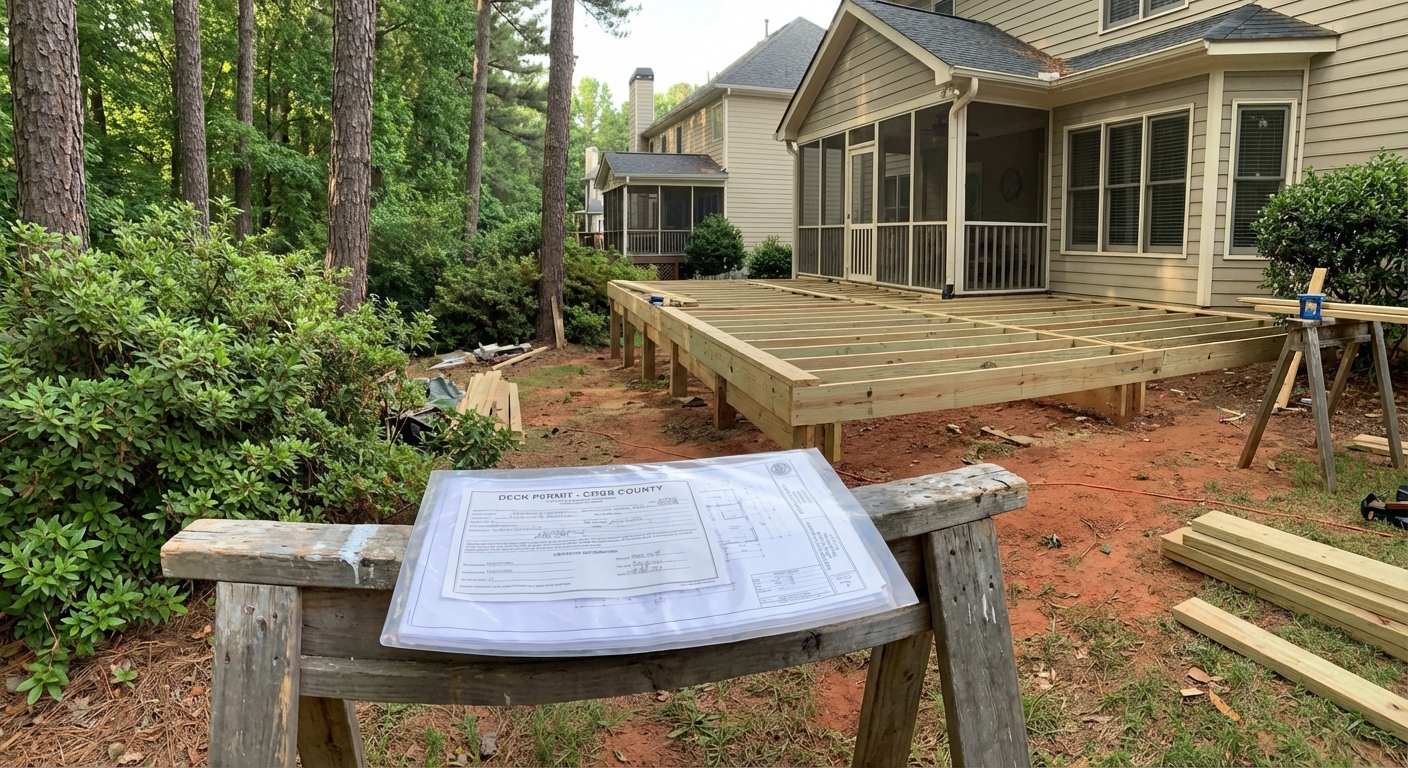
Building a deck in Georgia to enjoy those long summer evenings and mild winters? Before you break ground, you need to understand the permit requirements. Building a deck without the proper permits can lead to fines, delays, and even having to tear down your hard work. This guide will walk you through Georgia's deck permit rules, covering state guidelines and local variations, so you can build with confidence.
📋 Tool Alert: Permit Checker
Do you really need a permit? Check the exact rules for your city or township.
Check Permits →Do You Need a Deck Permit in Georgia? The General Rule
Looking for more regional information? Check out our Georgia State Decking Hub.
🏗️ Planning a deck project?
Get a free manual project review, or visualize your dream deck with AI before requesting quotes.
Generally, yes, you will likely need a permit to build a deck in Georgia. Most counties in Georgia require a permit for decks that exceed a certain size or height. The most common thresholds are:
- Size: Decks larger than 200 square feet.
- Height: Decks that are 30 inches or more above grade (ground level) at any point.
If your deck exceeds *either* of these limits, you’ll almost certainly need a permit. However, these are just *general* rules. The specific requirements vary by county and even city. Always check with your local building department to confirm the exact regulations in your area.
<!-- slot:after-intro -->
Why Are Deck Permits Required?
Deck permits are in place to ensure that your deck is structurally sound and safe, and that it meets building codes. This protects you, your family, and future homeowners. The permit process involves submitting your deck plans to your local building department for review. They'll check to make sure your design meets safety standards related to:
- Structural Integrity: Ensuring the deck can support the intended load (people, furniture, etc.) and withstand Georgia's weather conditions, including strong winds and heavy rain.
- Safety: Railings, stairs, and other safety features must meet code requirements to prevent falls and injuries.
- Zoning: Verifying that your deck complies with local zoning regulations regarding setbacks (distance from property lines) and other restrictions.
- Electrical: If you plan to include electrical outlets or lighting on your deck, the wiring must be inspected to ensure it meets electrical codes.
- Footings: Proper footing depth is crucial, especially with Georgia's red clay soil. The frost line is only 12 inches in most of Georgia, but proper drainage is also critical to prevent settling and shifting.
Remember, Georgia's humid subtropical climate presents unique challenges. The hot, humid summers (average temperatures between 85-95°F) and high humidity year-round are brutal on wood. Mold, mildew, and rot are constant threats, and termites are a serious issue statewide, particularly subterranean termites. Proper construction techniques and materials are essential to combat these issues.
Georgia Building Codes: What to Expect
Georgia adheres to the International Residential Code (IRC) 2018, with some state-specific amendments. This code provides detailed guidelines for deck construction, including:
- Footing Requirements: Minimum depth and size of footings, which depend on soil conditions and deck size.
- Framing Requirements: Size and spacing of joists, beams, and posts.
- Railing Requirements: Minimum height and spacing of railing components to prevent falls.
- Stair Requirements: Rise and run dimensions for stairs, as well as handrail requirements.
Familiarizing yourself with these codes will help you understand the requirements for your deck and ensure that your design complies.
County-Specific Deck Permit Requirements in Georgia
While the IRC provides a baseline, each county and city in Georgia can have its own specific requirements. Here's a look at some major cities:
- Atlanta: Permits are handled through the Atlanta Department of City Planning. Expect to pay between $150-$400 for a permit, depending on the scope of the project. The Atlanta Deck Permit: Requirements, Costs & How to Apply post offers more detail.
- Savannah: Permit applications are processed through Chatham County/City of Savannah. If your property is located in Savannah's historic district, you'll face additional design review to ensure your deck is consistent with the area's architectural character.
- Augusta: Permits are issued by the Augusta-Richmond County Planning & Development department.
- Macon-Bibb County: Contact the Macon-Bibb County Planning & Zoning Commission for specific requirements.
It's crucial to contact your local building department directly to confirm their specific requirements before starting your project.
Cost of Deck Permits in Georgia
The cost of a deck permit in Georgia varies depending on the size and complexity of your deck, as well as the specific fees charged by your local building department. As mentioned earlier, Atlanta permits typically range from $150-$400. Other counties may have similar fee structures, or they may base the permit fee on the total value of the construction project.
Don't forget to factor in the cost of the deck itself. Here's a rough estimate of deck material and installation costs in Georgia:
| Material | Cost per Square Foot (Installed) |
| -------------------- | ---------------------------------- |
| Pressure-Treated Pine | $22 - $40 |
| Composite | $40 - $70 |
| Cedar | $30 - $50 |
| Trex | $45 - $75 |
| Ipe | $55 - $95 |
These prices can vary depending on the complexity of your design, the specific materials you choose, and the contractor you hire. The How Much Does a Deck Cost in Georgia? Complete 2026 Guide provides more detailed cost breakdowns.
<!-- slot:mid-content -->
How to Apply for a Deck Permit in Georgia
The application process typically involves these steps:
1. Prepare Your Deck Plans: You'll need detailed drawings of your deck, including dimensions, materials, and footing details. Many homeowners hire a professional architect or deck designer to create these plans. Use PaperPlan (paperplan.app) to visualize your deck with PaperPlan design with different materials and layouts before committing to a contractor.
2. Gather Required Documents: This may include a site plan showing the location of your deck on your property, as well as proof of property ownership.
3. Submit Your Application: Submit your plans and documents to your local building department.
4. Pay the Permit Fee: You'll need to pay the required permit fee at the time of application.
5. Schedule Inspections: Once your permit is approved, you'll need to schedule inspections at various stages of construction, such as after the footings are poured and after the framing is complete.
Common Deck Features in Georgia and Permit Implications
Certain deck features are particularly popular in Georgia, and they can impact permit requirements:
- Screened Porches: Adding a roof and screens to your deck can significantly increase its value and enjoyment, especially given Georgia's mosquito population. However, this also increases the structural load and may require a more substantial foundation and framing, impacting permit approval.
- Covered Decks: Similar to screened porches, covered decks require a more robust structure and will definitely need a permit.
- Ceiling Fans and Lighting: Adding electrical features requires adherence to electrical codes and inspection. Make sure your electrical plans are included in your permit application.
- Multi-Level Decks: Decks with multiple levels require careful planning and engineering to ensure structural stability.
Choosing the Right Decking Material for Georgia's Climate
Georgia's climate demands careful consideration when choosing decking materials. Best Decking Material for Georgia Humidity: What Won't Warp or Rot offers specific recommendations. Here's a quick overview:
- Pressure-Treated Southern Yellow Pine: This is the most affordable option and is readily available in Georgia. However, it requires regular maintenance to prevent rot and insect damage. Pine is abundant and cheap locally, making pressure-treated Southern Yellow Pine the default budget choice.
- Composite Decking: Composite decking is a low-maintenance alternative to wood that resists rot, insects, and fading. Popular brands include Trex, TimberTech, and Fiberon. See Best Composite Decking for Georgia's Climate: Top Brands Compared for a detailed comparison.
- Cedar: Cedar is a naturally rot-resistant wood that offers a beautiful aesthetic. However, it's more expensive than pressure-treated pine and may require occasional staining to maintain its appearance.
- Ipe: Ipe is a Brazilian hardwood that is incredibly durable and resistant to rot, insects, and fire. It's the most expensive option, but it can last for decades with minimal maintenance.
Best Time to Build a Deck in Georgia
The best months to build a deck in Georgia are typically September through May. This avoids the peak summer heat and frequent afternoon thunderstorms. The fall and spring offer milder temperatures and more predictable weather, making it easier to work outdoors.
<!-- slot:before-faq -->
What Happens If You Build a Deck Without a Permit?
Building a deck without a permit can have serious consequences:
- Fines: You could be fined by your local building department.
- Stop-Work Order: The building department can issue a stop-work order, halting construction until you obtain the necessary permits.
- Demolition: In the worst-case scenario, you may be required to tear down the deck if it doesn't meet code requirements.
- Difficulty Selling Your Home: A deck built without permits can create problems when you try to sell your home, as it may not be considered a legal improvement.
It's always best to obtain the necessary permits before starting your project to avoid these potential issues.
<!-- slot:end -->
🎨 Not sure which material to pick?
Upload a photo of your backyard and see exactly how Trex, TimberTech, or cedar would look — free and instant.
Frequently Asked Questions
Do I need a permit to replace my existing deck?
Generally, yes. Even if you're simply replacing an existing deck, you'll likely need a permit to ensure that the new deck meets current building codes. The permit process will also ensure that the new deck is structurally sound and safe.
How long does it take to get a deck permit in Georgia?
The time it takes to get a deck permit varies depending on your location and the complexity of your project. It can take anywhere from a few weeks to a few months to get your permit approved. Be sure to submit your application well in advance of when you plan to start construction.
Can I build a deck myself in Georgia, or do I need to hire a contractor?
You can build a deck yourself in Georgia, but you'll still need to obtain the necessary permits and ensure that your deck meets building codes. If you're not experienced in deck construction, it's best to hire a licensed and insured contractor to ensure that the job is done correctly. Consider searching for Best Deck Builders in Atlanta: How to Find the Right Contractor or similar guides for other cities like Best Deck Builders in Savannah: Local Guide for 2026 or Best Deck Builders in Augusta, GA: Trusted Local Contractors.
What inspections are required for a deck permit in Georgia?
Typical inspections include:
- Footing Inspection: After the footings are excavated but before concrete is poured.
- Framing Inspection: After the deck framing is complete but before decking is installed.
- Final Inspection: After the deck is fully completed.
Your local building department may require additional inspections depending on the scope of your project.
📋 Planning a deck project?
Get a free manual project review from our team — no obligation, no spam.
Get Free Project Review →Upload a backyard photo and preview real decking materials with AI — free, instant, no sign-up.
Permits, costs, material comparisons, and questions to ask before requesting quotes — delivered to your inbox.