
Covered Deck Ideas for Georgia (2026)
Explore covered deck ideas perfect for Georgia's climate. Combat rain, humidity, and sun with designs that offer shade and lasting protection.
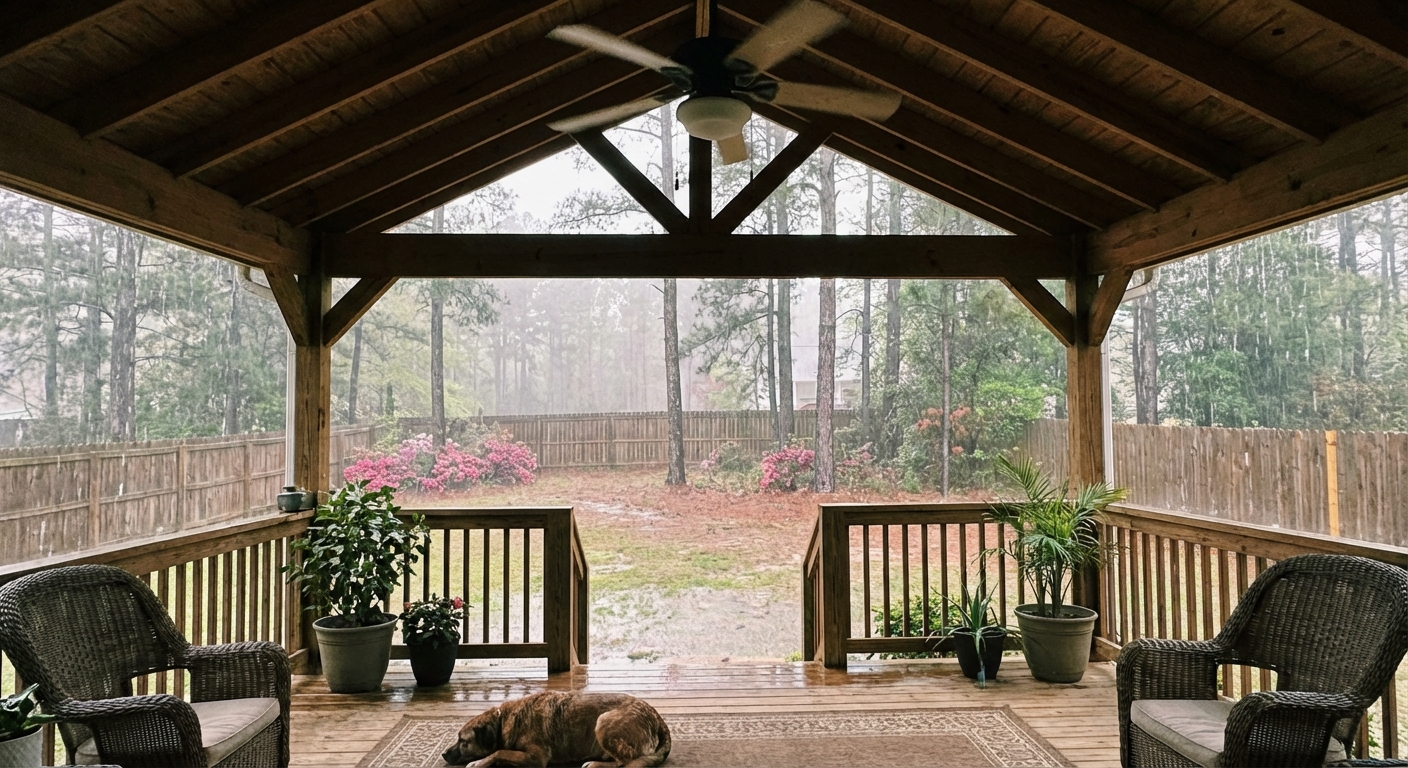
Are you dreaming of a deck in Georgia, but worried about the relentless sun, frequent rain, and high humidity? A covered deck is the answer. It extends your outdoor living season and protects your investment from the elements. This guide explores covered deck ideas specifically tailored for Georgia homeowners, considering everything from permits to material choices.
Why a Covered Deck is Essential in Georgia
Looking for more regional information? Check out our Georgia State Decking Hub.
🏗️ Planning a deck project?
Get a free manual project review, or visualize your dream deck with AI before requesting quotes.
Georgia's climate presents unique challenges for outdoor structures. Understanding these challenges is the first step in designing a covered deck that lasts.
- Intense Heat and Sun: Georgia summers bring temperatures soaring between 85-95°F, making uncovered decks unbearable during peak hours.
- Heavy Rainfall: Expect over 50 inches of rain annually, which can quickly damage untreated wood and make your deck unusable.
- High Humidity: Humidity fuels mold, mildew, and wood rot, significantly shortening the lifespan of your deck. See also: Best Decking Material for Georgia Humidity.
- Termite Pressure: Georgia is a high-termite activity zone, requiring pressure-treated lumber for deck framing.
- Red Clay Soil: Georgia's distinctive red clay stains everything. Consider this when choosing decking materials and planning for maintenance. Deck Maintenance in Georgia: Fighting Humidity, Mold & Red Clay Stains offers tips.
A well-designed covered deck addresses these issues, creating a comfortable and durable outdoor space.
<!-- slot:after-intro -->
Covered Deck Design Ideas for Georgia
Here are several covered deck design ideas, with Georgia's specific needs in mind:
1. The Simple Overhang
A basic roof extension attached to your house provides essential shade and rain protection. This is the most cost-effective option.
- Pros: Affordable, relatively easy to install.
- Cons: Limited protection from wind and insects.
- Material Considerations: Match your house's existing roofing material for a cohesive look. Consider metal roofing for its durability and low maintenance.
2. The Gable Roof
A gable roof (two sloping sides meeting at a ridge) offers more headroom and better rain runoff than a simple overhang.
- Pros: Improved ventilation, classic aesthetic.
- Cons: More complex construction, higher cost.
- Design Tip: Incorporate ceiling fans to maximize airflow and combat humidity.
3. The Shed Roof
A shed roof (single sloping plane) is a modern and cost-effective alternative to a gable roof.
- Pros: Simple design, efficient water runoff.
- Cons: Can feel less spacious than a gable roof.
- Best For: Decks with a contemporary aesthetic.
4. The Screened Porch
Enclose your covered deck with screens to create a screened porch. This provides unparalleled protection from mosquitoes and other insects, which are prevalent in Georgia, especially near Savannah and Augusta.
- Pros: Insect-free environment, extended usability.
- Cons: Higher cost, can obstruct views. See also: Screened Porch vs Open Deck in Georgia: Which Is Right for You?.
- Material Considerations: Use durable screening material that can withstand Georgia's humidity and UV exposure.
5. The Pergola with Retractable Canopy
A pergola provides partial shade, and a retractable canopy offers on-demand protection from sun and rain.
- Pros: Flexible shade control, stylish design.
- Cons: Canopy requires maintenance, less effective in heavy rain.
- Best For: Homeowners who want a balance of sun and shade.
6. The Pavilion
A freestanding covered structure, a pavilion is ideal for larger properties and creates a distinct outdoor living area.
- Pros: Versatile design, creates a focal point in your yard.
- Cons: Higher cost, requires more space.
- Design Tip: Consider adding an outdoor kitchen or fireplace for a luxurious entertaining space.
7. The Deck with a Combination of Covered and Uncovered Areas
Combine a covered section for dining or lounging with an uncovered area for sunbathing.
- Pros: Offers flexibility, caters to different preferences.
- Cons: Requires careful planning to ensure a cohesive design.
- Best For: Families with diverse outdoor needs.
8. Under-Deck Ceiling System
If you have an elevated deck, consider an under-deck ceiling system to create a dry, usable space below. This is particularly useful in areas with frequent rainfall, like Macon.
- Pros: Creates a dry, usable space beneath the deck, protects the deck structure from moisture.
- Cons: Can reduce headroom beneath the deck, adds to the overall cost.
- Material Considerations: Choose a system that is durable, waterproof, and aesthetically pleasing.
Choosing the Right Materials for Your Covered Deck in Georgia
Material selection is crucial for a long-lasting covered deck in Georgia. Consider these factors:
- Decking:
* Pressure-Treated Lumber: The most affordable option, but requires regular maintenance to prevent rot and insect damage. Essential for framing due to termite pressure.
* Composite Decking: Low-maintenance, durable, and resistant to rot, insects, and fading. A great option for Georgia's humid climate. See also: Best Composite Decking for Georgia: Top Brands Compared.
* Cedar: Naturally resistant to rot and insects, but requires regular staining to maintain its appearance.
- Framing: Always use pressure-treated lumber for framing to protect against termites and rot.
- Roofing: Match your house's roofing material or choose a durable option like metal or asphalt shingles.
- Fasteners: Use stainless steel or coated fasteners to prevent corrosion.
Here's a cost comparison of popular decking materials in Georgia (installed):
| Material | Cost per Square Foot (Installed) | Pros | Cons |
| -------------------- | ---------------------------------- | -------------------------------------------------------------------------- | ----------------------------------------------------------------- |
| Pressure-Treated | $22 - $40 | Affordable, readily available | Requires regular maintenance, prone to rot and insects |
| Composite | $40 - $70 | Low-maintenance, durable, resists rot and insects | Higher upfront cost |
| Cedar | $30 - $50 | Naturally resistant to rot and insects, beautiful aesthetic | Requires regular staining |
Remember that these are average costs. Your actual cost will depend on the size and complexity of your deck, as well as your location. To get a better idea of costs in your specific area, check out How Much Does a Deck Cost in Georgia? Complete 2026 Guide or Deck Cost in Atlanta: Local Pricing Guide for 2026.
<!-- slot:mid-content -->
Permitting and Regulations in Georgia
Most Georgia cities require permits for decks exceeding 200 square feet or 30 inches above grade. Check with your local building department for specific requirements.
- Atlanta: Permits are obtained through the Atlanta Department of City Planning, and fees range from $150 - $400. See also: Atlanta Deck Permit: Requirements, Costs & How to Apply.
- Footings: Ensure your footings are deep enough to meet local frost line requirements (typically 12-18 inches in Georgia) to prevent movement due to freezing and thawing. The red clay soil requires careful attention to proper drainage around the footings.
Failing to obtain the necessary permits can result in fines and delays.
Building Your Covered Deck: DIY vs. Hiring a Professional
Building a covered deck is a complex project that requires carpentry skills, knowledge of building codes, and access to specialized tools. While a DIY approach can save money, hiring a professional deck builder ensures a structurally sound and code-compliant deck. Find local pros here: Best Deck Builders in Atlanta, Best Deck Builders in Savannah, Best Deck Builders in Augusta.
If you choose the DIY route, How to Build a Deck in Georgia: Step-by-Step DIY Guide for 2026 can be a helpful resource.
Georgia's best months for deck building are September through May, to avoid the intense summer humidity.
Design and Visualization
Before you start building, visualize your dream deck! Use PaperPlan (paperplan.app) to visualize your deck with PaperPlan design before committing to a contractor. This helps you explore different layouts, materials, and features, ensuring you get the perfect covered deck for your needs and budget.
<!-- slot:before-faq -->
Maintaining Your Covered Deck in Georgia
Proper maintenance is crucial to prolong the life of your covered deck, especially in Georgia's challenging climate.
- Regular Cleaning: Remove leaves, debris, and dirt regularly to prevent mold and mildew growth.
- Staining/Sealing: Apply a high-quality stain or sealant every 1-2 years to protect the wood from moisture and UV damage. Consider the impact of pine tree sap if you have pine trees nearby. Deck Staining in Georgia: Best Products & Timing for Southern Humidity offers specific advice.
- Inspect for Rot and Insect Damage: Check your deck regularly for signs of rot, insect damage, or loose fasteners. Address any issues promptly to prevent further damage.
- Clean Red Clay Stains: Use a deck cleaner specifically designed to remove red clay stains. Pressure washing can also be effective, but be careful not to damage the wood.
<!-- slot:end -->
🎨 Not sure which material to pick?
Upload a photo of your backyard and see exactly how Trex, TimberTech, or cedar would look — free and instant.
Frequently Asked Questions
What is the best roofing material for a covered deck in Georgia?
Asphalt shingles are a cost-effective and readily available option. Metal roofing offers superior durability and longevity, but comes at a higher price. Match your house's existing roofing for a cohesive look.
How do I prevent mold and mildew on my covered deck?
Ensure proper ventilation, clean your deck regularly, and apply a mildew-resistant stain or sealant. Consider using composite decking, which is naturally resistant to mold and mildew.
Do I need a permit for a covered deck in Atlanta?
Yes, if your deck exceeds 200 square feet or is more than 30 inches above grade. Contact the Atlanta Department of City Planning for specific requirements. Fees range from $150-$400.
How much does it cost to build a covered deck in Georgia?
The cost varies depending on the size, materials, and complexity of the design. Expect to pay between $22 - $70 per square foot for materials and installation. Pressure-treated lumber is the most affordable option, while composite decking is more expensive but requires less maintenance.
What is the best time of year to build a deck in Georgia?
Avoid the peak summer humidity by building your deck between September and May. The weather is milder and more conducive to outdoor construction.
📋 Planning a deck project?
Get a free manual project review from our team — no obligation, no spam.
Get Free Project Review →Upload a backyard photo and preview real decking materials with AI — free, instant, no sign-up.
Permits, costs, material comparisons, and questions to ask before requesting quotes — delivered to your inbox.