
How to Build a Deck in Georgia (2026)
Dreaming of a new deck? This Georgia-specific DIY guide covers everything from permits to materials, helping you build a beautiful & lasting outdoor space.
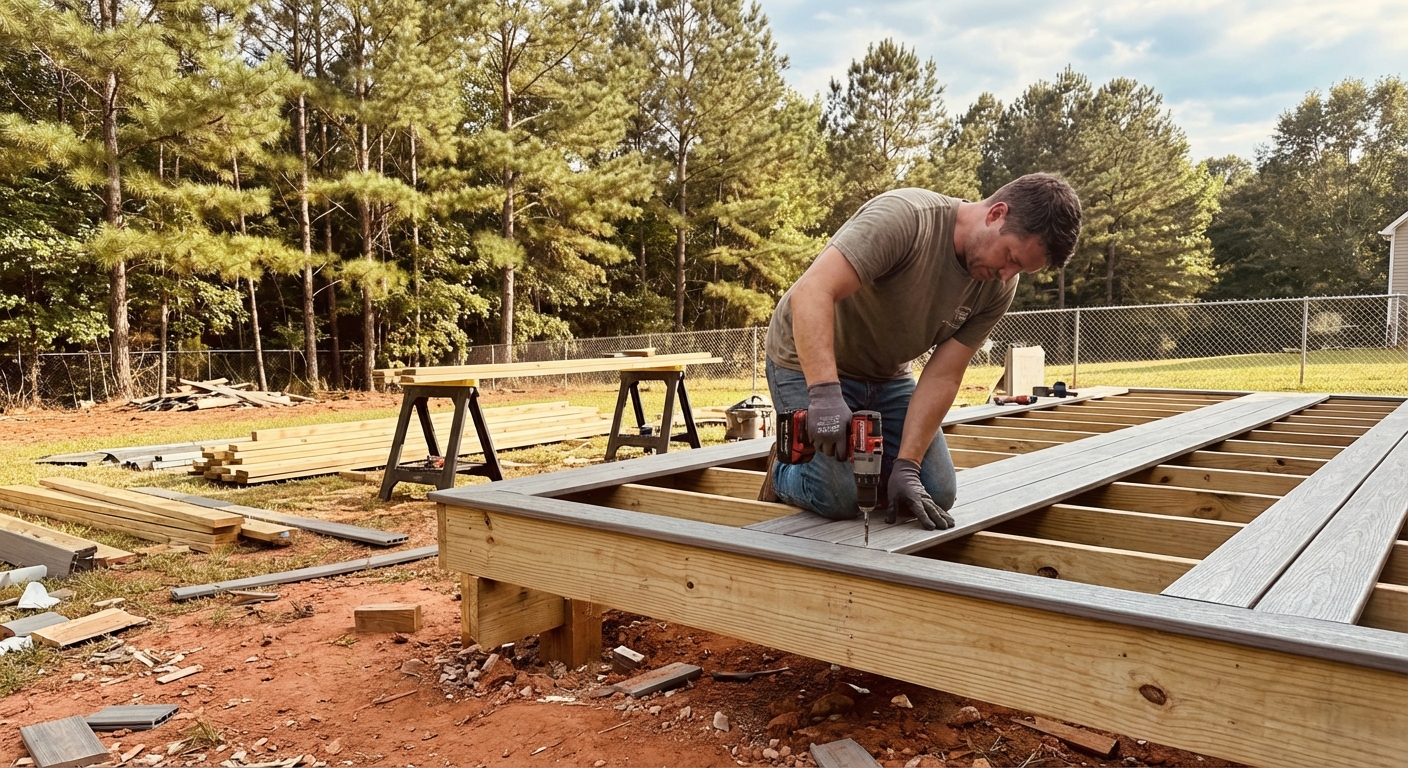
Planning to build a deck in Georgia? The state's unique climate, with its hot, humid summers and relatively mild winters, presents specific challenges and opportunities. This guide will walk you through the process, from planning and permits to construction and maintenance, ensuring your deck withstands the Georgia elements for years to come.
📐 Tool Alert: Deck Stair Calculator
Calculate rise, run, and stringer cuts while ensuring IRC/OBC code compliance.
Calculate Stairs →Planning Your Georgia Deck Project
Looking for more regional information? Check out our Georgia State Decking Hub.
🏗️ Planning a deck project?
Get a free manual project review, or visualize your dream deck with AI before requesting quotes.
The first step is envisioning your ideal deck. Consider how you'll use the space. Will it be for grilling and dining? Relaxing and enjoying the outdoors? Or entertaining guests? This will influence the size, shape, and features of your deck. Popular features in Georgia include screened porches (essential for battling mosquitoes!), ceiling fans for added comfort, and covered sections to provide relief from the frequent rain.
<!-- slot:after-intro -->
Here's what to consider during the planning phase:
- Size and Shape: Measure your space and sketch out different deck layouts. Consider the flow between your house and the deck. Most Georgia cities require permits for decks over 200 sqft or 30 inches above grade, so factor this into your size considerations. Check with your local building department. In Atlanta, you'll need to go through the Atlanta Department of City Planning.
- Location: Think about sun exposure, privacy, and proximity to trees. Georgia's abundant pine trees drop sap, which can affect your material choices and maintenance routine.
- Materials: Pressure-treated lumber is a must for framing, given Georgia's termite pressure. For decking, you have several options:
* Pressure-Treated Lumber: The most affordable option, but requires regular staining and sealing. Expect to pay around $22-40/sqft installed.
* Composite Decking: Low-maintenance and durable, but more expensive. Expect to pay around $40-70/sqft installed. Consider exploring the Best Composite Decking for Georgia: Top Brands Compared.
* Cedar: A beautiful and naturally rot-resistant option, but also requires maintenance. Expect to pay around $30-50/sqft installed.
- Budget: Determine how much you're willing to spend. DIY projects can save on labor costs, but factor in materials, tools, and potential unforeseen expenses. For a detailed breakdown, check out How Much Does a Deck Cost in Georgia? Complete 2026 Guide.
- Permits: Research local building codes and permit requirements. Failure to obtain necessary permits can result in fines and delays. See Do You Need a Deck Permit in Georgia? State & City Rules for more information. In Atlanta, deck permit fees range from $150-400.
Step-by-Step Guide to Building Your Deck
Follow these steps to build your deck. Remember to prioritize safety and consult with a professional if you're unsure about any aspect of the process.
1. Obtain Permits and Approvals
Before you start any construction, obtain the necessary permits from your local building department. This usually involves submitting your deck plans and paying a fee. The permitting process ensures your deck meets safety and building code requirements.
2. Lay Out the Deck Footings
Mark the location of your deck footings according to your plans. Use stakes and string to create a clear outline. Accuracy is crucial at this stage. Remember that Georgia's red clay soil requires footings to be deep enough to avoid frost heave – typically 12-18 inches.
3. Dig and Pour the Footings
Dig holes for the footings, ensuring they are the correct depth and diameter. Pour concrete into the holes to create solid footings. Use pre-cast concrete piers on top of the footings for added stability and to prevent direct contact between the wood and the ground.
4. Install the Posts
Attach the posts to the footings using appropriate hardware. Ensure the posts are plumb and properly aligned. This is critical for the structural integrity of your deck.
5. Build the Frame
Construct the deck frame using pressure-treated lumber. This includes the beams, joists, and ledger board (the board that attaches to your house). Ensure the frame is level and securely fastened together. Proper spacing of joists is essential for supporting the decking.
6. Install the Decking
Lay the decking boards, leaving a small gap between each board for expansion and contraction. Fasten the boards to the frame using screws or hidden fasteners. Consider using Best Decking Material for Georgia Humidity to combat the humidity and prevent rot.
7. Install Railings and Stairs
Install railings around the perimeter of the deck for safety. Build stairs if your deck is elevated. Ensure the railings and stairs meet local building codes.
8. Add Finishing Touches
Add any finishing touches, such as trim, lighting, or built-in seating. Consider adding a screened enclosure or a covered section for added comfort.
<!-- slot:mid-content -->
Choosing the Right Materials for Georgia's Climate
Georgia's hot, humid climate presents unique challenges for deck construction. The key is to choose materials that can withstand moisture, resist rot, and deter insects.
Here's a breakdown of common decking materials and their suitability for Georgia:
| Material | Pros | Cons | Georgia Suitability |
|---------------------|-----------------------------------------------------------------------|-----------------------------------------------------------------------|----------------------|
| Pressure-Treated | Affordable, readily available, termite-resistant | Requires regular maintenance, prone to warping and cracking | Good (with upkeep) |
| Composite | Low-maintenance, durable, resists rot and insects | More expensive than pressure-treated lumber | Excellent |
| Cedar | Naturally rot-resistant, beautiful appearance | Requires regular maintenance, can be expensive | Good (with upkeep) |
| Redwood | Naturally rot-resistant, beautiful appearance | Can be expensive, not as readily available as other options | Good (with upkeep) |
| Ipe (Brazilian Walnut) | Extremely durable, naturally resistant to rot and insects | Very expensive, difficult to work with | Excellent |
Humidity is your #1 enemy in Georgia. Mold, mildew, and wood rot are constant concerns. Proper ventilation beneath the deck is essential to prevent moisture buildup. Consider using a deck drainage system to channel water away from the substructure.
Also, remember Georgia's red clay! It stains everything. Choose darker decking colors or be prepared for regular cleaning to maintain your deck's appearance.
Cost Considerations for Your Georgia Deck
The cost of building a deck in Georgia varies depending on the size, materials, and complexity of the design. Here's a general cost breakdown:
- Pressure-Treated Lumber: $22-40/sqft installed
- Composite Decking: $40-70/sqft installed
- Cedar: $30-50/sqft installed
Labor costs can add significantly to the overall price. DIY projects can save on labor, but require time, skill, and effort. If you're hiring a contractor, get multiple quotes and check their references. You can also visualize your deck with PaperPlan design before committing to a contractor. Use PaperPlan (paperplan.app) to create a detailed 3D model and experiment with different materials and layouts.
Other cost factors to consider:
- Permit Fees: Varies by city and county. Expect to pay $150-400 for an Atlanta deck permit.
- Demolition Costs: If you're replacing an existing deck, factor in the cost of demolition and disposal.
- Site Preparation: Clearing the area and leveling the ground can add to the cost.
- Additional Features: Screened enclosures, covered sections, and built-in seating will increase the overall cost. Consider Covered Deck Ideas for Georgia: Shade & Rain Protection That Works. You may also want to compare Screened Porch vs Open Deck in Georgia: Which Is Right for You?.
The best months to build a deck in Georgia are September through May, avoiding the peak summer humidity and potential thunderstorms.
Maintaining Your Georgia Deck
Regular maintenance is essential to prolong the life of your deck. Here are some tips for maintaining your deck in Georgia's climate:
- Clean Regularly: Remove dirt, debris, and mildew with a deck cleaner and a scrub brush.
- Stain or Seal: Apply a stain or sealant every one to two years to protect the wood from moisture and UV damage. Choose a product specifically designed for decks. Consider Deck Staining in Georgia: Best Products & Timing for Southern Humidity.
- Inspect for Damage: Check for signs of rot, insect damage, or loose fasteners. Repair any damage promptly.
- Clear Debris: Keep the area beneath the deck clear of leaves and debris to improve ventilation and prevent moisture buildup.
- Power Washing: Use a power washer to remove stubborn stains and mildew. Be careful not to damage the wood.
- Address Red Clay Stains: Pressure wash and use specialized cleaners designed to remove red clay stains.
<!-- slot:before-faq -->
Taking these steps will help you enjoy your deck for many years to come. If you'd rather leave the work to professionals, consider checking out the Best Deck Builders in Atlanta, Best Deck Builders in Savannah, or Best Deck Builders in Augusta.
<!-- slot:end -->
🎨 Not sure which material to pick?
Upload a photo of your backyard and see exactly how Trex, TimberTech, or cedar would look — free and instant.
Frequently Asked Questions
Do I need a permit to build a deck in Georgia?
Yes, most cities in Georgia require permits for decks over 200 sqft or 30 inches above grade. Check with your local building department for specific requirements.
What is the best material for a deck in Georgia's climate?
Composite decking is an excellent choice for Georgia's climate due to its low-maintenance and resistance to rot and insects. Pressure-treated lumber is a more affordable option but requires regular maintenance.
How often should I stain or seal my deck in Georgia?
You should stain or seal your deck every one to two years to protect it from moisture and UV damage.
How can I prevent mold and mildew on my deck?
Ensure proper ventilation beneath the deck and clean it regularly with a deck cleaner that contains mildewcide.
How deep should deck footings be in Georgia?
Deck footings should be at least 12-18 inches deep to avoid frost heave, due to the frost line.
📋 Planning a deck project?
Get a free manual project review from our team — no obligation, no spam.
Get Free Project Review →Upload a backyard photo and preview real decking materials with AI — free, instant, no sign-up.
Permits, costs, material comparisons, and questions to ask before requesting quotes — delivered to your inbox.