
Georgia Deck Design Ideas (2026)
Dreaming of a new deck in Georgia? Get inspired with design ideas for every budget, tailored for the Georgia climate. Find the perfect deck for your home!
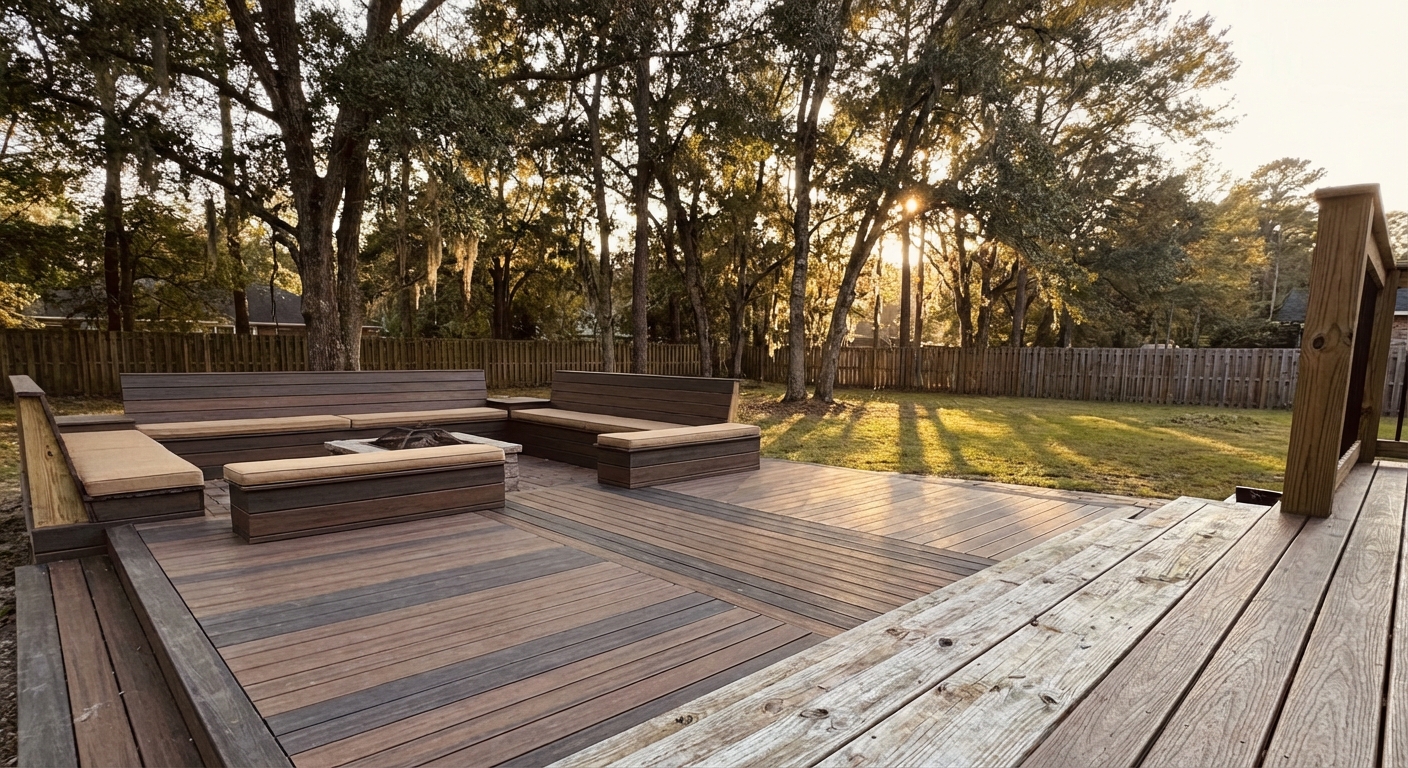
Are you a Georgia homeowner dreaming of a new deck but feeling overwhelmed by design choices? From combating the relentless humidity to dealing with our infamous red clay, building a deck here presents unique challenges. This guide provides inspiration for deck designs that thrive in Georgia's climate, no matter your budget. We'll cover material choices, popular features, and design considerations specific to the Peach State, helping you create the perfect outdoor oasis.
<!-- slot:after-intro -->
Looking for more regional information? Check out our Georgia State Decking Hub.
Understanding Georgia's Deck-Building Challenges
Georgia's climate demands careful planning. Our hot, humid summers (often hitting 85-95°F) and frequent heavy rainfall (50+ inches per year) create a breeding ground for mold, mildew, and wood rot. The good news? With the right materials and design choices, you can overcome these challenges.
🏗️ Planning a deck project?
Get a free manual project review, or visualize your dream deck with AI before requesting quotes.
Humidity: The #1 Enemy
High humidity accelerates wood decay. Proper ventilation under your deck is crucial. Consider wider spacing between deck boards to improve airflow. Also, choose moisture-resistant materials like pressure-treated lumber or composite decking. See Best Decking Material for Georgia Humidity for a detailed comparison.
The Red Clay Factor
Georgia's red clay soil is notorious for staining. Opt for darker-colored decking materials to minimize the appearance of stains. Regular cleaning with a specialized deck cleaner is essential. You'll find helpful tips in Deck Maintenance in Georgia: Fighting Humidity, Mold & Red Clay Stains.
Termite Pressure
Termites are a significant concern in Georgia. Always use pressure-treated lumber for the deck's framing. Consider professional termite treatment for the surrounding soil to protect your investment.
Budget-Friendly Deck Ideas
Building a deck doesn't have to break the bank. Here are some ideas for creating a beautiful and functional outdoor space on a budget.
Pressure-Treated Wood Decks
Pressure-treated lumber is the most affordable decking option. Expect to pay around $22-$40 per square foot installed. While it requires more maintenance than composite, regular staining and sealing can extend its lifespan.
Design Ideas:
- Simple Rectangular Deck: A basic rectangular deck is the most cost-effective design.
- Single-Level Design: Avoid complex multi-level designs, as they increase labor and material costs.
- DIY Installation: If you're handy, building the deck yourself can save significantly on labor costs. Refer to How to Build a Deck in Georgia: Step-by-Step DIY Guide for 2026 for detailed instructions.
- Strategic Landscaping: Use landscaping to define the space and add visual appeal without expensive features.
Small Deck Designs
Reducing the deck's size is a surefire way to cut costs. Focus on creating a cozy and functional space rather than a large entertainment area.
Design Ideas:
- Balcony Deck: If you have a small balcony, a simple deck overlay can transform it into a usable outdoor space.
- Entryway Deck: A small deck at your front or back entrance can add curb appeal and create a welcoming transition.
- Conversation Nook: Design a small deck specifically for seating and conversation.
Mid-Range Deck Designs: Balancing Cost and Features
If you have a slightly larger budget, you can incorporate more features and upgrade your materials.
Composite Decking
Composite decking offers a great balance of durability, aesthetics, and low maintenance. Expect to pay around $40-$70 per square foot installed. While more expensive upfront than pressure-treated wood, it resists rot, fading, and insect damage, saving you money in the long run. Explore Best Composite Decking for Georgia: Top Brands Compared before deciding.
Design Ideas:
- Built-in Benches: Incorporate built-in benches for comfortable seating and to save space.
- Picture-Frame Border: Add a contrasting border around the deck perimeter for a polished look.
- Curved Decking: While curves add complexity, a subtle curve can soften the deck's appearance.
- Two-Tone Design: Use different colors of composite decking to create visual interest. Use PaperPlan (paperplan.app) to visualize your deck with PaperPlan design before committing to a contractor. This helps you experiment with different colors and layouts to find the perfect look for your home.
Cedar Decks
Cedar is a naturally beautiful and durable wood option. It's more expensive than pressure-treated lumber (around $30-$50 per square foot installed) but offers superior resistance to rot and insects.
Design Ideas:
- Natural Stain: Enhance cedar's natural beauty with a clear or lightly tinted stain.
- Railing Details: Invest in decorative railings to elevate the deck's aesthetic.
- Planter Boxes: Integrate planter boxes into the deck design for a touch of greenery.
<!-- slot:mid-content -->
High-End Deck Designs: Luxury and Functionality
For homeowners seeking a premium outdoor living space, the possibilities are endless.
Multi-Level Decks
Multi-level decks create distinct zones for dining, lounging, and entertaining. They're ideal for sloping yards and can significantly increase your outdoor living space.
Design Ideas:
- Integrated Stairs: Design wide, inviting stairs connecting the different levels.
- Outdoor Kitchen: Incorporate a built-in grill, countertop, and storage for outdoor cooking.
- Fire Pit Area: Create a cozy fire pit area on a lower level for evening gatherings.
Covered Decks and Screened Porches
In Georgia, covered decks and screened porches are essential for enjoying the outdoors year-round. They provide shade from the sun and protection from rain and mosquitoes. See Covered Deck Ideas for Georgia: Shade & Rain Protection That Works and Screened Porch vs Open Deck in Georgia: Which Is Right for You? to help you decide.
Design Ideas:
- Ceiling Fan: Install a ceiling fan to circulate air and keep the space cool.
- Outdoor Lighting: Use a combination of ambient, task, and accent lighting to create a warm and inviting atmosphere.
- Outdoor Fireplace: An outdoor fireplace provides warmth and ambiance during cooler months.
- Screened-In Dining Area: Create a dedicated screened-in dining area for bug-free meals.
Georgia-Specific Considerations
Beyond the general design ideas, here are some Georgia-specific factors to keep in mind:
Permits
Most Georgia cities require permits for decks over 200 square feet or 30 inches above grade. In Atlanta, you'll need to obtain a permit from the Atlanta Department of City Planning. Permit fees typically range from $150-$400. Ignoring permit requirements can lead to costly fines and delays. Consult Do You Need a Deck Permit in Georgia? State & City Rules and Atlanta Deck Permit: Requirements, Costs & How to Apply for comprehensive information.
Soil Conditions
Georgia's red clay soil requires careful attention to footings. Ensure your footings are deep enough (typically 12-18 inches below the frost line) to prevent movement and settling.
Pine Tree Sap
If you have pine trees near your deck, be prepared for sap. This can stain and damage certain decking materials. Composite decking is more resistant to sap than wood. Regular cleaning is essential.
Best Time to Build
The best time to build a deck in Georgia is from September to May, avoiding the peak summer humidity and heat.
Cost Considerations
Here's a general cost breakdown for different decking materials in Georgia (installed):
| Material | Cost per Square Foot (Installed) | Pros | Cons |
| ----------------- | -------------------------------- | --------------------------------------------------------------------- | ------------------------------------------------------------------------ |
| Pressure-Treated | $22-$40 | Most affordable, readily available | Requires regular maintenance, susceptible to rot and insects |
| Composite | $40-$70 | Low maintenance, durable, resists rot and insects | More expensive upfront, can get hot in direct sunlight |
| Cedar | $30-$50 | Naturally beautiful, resists rot and insects, aromatic | More expensive than pressure-treated, requires some maintenance |
| Exotic Hardwoods | $50-$100+ | Extremely durable, beautiful, luxurious | Most expensive, requires specialized installation, sourcing can be difficult |
For more detailed pricing information, see How Much Does a Deck Cost in Georgia? Complete 2026 Guide and Deck Cost in Atlanta: Local Pricing Guide for 2026.
<!-- slot:before-faq -->
Creating the perfect deck for your Georgia home requires careful planning and consideration of the state's unique climate and conditions. By choosing the right materials, incorporating thoughtful design features, and working with experienced professionals (see Best Deck Builders in Atlanta, Best Deck Builders in Savannah, and Best Deck Builders in Augusta for local recommendations), you can build an outdoor space that you'll enjoy for years to come.
<!-- slot:end -->
🎨 Not sure which material to pick?
Upload a photo of your backyard and see exactly how Trex, TimberTech, or cedar would look — free and instant.
Frequently Asked Questions
What is the best decking material for Georgia's humidity?
The best decking material for Georgia's humidity is composite decking. It resists rot, mold, and mildew, making it ideal for our humid climate. Pressure-treated lumber is a more affordable option but requires regular maintenance to prevent decay.
How deep should deck footings be in Georgia?
Deck footings in Georgia should be at least 12-18 inches below the frost line to prevent movement and settling due to freezing and thawing cycles. Consult your local building codes for specific requirements.
Do I need a permit to build a deck in Atlanta?
Yes, you typically need a permit to build a deck in Atlanta if it's over 200 square feet or 30 inches above grade. Contact the Atlanta Department of City Planning for specific requirements and to apply for a permit.
How can I protect my deck from Georgia red clay stains?
To protect your deck from red clay stains, choose darker-colored decking materials. Regular cleaning with a specialized deck cleaner is also essential. Consider sealing your deck to create a barrier against stains.
What features are popular for decks in Georgia?
Popular deck features in Georgia include screened porches for mosquito protection, covered sections for rain and sun protection, ceiling fans for cooling, and outdoor kitchens for entertaining.
📋 Planning a deck project?
Get a free manual project review from our team — no obligation, no spam.
Get Free Project Review →Upload a backyard photo and preview real decking materials with AI — free, instant, no sign-up.
Permits, costs, material comparisons, and questions to ask before requesting quotes — delivered to your inbox.