
Covered Deck Ideas for Tennessee (2026)
Explore covered deck ideas perfect for Tennessee's climate. Beat the heat and rain with stylish designs, material options, and local cost insights.
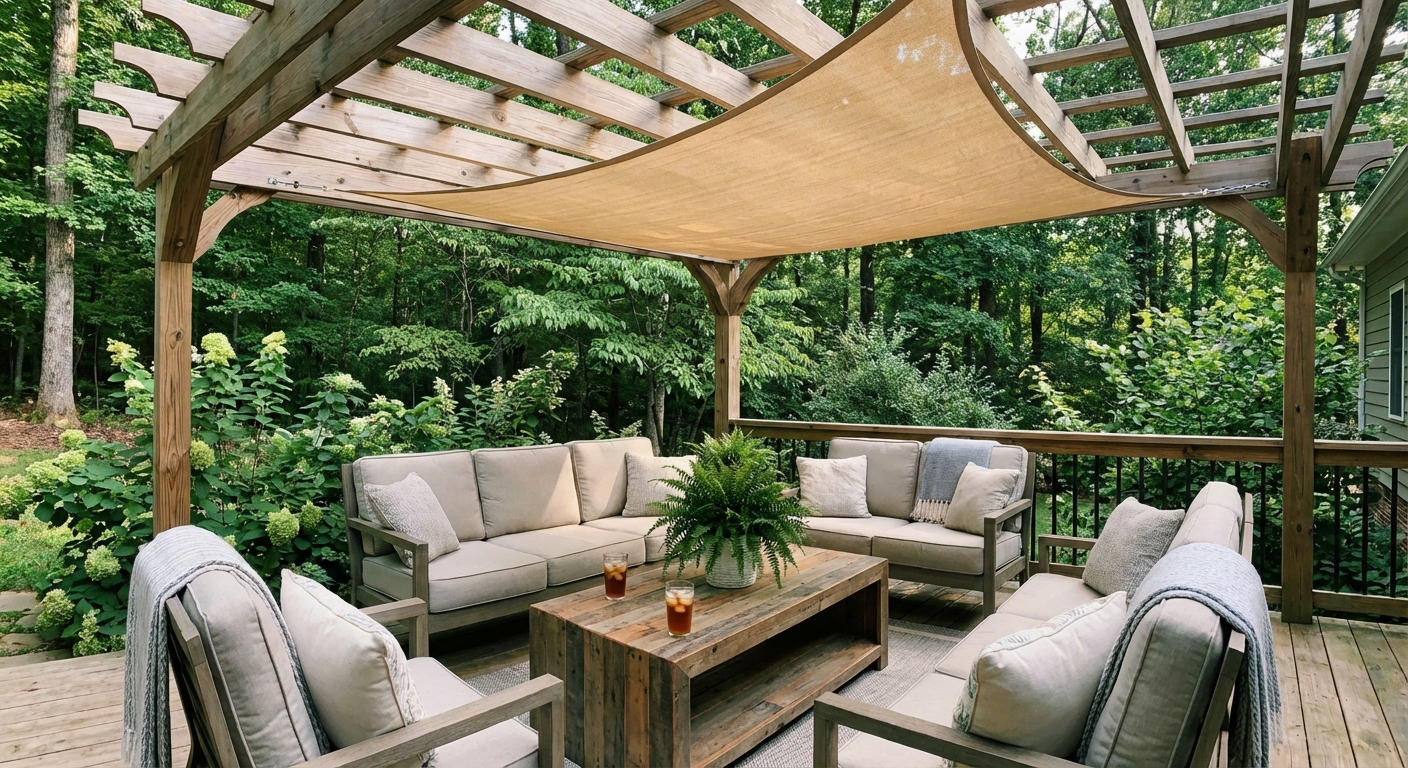
Are you dreaming of a comfortable outdoor space in Tennessee, but the scorching summer sun and frequent rain showers are holding you back? A covered deck is the perfect solution, providing shade, protection, and extending your outdoor living season. Because Tennessee has no state income tax on wages, homeowners often invest more in home improvements like decks! This guide will explore various covered deck ideas tailored to Tennessee's climate, costs, and common building practices.
Why Choose a Covered Deck in Tennessee?
Looking for more regional information? Check out our Tennessee State Decking Hub.
🏗️ Planning a deck project?
Get a free manual project review, or visualize your dream deck with AI before requesting quotes.
Tennessee's weather can be challenging for enjoying an open deck year-round. The state experiences hot, humid summers with temperatures often reaching 85-95°F, and receives over 50 inches of rain annually. High humidity, frequently above 60%, further complicates outdoor comfort. A covered deck addresses these issues directly:
- Sun Protection: Provides shade, reducing the intensity of the summer heat.
- Rain Protection: Allows you to enjoy your deck even during rain showers.
- Extends Outdoor Season: Creates a more comfortable environment for enjoying your deck in the spring and fall.
- Increased Property Value: A well-designed and constructed covered deck adds value to your home.
- Pest Control: A covered and screened-in deck significantly reduces mosquito and other insect issues, a major factor in Tennessee.
<!-- slot:after-intro -->
Covered Deck Design Ideas for Tennessee Homes
Here are several covered deck design ideas suitable for Tennessee homes, considering the climate and common architectural styles:
Gable Roof Covered Decks
Gable roofs are a classic and cost-effective option for covered decks. They feature a triangular shape that allows for efficient water runoff, crucial considering Tennessee's rainfall. Gable roofs are relatively easy to build and can be customized with different roofing materials to match your home's aesthetic.
- Pros: Cost-effective, good water runoff, simple construction.
- Cons: Can appear basic if not well-designed.
Shed Roof Covered Decks
Shed roofs, also known as single-slope roofs, are another affordable and straightforward option. They are particularly well-suited for decks attached to the back of a house, where the roof can slope away from the building.
- Pros: Affordable, simple construction, good for decks attached to houses.
- Cons: May not be as aesthetically pleasing as other options for some homes.
Hip Roof Covered Decks
Hip roofs feature slopes on all four sides, providing a more visually appealing and structurally sound option. They are more complex to build than gable or shed roofs, but offer better wind resistance and a more finished look.
- Pros: Visually appealing, good wind resistance, structurally sound.
- Cons: More complex and expensive to build.
Pergola with Retractable Canopy
For a more flexible option, consider a pergola with a retractable canopy. This allows you to enjoy the sun when desired and easily create shade when needed. Retractable canopies are available in various materials and colors to complement your deck design.
- Pros: Flexible sun control, adds visual interest, various material options.
- Cons: Canopy may require maintenance or replacement over time.
Screened-In Porch (Covered & Enclosed)
While technically a porch, many Tennessee homeowners opt for a screened-in porch that incorporates a roof or cover. This offers the best protection from insects and the elements, creating a truly comfortable outdoor living space. Given Tennessee's notorious bug population, this is a very popular choice.
- Pros: Excellent protection from insects and weather, creates a comfortable outdoor room.
- Cons: More expensive than a simple covered deck, requires careful planning and construction.
Multi-Level Covered Decks
In East Tennessee cities like Johnson City and Knoxville, where hilly terrain is common, multi-level decks are a popular choice. Incorporating a covered section on one or more levels provides shade and rain protection while maximizing usable outdoor space.
- Pros: Maximizes space on sloped lots, creates distinct outdoor zones, adds visual interest.
- Cons: More complex and expensive to build, requires careful planning and engineering.
Choosing the Right Materials for Your Tennessee Covered Deck
Selecting the right materials is crucial for ensuring the longevity and durability of your covered deck, especially considering Tennessee's humid climate and termite pressure.
Decking Materials
- Pressure-Treated Lumber: The most affordable option. Properly treated lumber resists rot and insect damage. However, it requires regular maintenance, including cleaning, staining, and sealing. Expect to pay between $22-40/sqft installed.
- Composite Decking: Made from a blend of wood fibers and plastic, composite decking is low-maintenance and resistant to rot, insects, and fading. Brands like Trex are popular choices. Costs range from $40-70/sqft installed. Use PaperPlan (paperplan.app) to visualize your deck with PaperPlan design with different materials and layouts before committing to a contractor.
- Cedar: A naturally rot-resistant wood with a beautiful appearance. Cedar requires less maintenance than pressure-treated lumber but is more expensive. Expect to pay around $30-50/sqft installed.
- Ipe: An exceptionally durable and naturally rot-resistant hardwood. Ipe is a premium option with a higher price tag.
Roofing Materials
- Asphalt Shingles: A cost-effective and widely available option that matches most home styles.
- Metal Roofing: Durable, long-lasting, and available in various colors and styles. Metal roofing is a good choice for a modern or rustic aesthetic.
- Wood Shingles or Shakes: A natural and aesthetically pleasing option that requires more maintenance than other roofing materials.
- Translucent Panels: Polycarbonate or acrylic panels can be used to create a covered area that allows natural light to filter through.
Framing Materials
- Pressure-Treated Lumber: The standard choice for deck framing, offering rot and insect resistance.
- Steel Framing: A more durable and dimensionally stable option than wood, but also more expensive.
Fasteners
- Use stainless steel or coated deck screws to prevent corrosion, especially in Tennessee's humid climate.
Cost Considerations for a Covered Deck in Tennessee
The cost of building a covered deck in Tennessee varies depending on the size, materials, and complexity of the design. Here's a general overview of estimated costs:
| Material | Estimated Cost (Installed) |
|--------------------|-----------------------------|
| Pressure-Treated | $22-40/sqft |
| Composite (e.g. Trex) | $40-75/sqft |
| Cedar | $30-50/sqft |
These are just estimates, and actual costs may vary. Factors influencing the final price include:
- Size of the Deck: Larger decks will naturally cost more.
- Materials Used: Premium materials like composite decking or cedar will increase the cost.
- Complexity of the Design: Intricate designs with multiple levels or custom features will be more expensive.
- Labor Costs: Contractor fees vary depending on experience and location.
- Permitting Fees: Most Tennessee cities, including Franklin (City of Franklin Building & Codes Dept), Murfreesboro (Murfreesboro Planning & Codes), Clarksville (Clarksville Building & Codes), and Johnson City (Johnson City Building Division), require permits for decks over 200 sqft or 30" above grade.
<!-- slot:mid-content -->
Tennessee-Specific Building Considerations
Building a covered deck in Tennessee requires attention to specific local factors:
- Permitting: Obtain the necessary permits from your local building department before starting construction.
- Frost Line: Ensure footings extend below the frost line, which is typically 12-18 inches in most of Tennessee.
- Drainage: Proper drainage is crucial to prevent water damage and rot, especially given the state's high rainfall. Ensure the deck is properly sloped and consider installing gutters and downspouts.
- Termite Protection: Tennessee has significant termite pressure. Use ground contact treatment and metal post bases to prevent termite infestations.
- Soil Conditions: Middle Tennessee, including Nashville, Franklin, and Murfreesboro, has limestone bedrock. This can make digging footings challenging, requiring specialized equipment or techniques.
- Elevation: In East Tennessee, elevated decks are common due to the hilly terrain. Ensure the deck is properly engineered and supported to meet local building codes.
- Best Build Months: The best months to build a deck in Tennessee are typically March-May and September-November, avoiding the extreme heat of summer and the potential for frost in winter.
Design Tips for Tennessee Covered Decks
- Maximize Airflow: Design your covered deck to allow for good airflow to combat humidity. Consider incorporating open railings or lattice panels.
- Incorporate Ceiling Fans: Ceiling fans can help circulate air and keep you cool during the hot summer months.
- Choose Light Colors: Light-colored decking and roofing materials will reflect sunlight and help keep the deck cooler.
- Add Comfortable Seating: Invest in comfortable outdoor furniture that is weather-resistant and suitable for Tennessee's climate.
- Consider Outdoor Lighting: Lighting can enhance the ambiance of your deck and allow you to enjoy it after dark.
- Incorporate Landscaping: Add potted plants or landscaping around the deck to create a more inviting and natural environment.
<!-- slot:before-faq -->
Building a covered deck in Tennessee is a worthwhile investment that can significantly enhance your outdoor living experience. By carefully considering the design, materials, and local building considerations, you can create a beautiful and functional space that you and your family will enjoy for years to come.
<!-- slot:end -->
🎨 Not sure which material to pick?
Upload a photo of your backyard and see exactly how Trex, TimberTech, or cedar would look — free and instant.
Frequently Asked Questions
What type of wood is best for a deck in Tennessee?
Pressure-treated lumber is the most affordable and commonly used option. However, cedar and composite decking offer better durability and lower maintenance, making them excellent choices for Tennessee's climate.
How much does it cost to build a 12x12 covered deck in Tennessee?
Using the cost estimates above, a 12x12 (144 sqft) covered deck would range from:
- Pressure-treated: $3,168 - $5,760
- Composite: $5,760 - $10,800
- Cedar: $4,320 - $7,200
These are rough estimates; obtaining quotes from local contractors is recommended.
Do I need a permit to build a covered deck in Tennessee?
Most cities in Tennessee require permits for decks exceeding 200 sqft or 30 inches above grade. Check with your local building department (e.g., City of Franklin Building & Codes Dept, Murfreesboro Planning & Codes, Clarksville Building & Codes, Johnson City Building Division) for specific requirements.
How do I protect my deck from termites in Tennessee?
Use pressure-treated lumber rated for ground contact, apply a termite barrier treatment to the soil before construction, and use metal post bases to prevent termites from accessing the wood. Regular inspections and preventative treatments are also recommended.
What are some low-maintenance decking options for Tennessee's climate?
Composite decking is a great low-maintenance option, as it's resistant to rot, insects, and fading. PVC decking is another excellent choice, offering similar benefits and even greater durability.
Tennessee Deck Design Ideas: Inspiration for Every Budget
Screened Porch vs. Open Deck in Tennessee: Which Is Better?
Deck Maintenance in Tennessee Humidity: Protect Your Investment
📋 Planning a deck project?
Get a free manual project review from our team — no obligation, no spam.
Get Free Project Review →Upload a backyard photo and preview real decking materials with AI — free, instant, no sign-up.
Permits, costs, material comparisons, and questions to ask before requesting quotes — delivered to your inbox.