
Tennessee Deck Design Ideas (2026)
Dreaming of a new deck in Tennessee? Explore design ideas, material costs, and key considerations for your outdoor oasis, tailored for TN homeowners.
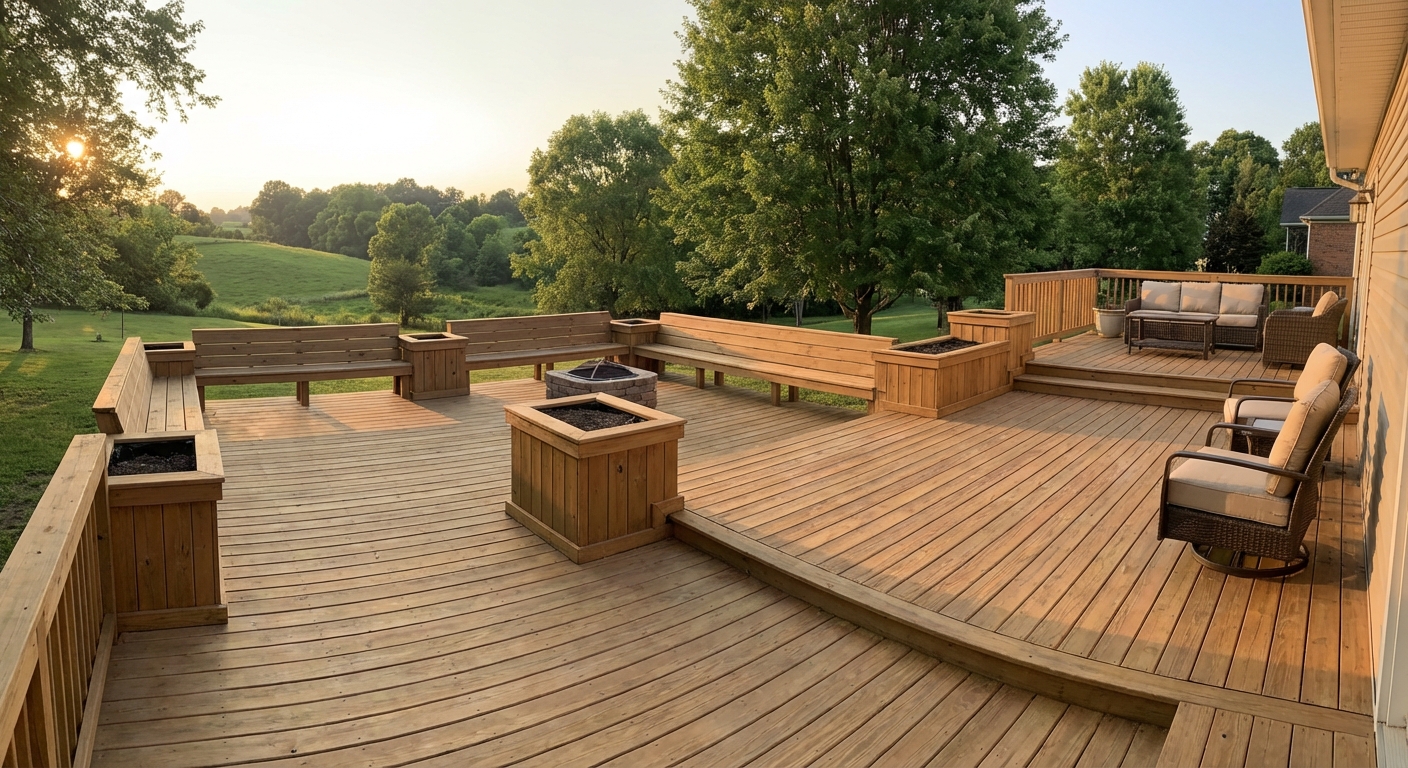
Are you a Tennessee homeowner looking to enhance your outdoor living space with a beautiful and functional deck? With no state income tax on wages, many Tennesseans are choosing to invest in home improvements like decks. But with the state's unique climate and varying terrains, designing the perfect deck requires careful planning. This guide provides inspiration and practical advice to help you create a deck that fits your budget, lifestyle, and the specific challenges of Tennessee living.
Defining Your Tennessee Deck Style and Budget
Looking for more regional information? Check out our Tennessee State Decking Hub.
🏗️ Planning a deck project?
Get a free manual project review, or visualize your dream deck with AI before requesting quotes.
Before diving into specific design elements, consider your overall vision and financial constraints. What activities will the deck primarily support? Entertaining, relaxing, dining, or a combination? How much are you realistically willing to spend?
Understanding your needs and budget will guide your material choices, size, and features. In Tennessee, you can expect to pay:
- Pressure-treated wood: $22-40 per square foot installed
- Composite decking: $40-70 per square foot installed
- Cedar decking: $30-50 per square foot installed
- Trex decking: $45-75 per square foot installed
These prices are installed costs, including labor and materials. Keep in mind that complex designs, elevated decks, and additional features like railings, stairs, or lighting will increase the overall cost.
Here's a table summarizing typical deck costs in Tennessee:
| Material | Cost per Sq Ft (Installed) | Pros | Cons |
| ------------------ | --------------------------- | -------------------------------------------------------------------------------------------------------------------------------------------------------------------------------------------------------------------------------------------------------------- | ----------------------------------------------------------------------------------------------------------------------------------------------------------------------------------------------------------------------------------------------------- |
| Pressure-Treated | $22 - $40 | Most affordable option, readily available, can be stained or painted. | Requires regular maintenance (cleaning, staining), prone to warping and splintering if not properly maintained, susceptible to insect damage. |
| Composite | $40 - $70 | Low maintenance, resists fading, staining, and scratching, durable, long-lasting, available in various colors and styles. | More expensive than pressure-treated wood, can get hot in direct sunlight, not as "natural" looking as wood. |
| Cedar | $30 - $50 | Naturally beautiful, resistant to decay and insects, less prone to warping than pressure-treated, pleasant aroma. | More expensive than pressure-treated, requires occasional staining to maintain its color and protect it from the elements, can be softer than some other wood options. |
| Trex (Composite) | $45 - $75 | Very low maintenance, highly durable, resists fading, staining, and scratching, made from recycled materials, long lifespan, wide range of colors and styles. | One of the most expensive decking materials, can get hot in direct sunlight, some find the texture and appearance less appealing than natural wood. |
<!-- slot:after-intro -->
Adapting to Tennessee's Climate and Terrain
Tennessee's climate presents unique challenges for deck design. Hot, humid summers (85-95°F) and high humidity year-round (often 60%+) can take a toll on wood. Additionally, Tennessee receives over 50 inches of rain annually, making proper drainage crucial. Mild winters with occasional frost also need to be considered, with a typical frost line of 12-18 inches. Termites are a significant issue, demanding proper ground contact treatment.
Moisture Management
- Spacing: Ensure adequate spacing between deck boards (typically 1/8" to 1/4") to allow for expansion and contraction due to moisture.
- Flashing: Install proper flashing where the deck connects to your house to prevent water damage.
- Drainage: Design your deck with a slight slope to facilitate water runoff. Consider incorporating drainage systems for under-deck areas, especially if you're building a covered deck.
Material Selection
- Pressure-treated lumber: Choose lumber that is specifically treated for ground contact if any part of your deck will be close to the soil.
- Composite decking: This is an excellent choice for Tennessee due to its resistance to moisture, rot, and insects.
- Cedar or redwood: These naturally rot-resistant woods can be a good option, but they require more maintenance than composite.
Termite Protection
- Ground contact treatment: Treat the soil around the deck's perimeter with a termiticide.
- Metal post bases: Use metal post bases to elevate wood posts off the ground, preventing termite access and moisture damage.
- Regular inspections: Inspect your deck regularly for signs of termite activity.
Addressing Tennessee's Terrain
East Tennessee's hilly and mountainous terrain often necessitates elevated decks or multi-level designs. Middle Tennessee, including Nashville, Franklin, and Murfreesboro, frequently has limestone bedrock, which can complicate footing installation. Consider these points:
- Elevated Decks: Common in areas like Knoxville and Johnson City, these decks require careful engineering to ensure structural integrity. Consult with a qualified engineer or deck builder.
- Multi-Level Decks: These decks are ideal for sloped yards, creating distinct zones for different activities.
- Footing Challenges: In areas with limestone, you may need to use specialized drilling techniques or consider alternative footing options like concrete piers.
Tennessee Deck Design Ideas by Style
Here's a look at popular deck design styles that work well in Tennessee:
- Rustic Charm: Embrace natural wood tones, exposed beams, and simple railings. Use cedar or pressure-treated lumber with a natural stain. This style blends seamlessly with Tennessee's natural landscape.
- Modern Minimalism: Opt for clean lines, hidden fasteners, and minimalist railings (cable railings are a great choice). Use composite decking in neutral colors like gray or brown.
- Southern Comfort: Incorporate classic Southern elements like rocking chairs, porch swings, and decorative railings. A covered deck or screened porch is a must-have for enjoying the outdoors in comfort.
- Contemporary Cool: Combine different materials like wood, metal, and glass for a unique and stylish look. Use composite decking with contrasting accents.
- Farmhouse Flair: Use painted wood, rustic hardware, and vintage-inspired lighting. A farmhouse-style deck is perfect for creating a cozy and inviting outdoor space.
Must-Have Deck Features for Tennessee Homes
Certain features enhance the usability and enjoyment of your deck in Tennessee's climate:
- Covered Decks: A covered deck provides shade and protection from rain, allowing you to enjoy your outdoor space year-round. Consider a solid roof or a pergola with a retractable canopy. See also: Covered Deck Ideas for Tennessee: Beat the Heat & Rain
- Screened Porches: Screened porches are essential for keeping out mosquitoes and other insects, especially during the summer months. They provide a comfortable and bug-free outdoor living space. See also: Screened Porch vs. Open Deck in Tennessee: Which Is Better?
- Outdoor Kitchens: An outdoor kitchen is perfect for entertaining and enjoying meals outdoors. Include a grill, countertop space, and storage cabinets.
- Fire Pits: A fire pit creates a cozy and inviting atmosphere, extending the usability of your deck into the cooler months. Choose a wood-burning or gas-powered fire pit.
- Built-in Seating: Built-in benches and seating areas maximize space and provide comfortable seating options.
- Lighting: Proper lighting is essential for creating a safe and inviting outdoor space. Use a combination of ambient, task, and accent lighting.
<!-- slot:mid-content -->
Navigating Permits and Regulations in Tennessee
Most Tennessee cities require permits for decks exceeding 200 square feet or 30 inches above grade. Contact your local building department to determine the specific requirements in your area. Here are contacts for some major cities:
- Franklin: City of Franklin Building & Codes Dept.
- Murfreesboro: Murfreesboro Planning & Codes
- Clarksville: Clarksville Building & Codes
- Johnson City: Johnson City Building Division
Be prepared to submit detailed plans, including dimensions, materials, and footing details. Ensure your deck design complies with local zoning regulations, building codes, and HOA guidelines.
Planning and Visualization Tools
Planning your deck design can be overwhelming. Use PaperPlan (paperplan.app) to visualize your deck with PaperPlan design with different materials and layouts before committing to a contractor. This tool allows you to experiment with different options and see how they look in your space.
Finding the Right Deck Builder in Tennessee
Choosing the right deck builder is crucial for a successful project. Look for a licensed and insured contractor with experience building decks in Tennessee's climate and terrain. Get multiple quotes and check references. Consider deck builders in your area, such as:
- Best Deck Builders in Franklin, TN: Trusted Local Contractors
- Best Deck Builders in Murfreesboro: Local Guide for 2026
- Best Deck Builders in Clarksville: Finding Quality & Value
- Best Deck Builders in Johnson City, TN: Top Local Picks
Deck Maintenance Tips for Tennessee's Humidity
Maintaining your deck is essential for extending its lifespan and preserving its beauty. Regular cleaning and sealing are crucial, especially in Tennessee's humid climate. See also: Deck Maintenance in Tennessee Humidity: Protect Your Investment
<!-- slot:before-faq -->
Best Times to Build a Deck in Tennessee
The best months for deck construction in Tennessee are March-May and September-November. These months offer moderate temperatures and lower humidity, making them ideal for outdoor work. Avoid building during the hottest summer months (June-August) and the coldest winter months (December-February).
<!-- slot:end -->
🎨 Not sure which material to pick?
Upload a photo of your backyard and see exactly how Trex, TimberTech, or cedar would look — free and instant.
Frequently Asked Questions
What type of wood is best for a deck in Tennessee?
Pressure-treated lumber is a cost-effective option, but composite decking is a more durable and low-maintenance choice for Tennessee's humid climate. Cedar and redwood are also good options, but they require more upkeep.
How often should I seal my deck in Tennessee?
You should seal your deck every 1-2 years, depending on the type of wood and the amount of exposure to the elements. Look for sealants specifically designed for exterior use and that offer UV protection.
Do I need a permit to build a deck in Tennessee?
Most cities require permits for decks larger than 200 square feet or 30 inches above grade. Check with your local building department for specific requirements.
How can I prevent termites from damaging my deck?
Use pressure-treated lumber, treat the soil around the deck's perimeter with a termiticide, and use metal post bases to elevate wood posts off the ground. Regularly inspect your deck for signs of termite activity.
How much does it cost to build a deck in Tennessee?
The cost of building a deck in Tennessee ranges from $22 to $75 per square foot installed, depending on the materials used. Pressure-treated lumber is the most affordable option, while composite decking is the most expensive.
📋 Planning a deck project?
Get a free manual project review from our team — no obligation, no spam.
Get Free Project Review →Upload a backyard photo and preview real decking materials with AI — free, instant, no sign-up.
Permits, costs, material comparisons, and questions to ask before requesting quotes — delivered to your inbox.