
Deck Cost in Flower Mound (2026)
What does a deck cost in Flower Mound in 2026? Get real pricing by material, labor rates, and money-saving tips for your North Texas deck project.
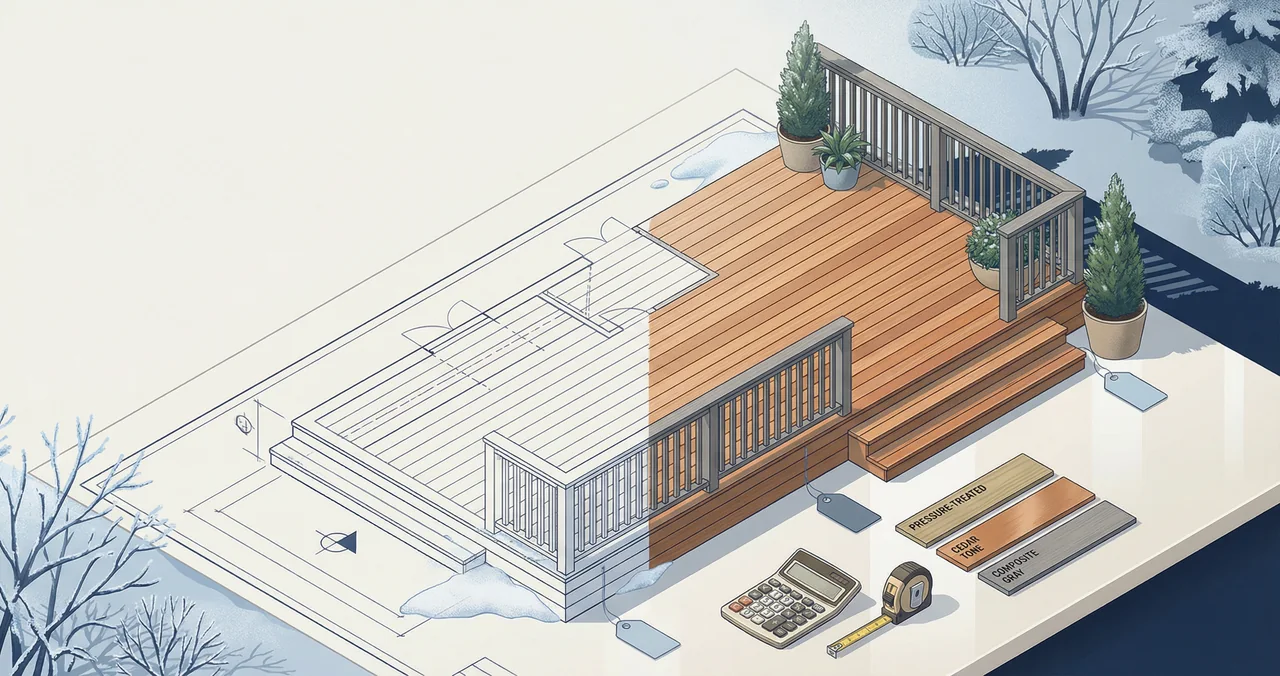
Deck Cost in Flower Mound: What Homeowners Are Paying in 2026
You want a deck, you've got a budget, and you need real numbers — not vague ranges from a national website that doesn't know the difference between Flower Mound and Fargo. Deck costs here in North Texas are shaped by everything from our brutal summers to local permit requirements to the contractor market in the DFW metroplex.
🏗️ Planning a deck project?
Get a free manual project review, or visualize your dream deck with AI before requesting quotes.
🧮 Tool Alert: Deck Cost Calculator
Estimate your project costs in seconds based on local pricing bands for your area.
Calculate My Cost →Looking for more regional information? Check out our Texas State Decking Hub.
Here's what Flower Mound homeowners are actually paying in 2026 — broken down by material, size, and the factors that push your price up or pull it down.
<!-- slot:after-intro -->
For a broader look at deck pricing across different materials and regions, see our complete deck cost guide for Texas.
Average Deck Cost in Flower Mound by Material
Material choice is the single biggest cost driver. A 320 sq ft deck (a common size for Flower Mound backyards in neighborhoods like Bridlewood, Wellington, or Stone Hill) will run you:
| Material | Cost Per Sq Ft (Installed) | 320 Sq Ft Deck Total |
|---|---|---|
| Pressure-Treated Pine | $25–$45 | $8,000–$14,400 |
| Cedar | $35–$55 | $11,200–$17,600 |
| Composite | $45–$75 | $14,400–$24,000 |
| Trex (brand-name composite) | $50–$80 | $16,000–$25,600 |
| Ipe (hardwood) | $60–$100 | $19,200–$32,000 |
Most Flower Mound homeowners land in the $15,000–$22,000 range for a mid-size composite or cedar deck with standard railing and a simple layout.
Pressure-treated pine remains the budget pick, but consider this: Flower Mound's heat, humidity, and termite pressure mean you'll be staining and sealing every 1–2 years. Over a decade, that maintenance closes the gap with composite fast.
Cost Per Square Foot Breakdown
Those installed prices above include materials *and* labor, but it helps to see where the money goes.
Materials Only (No Labor)
- Pressure-treated lumber: $8–$15/sq ft
- Cedar decking boards: $12–$22/sq ft
- Composite boards: $20–$35/sq ft
- Trex Transcend or Enhance: $22–$40/sq ft
- Ipe decking: $30–$55/sq ft
Structural Components
Your decking boards are only part of the material bill. Budget for:
- Substructure (joists, beams, posts): $5–$12/sq ft — almost always pressure-treated, regardless of your decking surface
- Concrete footings: $50–$150 per footing, with most decks needing 6–12 footings
- Fasteners and hardware: $2–$4/sq ft — use stainless steel or coated fasteners; standard galvanized corrodes faster in our humidity
- Railing systems: $20–$60 per linear foot installed, depending on material (aluminum, composite, cable, wood)
A deck with 60 linear feet of composite railing adds $1,200–$3,600 to your total. That's a line item people routinely forget.
Labor Costs in Flower Mound
Labor typically accounts for 40%–60% of your total deck cost. In the Flower Mound and greater DFW area, expect:
- General deck labor: $15–$30 per square foot
- Complex builds (multi-level, curves, built-in seating): $25–$40 per square foot
- Demolition/removal of old deck: $3–$8 per square foot, or $500–$1,500 flat rate for an average teardown
Flower Mound sits in a competitive contractor market. The DFW metroplex has a deep bench of deck builders, which works in your favor — you're not stuck with one or two local options. But quality varies. Get at least three quotes and ask specifically about their experience with your chosen material.
Why Labor Rates Vary
A contractor building a straightforward rectangular ground-level deck on flat terrain charges less per square foot than one navigating a sloped lot in Canyon Falls or working around mature trees in Timber Creek. Complexity is the multiplier:
- Elevated decks (over 4 feet) require more structural engineering and materials
- Stairs add $50–$120 per step, installed
- Built-in features (benches, planters, pergola attachments) are billed hourly or as add-ons
- Access difficulty — if materials can't be delivered close to the build site, count on paying more
What Affects Your Total Price
Beyond material and labor, several Flower Mound–specific factors shape your final number.
Permits and Inspections
In Flower Mound, deck permits are typically required for structures over 200 sq ft or 30 inches above grade. Contact Flower Mound's Building/Development Services department before you start. Permit fees generally run $150–$500 depending on project scope. Skipping the permit is a gamble — it can complicate insurance claims and home sales later.
Climate and Weather Considerations
Flower Mound's climate hits decks hard. Summer surface temperatures on dark composite boards can reach 150°F+, and our mix of intense UV, humidity, and occasional heavy rains accelerates wear on unprotected wood.
Key climate-driven cost factors:
- UV-resistant decking — lighter-colored composites and capped products handle our sun better but cost more upfront
- Mold and mildew resistance — a real issue in humid months; composite and Ipe resist naturally, while wood needs treatment
- Termite protection — pressure-treated lumber is chemically treated against termites, but ground contact points still need monitoring
- Frost line depth of 6–12 inches — footings must extend below this to prevent shifting, though our mild winters make this less of a concern than in northern states
Deck Size and Layout
This seems obvious, but the cost-per-square-foot actually *drops* slightly on larger decks. A 12x12 deck costs more per square foot than a 20x20 because setup, permits, and mobilization costs get spread across more area.
| Deck Size | Composite (Installed) | Pressure-Treated (Installed) |
|---|---|---|
| 12x12 (144 sq ft) | $7,200–$10,800 | $4,300–$6,500 |
| 16x16 (256 sq ft) | $12,000–$19,200 | $7,000–$11,500 |
| 16x20 (320 sq ft) | $14,400–$24,000 | $8,000–$14,400 |
| 20x20 (400 sq ft) | $18,000–$30,000 | $10,000–$18,000 |
For sizing guidance on larger builds, square footage planning makes a real difference in getting the most value from your investment.
<!-- slot:mid-content -->
Composite vs Wood: Cost Comparison
This is the decision most Flower Mound homeowners wrestle with. Here's the honest breakdown.
Upfront Cost
Wood wins. A pressure-treated pine deck costs roughly 40%–50% less upfront than a comparable composite deck. Cedar splits the difference.
10-Year Cost of Ownership
Wood loses — usually. Here's why:
Pressure-treated pine maintenance over 10 years:
- Staining/sealing every 1–2 years: $1.50–$3.00/sq ft per application
- Board replacements (warping, cracking, rot): $500–$1,500 over the decade
- Your time or a contractor's time to do the work
On a 320 sq ft deck, that's roughly $3,000–$7,000 in maintenance over 10 years.
Composite maintenance over 10 years:
- Occasional soap-and-water cleaning: essentially free
- No staining, no sealing, no board replacements under normal use
When you factor in maintenance, a composite deck and a pressure-treated deck often cost within $2,000–$4,000 of each other over a decade — and the composite looks better at year 10.
Performance in Flower Mound's Climate
| Factor | Pressure-Treated | Cedar | Composite |
|---|---|---|---|
| UV resistance | Low (grays quickly) | Low–Medium | High (capped products) |
| Mold/mildew | Moderate (needs sealing) | Moderate | High |
| Termite resistance | Treated but not immune | Low | Immune |
| Heat retention | Lower | Lower | Higher (darker colors) |
| Lifespan | 10–15 years | 15–20 years | 25–50 years |
One thing composite critics get right: dark composite boards get *hot* in direct Flower Mound sun. If your deck faces south or west with no shade, consider lighter composite colors or look into boards with cooling technology. Some newer Trex and TimberTech lines address this directly.
Use PaperPlan to visualize different decking materials on your own home before committing — seeing how a light grey composite versus a dark walnut looks against your siding can prevent expensive regret.
For a deeper comparison of top composite brands available in your area, brand reputation and warranty coverage matter as much as the per-board price.
How to Save Money on Your Flower Mound Deck
You don't have to sacrifice quality to bring costs down. These are the most effective levers.
1. Build in the Off-Peak Season
Flower Mound's best building window is October through April — you avoid the miserable summer heat, and contractors are less booked. Many DFW deck builders offer 5%–15% discounts during the slower winter months. Since we rarely get hard freezes that stop construction, winter builds are entirely practical here.
The best time to build a deck varies by region, but in North Texas, you have a wider window than most of the country.
2. Simplify Your Design
Every angle, curve, and level change adds cost. A rectangular single-level deck is the most cost-efficient shape. If you want visual interest, invest in railing upgrades or lighting rather than structural complexity.
3. Use a Hybrid Approach
Go pressure-treated for the substructure (this is standard practice anyway) and composite for the visible decking surface. You get the durability where it matters and save on hidden structural components.
4. Do Some Work Yourself
Demolishing an old deck, clearing the build area, or handling post-build landscaping can save you $500–$2,000. Don't DIY the structural work unless you're genuinely experienced — a failed inspection means tearing it out and starting over.
If you're considering a full DIY build, understand the permit and code requirements first.
5. Get Multiple Quotes — and Negotiate
Three quotes minimum. In the DFW market, you have leverage. Ask each contractor:
- What's included in the quote? (Permits? Cleanup? Footings?)
- What's your timeline?
- Can you match or beat a competitor's price on the same scope?
- Do you offer off-season pricing?
6. Choose Standard Sizes
Decking boards come in standard lengths (12, 16, 20 feet). Designing your deck to minimize cuts and waste saves both material and labor. A good contractor plans this automatically — ask about it.
Financing Note
Many Flower Mound homeowners finance decks through home equity lines of credit or contractor financing plans. A $20,000 composite deck financed over 5 years at reasonable rates is often more practical than paying cash for a $10,000 wood deck that needs $5,000+ in maintenance.
For homeowners working with a specific budget on a standard-size build, knowing your target square footage upfront keeps quotes comparable.
<!-- slot:before-faq -->
🎨 Not sure which material to pick?
Upload a photo of your backyard and see exactly how Trex, TimberTech, or cedar would look — free and instant.
Frequently Asked Questions
How much does a 12x16 deck cost in Flower Mound?
A 12x16 (192 sq ft) deck in Flower Mound costs approximately $4,800–$8,600 for pressure-treated wood and $8,600–$14,400 for composite, fully installed. These ranges assume a ground-level build with standard railing on a relatively flat lot. Add 15%–25% for elevated builds or complex layouts. For a more detailed look at 12x16 deck pricing, material choices have the biggest impact on where you land in that range.
Do I need a permit to build a deck in Flower Mound?
Most likely, yes. Flower Mound requires permits for decks over 200 sq ft or more than 30 inches above grade. Even smaller decks may need a permit depending on setback requirements and HOA rules — and many Flower Mound neighborhoods have active HOAs with their own architectural review process. Contact Flower Mound's Building/Development Services department and check your HOA covenants before breaking ground. The risks of building without a permit apply in Texas just as they do anywhere else.
What's the best decking material for Flower Mound's climate?
Capped composite is the strongest all-around performer for Flower Mound conditions. It handles our UV exposure, humidity, and termite pressure without ongoing maintenance. Pressure-treated pine works if you're committed to annual sealing — but most homeowners underestimate how quickly Texas sun and moisture degrade unprotected wood. Cedar offers a middle ground with natural rot resistance, though it still needs regular treatment. Ipe is the premium choice: virtually indestructible but priced accordingly.
Is it cheaper to build a deck or a patio in Flower Mound?
A basic concrete patio typically costs $8–$16 per square foot installed — significantly less than any deck material. But decks offer advantages patios can't: they work on sloped lots, elevate you above grade for better views and airflow, and add usable space when your yard drops off behind the house. Many Flower Mound homes in developments like Riverwalk or Canyon Falls have graded lots where a patio would require extensive site work that erases the cost advantage.
How long does it take to build a deck in Flower Mound?
A straightforward single-level deck (under 400 sq ft) typically takes 1–2 weeks from start to finish, assuming permits are already approved. Permit processing in Flower Mound usually takes 1–3 weeks, so plan for 3–5 weeks total from application to completion. Larger or multi-level builds can stretch to 3–4 weeks of construction time. Weather delays are uncommon during the October–April building season, though spring storms can occasionally push timelines.
<!-- slot:end -->
📋 Planning a deck project?
Get a free manual project review from our team — no obligation, no spam.
Get Free Project Review →Upload a backyard photo and preview real decking materials with AI — free, instant, no sign-up.
Permits, costs, material comparisons, and questions to ask before requesting quotes — delivered to your inbox.