
Deck Cost in Lincoln (2026)
What does a deck cost in Lincoln, NE? See 2026 pricing by material, labor rates, and money-saving tips specific to Lincoln's climate and building codes.
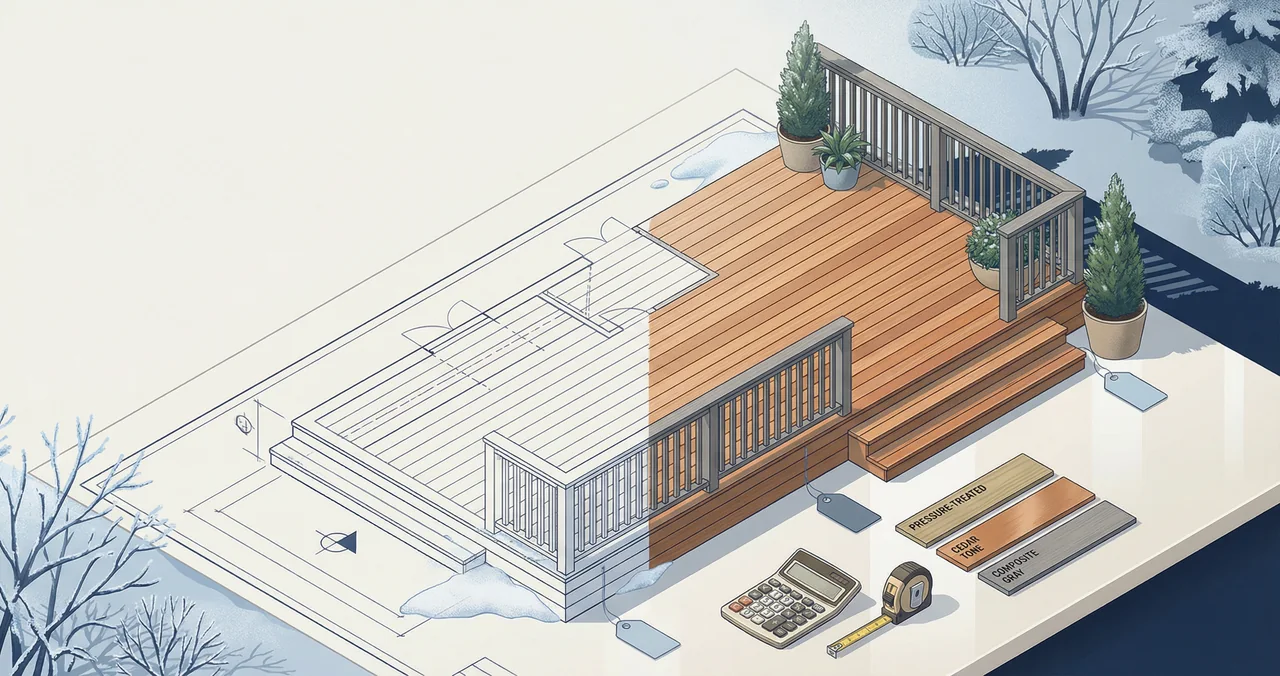
How Much Does a Deck Cost in Lincoln in 2026?
A new deck in Lincoln runs between $8,000 and $32,000 for a typical 300-square-foot project, depending on materials and complexity. That's a wide range — and the number that matters is *your* number, based on your lot, your material choice, and how much your project demands from a structural standpoint.
🏗️ Planning a deck project?
Get a free manual project review, or visualize your dream deck with AI before requesting quotes.
🧮 Tool Alert: Deck Cost Calculator
Estimate your project costs in seconds based on local pricing bands for your area.
Calculate My Cost →Lincoln's climate is the biggest wildcard in your budget. Freeze-thaw cycles pound footings and decking surfaces from November through March. Contractors here build differently than in milder regions: deeper footings, beefier framing, and materials that can handle moisture, road salt, and temperature swings from -10°F to 100°F. All of that affects what you'll pay.
Here's what Lincoln homeowners are actually spending in 2026.
<!-- slot:after-intro -->
For a broader look at deck pricing across different materials and regions, see our deck cost guide. Timing your build right can also save thousands — check our guide on the best time to build a deck.
Average Deck Cost in Lincoln by Material
Every material hits a different price point — and performs differently through a Nebraska winter. These are installed prices, meaning materials plus labor, for a standard deck build in Lincoln.
| Material | Cost Per Sq Ft (Installed) | 300 Sq Ft Deck | 500 Sq Ft Deck |
|---|---|---|---|
| Pressure-Treated Pine | $25–$45 | $7,500–$13,500 | $12,500–$22,500 |
| Cedar | $35–$55 | $10,500–$16,500 | $17,500–$27,500 |
| Composite | $45–$75 | $13,500–$22,500 | $22,500–$37,500 |
| Trex (brand-specific) | $50–$80 | $15,000–$24,000 | $25,000–$40,000 |
| Ipe (hardwood) | $60–$100 | $18,000–$30,000 | $30,000–$50,000 |
Pressure-treated pine is the most common choice in Lincoln neighborhoods like Piedmont, Fallbrook, and the Near South. It's affordable upfront but demands annual sealing and staining to survive Nebraska's moisture and salt exposure. Skip that maintenance and you're looking at replacement boards within 8–10 years.
Composite and PVC decking hold up best in Lincoln's climate. No annual sealing, no splintering, no rot from freeze-thaw moisture. The upfront cost is higher, but the 25-year lifecycle cost often comes out lower than wood when you factor in stain, sealant, and replacement boards.
If you're comparing composite brands and wondering what's actually worth the premium, check out our guide to the best composite decking brands for a detailed breakdown.
Cost Per Square Foot Breakdown
Your per-square-foot price includes more than just decking boards. Here's roughly how the money splits on a typical Lincoln deck project:
Materials (40–50% of total cost)
- Decking boards: The biggest material line item
- Framing lumber (joists, beams, ledger board): Usually pressure-treated regardless of your decking choice
- Hardware: Joist hangers, structural screws, post brackets
- Footings and concrete: Significant in Lincoln — frost line depth ranges from 36 to 60 inches, so your footings go deep
Labor (50–60% of total cost)
- Demolition (if replacing an old deck): $3–$5/sq ft
- Foundation work: More expensive in Lincoln than national averages due to deep frost footings
- Framing and decking installation: $15–$30/sq ft depending on complexity
- Railings, stairs, finishing: Adds $10–$20/linear foot for railings
The Hidden Line Items
A few costs catch Lincoln homeowners off guard:
- Permit fees: Typically $75–$200 in Lincoln for standard residential decks
- Grading and site prep: Lots in areas like Wilderness Hills or Yankee Hill may need more prep work on sloped terrain
- Gutter and drainage adjustments: Attached decks sometimes require rerouting downspouts
Labor Costs in Lincoln
Lincoln's labor market for deck builders runs $40–$70 per hour in 2026, though most contractors quote by the project rather than hourly. Labor typically makes up 50–60% of your total deck cost — and it's the piece that fluctuates most with timing and demand.
Why Lincoln Labor Costs Spike Seasonally
The building season here is compressed. May through October is the realistic window for deck construction, and most contractors are booked solid by mid-spring. That creates a pricing dynamic you won't see in year-round building climates:
- Book by March to lock in spring pricing and get on the schedule
- June through August is peak demand — some contractors add a 10–15% premium
- September and October sometimes offer better pricing as schedules open up, but you're racing the first freeze
- Winter builds are rare in Lincoln and require specialized cold-weather concrete techniques for footings
A standard 300-square-foot deck takes 3–7 days to build in Lincoln, depending on complexity and footing requirements. Multi-level decks or projects requiring deep excavation for frost-line footings can stretch to 2+ weeks.
<!-- slot:mid-content -->
What Affects Your Total Price
Two decks with identical square footage can cost vastly different amounts. Here's what moves the needle in Lincoln:
1. Material Choice
This is the single biggest factor. The gap between a pressure-treated pine deck and a premium composite deck can be $15,000 or more on a 400-square-foot project.
2. Deck Height and Foundation Requirements
Lincoln's 36–60 inch frost line means every footing must go deep. A ground-level deck on a flat lot needs simpler footings than an elevated deck on a slope. Raised decks also require more posts, beams, and often engineered stair systems — all of which add cost.
3. Complexity and Features
Each of these adds to your per-square-foot price:
- Multi-level designs: 20–30% more than single-level
- Built-in benches or planters: $500–$2,000
- Pergola or shade structure: $2,000–$8,000
- Deck lighting: $500–$3,000
- Curved or angled edges: Premium cuts and waste increase material costs
4. Lot Conditions
Accessibility matters. If your backyard in a neighborhood like Highlands or Meadow Lane requires materials to be hand-carried through a narrow side yard, expect labor costs to increase. Sloped lots require more structural engineering.
5. Permits and Code Requirements
In Lincoln, deck permits are typically required for structures over 200 square feet or 30 inches above grade. Contact Lincoln's Building and Safety Department (part of Building/Development Services) before your project starts. Permit fees are modest, but the inspection process can add a few days to your timeline.
6. Season and Contractor Availability
As mentioned, Lincoln's short building season creates real pricing pressure. The difference between booking in February and scrambling in June can be $1,000–$3,000 on the same project.
Composite vs Wood: A Real Cost Comparison for Lincoln
This is the decision most Lincoln homeowners wrestle with. Here's how the math actually works over time:
| Factor | Pressure-Treated Wood | Composite |
|---|---|---|
| Installed cost (300 sq ft) | $7,500–$13,500 | $13,500–$22,500 |
| Annual maintenance | $200–$500 (stain + seal) | $0–$50 (occasional cleaning) |
| 10-year maintenance total | $2,000–$5,000 | $0–$500 |
| Expected lifespan | 10–15 years (with maintenance) | 25–30 years |
| Board replacements | Likely after 8–10 years | Rare |
| 20-year total cost | $12,000–$22,000+ | $13,500–$23,000 |
In Lincoln specifically, wood takes a beating. The freeze-thaw cycle forces moisture into grain, which expands and contracts, splitting boards faster than in moderate climates. Road salt and ice melt tracked onto decks accelerate the damage. Composite closes the cost gap faster in Lincoln than in milder regions because wood deteriorates quicker here.
That said, pressure-treated wood still makes sense if you're on a tight upfront budget and willing to commit to annual maintenance. Cedar sits in the middle — naturally rot-resistant and beautiful, but still needs sealing in Lincoln's climate.
Use PaperPlan to visualize different decking materials on your own home before committing — seeing composite versus cedar on your actual house can make the decision much clearer.
For homeowners in other Midwest cities weighing similar decisions, our deck cost breakdown for Columbus and Indianapolis pricing guide offer useful regional comparisons.
How to Save Money on Your Lincoln Deck
Smart planning saves more than cutting corners ever will. Here's where Lincoln homeowners find real savings:
Time Your Project Right
- Get quotes in January or February when contractors are planning their season
- Schedule for early May or late September to avoid peak-summer pricing
- Avoid emergency timeline requests — rushed scheduling almost always costs more
Optimize Your Design
- Stick to standard dimensions. A 12x16 or 14x20 rectangle uses lumber efficiently with minimal waste. Angles and curves look great but increase material costs 15–25%
- Go with a single level unless your lot demands otherwise. Multi-level decks look impressive but the additional framing and footings add up fast
- Skip the built-ins initially. You can add benches, planters, and lighting later without rebuilding
Be Strategic About Materials
- Use composite for the decking surface and pressure-treated lumber for the framing. This is standard practice — you get the low-maintenance surface where it counts without paying composite prices for hidden structural members
- Compare mid-range composite lines before jumping to premium. Brands like Trex Enhance or TimberTech Edge deliver solid performance at $5–$10 less per square foot than top-tier lines
- Buy during off-season sales if you're sourcing materials yourself. Lincoln lumber yards and home improvement stores often discount decking materials in late fall
Get Multiple Quotes
Three quotes minimum. Lincoln has a solid base of experienced deck builders, and pricing varies more than you'd expect. Make sure each quote breaks down materials, labor, permits, and timeline separately so you're comparing apples to apples.
If you're weighing whether a deck and patio combination might stretch your outdoor living space further for the budget, that's worth exploring too.
Lincoln Deck Building: Permits and Regulations
A quick rundown on what Lincoln requires:
- Permits required for decks over 200 square feet or 30 inches above grade
- Frost footing depth: 36–60 inches (your contractor will confirm the exact requirement for your lot)
- Setback requirements: Decks must meet property line setbacks — typically 5 feet for side yards and rear yards, but verify with the city
- Inspections: Lincoln typically requires a footing inspection before concrete is poured and a final inspection after completion
- Processing time: Allow 2–4 weeks for permit approval during busy season
Contact Lincoln's Building/Development Services department early in your planning process. Skipping permits isn't worth the risk — unpermitted decks create problems when you sell your home and may not meet structural requirements for snow load.
For more on how deck permits work and what's typically required, we've put together a detailed walkthrough.
<!-- slot:before-faq -->
🎨 Not sure which material to pick?
Upload a photo of your backyard and see exactly how Trex, TimberTech, or cedar would look — free and instant.
Frequently Asked Questions
How much does a 12x16 deck cost in Lincoln?
A 12x16 deck (192 square feet) in Lincoln costs approximately $4,800–$8,640 in pressure-treated wood or $8,640–$14,400 in composite, fully installed. Since this size falls just under Lincoln's 200-square-foot permit threshold, you may not need a permit — but confirm with the city, as height above grade also triggers the requirement. For larger sizing comparisons, see our guide to 12x16 deck costs.
What is the cheapest decking material in Lincoln?
Pressure-treated pine is the most affordable option at $25–$45 per square foot installed. It's a solid choice for budget-conscious builds, but factor in $200–$500 annually for staining and sealing. In Lincoln's freeze-thaw climate, skipping maintenance dramatically shortens the deck's life. If upfront budget is the priority, pressure-treated wood with a disciplined maintenance schedule is the way to go.
When is the best time to build a deck in Lincoln?
May through early October is the realistic building window. The sweet spot is booking your contractor by March for a May or early June start. This gives you the best combination of pricing, availability, and weather. Late September builds can work but you're racing the first hard freeze, which can complicate concrete work for footings.
Do I need a permit to build a deck in Lincoln, NE?
Most likely, yes. Lincoln requires permits for decks over 200 square feet or 30 inches above grade. Even smaller decks may trigger permit requirements depending on your lot and proximity to property lines. The permit process through Lincoln's Building/Development Services typically takes 2–4 weeks and costs $75–$200. Your contractor should handle this, but confirm it's included in their scope.
How long does a composite deck last in Lincoln?
Quality composite decking lasts 25–30 years in Lincoln, even with the harsh freeze-thaw cycles. Most premium composite brands carry 25-year structural warranties and fade/stain warranties of similar length. Unlike wood, composite doesn't absorb moisture that causes freeze-thaw damage — which is why it's become the preferred material for Lincoln deck builders who are tired of replacing rotted pressure-treated boards after 10 years.
<!-- slot:end -->
📋 Planning a deck project?
Get a free manual project review from our team — no obligation, no spam.
Get Free Project Review →Upload a backyard photo and preview real decking materials with AI — free, instant, no sign-up.
Permits, costs, material comparisons, and questions to ask before requesting quotes — delivered to your inbox.