
Deck Cost in Omaha: What Homeowners Are…
What does a deck cost in Omaha in 2026? Get real pricing per square foot for composite, wood, and Trex decks plus local tips to save money.
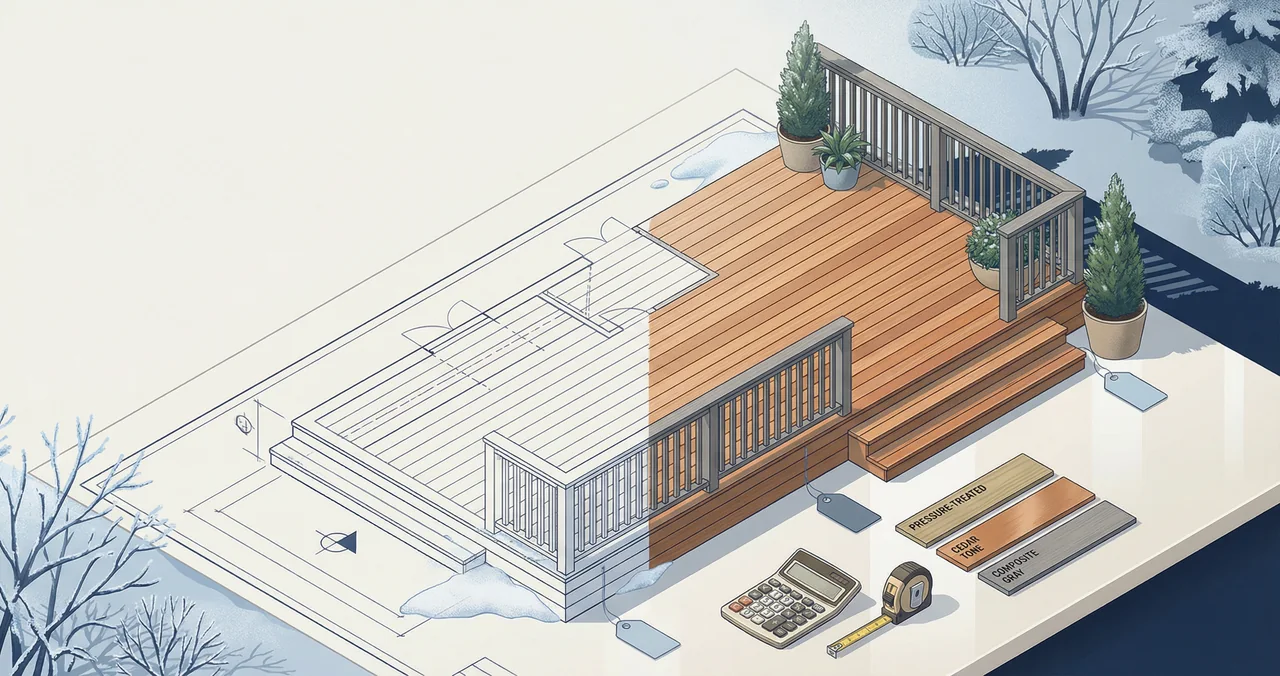
What Does a Deck Actually Cost in Omaha Right Now?
If you're pricing out a new deck in Omaha, you've probably already noticed the wide range of numbers floating around online. Most Omaha homeowners pay between $8,000 and $30,000 for a professionally built deck, depending on size, materials, and complexity. A standard 12x16 pressure-treated deck lands around $6,000–$8,600 installed, while a similar-sized composite deck runs $8,600–$14,400.
🏗️ Planning a deck project?
Get a free manual project review, or visualize your dream deck with AI before requesting quotes.
🧮 Tool Alert: Deck Cost Calculator
Estimate your project costs in seconds based on local pricing bands for your area.
Calculate My Cost →Those numbers shift based on your specific situation — your lot, your material choice, how high off the ground the deck sits, and when you book your contractor. Omaha's short building season (roughly May through October) means pricing pressure is real. Contractors fill their schedules fast, and waiting until April to call around usually means higher quotes or delayed start dates.
Here's what you need to know to budget accurately.
<!-- slot:after-intro -->
For a broader look at deck pricing across different materials and regions, see our deck cost guide.
Average Deck Cost in Omaha by Material
Material choice is the single biggest factor in your total cost. Here's how the most common options compare for a typical 320 sq ft (16x20) deck, fully installed in the Omaha metro:
| Material | Cost Per Sq Ft (Installed) | Total for 320 Sq Ft Deck |
|---|---|---|
| Pressure-treated wood | $25–$45 | $8,000–$14,400 |
| Cedar | $35–$55 | $11,200–$17,600 |
| Composite (mid-range) | $45–$75 | $14,400–$24,000 |
| Trex (premium composite) | $50–$80 | $16,000–$25,600 |
| Ipe (hardwood) | $60–$100 | $19,200–$32,000 |
A few things to note about these ranges. The low end assumes a simple, ground-level rectangular deck with basic railing. The high end reflects elevated builds, custom layouts, premium fasteners, and features like built-in benches or lighting.
Pressure-treated lumber remains the most popular choice in Omaha neighborhoods like Millard, Elkhorn, and Papillion — it's affordable upfront and widely available from local suppliers. But Omaha's freeze-thaw cycles are brutal on wood. You'll need to seal or stain annually to prevent cracking, warping, and moisture damage. Skip a year and you'll see it.
Composite and PVC decking have gained serious ground in the Omaha market. They handle Nebraska winters without the annual maintenance cycle. The upfront cost is higher, but you're not buying stain every spring or replacing boards after five years. For a deeper look at how these materials perform in freeze-thaw climates, see our guide on the best decking materials for freeze-thaw conditions.
Cost Per Square Foot Breakdown
Understanding what goes into that per-square-foot number helps you spot fair quotes from inflated ones. Here's a rough breakdown of where your money goes:
Materials (40–50% of total cost)
- Decking boards: The surface you walk on — this is where material choice matters most
- Framing lumber: Joists, beams, and ledger boards (usually pressure-treated regardless of surface material)
- Hardware and fasteners: Joist hangers, structural screws, hidden fastener systems for composite
- Railing systems: Can add $20–$50 per linear foot depending on material (aluminum, composite, cable, wood)
- Concrete for footings: Critical in Omaha — footings must extend below the frost line
Labor (50–60% of total cost)
Labor runs higher than materials in most Omaha deck builds. This isn't padding — it reflects the skill required for proper structural work, especially footing depth and ledger board attachment.
A straightforward ground-level deck might have a 60/40 labor-to-material split. Complex builds with multiple levels, angles, or elevated structures push closer to 65/35.
Labor Costs in Omaha
Omaha deck builders typically charge between $15 and $35 per square foot for labor alone, depending on the complexity of the build. Here's how that breaks down:
- Simple ground-level deck: $15–$20/sq ft labor
- Standard elevated deck (3–5 ft): $20–$28/sq ft labor
- Multi-level or complex design: $25–$35/sq ft labor
- Demolition of existing deck: $3–$8/sq ft (add to your budget if replacing)
Why Omaha Labor Rates Run Where They Do
Omaha sits in a competitive construction market. The metro has steady residential growth — West Omaha, Elkhorn, and Gretna keep expanding — which means deck builders stay busy. Combine that with a building season compressed into roughly five months and you get real pricing pressure from May through August.
Book your contractor by March. Seriously. The builders with the best reputations and fair pricing fill their spring and summer schedules early. By May, you're often looking at higher quotes from crews that still have availability, or you're waiting until late summer for a start date.
Permits also factor into labor timelines. In Omaha, deck permits are typically required for structures over 200 sq ft or 30 inches above grade. Your contractor should handle the permit process, but expect it to add 1–3 weeks to your timeline. Check with Omaha's Building/Development Services department for current requirements and fees.
<!-- slot:mid-content -->
What Affects Your Total Price
Beyond material and basic labor, several factors push your Omaha deck cost up or down:
Deck Height and Footing Depth
This is where Omaha builds differ from warmer climates. Nebraska's frost line sits between 36 and 60 inches deep, depending on your specific location. Every footing on your deck needs to extend below that line to prevent frost heave — the ground literally pushing your footings up as it freezes and thaws.
Deeper footings mean more concrete, more excavation, and more labor. An elevated deck that needs 8–12 footings at 42+ inches deep adds significant cost compared to a ground-level platform. If your yard slopes, the footings on the low side go even deeper.
Deck Size and Shape
Simple math: bigger deck, bigger price. But shape matters too. A straightforward rectangle is the most cost-efficient layout. Add angles, curves, multiple levels, or wraparound designs and you'll see labor costs jump 15–30% over a basic rectangle of the same square footage.
Railing and Stairs
Railing is often underestimated in initial budgets.
- Wood railing: $20–$30 per linear foot installed
- Composite railing: $30–$45 per linear foot installed
- Aluminum/metal railing: $35–$60 per linear foot installed
- Cable railing: $50–$80 per linear foot installed
A 320 sq ft deck typically needs 50–65 linear feet of railing. At composite prices, that's $1,500–$2,925 just for the railing system. Stairs add another $500–$2,000 depending on the run and material.
For more on railing options and code requirements, check out the best deck railing systems guide.
Site Conditions
Your specific lot matters. Steep grades, difficult access (no way to get a truck into the backyard), tree roots, existing concrete to remove, or utility lines to work around — all of these increase labor time and cost. Omaha's clay-heavy soil in many neighborhoods also makes excavation slower.
Snow Load and Structural Requirements
Nebraska building codes account for snow load — the weight your deck structure needs to support during heavy snowfall. This can require heavier framing members (larger joists, closer spacing) compared to decks in milder climates. It's not optional, and it adds modest cost to the framing phase.
Composite vs Wood: Cost Comparison
This is the decision most Omaha homeowners wrestle with. Here's an honest comparison over time:
| Factor | Pressure-Treated Wood | Composite |
|---|---|---|
| Installed cost (320 sq ft) | $8,000–$14,400 | $14,400–$24,000 |
| Annual maintenance | $200–$500 (stain/seal) | $0–$50 (occasional cleaning) |
| Expected lifespan | 10–15 years* | 25–30+ years |
| 10-year maintenance total | $2,000–$5,000 | $0–$500 |
| Total 10-year cost | $10,000–$19,400 | $14,400–$24,500 |
| Warranty | None typical | 25–50 year manufacturer warranty |
*In Omaha's climate, untreated or poorly maintained wood decks can deteriorate significantly in as few as 7–8 years.
The gap narrows fast when you factor in maintenance. After 10 years, you've spent almost as much on a wood deck as you would have on composite — and the composite deck still has 15+ years of life left. Wood also takes a beating from Omaha winters. The freeze-thaw cycles, road salt tracked onto the deck, and standing snow all accelerate deterioration.
If you want the look of real wood without the upkeep, cedar sits in the middle. It resists rot better than pressure-treated lumber but still needs regular sealing in Nebraska's climate. Budget $35–$55 per square foot installed.
Use PaperPlan to visualize different decking materials on your own home before committing — it helps narrow the decision when you can see composite vs. cedar in your actual backyard.
For a deeper comparison of low-maintenance decking options, we break down specific brands and their performance over time.
How to Save Money on Your Omaha Deck
Smart budgeting doesn't mean cutting corners. Here's where you can realistically save:
1. Build in the Off-Season
September and October builds — or even late August — can save you 5–15%. Contractors are finishing up their peak-season backlog and may offer better rates to fill their schedules. The weather in Omaha is usually still workable through mid-October.
2. Keep the Design Simple
A rectangular deck with a single level is the most cost-efficient shape per square foot. Every angle, bump-out, or level change adds labor. If budget is tight, go with a clean rectangle and invest the savings in better materials.
3. Choose Your Upgrade Moments
You don't need premium everything. A common strategy: use composite for the decking surface (where you'll feel the maintenance difference) and pressure-treated lumber for the framing (where it's hidden and performs well). Similarly, spend on railing quality where it's visible and skip the premium hidden fasteners if standard screws with plugs look fine to you.
4. Get Multiple Quotes — But Not Too Many
Three to four quotes from reputable Omaha builders gives you a solid range. More than that and you're wasting everyone's time. Look for builders who provide detailed, itemized quotes — not a single lump-sum number. You want to see material costs, labor costs, permit fees, and any allowances broken out.
5. Handle Demo Yourself
If you're replacing an existing deck, tearing out the old one yourself can save $1,000–$2,500. It's hard work but straightforward. Just make sure you dispose of the material properly — Omaha has specific waste disposal requirements for treated lumber.
6. Plan Ahead
This bears repeating: contact contractors in January or February for a spring/summer build. Early commitment gives you better pricing leverage and first pick of scheduling slots. Waiting until the last minute consistently costs more.
If you're curious about what a specific deck size runs, our cost breakdowns for 12x16 decks and 16x20 decks provide detailed pricing at those common dimensions.
<!-- slot:before-faq -->
🎨 Not sure which material to pick?
Upload a photo of your backyard and see exactly how Trex, TimberTech, or cedar would look — free and instant.
Frequently Asked Questions
How much does a 12x12 deck cost in Omaha?
A 12x12 (144 sq ft) deck in Omaha typically costs $3,600–$6,480 for pressure-treated wood or $6,480–$10,800 for composite, fully installed. These numbers assume a straightforward build at or near grade level. Elevated builds, custom railing, or stairs will push toward the higher end. For a ground-level platform deck with basic railing, most homeowners land in the $4,500–$7,000 range with mid-grade composite.
Do I need a permit to build a deck in Omaha?
Yes, in most cases. Omaha requires a building permit for decks over 200 square feet or more than 30 inches above grade. Even smaller decks may require a permit depending on your property's specific zoning. Contact Omaha's Building/Development Services department before starting work. Your contractor should handle the permit application, but verify this is included in your quote. Permit fees typically run $75–$300 depending on project scope. Building a deck without proper permits creates real problems for future home sales.
What is the best decking material for Omaha's climate?
Composite or PVC decking performs best in Omaha's harsh winters. The freeze-thaw cycles, snow load, and moisture exposure that define Nebraska weather are exactly what degrades wood fastest. Composite doesn't absorb moisture, won't crack from freezing, and handles road salt without damage. If you prefer natural wood, cedar holds up better than pressure-treated but still needs annual sealing. Ipe is incredibly durable but expensive and harder to source locally. For most Omaha homeowners, mid-range composite (Trex Enhance, TimberTech Pro) hits the best balance of durability, appearance, and cost.
When is the best time to build a deck in Omaha?
The optimal building window is May through October, with June through September being peak season. For the best pricing and contractor availability, book your build by March for a spring start. Late-season builds (September–October) can offer savings of 5–15% as contractors look to fill remaining schedule gaps. Avoid planning a build that extends into November — temperatures drop fast in Omaha, and concrete footings need adequate curing time before the ground freezes. For more on seasonal timing and its impact on your project, see our guide on the best time to build a deck.
Is it cheaper to build a deck yourself in Omaha?
DIY can save you 40–60% on labor costs, which translates to real money — potentially $4,000–$10,000+ on a mid-sized deck. But there are serious caveats. Omaha's footing depth requirements (36–60 inches below grade) make foundation work challenging without equipment. You still need a permit and inspections. And structural mistakes can be dangerous and expensive to fix. If you're handy and have built structures before, a simple ground-level deck is a reasonable DIY project. For elevated decks or anything over 3 feet off the ground, hire a professional.
<!-- slot:end -->
📋 Planning a deck project?
Get a free manual project review from our team — no obligation, no spam.
Get Free Project Review →Upload a backyard photo and preview real decking materials with AI — free, instant, no sign-up.
Permits, costs, material comparisons, and questions to ask before requesting quotes — delivered to your inbox.