
Deck Cost in Long Beach (2026)
What does a deck cost in Long Beach in 2026? Get real installed prices per square foot for composite, wood, and Trex — plus tips to save.
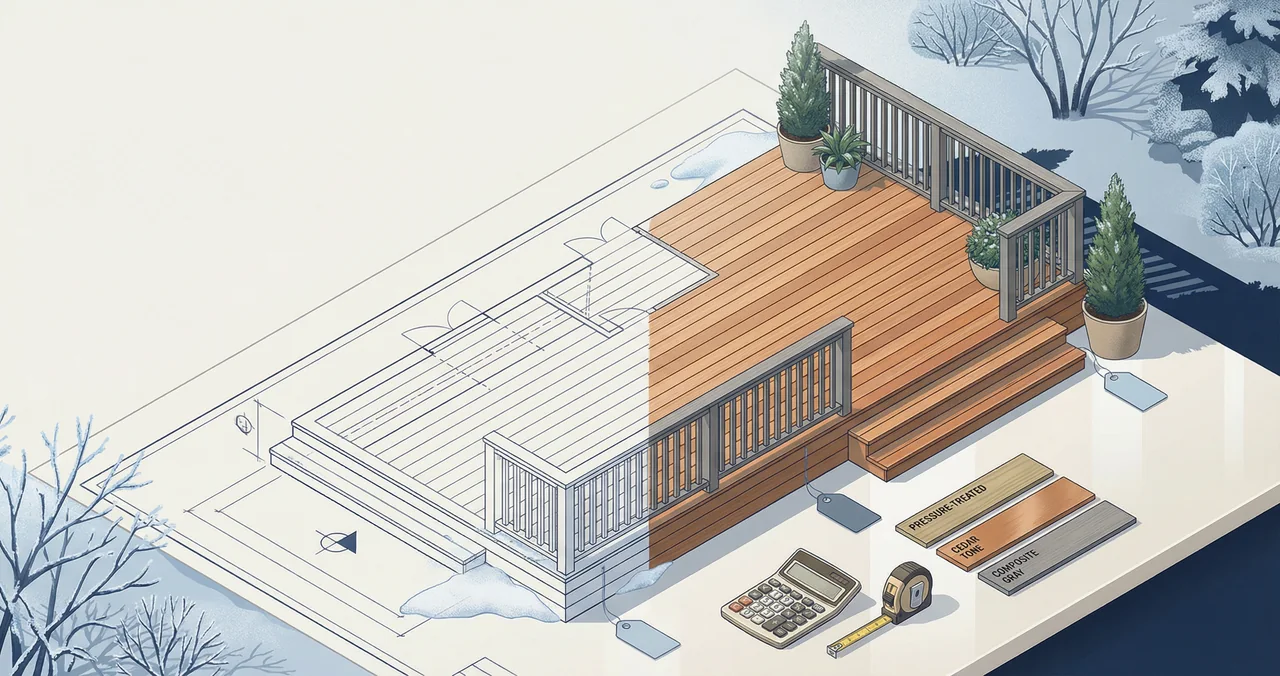
Deck Cost in Long Beach: What Homeowners Are Paying in 2026
A new deck in Long Beach typically runs $25 to $80 per square foot installed, depending on the material you choose and the complexity of your build. For a standard 300-square-foot deck, that means you're looking at somewhere between $7,500 and $24,000 all in — materials, labor, and permits.
🏗️ Planning a deck project?
Get a free manual project review, or visualize your dream deck with AI before requesting quotes.
🧮 Tool Alert: Deck Cost Calculator
Estimate your project costs in seconds based on local pricing bands for your area.
Calculate My Cost →Looking for more regional information? Check out our California State Decking Hub.
That's a wide range. The difference comes down to a few key decisions: pressure-treated lumber vs. composite vs. premium hardwood, a simple rectangular platform vs. a multi-level design with built-in benches, and whether you're building in Belmont Shore or Bixby Knolls (elevation and soil conditions vary more than you'd think across Long Beach).
Here's what Long Beach homeowners are actually paying in 2026 — broken down by material, size, and scope — so you can budget with confidence.
<!-- slot:after-intro -->
For a broader look at deck pricing across different materials and regions, see our deck cost guide. Timing your build right can also save thousands — check our guide on the best time to build a deck.
Average Deck Cost in Long Beach by Material
Material choice is the single biggest factor in your total cost. Here's what installed pricing looks like across Long Beach in 2026:
| Material | Installed Cost Per Sq Ft | 200 Sq Ft Deck | 350 Sq Ft Deck |
|---|---|---|---|
| Pressure-Treated Wood | $25–$45 | $5,000–$9,000 | $8,750–$15,750 |
| Cedar | $35–$55 | $7,000–$11,000 | $12,250–$19,250 |
| Composite | $45–$75 | $9,000–$15,000 | $15,750–$26,250 |
| Trex (brand-name composite) | $50–$80 | $10,000–$16,000 | $17,500–$28,000 |
| Ipe (Brazilian Hardwood) | $60–$100 | $12,000–$20,000 | $21,000–$35,000 |
A few notes specific to the Long Beach market:
- Cedar and redwood are locally available in Southern California, which keeps their prices more competitive here than in other parts of the country. Many Long Beach contractors stock both.
- Pressure-treated lumber remains the budget pick, but it requires regular sealing and staining — something easy to forget when you're enjoying 300 days of sunshine.
- Composite and Trex are increasingly popular in neighborhoods like Belmont Heights and El Dorado Park, where homeowners want low maintenance without sacrificing curb appeal.
Cost Per Square Foot Breakdown
The per-square-foot price you'll see quoted includes both materials and labor, but understanding each component helps you spot where costs can shift.
Materials Only (Per Square Foot)
- Pressure-treated wood: $8–$15
- Cedar: $12–$22
- Composite: $18–$35
- Trex: $22–$40
- Ipe: $30–$55
Labor (Per Square Foot)
- Basic installation: $15–$25
- Complex builds (multi-level, curves, built-ins): $25–$40
Additional Cost Items
These are often missing from initial quotes but show up on your final invoice:
- Permits: $200–$800 in Long Beach (more on this below)
- Demolition of existing deck: $500–$2,000
- Stairs: $500–$2,500 depending on height and material
- Railing: $20–$60 per linear foot installed
- Post footings: $50–$150 each
When comparing quotes, make sure each contractor is including the same line items. A quote that looks $3,000 cheaper might be missing railing, stairs, or permit fees.
Labor Costs in Long Beach
Labor typically accounts for 40% to 60% of your total deck cost in Long Beach. The Southern California construction market is competitive, and skilled deck builders stay busy year-round here.
Expect to pay $15 to $40 per square foot for labor, depending on:
- Deck complexity. A ground-level rectangular deck is straightforward. A second-story deck attached to your home with multiple stair runs and custom railing? That's a different job entirely.
- Material choice. Ipe and hardwoods require specialized tools and more experienced installers. Composite has hidden fastening systems that take longer to install than face-screwing pressure-treated boards.
- Site conditions. Sloped yards (common in the Signal Hill area and parts of Los Altos) require more engineering and foundation work.
One advantage of building in Long Beach: the year-round building season keeps contractor schedules relatively predictable. You won't see the seasonal price spikes that hit cities with harsh winters, where everyone scrambles to build between May and September. That said, summer remains the busiest season — booking your project for late fall or winter can sometimes get you better scheduling and pricing.
<!-- slot:mid-content -->
What Affects Your Total Price
Beyond material and labor, several factors can push your Long Beach deck project higher or lower than the averages above.
Deck Size and Shape
This one's obvious, but worth stating: a simple 12×12 platform deck (144 sq ft) will cost a fraction of a wraparound 400-square-foot multi-level design. If you're curious about how size affects pricing on larger builds, the cost breakdown for a 16×20 deck and 20×20 deck pricing guide give useful benchmarks, even though those are Ontario-based — the size-to-cost ratios translate.
Height and Foundation
Decks built more than 30 inches above grade require railing (per code) and deeper footings. Long Beach's frost line is only 12 to 18 inches deep — far shallower than northern states — so your footing costs stay reasonable. But if you're building a raised deck off a second-story entrance, expect structural posts, beam engineering, and potentially a soils report.
Permits and Code Requirements
In Long Beach, deck permits are typically required for structures over 200 square feet or 30 inches above grade. You'll need to check with Long Beach's Building and Development Services department for current requirements.
Budget $200 to $800 for permits. Some contractors handle the permit process; others leave it to you. Ask upfront. Building without a permit might save money now, but it creates real problems when you sell your home or file an insurance claim. It's not worth the risk — a lesson the risks of building without a permit article covers in detail.
Coastal Salt Air
This is the Long Beach factor that gets overlooked. If your home is within a few miles of the coast — and in Long Beach, most are — salt air will corrode standard metal fasteners, joist hangers, and hardware faster than you'd expect.
Invest in:
- Stainless steel or hot-dipped galvanized fasteners (add $200–$600 to a typical project)
- Coated joist hangers rated for coastal environments
- Composite or naturally rot-resistant decking (cedar, redwood, or ipe) over pressure-treated if your deck faces the ocean
This isn't an area to cut corners. Corroded fasteners compromise structural integrity, and replacement is expensive.
Attached vs. Freestanding
An attached deck (bolted to your home's ledger board) typically costs less than freestanding because it uses your home's structure for support. A freestanding deck needs additional posts and footings but avoids ledger board flashing issues — important in an area where even mild rain can cause water intrusion if the attachment isn't waterproofed properly.
The attached vs. freestanding deck permit guide breaks down the structural and permitting differences.
Composite vs Wood: Cost Comparison
This is the decision most Long Beach homeowners agonize over. Here's the honest comparison.
Upfront Cost
Wood wins. A pressure-treated deck costs roughly half what a mid-range composite deck costs to install. Cedar falls in between.
| | Pressure-Treated | Cedar | Composite |
|---|---|---|---|
| 300 sq ft installed | $7,500–$13,500 | $10,500–$16,500 | $13,500–$22,500 |
| Annual maintenance | $150–$400 | $100–$300 | $0–$50 |
| Expected lifespan | 15–20 years | 20–25 years | 25–30+ years |
Long-Term Cost
Composite catches up — and often wins. A pressure-treated deck needs staining or sealing every 1 to 3 years to hold up against Long Beach's UV exposure. Skip a few years and you're looking at splintering, warping, and early replacement.
Over 20 years, the total cost of ownership (install + maintenance) often breaks even between pressure-treated wood and composite. Cedar is somewhere in the middle — it's naturally more resistant to decay, looks beautiful, and is readily available from Southern California suppliers.
Use PaperPlan to visualize different decking materials on your own home before committing — it's a lot easier to compare cedar versus composite when you can actually see the colors and textures in context.
The Long Beach Climate Factor
Long Beach's mild, sunny climate is actually excellent for all decking materials. You don't have freeze-thaw cycles cracking boards or heaving footings. The main environmental threats are:
- UV fading (affects all materials; composite handles it better than untreated wood)
- Salt air corrosion (affects fasteners and hardware more than the decking itself)
- Occasional heavy rain (good drainage and flashing matter)
If you want the deepest dive on low-maintenance decking options, that guide covers the top-performing brands and materials.
How to Save Money on Your Long Beach Deck
You don't have to slash quality to bring costs down. Here's where smart Long Beach homeowners save real money.
1. Keep the Design Simple
Every angle, curve, and level change adds labor cost. A rectangular single-level deck is the most cost-effective shape per square foot. If you want visual interest, achieve it with railing style, lighting, or planters rather than complex geometry.
2. Choose Your Material Strategically
Pressure-treated wood for areas that won't get heavy UV exposure (shaded yards, under pergolas). Composite for sun-facing, high-traffic surfaces where you want zero maintenance. Mix and match — use composite for decking boards and pressure-treated for the substructure. Most contractors do this by default.
3. Build in the Off-Season
Long Beach's year-round building season means you *can* build in winter. While there's no dramatic off-season discount like you'd see in cold climates, contractors are generally less booked from November through February. You may find better availability and slightly more flexible pricing.
4. Get Three or More Quotes
This sounds basic, but too many homeowners go with the first contractor they call. Get at least three detailed, written quotes that break out materials, labor, permits, and any extras. Compare apples to apples.
5. Do Selective DIY
You probably shouldn't frame and build the deck yourself — that's where structural mistakes happen. But you can save money by:
- Demolishing the old deck yourself (save $500–$2,000)
- Staining or sealing a wood deck after installation
- Adding accessories like lighting, planters, or privacy screens after the build
If you're considering a full DIY approach, understand the realities of building your own deck first.
6. Right-Size Your Deck
A 300-square-foot deck that you actually use is better than a 500-square-foot deck that strains your budget. Think about how you'll use the space — a dining table and four chairs needs roughly 10×12 feet. A grill station adds another 4×6 feet. Size your deck around your real life, not a Pinterest fantasy.
<!-- slot:before-faq -->
🎨 Not sure which material to pick?
Upload a photo of your backyard and see exactly how Trex, TimberTech, or cedar would look — free and instant.
Frequently Asked Questions
How much does a 12×12 deck cost in Long Beach?
A 12×12 deck (144 square feet) in Long Beach costs between $3,600 and $11,500 installed, depending on material. Pressure-treated wood comes in at the low end ($3,600–$6,500), composite runs $6,500–$10,800, and premium materials like Trex or ipe push toward the top of that range. These prices include basic labor and materials but not railing, stairs, or permits — add $1,500 to $4,000 for those extras on a deck this size.
Do I need a permit to build a deck in Long Beach?
Most likely, yes. Long Beach requires permits for decks over 200 square feet or more than 30 inches above grade. Even smaller decks may need permits depending on your lot's setback requirements and zoning. Contact Long Beach's Building and Development Services department before starting. Permit costs typically run $200 to $800. Your contractor may handle the application, but confirm this in your contract.
What is the cheapest decking material for Long Beach homeowners?
Pressure-treated lumber is the most affordable option at $25 to $45 per square foot installed. It's a solid, proven material — just know that you'll need to seal or stain it every one to three years, especially with Long Beach's sun exposure. For a low-maintenance budget option, look at entry-level composite lines from brands like Fiberon or Trex Enhance, which start around $45 per square foot installed and require almost no upkeep.
How long does it take to build a deck in Long Beach?
A typical 200- to 400-square-foot deck takes 1 to 3 weeks from start to finish once construction begins. The bigger variable is lead time — getting permits (2 to 6 weeks in Long Beach) and scheduling with a contractor (1 to 8 weeks depending on season). Plan for 6 to 12 weeks total from signing a contract to sitting on your finished deck. Larger or more complex builds, like a 12×16 or bigger project, will extend that timeline.
Is composite decking worth the extra cost in Long Beach?
For most Long Beach homeowners, yes. The mild climate means you'll use your deck year-round, and composite's fade-resistant, low-maintenance properties make it ideal for Southern California's strong UV exposure. You won't spend weekends sanding and staining, and modern composite boards look remarkably close to real wood. The upfront premium of $15 to $30 more per square foot over pressure-treated wood typically pays for itself within 7 to 10 years in saved maintenance costs. For a closer look at top-performing brands, check the best composite decking brands roundup.
<!-- slot:end -->
📋 Planning a deck project?
Get a free manual project review from our team — no obligation, no spam.
Get Free Project Review →Upload a backyard photo and preview real decking materials with AI — free, instant, no sign-up.
Permits, costs, material comparisons, and questions to ask before requesting quotes — delivered to your inbox.