
Deck Cost in Stockton (2026)
What does a new deck cost in Stockton? Get 2026 pricing by material, labor rates, cost per square foot, and smart ways to save on your deck project.
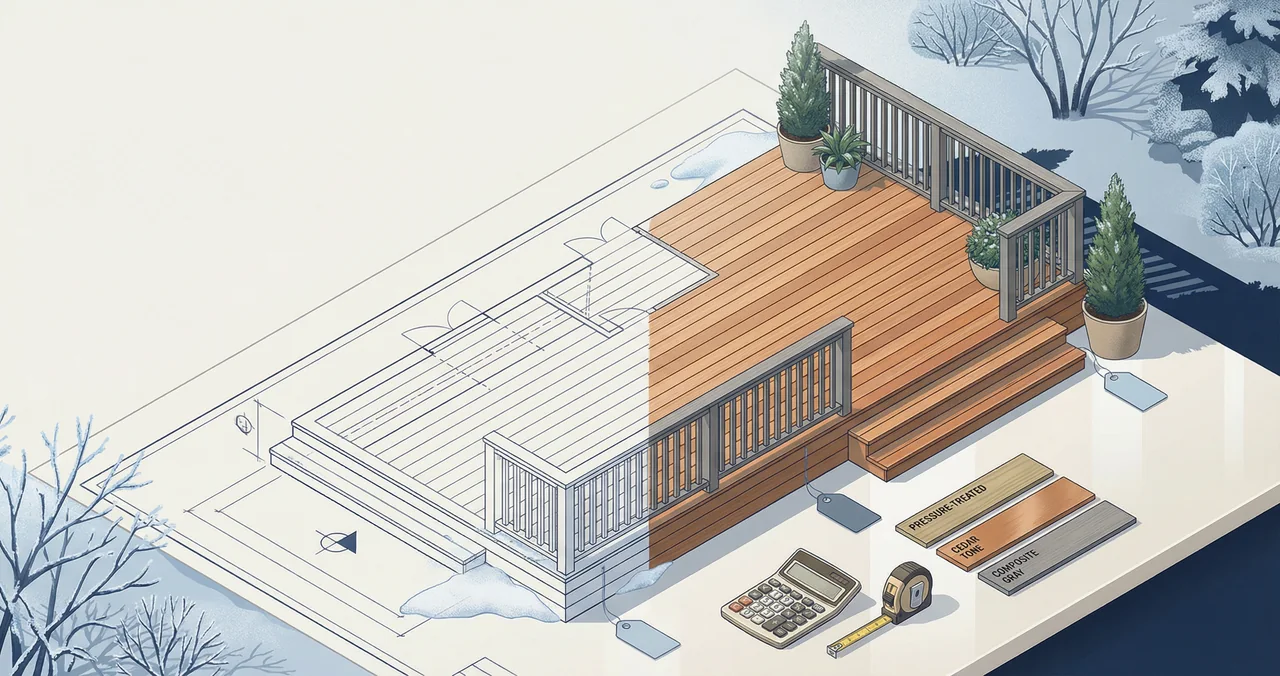
Deck Cost in Stockton: What Homeowners Are Paying in 2026
A new deck in Stockton typically runs $8,000 to $30,000 for a standard 300–400 square foot build, depending on materials, height, and complexity. That's a wide range — and the material you choose accounts for the biggest chunk of the difference.
🏗️ Planning a deck project?
Get a free manual project review, or visualize your dream deck with AI before requesting quotes.
🧮 Tool Alert: Deck Cost Calculator
Estimate your project costs in seconds based on local pricing bands for your area.
Calculate My Cost →Looking for more regional information? Check out our California State Decking Hub.
Stockton homeowners have an advantage most of the country doesn't: a year-round building season. That keeps contractor availability high and prices more competitive than markets where builders cram all their work into six months. But you still need to know what drives costs up (and how to keep them reasonable).
Here's what Stockton residents are actually paying in 2026.
<!-- slot:after-intro -->
For a broader look at deck pricing across different materials and regions, see our deck cost guide. Timing your build right can also save thousands — check our guide on the best time to build a deck.
Average Deck Cost in Stockton by Material
Material choice is the single biggest factor in your total project cost. Here's what installed decks are running in the Stockton area right now:
| Material | Installed Cost per Sq Ft | 300 Sq Ft Deck | 400 Sq Ft Deck |
|---|---|---|---|
| Pressure-Treated Pine | $25–$45 | $7,500–$13,500 | $10,000–$18,000 |
| Cedar | $35–$55 | $10,500–$16,500 | $14,000–$22,000 |
| Composite | $45–$75 | $13,500–$22,500 | $18,000–$30,000 |
| Trex (brand-specific) | $50–$80 | $15,000–$24,000 | $20,000–$32,000 |
| Ipe (hardwood) | $60–$100 | $18,000–$30,000 | $24,000–$40,000 |
Pressure-treated lumber remains the most popular choice for budget-conscious Stockton homeowners. It handles the Central Valley heat without issue, though it will need staining or sealing every 2–3 years.
Cedar and redwood are worth a close look here. Both are locally available in Northern California, which keeps material costs lower than in other parts of the country. Cedar offers natural rot resistance and holds up well in Stockton's mild winters.
Composite decking has gained serious ground in neighborhoods like Lincoln Village, Brookside, and Spanos Park. The higher upfront cost pays back through virtually zero maintenance — no staining, no sealing, no splinters.
Cost Per Square Foot Breakdown
Understanding what you're paying *per square foot* helps you compare quotes accurately. Here's how the cost typically breaks down for a mid-range composite deck in Stockton:
- Decking materials: $15–$30/sq ft
- Substructure (joists, beams, posts): $8–$15/sq ft
- Hardware and fasteners: $2–$4/sq ft
- Labor: $15–$25/sq ft
- Permits and inspections: $1–$3/sq ft
Total: $41–$77/sq ft (composite, fully installed)
For pressure-treated wood, expect the materials portion to drop to $8–$15/sq ft, bringing total installed costs down to that $25–$45 range.
A few things push per-square-foot costs higher:
- Small decks (under 200 sq ft) cost more per square foot because setup, permits, and mobilization costs get spread across fewer feet
- Multi-level designs add $5–$15/sq ft for the additional framing and transitions
- Elevated decks (over 5 feet) require heavier structural elements and sometimes engineering, adding $10–$20/sq ft
If you're planning a larger project, understanding how size affects pricing can help you right-size your design to your budget.
Labor Costs in Stockton
Labor typically makes up 35% to 50% of your total deck cost. In Stockton, deck builders generally charge between $15 and $30 per square foot for labor, depending on complexity.
Here's what shapes labor pricing locally:
Contractor Rate Structures
Most Stockton deck builders price by the project, not by the hour. But when you break it down:
- Basic ground-level deck: $15–$20/sq ft labor
- Standard raised deck (2–4 ft): $18–$25/sq ft labor
- Complex multi-level or custom: $25–$30+/sq ft labor
Why Stockton Labor Rates Are Competitive
Stockton sits in a sweet spot. Labor costs are lower than the Bay Area (where deck builders routinely charge $30–$45/sq ft for labor alone) but still reflect skilled, licensed work. The year-round building season means contractors maintain steady crews — they're not scrambling to hire seasonal workers every spring.
That said, don't chase the cheapest bid. Licensed contractors in California must carry workers' comp insurance and hold a C-13 (fencing) or B (general building) license for deck construction. Verify any contractor's license at the California Contractors State License Board before signing.
When to Schedule for Best Pricing
While Stockton's climate allows building year-round, you can sometimes negotiate better rates during late fall and early winter (November through January). Demand dips slightly as holiday season hits, and some builders offer discounts to keep crews busy.
<!-- slot:mid-content -->
What Affects Your Total Price
Beyond material and basic labor, several factors move your final number up or down. Stockton-specific considerations include:
Deck Height and Foundation Requirements
Stockton's frost line sits at just 12–18 inches, which is good news — your footings don't need to go nearly as deep as in cold-climate states. A standard 42-inch deep footing meets code here with room to spare, keeping foundation costs modest.
Ground-level decks (under 30 inches) on flat lots are the most affordable to build. Once you go above 30 inches, you'll need railings (code requirement), and the substructure gets beefier.
Permits and Inspections
In Stockton, deck permits are typically required for structures over 200 sq ft or 30 inches above grade. Contact Stockton's Building/Development Services department for current requirements.
Budget $300–$800 for permit fees, depending on project size. The permit process usually takes 2–4 weeks for plan review. Some builders handle the permit application as part of their service — ask upfront.
Skipping the permit is never worth it. Unpermitted work creates headaches at resale and can result in fines or forced removal.
Lot Conditions
- Sloped lots (common in parts of northeast Stockton near the delta) require additional grading or taller posts, adding $1,500–$5,000
- Limited access (no side gate, narrow passages) increases labor costs because materials must be hand-carried
- Existing structure removal runs $500–$2,000 for tear-out and disposal of an old deck
Design Add-Ons and Their Costs
| Feature | Typical Added Cost |
|---|---|
| Built-in bench seating | $500–$2,000 |
| Deck stairs (per flight) | $500–$1,500 |
| Railing (per linear ft) | $30–$60 |
| Pergola or shade structure | $2,000–$8,000 |
| Built-in lighting | $500–$3,000 |
| Privacy screen/wall | $1,000–$4,000 |
Use PaperPlan to visualize different decking materials on your own home before committing — it's far easier to adjust colors and layouts digitally than after boards are down.
Composite vs Wood: Cost Comparison
This is the decision most Stockton homeowners wrestle with. Here's a direct comparison over a 15-year ownership period for a 350 sq ft deck:
Upfront Cost
- Pressure-treated wood: ~$12,250 (at $35/sq ft avg installed)
- Cedar: ~$15,750 (at $45/sq ft avg installed)
- Composite (mid-range): ~$21,000 (at $60/sq ft avg installed)
15-Year Maintenance Cost
- Pressure-treated wood: Stain/seal every 2–3 years at $400–$800 each = $2,000–$6,000 total. Board replacement around year 10: $500–$1,500.
- Cedar: Stain/seal every 2–3 years at $400–$800 each = $2,000–$6,000 total.
- Composite: Occasional cleaning. $100–$300 total.
15-Year Total Cost of Ownership
| Material | Build Cost | Maintenance | Total |
|---|---|---|---|
| Pressure-treated | $12,250 | $3,500 | ~$15,750 |
| Cedar | $15,750 | $3,500 | ~$19,250 |
| Composite | $21,000 | $200 | ~$21,200 |
The gap narrows significantly over time. And in Stockton's hot summers — where deck surfaces bake in 100°F+ heat — composite has another advantage: it doesn't crack or warp the way wood can without diligent maintenance.
One caveat: composite decking gets noticeably hotter underfoot in direct sun. If your deck faces south or west with no shade, consider lighter-colored composite or factor in a pergola. For a deeper look at material options, this comparison of composite decking brands covers the major players.
How to Save Money on Your Stockton Deck
Cutting costs doesn't mean cutting corners. Here are practical ways to reduce your deck budget without compromising quality:
1. Right-Size Your Deck
The cheapest square foot is the one you don't build. A well-designed 250 sq ft deck with smart furniture placement often functions better than a sprawling 500 sq ft platform. Measure your actual furniture and traffic patterns before committing to a size.
2. Choose a Simple Footprint
Rectangular decks cost 15–25% less than designs with angles, curves, or multiple levels. Every corner and transition adds labor and material waste.
3. Mix Materials Strategically
Use composite or cedar for the decking surface (what you see and touch) and pressure-treated lumber for the substructure (what you don't). This is standard practice and saves $3–$8/sq ft versus using premium materials throughout. If you're considering aluminum framing for extra longevity, that's another option — though it adds cost upfront.
4. Stay Under 30 Inches
Ground-level decks under 30 inches don't require railings in most jurisdictions, saving $2,000–$5,000 on a typical build. They may also have simplified permit requirements.
5. Get Three or More Quotes
Pricing varies widely among Stockton contractors. Get at least three detailed, written quotes. Make sure each quote specifies:
- Materials brand and grade
- Substructure specifications
- Permit handling
- Timeline and payment schedule
- Warranty terms
6. Time It Right
As mentioned, booking your project in late fall or winter can yield 5–15% savings. You'll also have more flexibility on scheduling — spring and summer books fill fast in the Central Valley.
7. Do Selective DIY
Even if you hire out the build, you can save by handling:
- Old deck demolition and removal ($500–$2,000 saved)
- Site clearing and grading ($300–$1,000 saved)
- Staining/sealing if you choose wood ($400–$800 saved per application)
Just don't DIY structural work unless you genuinely have the skills. A failed deck is dangerous and expensive to fix. Looking for affordable deck building options in nearby cities? Shopping contractors from adjacent markets can sometimes yield competitive bids.
<!-- slot:before-faq -->
🎨 Not sure which material to pick?
Upload a photo of your backyard and see exactly how Trex, TimberTech, or cedar would look — free and instant.
Frequently Asked Questions
How much does a 12x16 deck cost in Stockton?
A 12x16 deck (192 sq ft) in Stockton costs approximately $4,800–$8,600 for pressure-treated wood and $8,600–$14,400 for composite, fully installed. Small decks like this run slightly higher per square foot because fixed costs (permits, mobilization, footings) don't scale down proportionally. Here's a detailed breakdown of 12x16 deck costs for reference.
Do I need a permit to build a deck in Stockton?
Most likely, yes. In Stockton, deck permits are typically required for structures over 200 sq ft or 30 inches above grade. Even smaller decks may need permits depending on your lot's specific conditions. Contact Stockton's Building/Development Services department before starting work. Permit fees generally run $300–$800. Some ground-level platforms under 200 sq ft may be exempt — but confirm this with the city first.
What's the best decking material for Stockton's climate?
Stockton's hot, dry summers and mild winters mean all common decking materials perform well here. Cedar and redwood are popular because they're locally sourced in Northern California and naturally resistant to insects and rot. Composite handles the heat without cracking or fading (choose lighter colors to reduce heat absorption). Pressure-treated pine is the budget pick and holds up fine with regular maintenance. Avoid untreated softwoods — they won't last.
How long does it take to build a deck in Stockton?
A straightforward ground-level deck takes most crews 3–5 days. A raised deck with stairs and railings runs 5–10 days. Complex multi-level builds or projects requiring significant site prep can take 2–3 weeks. Add 2–4 weeks for permit approval before construction begins. Stockton's year-round building weather means you won't face seasonal delays.
Is composite decking worth the extra cost in Stockton?
For most Stockton homeowners, yes — especially if you plan to stay in the home for 7+ years. The 15-year cost comparison shows composite is only marginally more expensive than wood when you factor in maintenance. You also get consistent appearance, no splinters (important for families), and no annual staining weekends. The main trade-off is higher surface temperature in direct sun, which matters when Stockton hits triple digits in July and August. A pool deck or patio setup near water can offset this nicely.
<!-- slot:end -->
📋 Planning a deck project?
Get a free manual project review from our team — no obligation, no spam.
Get Free Project Review →Upload a backyard photo and preview real decking materials with AI — free, instant, no sign-up.
Permits, costs, material comparisons, and questions to ask before requesting quotes — delivered to your inbox.