
Deck Cost in Naperville (2026)
What does a deck cost in Naperville in 2026? See real pricing by material, labor rates, and money-saving tips for DuPage County homeowners.
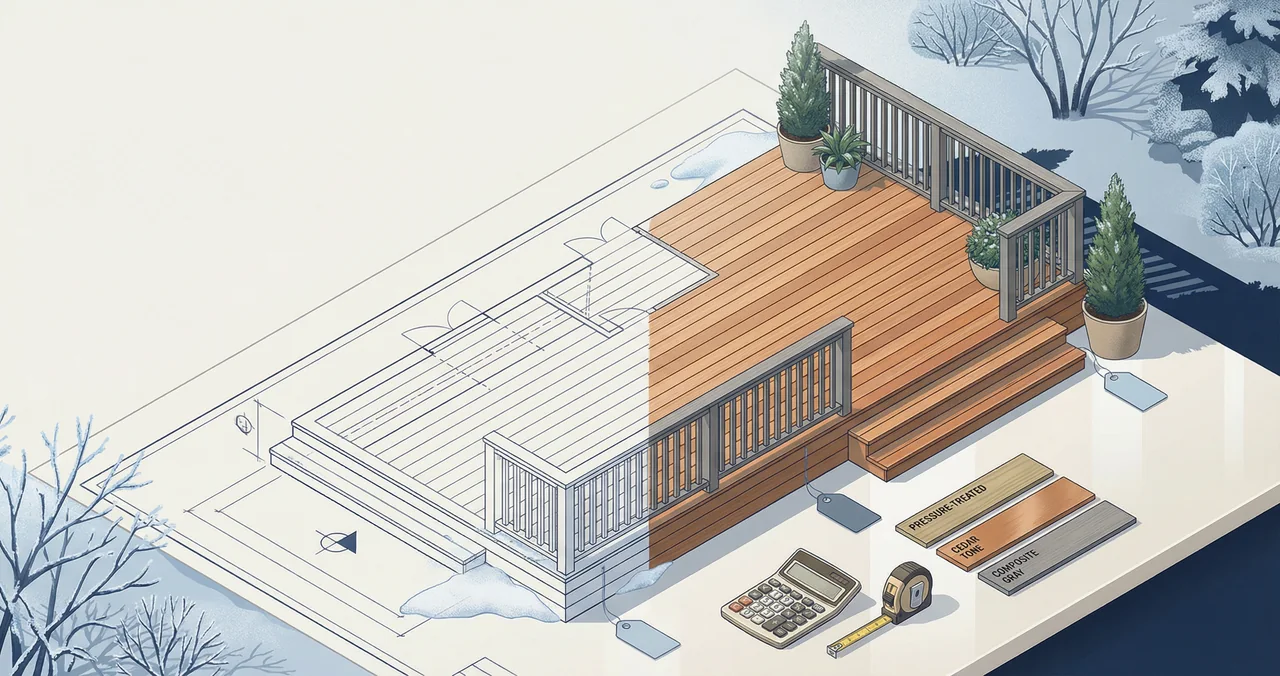
Average Deck Cost in Naperville by Material
A standard 320 sq ft deck in Naperville runs between $8,000 and $24,000 installed, depending on material. That range is wide for a reason — pressure-treated pine and premium hardwoods are completely different projects.
🏗️ Planning a deck project?
Get a free manual project review, or visualize your dream deck with AI before requesting quotes.
🧮 Tool Alert: Deck Cost Calculator
Estimate your project costs in seconds based on local pricing bands for your area.
Calculate My Cost →Here's what Naperville homeowners are paying in 2026:
| Material | Installed Cost per Sq Ft | 320 Sq Ft Deck Total |
|---|---|---|
| Pressure-treated wood | $25–$45 | $8,000–$14,400 |
| Cedar | $35–$55 | $11,200–$17,600 |
| Composite | $45–$75 | $14,400–$24,000 |
| Trex (brand-name composite) | $50–$80 | $16,000–$25,600 |
| Ipe (tropical hardwood) | $60–$100 | $19,200–$32,000 |
Those numbers include materials, labor, standard railings, and basic footings. They don't include permits, design upgrades, or extras like built-in seating or lighting.
Naperville sits in DuPage County where contractor demand stays high. Proximity to Chicago's western suburbs means labor rates trend above state averages. If your neighbor in Plainfield or Aurora got a lower quote, that's likely why.
<!-- slot:after-intro -->
For a broader look at deck pricing across different materials and regions, see our deck cost guide.
Cost Per Square Foot Breakdown
The per-square-foot price is the fastest way to compare bids. But not every contractor bundles costs the same way, so make sure you're comparing apples to apples.
What's typically included in "installed" pricing
- Framing and substructure (pressure-treated joists, beams, posts)
- Decking boards (your chosen surface material)
- Standard railings (wood or aluminum depending on the package)
- Footings — and in Naperville, this matters more than most places
What's usually extra
- Permit fees ($75–$300 in Naperville depending on scope)
- Stairs and multi-level transitions ($500–$2,000+)
- Built-in benches, planters, or pergolas
- Demolition of an existing deck ($500–$1,500)
- Upgraded railing systems like glass or cable rail
When you see a quote at $25/sq ft for pressure-treated, that's the entry point — a simple, rectangular, ground-level deck with no frills. Once you add elevation, angles, or wraparound designs, you're climbing toward the upper range fast.
Labor Costs in Naperville
Labor typically accounts for 50–60% of your total deck cost in the Naperville area. That's slightly higher than national averages, driven by a few local factors:
- Contractor demand. Naperville's building season runs roughly May through October. That's a compressed window, and experienced crews book up quickly. If you're calling in April hoping for a June start, you may already be late.
- Frost line depth. Illinois code requires footings to extend below the frost line — 42 inches minimum in DuPage County. That means more excavation, more concrete, and more labor hours than a deck in, say, North Carolina.
- Licensing and insurance. Reputable Naperville contractors carry proper liability coverage and workers' comp. That overhead gets built into your quote, and it should.
Expect to pay $15–$35 per square foot for labor alone, depending on complexity. A straightforward rectangle on flat ground sits at the low end. A multi-level deck with angles, stairs, and integrated lighting? That's pushing the top.
Pro tip: Book your contractor by March. Naperville crews start scheduling winter consultations for spring builds. Waiting until the snow melts means you're competing with every other homeowner who had the same idea.
<!-- slot:mid-content -->
What Affects Your Total Price
Two Naperville decks of the same size can cost wildly different amounts. Here's what moves the needle:
Deck size and layout
Simple math — more square footage costs more. But layout matters just as much. A 12×16 rectangular deck is efficient to frame and install. An L-shaped or wraparound design with the same square footage takes significantly more labor and generates more material waste.
Elevation and access
A ground-level deck requires minimal substructure. A deck that's 30 inches or more above grade needs posts, bracing, and — in Naperville — a permit from the Building/Development Services department. Elevated decks also require code-compliant railings (36 inches minimum for residential in Illinois, 42 inches if the deck is more than 30 inches off the ground).
Site conditions
Sloped yards are common in neighborhoods like Cress Creek, White Eagle, and parts of north Naperville near the DuPage River corridor. Grading, retaining considerations, and extended post lengths all add cost. If your yard has mature trees with root systems near the build area, your contractor may need to adjust footing locations.
Material grade and finish
Even within a single material category, there's a range. Pressure-treated lumber comes in different grades. Composite boards vary from entry-level (solid-color, no grain pattern) to premium lines with realistic wood textures and enhanced fade resistance. The price difference between Trex Enhance and Trex Transcend, for instance, can be $8–$15 per square foot.
Permits and inspections
In Naperville, deck permits are required for structures over 200 sq ft or 30 inches above grade. You'll need a site plan showing setbacks, and the city will inspect footings before you pour. Budget $75–$300 for permit fees and factor in a few days for the approval process. Don't skip this — unpermitted work can cause serious problems when you sell your home.
Seasonal timing
Building during peak season (June–August) means higher demand and potentially higher prices. Early spring and fall builds can sometimes save you 5–10% on labor, and contractors may have more flexibility in scheduling.
Composite vs Wood: Cost Comparison
This is the decision most Naperville homeowners wrestle with. Given the local climate — harsh winters, freeze-thaw cycles, road salt tracked onto surfaces, and heavy spring rains — the choice matters more here than in milder regions.
| Factor | Pressure-Treated Wood | Composite |
|---|---|---|
| Installed cost (per sq ft) | $25–$45 | $45–$75 |
| Lifespan | 10–15 years | 25–50 years |
| Annual maintenance | Staining/sealing yearly ($1–$3/sq ft) | Occasional soap-and-water wash |
| Freeze-thaw resistance | Moderate (moisture absorption) | Excellent (non-porous) |
| 10-year total cost (320 sq ft) | $11,400–$24,000+ | $14,400–$24,000 |
| Appearance over time | Grays and weathers without upkeep | Retains color with minimal fading |
The upfront gap narrows over time. Wood decks in Naperville need annual sealing to handle moisture and salt exposure from winter deicing. Skip a year or two and you're looking at warped boards, splinters, and potential structural issues. Over a decade, the maintenance costs on wood can match or exceed the premium you'd have paid for composite.
If you're planning to stay in your home for 7+ years, composite almost always wins on total cost of ownership. If you're building on a tight budget and don't mind the upkeep, pressure-treated wood gets you outdoors for less money now.
Cedar falls in the middle — $35–$55/sq ft installed — with better natural rot resistance than pressure-treated pine. It still needs sealing in Naperville's climate, but it holds up better without it. For homeowners who want a natural wood look and are willing to maintain it, cedar is a solid middle ground. The same freeze-thaw considerations that apply in Ontario are equally relevant here in northern Illinois.
Use PaperPlan to visualize different decking materials on your own home before committing — it's the fastest way to see how composite versus wood will actually look against your siding and trim.
How to Save Money on Your Naperville Deck
You don't have to sacrifice quality to bring costs down. These strategies actually work:
1. Build during the shoulder season
Naperville contractors are slammed June through August. Schedule for May or September–October and you may get better pricing, faster turnaround, and a crew that isn't rushing between five jobs.
2. Keep the design simple
Every angle, curve, and level change adds cost. A clean rectangular deck with a single set of stairs is the most cost-efficient layout. You can always add visual interest with railing upgrades or landscaping around the perimeter.
3. Use composite where it matters, wood where it doesn't
Some contractors offer hybrid builds — composite decking boards on a pressure-treated frame (which is standard practice anyway). But you can also use composite on the main deck surface and pressure-treated wood for less-visible areas like stair stringers or the underside fascia.
4. Get three to five quotes
Pricing varies significantly between Naperville contractors. Get at least three detailed, written quotes that break out materials, labor, permits, and any contingencies. Don't automatically take the lowest bid — compare scope, warranty, and references. The same vetting approach used for Chicago-area builders applies in the suburbs.
5. Handle demolition yourself
If you're replacing an old deck, tearing it out yourself can save $500–$1,500. It's labor-intensive but doesn't require specialized skills. Rent a dumpster, grab a pry bar, and set aside a weekend. Just make sure the existing footings are inspected — you may be able to reuse them.
6. Bundle with other outdoor projects
If you're also planning a fence installation or backyard landscaping, bundling projects with one contractor can sometimes reduce total cost. Shared mobilization, equipment, and material delivery all save money.
7. Plan ahead for permits
Naperville's permitting process isn't instant. Submit your application early to avoid delays that push your build into peak season — when labor rates are highest. You can typically start the permit process in winter for a spring build.
<!-- slot:before-faq -->
🎨 Not sure which material to pick?
Upload a photo of your backyard and see exactly how Trex, TimberTech, or cedar would look — free and instant.
Frequently Asked Questions
How much does a 12x16 deck cost in Naperville?
A 12×16 deck (192 sq ft) in Naperville ranges from $4,800 to $8,640 for pressure-treated wood and $8,640 to $14,400 for composite, fully installed. These estimates assume a straightforward, single-level build. Add stairs, railings beyond the standard package, or elevation above 30 inches, and you'll push toward the higher end. For comparison, see how a similar-sized deck prices out in Ontario markets.
Do I need a permit to build a deck in Naperville?
Yes, in most cases. Naperville requires a building permit for decks over 200 sq ft or 30 inches above grade. You'll need to submit a site plan showing property lines, setbacks, and the deck's location. The city's Building/Development Services department handles reviews, and they'll inspect footings before concrete is poured. Permit fees typically run $75–$300. Building without a permit can result in fines, required removal, or complications during a home sale.
What is the best decking material for Naperville's climate?
Composite and PVC decking handle Naperville's freeze-thaw cycles best. They don't absorb moisture, so they resist cracking and warping through winter. Wood decks — including cedar and pressure-treated — need annual sealing to survive the combination of snow, ice, road salt, and spring moisture. If you go with wood, plan on spending $1–$3 per square foot per year on maintenance. Most low-maintenance decking options designed for Canadian winters perform equally well in northern Illinois.
When is the best time to build a deck in Naperville?
The building season runs May through October, with May, September, and early October being the sweet spot for scheduling and pricing. Summer months are peak demand — contractors are busiest and less flexible on pricing. Start planning in January or February, get quotes by March, and submit your permit application early. Ground needs to be thawed for footing excavation, which typically means late April at the earliest. The best time to build a deck mirror what you'll experience in the Chicago suburbs.
How deep do deck footings need to be in Naperville?
Deck footings in Naperville must extend below the frost line — a minimum of 42 inches in DuPage County, though some areas may require up to 60 inches depending on soil conditions. This is a critical detail that directly affects your budget. Deeper footings mean more excavation, more concrete, and more labor. Your contractor should confirm the exact requirement with the city before breaking ground. Cutting corners on footing depth is one of the most expensive mistakes you can make — frost heave will shift your entire deck.
<!-- slot:end -->
📋 Planning a deck project?
Get a free manual project review from our team — no obligation, no spam.
Get Free Project Review →Upload a backyard photo and preview real decking materials with AI — free, instant, no sign-up.
Permits, costs, material comparisons, and questions to ask before requesting quotes — delivered to your inbox.