
Deck Cost in Reno: What Homeowners Are…
What does a deck cost in Reno? See 2026 pricing by material, labor rates, and money-saving tips for building in Reno's harsh mountain climate.
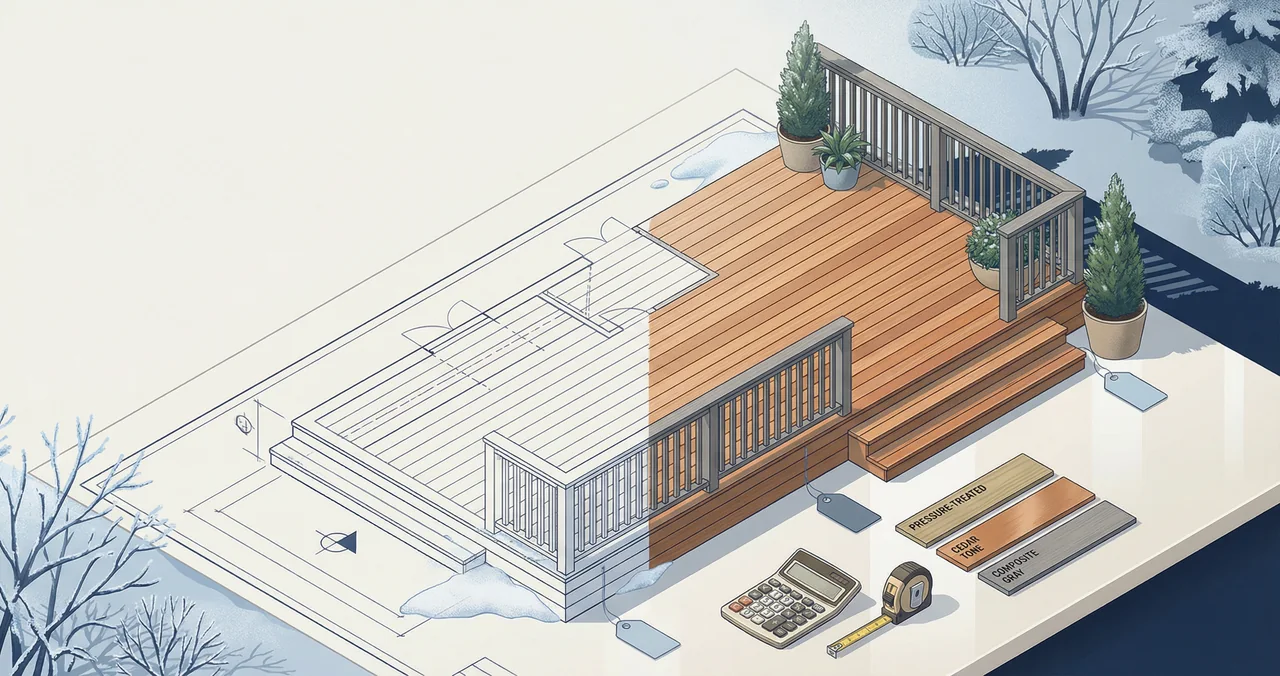
Deck Cost in Reno: What Homeowners Are Paying in 2026
If you're pricing out a new deck in Reno, the short answer is $25 to $100 per square foot installed — but that range is enormous because material choice, deck size, and site complexity all swing the number dramatically. A basic 12×16 pressure-treated deck might run $4,800 to $8,640, while a large composite build with built-in seating and multi-level design can push past $30,000.
🏗️ Planning a deck project?
Get a free manual project review, or visualize your dream deck with AI before requesting quotes.
🧮 Tool Alert: Deck Cost Calculator
Estimate your project costs in seconds based on local pricing bands for your area.
Calculate My Cost →Reno's climate makes this decision more consequential than in milder regions. Freeze-thaw cycles, heavy snow loads, and intense summer UV mean your material choice directly affects how long the deck lasts and how much you'll spend maintaining it. Here's what Reno homeowners are actually paying right now — and where the real savings are.
<!-- slot:after-intro -->
For a broader look at deck pricing across different materials and regions, see our deck cost guide. Timing your build right can also save thousands — check our guide on the best time to build a deck.
Average Deck Cost in Reno by Material
Material drives roughly 40-50% of your total project cost, with labor making up most of the rest. Here's what Reno contractors are charging in 2026 for a fully installed deck, including framing, footings, and basic railing:
| Material | Installed Cost per Sq Ft | 12×16 Deck (192 sq ft) | 16×20 Deck (320 sq ft) |
|---|---|---|---|
| Pressure-Treated Wood | $25–$45 | $4,800–$8,640 | $8,000–$14,400 |
| Cedar | $35–$55 | $6,720–$10,560 | $11,200–$17,600 |
| Composite (mid-range) | $45–$75 | $8,640–$14,400 | $14,400–$24,000 |
| Trex (premium lines) | $50–$80 | $9,600–$15,360 | $16,000–$25,600 |
| Ipe (hardwood) | $60–$100 | $11,520–$19,200 | $19,200–$32,000 |
These ranges account for Reno's market. You'll land at the lower end with a simple, ground-level rectangular deck and basic railing. The upper end reflects elevated builds, complex layouts, and premium finishes.
Pressure-treated lumber remains the budget pick, but understand the trade-off in Reno: the freeze-thaw cycle is brutal on wood that hasn't been properly sealed. You're looking at annual staining and sealing to prevent cracking and rot, which adds $1–$2 per square foot per year in maintenance costs.
Composite and PVC decking hold up best against Reno's combination of snow, ice, and intense high-desert sun. The upfront premium pays for itself within 5–7 years when you factor in zero staining, no board replacement, and minimal upkeep. For a deeper comparison of composite decking brands and what to look for, material quality matters more than brand name.
Cost Per Square Foot Breakdown
That installed price includes multiple cost layers. Understanding each one helps you see where your money actually goes:
Materials Only (No Labor)
- Pressure-treated lumber: $8–$15/sq ft
- Cedar decking boards: $12–$22/sq ft
- Composite boards: $18–$32/sq ft
- Trex Transcend/Enhance: $22–$38/sq ft
- Ipe hardwood: $28–$48/sq ft
Structural Components
These costs apply regardless of decking material:
- Concrete footings: $150–$400 each (Reno requires footings below frost line — 36 to 60 inches deep depending on your specific location, which adds cost compared to warmer climates)
- Framing lumber (joists, beams, ledger): $5–$10/sq ft
- Hardware and fasteners: $2–$4/sq ft
- Railing systems: $30–$80 per linear foot installed
- Stairs: $75–$200 per step
The Reno-Specific Add-Ons
Building in northern Nevada adds costs you won't see in quotes from Phoenix or LA:
- Deep footings: Standard Reno frost line depth means more concrete, more digging, and potentially more labor. Expect footings to cost 30–50% more than in frost-free zones.
- Snow load engineering: Reno decks need to handle significant snow weight. Your contractor should be designing for at minimum 40 psf ground snow load, which may mean beefier joists and closer spacing.
- Post bases and flashing: Proper moisture management around posts and the ledger board connection prevents the ice dam damage that ruins so many Reno decks within 10 years.
Labor Costs in Reno
Deck builders in the Reno area typically charge $15–$35 per square foot for labor, depending on project complexity. That breaks down roughly as:
- Simple ground-level deck: $15–$20/sq ft labor
- Elevated deck (4+ feet): $22–$30/sq ft labor
- Multi-level or complex design: $28–$35/sq ft labor
Reno's shorter building season (May through October for most outdoor work) concentrates demand into fewer months. Contractors' schedules fill fast. If you want a summer build, book your contractor by March — waiting until May often means you're looking at a late-summer or fall start, and some builders will be fully committed.
Labor rates have climbed roughly 8–12% over the past two years in the Reno-Sparks metro area, driven by population growth and construction demand across northern Nevada. The Reno market isn't as expensive as the Bay Area, but it's no longer the bargain it was a decade ago.
Permit costs add another $200–$500 to your project. In Reno, deck permits are typically required for structures over 200 square feet or 30 inches above grade. Contact Reno's Building and Development Services department for current requirements — they can also tell you about setback rules that might affect your deck footprint. If you're curious about what happens when you skip the permit process, the risks are real and expensive.
<!-- slot:mid-content -->
What Affects Your Total Price
Beyond material and labor rates, several factors push your Reno deck project higher or lower:
Deck Size and Shape
A simple rectangle is the most cost-efficient shape. Every angle, curve, or notch adds cutting waste and labor time. An L-shaped deck costs roughly 10–15% more than a rectangle of equivalent square footage.
Height and Access
Ground-level decks are cheapest. Once you're building above 4 feet, you need additional posts, bracing, and the labor to work at height. A second-story deck attached to an upper floor can cost 2–3x more per square foot than ground level.
Railing and Stairs
Railing is surprisingly expensive — often $3,000–$8,000 for a medium deck. Aluminum and cable railing systems look sharp but push past composite or wood options. Every set of stairs adds $1,000–$3,000 depending on length and material. For details on code-compliant cable railing options, the requirements are worth understanding upfront.
Site Conditions
- Sloped lots (common in neighborhoods like Caughlin Ranch, Galena Forest, and parts of southwest Reno) require more structural work
- Rock and caliche in the soil make digging footings harder — expect excavation surcharges of $500–$2,000 if your lot has shallow rock
- Access limitations (tight side yards, steep driveways) add labor cost because materials have to be hand-carried
Built-In Features
Each add-on has a real cost impact:
- Built-in benches: $1,500–$4,000
- Pergola or shade structure: $3,000–$12,000
- Deck lighting: $500–$2,500
- Built-in planter boxes: $300–$800 each
- Hot tub reinforcement: $1,000–$3,000 (structural upgrade for the added weight)
Use PaperPlan to visualize different decking materials on your own home before committing — seeing composite vs. cedar on your actual house helps you decide if the price difference is worth it.
Composite vs Wood: Cost Comparison
This is the biggest decision you'll make, and Reno's climate makes the math different from what you'd calculate in a mild-weather city.
10-Year Cost of Ownership
| Factor | Pressure-Treated Wood | Composite (Mid-Range) |
|---|---|---|
| Install cost (320 sq ft) | $8,000–$14,400 | $14,400–$24,000 |
| Annual maintenance | $400–$700/year (stain, seal, repairs) | $50–$100/year (cleaning) |
| 10-year maintenance total | $4,000–$7,000 | $500–$1,000 |
| Board replacements | $500–$2,000 (warped/cracked boards) | $0–$300 |
| 10-year total cost | $12,500–$23,400 | $14,900–$25,300 |
The gap narrows fast. Over 10 years, composite's higher upfront cost is nearly offset by wood's relentless maintenance demands — especially in Reno, where freeze-thaw cycling and snow accelerate wood deterioration.
Performance in Reno's Climate
Pressure-treated wood in Reno will:
- Crack and check within 2–3 years without annual sealing
- Absorb moisture that freezes and expands, splitting boards
- Need re-staining every 1–2 years (not the 3–5 years manufacturers suggest for milder climates)
- Show gray weathering from UV exposure at 4,500+ feet elevation
Composite decking in Reno will:
- Resist moisture absorption and freeze-thaw damage
- Handle snow removal without gouging (use a plastic shovel, not metal)
- Maintain color better despite high-altitude UV, though some fading is normal
- Require only periodic washing
Cedar sits in the middle — naturally rot-resistant and beautiful, but still needs sealing every 1–2 years in Reno's climate to maintain its appearance and structural integrity. It's a solid choice if you prefer the look and don't mind the upkeep commitment. Check out this guide to the best low-maintenance decking options if long-term ease is your priority.
How to Save Money on Your Reno Deck
Smart timing, design choices, and material decisions can cut thousands from your project without compromising quality.
1. Build in the Shoulder Season
Late September through early November and early spring (March–April) are when some contractors offer better pricing to fill gaps in their schedules. The weather is still workable, and you avoid peak-season markups. Not all builders discount off-season work, but it's worth asking.
2. Keep the Design Simple
A rectangular, single-level deck with standard railing is the most cost-efficient build. Every angle, curve, level change, and built-in feature adds cost. If budget is tight, start with a clean rectangle and add features later.
3. Choose a Smart Material Tier
Mid-range composite (like Trex Enhance or TimberTech Edge) gives you excellent freeze-thaw performance at $45–$65/sq ft installed — significantly less than premium lines that cost $70–$80+. The performance difference between mid-range and premium composite is mostly aesthetic, not structural.
4. DIY What You Can
Even if you hire out the structural build, you can handle:
- Staining/sealing (if you go with wood) — saves $500–$1,500
- Deck lighting installation — save $300–$800
- Demolition of an old deck — saves $500–$2,000
- Simple cosmetic railing — saves $1,000–$2,000 if you're handy
Leave footings, framing, and ledger board attachment to professionals. Those elements are structural and code-critical — especially in a snow-load zone like Reno.
5. Get Multiple Quotes
Three quotes minimum. Reno has a range of builders from large operations to independent crews, and pricing varies more than you'd expect. Make sure you're comparing apples to apples — same materials, same design, same scope. The cheapest quote isn't always the best value if it cuts corners on footings or uses thinner framing.
6. Skip the Extras (For Now)
A pergola, built-in kitchen, or hot tub pad can always be added later. Get the deck built right with quality materials and proper structure — the add-ons can come in year two or three when the budget allows. For ideas on deck lighting that's easy to retrofit, planning conduit during the initial build saves money later even if you don't install the fixtures right away.
<!-- slot:before-faq -->
🎨 Not sure which material to pick?
Upload a photo of your backyard and see exactly how Trex, TimberTech, or cedar would look — free and instant.
Frequently Asked Questions
How much does a 12×16 deck cost in Reno?
A 12×16 deck (192 sq ft) in Reno costs between $4,800 and $14,400 installed, depending on material. Pressure-treated wood lands at the low end ($4,800–$8,640), composite sits in the middle ($8,640–$14,400), and premium materials like Trex Transcend or Ipe push higher. Add $2,000–$5,000 for stairs, upgraded railing, or other features beyond a basic build.
Do I need a permit to build a deck in Reno?
In most cases, yes. Reno typically requires a building permit for decks over 200 square feet or 30 inches above grade. The permit process involves submitting a site plan and deck design for review. Fees run $200–$500 depending on project scope. Contact Reno's Building and Development Services department for current requirements — rules can change, and your specific lot may have additional setback or HOA restrictions.
What's the best decking material for Reno's climate?
Composite and PVC decking perform best in Reno's combination of freeze-thaw cycles, heavy snow, and high-altitude UV exposure. They resist moisture absorption, won't crack from ice expansion, and need minimal maintenance. If you prefer natural wood, cedar is the better choice over pressure-treated pine — but plan on sealing it every 1–2 years without fail. Budget-conscious homeowners can still do well with pressure-treated lumber if they commit to annual staining and sealing with the right product.
When is the best time to build a deck in Reno?
The prime building window is May through October, but the smartest move is to book your contractor by March. Reno's short construction season means the best builders fill their schedules early. For the best pricing, ask about shoulder-season availability in early spring or late fall — some contractors offer discounts to keep crews working during slower periods.
How deep do deck footings need to be in Reno?
Deck footings in the Reno area must extend below the frost line, which ranges from 36 to 60 inches deep depending on your specific location and elevation. This is significantly deeper than frost-free regions and adds real cost to the project — expect to pay $150–$400 per footing including excavation and concrete. Your contractor should know the exact frost depth requirement for your neighborhood, and the building inspector will verify depth before allowing the project to proceed.
<!-- slot:end -->
📋 Planning a deck project?
Get a free manual project review from our team — no obligation, no spam.
Get Free Project Review →Upload a backyard photo and preview real decking materials with AI — free, instant, no sign-up.
Permits, costs, material comparisons, and questions to ask before requesting quotes — delivered to your inbox.