
Deck Permits in Reno (2026)
Need a deck permit in Reno? Learn requirements, fees, building codes, setback rules, and how to apply through Reno's Building Division in 2026.
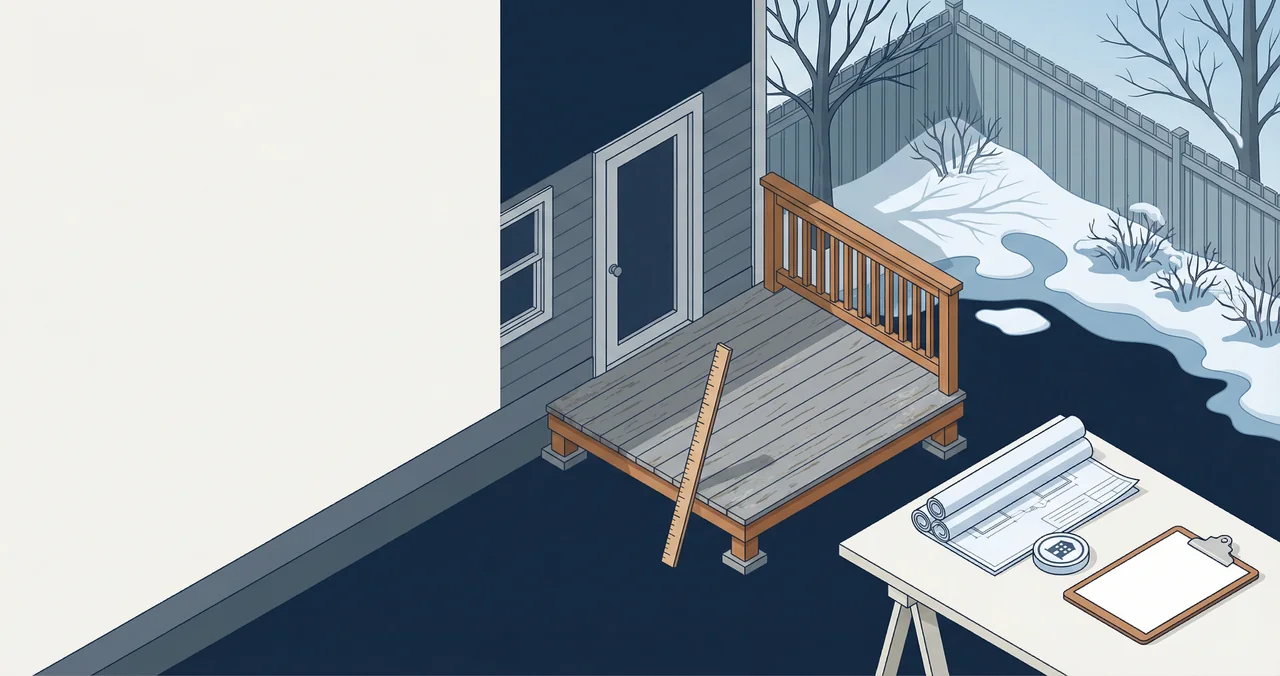
Deck Permits in Reno: Requirements, Costs & How to Apply in 2026
If you're planning a new deck in Reno, the permit question is probably near the top of your list. Do you actually need one? How much will it cost? And how long will it hold up your project during an already-short building season?
🏗️ Planning a deck project?
Get a free manual project review, or visualize your dream deck with AI before requesting quotes.
📋 Tool Alert: Permit Checker
Do you really need a permit? Check the exact rules for your city or township.
Check Permits →Here's the short answer: most deck projects in Reno require a building permit. The City of Reno's Building Division enforces this, and the rules exist for good reason — Reno's harsh winters, heavy snow loads, and deep frost lines mean a poorly built deck can become a safety hazard fast. Below is everything you need to know to get your permit squared away so you can start building when the weather cooperates.
<!-- slot:after-intro -->
Do You Need a Deck Permit in Reno?
In most cases, yes. The City of Reno requires a building permit for deck construction that meets certain thresholds. Specifically, a permit is typically required when your deck is:
- Over 200 square feet in total area
- More than 30 inches above grade at any point
- Attached to your home's structure (ledger board connection)
A small, ground-level platform under 200 square feet that sits at or near grade level *may* be exempt — but don't assume. If you're building anything elevated, anything structurally attached, or anything of significant size, you need a permit.
Even for projects that seem to fall below the threshold, it's worth calling Reno's Building Division at (775) 334-2090 or visiting their office at 1 East First Street to confirm. Permit requirements can change, and zoning overlays in certain Reno neighborhoods may impose additional restrictions.
What About Replacing an Existing Deck?
Replacing decking boards on an existing, structurally sound frame is generally considered maintenance and doesn't require a permit. But if you're replacing the substructure, changing the footprint, raising the height, or adding features like a roof or enclosed walls, you're back in permit territory.
When a Permit Is Required
Let's get specific. Here are the scenarios where Reno homeowners definitely need a permit:
- New deck construction over 200 sq ft or 30 inches above grade
- Deck additions or expansions that increase the footprint
- Structural modifications to an existing deck (new beams, posts, footings)
- Attached decks that connect to your home via a ledger board
- Elevated decks or multi-level deck designs
- Decks with roofs, pergolas, or covered structures
- Hot tub or spa installations on a deck (additional load requirements)
- Electrical or plumbing work associated with the deck (outdoor kitchens, lighting circuits)
Permit-Exempt Projects (Typically)
- Ground-level decks under 200 sq ft and under 30 inches above grade
- Cosmetic repairs: replacing deck boards, refinishing, re-staining
- Minor railing repairs that don't change the overall structure
Important: Even exempt projects must still comply with zoning setbacks and HOA rules. Exempt from a permit does not mean exempt from all regulations.
Permit Fees & Processing Time
How Much Does a Deck Permit Cost in Reno?
Permit fees in Reno are based on the estimated construction value of your project. The Building Division uses a valuation table to calculate fees, but here's what you can generally expect for residential deck projects in 2026:
| Project Size | Estimated Valuation | Approximate Permit Fee |
|---|---|---|
| Small deck (under 200 sq ft) | $5,000–$9,000 | $150–$300 |
| Mid-size deck (200–400 sq ft) | $10,000–$25,000 | $300–$600 |
| Large deck (400+ sq ft) | $25,000–$60,000 | $600–$1,200+ |
These fees typically include plan review and inspection fees. Additional fees may apply for:
- Electrical permits (if adding outlets, lighting circuits): $75–$150
- Plumbing permits (outdoor kitchens with gas or water lines): $100–$200
- Grading permits (if significant site work is needed): varies
Plan review fees are usually included in the building permit fee but can sometimes be billed separately for more complex projects. Ask the Building Division for a detailed fee schedule.
How Long Does It Take?
Processing times vary depending on the complexity of your project and current workload:
- Simple residential decks: 2–4 weeks for plan review
- Complex or multi-level decks: 4–6 weeks
- Over-the-counter permits (very simple projects): same day to 1 week
Given Reno's short building season — May through October is ideal — timing matters. If you want to build in early summer, submit your permit application by March or early April at the latest. This also aligns with when you should be booking contractors, since Reno's compressed season means best time to build a deck.
<!-- slot:mid-content -->
Building Codes & Setback Rules
Reno follows the International Residential Code (IRC) as adopted by the State of Nevada, with local amendments. Here's what that means for your deck project.
Structural Requirements
- Footings must extend below the frost line. In the Reno area, this means 36 to 60 inches deep, depending on your specific location and elevation. Reno's freeze-thaw cycles are no joke — shallow footings will heave and shift, potentially cracking your entire deck structure.
- Snow load design: Reno decks must be engineered for local ground snow loads, which can reach 30–50 pounds per square foot depending on elevation. Higher neighborhoods like Caughlin Ranch, Galena, or areas near Mt. Rose see even heavier loads.
- Joist sizing and spacing must follow IRC span tables or engineered drawings
- Ledger board connections to the house must use lag bolts or through-bolts with proper flashing — this is a top failure point inspectors look for
- Post-to-beam connections require approved hardware (Simpson Strong-Tie or equivalent)
Railing Requirements
- Railings are required on any deck surface more than 30 inches above grade
- Minimum railing height: 36 inches (42 inches in some jurisdictions — verify with Reno's code)
- Baluster spacing: no more than 4 inches apart (the "4-inch sphere rule")
- Railings must withstand 200 pounds of force applied in any direction at the top
For a rundown on railing options that meet code, check out the best deck railing systems available in 2026.
Setback Rules
Setbacks determine how close your deck can be to property lines. In Reno's residential zones, typical setbacks are:
- Front yard: 20 feet from the property line (varies by zone)
- Side yard: 5 feet minimum
- Rear yard: 20 feet (some zones allow reduced rear setbacks)
These numbers change based on your zoning district — Reno has multiple residential zones (SF6, SF9, SF15, MF14, etc.) with different rules. You can look up your property's zoning on the City of Reno's GIS mapping tool or call the Planning Division.
Also check for easements. Utility easements along your property may restrict where you can build. If your property borders a drainage channel or open space, additional setbacks may apply. For more on building near easements, see what you need to know about building near property easements.
Climate-Specific Code Considerations
Reno's high desert climate — hot dry summers and cold snowy winters — creates unique challenges:
- Freeze-thaw cycles damage wood faster than in milder climates. Pressure-treated lumber needs annual sealing to resist moisture infiltration and cracking.
- UV exposure at Reno's elevation (4,500+ feet) accelerates fading and material degradation
- Snow load means your deck's structural members may need to be upsized compared to projects at lower elevations
- Composite and PVC decking hold up best in Reno's conditions — they resist moisture, don't crack from freeze-thaw, and require minimal maintenance
Use PaperPlan to visualize different decking materials on your own home before committing — it's especially helpful when comparing how composite versus wood options look against Reno's natural landscape. Check it out at paperplan.app.
How to Apply for a Deck Permit in Reno
Here's the step-by-step process for getting your deck permit through the City of Reno.
Step 1: Prepare Your Plans
You'll need to submit construction documents that include:
- Site plan showing your property boundaries, the deck's location, and distances to property lines (setbacks)
- Floor plan of the deck with dimensions
- Elevation drawings showing height above grade
- Structural details: footing depth and diameter, joist/beam sizes, post sizes, ledger connection method
- Material specifications
- Railing details (if applicable)
For simple decks, many contractors can prepare these plans. For complex or elevated decks, you may need a licensed engineer or architect to stamp the drawings.
Step 2: Submit Your Application
You can submit permit applications through:
- Online: The City of Reno uses the Accela Citizen Access (ACA) portal for permit applications. You can upload documents and track your application status online.
- In person: Visit the Building Division at 1 East First Street, Reno, NV 89501
You'll need:
- Completed permit application form
- Two sets of construction plans
- Proof of property ownership or contractor authorization
- Contractor license information (if using a licensed contractor)
- Permit fees
Step 3: Plan Review
The Building Division reviews your plans for code compliance. For straightforward residential decks, expect 2–4 weeks. You'll be notified of approval or if corrections are needed.
Step 4: Receive Your Permit and Build
Once approved, you'll receive your permit. Post it visibly at the job site — this is required by code.
Step 5: Schedule Inspections
Typical inspections for a deck project include:
1. Footing inspection — before pouring concrete (inspector verifies depth below frost line)
2. Framing inspection — after structural framing is complete but before decking is installed
3. Final inspection — completed deck including railings, stairs, and any electrical
Don't cover up work before it's inspected. If you pour your footings or install decking before the inspector signs off on the previous stage, you may be required to tear it out.
Step 6: Final Approval
After passing all inspections, you'll receive your Certificate of Completion. Keep this document — you'll need it when you sell your home, and it proves your deck was built to code.
What Happens If You Build Without a Permit
Skipping the permit might seem tempting, especially when you're trying to beat Reno's short building window. Don't do it. Here's what you're risking:
Financial Penalties
- Fines from the City of Reno, often double the original permit fee or more
- Stop-work orders that shut down your project mid-construction
- A requirement to retroactively obtain a permit, which may involve exposing completed work for inspection — meaning tearing up finished decking to show footings and framing
Real Estate Consequences
- Unpermitted structures can kill a home sale. Title companies and lenders flag unpermitted work during transactions.
- You may be required to remove the deck entirely or bring it up to code before closing
- Your homeowner's insurance may deny claims related to an unpermitted deck — including liability if someone is injured on it
Safety Risks
Permits exist because Reno's building environment is demanding. A deck built without proper footing depth will shift during freeze-thaw. Undersized joists will sag under snow load. Improperly attached ledger boards can separate from the house wall, causing catastrophic collapse.
This isn't hypothetical — building without a permit creates real risks that go well beyond fines.
How Much Does a Deck Cost in Reno?
If you're budgeting for your project alongside permit costs, here's what installed deck pricing looks like in the Reno market for 2026:
| Decking Material | Installed Cost (per sq ft) |
|---|---|
| Pressure-treated wood | $25–$45 |
| Cedar | $35–$55 |
| Composite | $45–$75 |
| Trex (brand-name composite) | $50–$80 |
| Ipe (hardwood) | $60–$100 |
Given Reno's climate, composite decking is the strongest value play for most homeowners. It handles freeze-thaw without splitting, resists UV fading at altitude, and won't need annual sealing. Pressure-treated wood costs less upfront but demands consistent maintenance in Reno's conditions. For a deeper look at low-maintenance decking options that hold up in harsh climates, it's worth researching before you commit to a material.
If you're trying to decide between composite decking brands, focus on warranties and how the product performs in high-UV, freeze-thaw environments specifically.
<!-- slot:before-faq -->
🎨 Not sure which material to pick?
Upload a photo of your backyard and see exactly how Trex, TimberTech, or cedar would look — free and instant.
Frequently Asked Questions
Do I need a permit for a ground-level deck in Reno?
Not always. If your deck is under 200 square feet and less than 30 inches above grade, it may be exempt from permit requirements. However, you still need to comply with zoning setbacks and any HOA rules. Call the Reno Building Division at (775) 334-2090 to confirm before you start building.
How long does it take to get a deck permit in Reno?
For a standard residential deck, plan on 2–4 weeks for plan review. More complex projects with engineering requirements can take 4–6 weeks. Very simple projects may qualify for expedited or over-the-counter review. Submit your application by March if you want to build during Reno's prime season of May through October.
How much does a deck permit cost in Reno in 2026?
Fees are based on your project's estimated construction value. For most residential decks, expect to pay between $150 and $1,200 depending on size and complexity. Electrical or plumbing sub-permits add $75–$200 each. Contact the Building Division for an exact quote based on your project scope.
Can my contractor pull the permit for me?
Yes. Licensed contractors in Nevada can pull permits on behalf of homeowners. In fact, most reputable Reno deck builders handle the entire permit process as part of their service. If a contractor suggests skipping the permit, that's a major red flag — find a builder who does things right.
What inspections are required for a deck in Reno?
Most deck projects require three inspections: a footing inspection (before concrete is poured), a framing inspection (after structural work but before decking), and a final inspection (completed deck with railings and stairs). Your permit card will list the specific inspections required for your project. Schedule each one through the Building Division — don't proceed to the next phase until the previous inspection passes.
<!-- slot:end -->
📋 Planning a deck project?
Get a free manual project review from our team — no obligation, no spam.
Get Free Project Review →Upload a backyard photo and preview real decking materials with AI — free, instant, no sign-up.
Permits, costs, material comparisons, and questions to ask before requesting quotes — delivered to your inbox.