
Deck Cost in Richmond (2026)
What does a deck cost in Richmond, BC? Get 2026 pricing per square foot for composite, cedar, and pressure-treated decks — plus tips to save on your build.
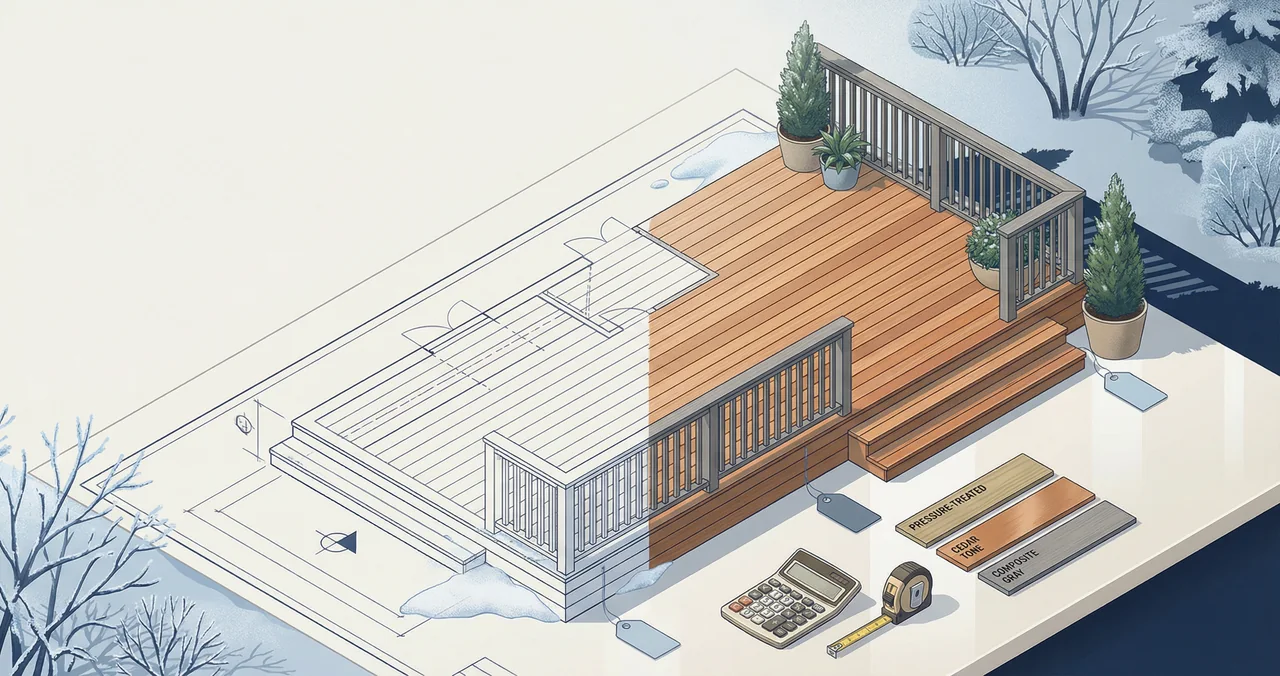
A new deck in Richmond, BC typically runs between $30 and $120 per square foot installed, depending on materials and complexity. For a standard 300-square-foot deck, that puts you in the range of $9,000 to $36,000 CAD — a wide spread that comes down to the choices you make.
Richmond's constant moisture and mild winters create specific challenges that directly affect what you should spend. Cheap out on the wrong material, and you'll be pressure washing algae every few months. Overspend on exotic hardwood without proper installation, and you're still fighting the same moisture problems.
Here's exactly what Richmond homeowners are paying in 2026, broken down by material, size, and project type.
🧮 Tool Alert: Deck Cost Calculator
Estimate your project costs in seconds based on local pricing bands for your area.
Calculate My Cost →Average Deck Cost in Richmond by Material
Material choice is the single biggest factor in your final price. In Richmond's wet climate, this decision also determines how much maintenance you'll deal with for the next 10 to 25 years.
🏗️ Planning a deck project?
Get a free manual project review, or visualize your dream deck with AI before requesting quotes.
Here are 2026 installed prices (materials + labour) that Richmond contractors are currently quoting:
| Material | Cost Per Sq Ft (CAD, Installed) | Best For |
|---|---|---|
| Pressure-treated wood | $30–$55 | Budget builds, covered decks |
| Cedar | $40–$65 | Natural look, moderate budgets |
| Composite | $50–$85 | Low maintenance, moisture resistance |
| Trex (premium composite) | $55–$90 | Long-term value, warranty coverage |
| Ipe (tropical hardwood) | $70–$120 | High-end builds, maximum durability |
A few things to keep in mind with these numbers. The low end assumes a simple, ground-level rectangular deck with standard railing. The high end reflects second-storey builds, complex shapes, built-in benches, or premium railing systems.
Pressure-treated wood remains the most popular choice for budget-conscious Richmond homeowners, but it demands the most upkeep in this climate. You'll need to seal it within the first year and re-stain every two to three years to prevent moisture damage.
Composite and Trex decking have become increasingly popular in Metro Vancouver specifically because they handle Richmond's rain without the constant maintenance cycle. The upfront cost stings, but many homeowners find the math works out over 10+ years.
Cost Per Square Foot Breakdown
Your per-square-foot cost includes more than just decking boards. Here's how that price typically breaks down for a mid-range composite deck in Richmond:
- Decking material: $18–$35/sq ft
- Substructure (joists, beams, posts): $8–$15/sq ft
- Hardware and fasteners: $2–$4/sq ft
- Railing system: $3–$8/sq ft (averaged across deck area)
- Labour: $15–$30/sq ft
- Permits and inspections: $1–$3/sq ft (averaged)
Common Deck Sizes and Total Costs
To give you a clearer picture, here's what Richmond homeowners are paying for popular deck sizes using composite decking (mid-range):
| Deck Size | Square Footage | Estimated Total (CAD) |
|---|---|---|
| 10×12 | 120 sq ft | $6,000–$10,200 |
| 12×16 | 192 sq ft | $9,600–$16,320 |
| 14×20 | 280 sq ft | $14,000–$23,800 |
| 16×20 | 320 sq ft | $16,000–$27,200 |
| 20×20 | 400 sq ft | $20,000–$34,000 |
These estimates include standard railing, basic stairs, and a straightforward rectangular layout. If you're curious about pricing for larger builds in other parts of the province, check out our 16×20 deck cost breakdown for Ontario or 20×20 deck cost guide — the material costs are similar, though labour rates differ by region.
Labor Costs in Richmond
Labour accounts for roughly 40% to 50% of your total deck project in Richmond. That's higher than the national average, and there are a few reasons why.
Richmond-specific labour factors:
- Metro Vancouver wage rates — Skilled carpenters and deck builders in the Lower Mainland command higher rates than most other Canadian markets. Expect to pay $15–$30 per square foot for labour alone, depending on project complexity.
- Seasonal demand compression — The realistic building window in Richmond runs from June through September. Every deck builder in the city is booked solid during these months, which drives prices up.
- Rain delays — Even during summer, Richmond sees occasional rain. Contractors often build delays into their quotes. A project quoted at two weeks may take three.
- Foundation requirements — Richmond sits on river delta soil. Some areas require deeper footings or helical piles, which adds $500–$2,000+ to foundation costs depending on conditions.
How to Get Better Labour Rates
The single most effective strategy: book in winter for a summer build. Contractors who lock in projects during their slow season (November through February) often offer 5% to 15% discounts on labour. You're giving them scheduling certainty, and they reward that.
Getting three to five quotes is standard advice, but in Richmond's competitive market, also ask each contractor:
- How they handle rain delays (fixed price vs. time-and-materials)
- Whether they use helical piles or sono tubes for footings
- What their warranty covers for moisture-related issues
What Affects Your Total Price
Beyond material and labour, several factors can push your Richmond deck cost up significantly.
Deck Height and Access
A ground-level deck costs far less than a second-storey build. If your home backs onto a slope — common in areas near the Richmond Nature Park or along the dyke trails — you may need:
- Extended posts and additional bracing: Add $2,000–$6,000
- Engineered beam design: Add $500–$1,500 for an engineer's stamp
- Stairs: $75–$150 per step, installed
Permits and Code Requirements
In Richmond, BC, deck permits are typically required for structures over 24 inches above grade or over 100 square feet. Contact Richmond's Building Department for your specific requirements, as rules vary by property zone.
Budget $200–$600 for the permit itself, plus potential inspection fees. Skipping the permit is never worth it — it can complicate home insurance claims and future resale.
Railings and Finishing
Railing costs vary dramatically:
- Pressure-treated wood railing: $20–$40/linear ft
- Composite railing: $40–$70/linear ft
- Aluminum railing: $50–$80/linear ft
- Glass railing: $80–$200/linear ft
Glass railing has become popular in Richmond, especially for homes in Steveston and along the waterfront, where homeowners want to preserve sightlines. But it nearly doubles your railing budget.
Additional Features
- Built-in lighting: $500–$2,500
- Pergola or shade structure: $3,000–$10,000
- Built-in seating: $1,000–$3,500
- Hot tub reinforcement: $1,500–$4,000 (structural upgrades)
- Covered roof over deck: $5,000–$15,000+
Given Richmond's rain, a partial roof or pergola with a retractable canopy is one of the smartest additions you can make. It extends your usable deck season by months. If you're thinking about covered options, you might also explore covered deck builders in Richmond for specialists who handle that kind of work.
Composite vs Wood: Cost Comparison
This is the question most Richmond homeowners wrestle with. Here's a direct comparison using a 300-square-foot deck as a baseline.
10-Year Cost of Ownership
| Cost Category | Pressure-Treated Wood | Composite |
|---|---|---|
| Materials + Installation | $9,000–$16,500 | $15,000–$25,500 |
| Annual cleaning | $100–$200 | $50–$100 |
| Staining/sealing (every 2 yrs) | $600–$1,200 per application | $0 |
| Board replacement | $200–$800 over 10 yrs | $0–$200 |
| 10-Year Total | $13,000–$24,500 | $15,500–$26,500 |
The gap narrows considerably over time. And in Richmond specifically, wood maintenance costs skew toward the high end because of the moisture. You're not staining every three years here — it's closer to every two, sometimes less if your deck faces north or sits under tree cover.
Climate Performance in Richmond
Pressure-treated wood in Richmond's climate:
- Requires annual power washing to prevent algae and mold
- Warps and cups faster than in drier climates
- Needs consistent sealing to prevent moisture absorption
- Lifespan: 10–15 years with diligent maintenance
Composite decking in Richmond's climate:
- Resists mold and algae growth (still needs occasional cleaning)
- Won't warp, crack, or splinter from moisture
- No staining or sealing required
- Lifespan: 25–30+ years with basic upkeep
Bottom line: If you plan to stay in your home for more than five to seven years, composite almost always makes more financial sense in Richmond. If you're building a rental property deck or a short-term solution, pressure-treated wood keeps your upfront costs down.
Use PaperPlan to visualize different decking materials on your own home before committing — it helps to see how composite versus cedar actually looks against your siding and landscaping.
For homeowners looking at premium composite specifically, our Trex deck builders in Richmond guide covers what to expect from certified installers in the area.
How to Save Money on Your Richmond Deck
Smart planning can cut your deck cost by 10% to 25% without sacrificing quality. Here are the strategies that actually work.
1. Time Your Project Right
Book during the off-season. Contact builders in January or February for a summer build. You'll have more negotiating leverage, and contractors can plan their schedules around your project. Many Richmond builders offer early-bird pricing for projects booked three to six months in advance.
2. Simplify Your Design
Every angle, curve, and level change adds cost. A rectangular deck with a single level is the most cost-effective design. Compare:
- Simple rectangle: Base price
- L-shape: Add 10–15%
- Multi-level: Add 20–40%
- Curved edges: Add 15–25%
3. Choose Materials Strategically
You don't have to go all-or-nothing on premium materials:
- Use composite for the deck surface (where moisture resistance matters most)
- Use pressure-treated wood for the substructure (hidden, protected from weather)
- Choose aluminum railing over glass (similar look, half the cost)
4. Do Some Prep Work Yourself
Most contractors are happy to let you handle:
- Clearing and levelling the build area
- Removing old deck or patio materials
- Staining or finishing (if you choose wood)
- Landscaping around the finished deck
This can save $500–$2,000 depending on the scope.
5. Get Multiple Quotes — But Compare Apples to Apples
When comparing quotes from Richmond deck builders, make sure each quote includes:
- Detailed material specifications (brand, grade, colour)
- Foundation type (sono tubes, helical piles, concrete piers)
- Permit costs and who handles the application
- Cleanup and disposal fees
- Payment schedule and warranty terms
Need help finding competitive quotes? Our guide to affordable deck builders in Burnaby covers the broader Metro Vancouver market, and many of those contractors serve Richmond too.
6. Consider Financing
If cash flow is a concern but you want quality materials, some Richmond builders offer payment plans or partner with financing companies. Explore deck builders with financing in Richmond to see what's available. Spreading the cost over 12 to 24 months often lets homeowners choose composite over wood — which saves money long-term anyway.
🎨 Not sure which material to pick?
Upload a photo of your backyard and see exactly how Trex, TimberTech, or cedar would look — free and instant.
Frequently Asked Questions
How much does a 12×16 deck cost in Richmond, BC?
A 12×16 deck (192 sq ft) in Richmond costs between $5,760 and $10,560 for pressure-treated wood, or $9,600 to $16,320 for composite — installed. These prices include standard railing, basic stairs, and permit costs. Second-storey builds, custom railing, or challenging site conditions can push the total higher. For a deeper breakdown of this popular size, check out our 12×16 deck cost guide.
Do I need a permit to build a deck in Richmond?
In most cases, yes. Richmond requires building permits for decks that are over 24 inches above grade or exceed 100 square feet. Even smaller decks may require permits depending on your property's zoning and proximity to property lines. Contact Richmond's Building Department directly — they can tell you exactly what's required for your specific lot. Skipping the permit risks fines, forced removal, and complications with home insurance.
What is the best decking material for Richmond's climate?
Composite decking is the best all-around choice for Richmond's wet climate. It resists moisture, mold, and algae without requiring annual sealing or staining. Cedar is a solid middle ground if you prefer natural wood and don't mind regular maintenance. Pressure-treated wood works for budget builds but demands the most upkeep in Richmond's rainy conditions. Ipe is nearly indestructible but costs two to three times more than pressure-treated.
When is the best time to build a deck in Richmond?
June through September offers the most reliable building weather, but those months are also when every contractor is fully booked. The best strategy is to plan and book during winter (November through February) for a summer build. You'll often get better pricing, first pick of scheduling, and more time to finalize your design. Some contractors will even start foundation work in late spring to get ahead of schedule.
Can I build a deck myself to save money in Richmond?
You can, but the savings may be less than you think. DIY eliminates labour costs (40–50% of the total), but you'll pay retail for materials instead of contractor pricing, which partially offsets the savings. You'll also need to handle permits, inspections, and ensure your build meets BC Building Code requirements. A realistic DIY savings estimate is 25–35% — not the 50% many people expect. For structural elements like posts, beams, and ledger board connections, consider hiring a professional even if you do the rest yourself. Mistakes in the substructure can be dangerous and expensive to fix.
📋 Planning a deck project?
Get a free manual project review from our team — no obligation, no spam.
Get Free Project Review →Upload a backyard photo and preview real decking materials with AI — free, instant, no sign-up.
Permits, costs, material comparisons, and questions to ask before requesting quotes — delivered to your inbox.