
Deck Cost in Vancouver (2026)
What does a deck cost in Vancouver in 2026? Get real per-square-foot pricing for composite, cedar, Trex, and pressure-treated decks — plus tips to save.
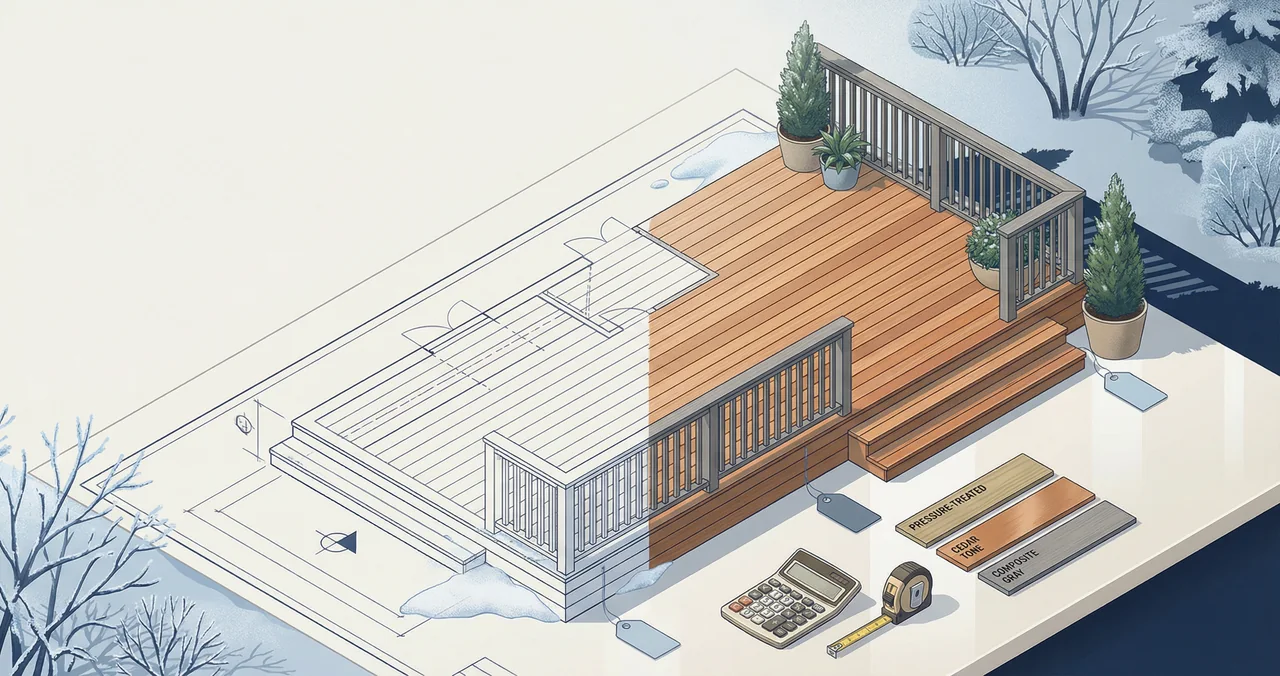
You want a deck. You want to know what it'll cost. Fair enough — Vancouver isn't cheap, and the numbers you find online are all over the place.
Here's the reality: a standard 12×16 deck in Vancouver costs between $5,760 and $16,320 CAD installed, depending on the material you choose. That's a wide range, and the final number depends on your lot, your material pick, your builder's schedule, and how complicated the design gets.
This guide breaks down exactly what Vancouver homeowners are paying in 2026 — by material, by square foot, and by the real-world factors that push your quote up or down.
🧮 Tool Alert: Deck Cost Calculator
Estimate your project costs in seconds based on local pricing bands for your area.
Calculate My Cost →Average Deck Cost in Vancouver by Material
Every decking material sits in a different price bracket. These are fully installed costs — materials, labour, substructure, and basic finishing — based on what Vancouver-area contractors are quoting in 2026.
🏗️ Planning a deck project?
Get a free manual project review, or visualize your dream deck with AI before requesting quotes.
| Material | Installed Cost (CAD/sq ft) | 200 sq ft Deck | 320 sq ft Deck |
|---|---|---|---|
| Pressure-Treated | $30–$55 | $6,000–$11,000 | $9,600–$17,600 |
| Cedar | $40–$65 | $8,000–$13,000 | $12,800–$20,800 |
| Composite | $50–$85 | $10,000–$17,000 | $16,000–$27,200 |
| Trex (brand-name composite) | $55–$90 | $11,000–$18,000 | $17,600–$28,800 |
| Ipe (tropical hardwood) | $70–$120 | $14,000–$24,000 | $22,400–$38,400 |
The low end of each range assumes a simple rectangular deck, ground-level or near-ground, with standard railing. The high end reflects raised decks, multi-level designs, or premium railing and hardware choices.
For a deeper look at how size affects the total, check out our Ontario deck cost breakdowns for 12×16 builds — the square footage math translates well to BC pricing once you adjust for local labour rates.
Cost Per Square Foot Breakdown
That installed price isn't all material. Here's roughly how your per-square-foot cost breaks down for a mid-range composite deck in Vancouver:
- Decking material: $18–$35/sq ft
- Substructure (joists, beams, posts, hardware): $10–$18/sq ft
- Labour: $18–$30/sq ft
- Footings and foundation: $3–$8/sq ft
- Railing (if applicable): $5–$15/sq ft
- Permits and inspections: $1–$3/sq ft (amortized across the project)
These aren't fixed numbers. A ground-level floating deck skips the footing costs almost entirely. A second-story deck attached to your home in Kitsilano with helical piles? That footing line jumps significantly.
What About Stairs, Benches, and Extras?
Add-ons increase cost fast:
- Deck stairs: $75–$200 per step (wider stairs cost more)
- Built-in benches: $500–$1,500 each
- Pergola or shade structure: $3,000–$10,000+
- Under-deck drainage system: $5–$10/sq ft (worth it for raised decks in Vancouver's rain)
- Built-in lighting: $500–$2,500 depending on complexity
Labour Costs in Vancouver
Vancouver labour rates for deck construction run $18–$30 per square foot in 2026, which typically accounts for 35–45% of your total project cost. That's higher than the national average, and there are good reasons for it.
The Lower Mainland has a competitive skilled trades market. Experienced deck builders stay busy year-round, and the ones with solid reputations book out months in advance — especially for summer builds.
Why Labour Costs Vary
- Season: Summer (June–September) is peak. Builders charge more and availability is limited. Booking your project in January or February for a summer build often gets you a better rate and guarantees your spot.
- Complexity: A rectangular deck on flat ground is straightforward. Multi-level decks, curved sections, or builds on sloped lots (common in North Vancouver, Burnaby's hillside neighbourhoods, or the west side) require more time and expertise.
- Access: Tight lot access — think narrow side yards in East Vancouver or Marpole — means manual material hauling, which adds labour hours.
- Height: Decks over 24 inches above grade require more robust engineering, deeper footings, and additional safety measures. They also trigger permit requirements in Vancouver.
Permits in Vancouver
In Vancouver, BC, deck permits are typically required for structures over 24 inches above grade or exceeding 100 square feet. Permit costs range from $150 to $500+ depending on scope. Contact the City of Vancouver's Building Department for your specific situation — requirements can also vary if you're technically in Burnaby, Richmond, or the District of North Vancouver.
Your contractor should handle the permit process, but confirm this upfront. Skipping permits creates problems at resale.
What Affects Your Total Price
Two homeowners on the same street can get quotes $10,000 apart for similar-looking decks. Here's why.
Lot and Terrain
Vancouver is hilly. A flat lot in South Vancouver or Richmond is simpler to build on than a sloped lot in the British Properties, Deep Cove, or along the hillsides of East Burnaby. Sloped lots need:
- Deeper footings (Vancouver's frost line sits at 12–24 inches, but slopes often require going deeper for stability)
- Taller posts and additional bracing
- Engineered plans in many cases, adding $500–$2,000 in design fees
Deck Height and Attachment
A ground-level deck costs significantly less than a raised deck attached to your home. Attachment to the house ledger requires proper flashing — absolutely critical in Vancouver's rain — and usually engineering review for the connection points.
Material Choice
This is the single biggest lever you control. Jumping from pressure-treated lumber to Trex composite can nearly double your material cost. But the maintenance math changes the picture over time (more on that below).
Design Complexity
Every angle, curve, and level change adds labour. A simple rectangle is the most cost-effective shape. L-shaped, wraparound, and multi-tier designs look great but cost 15–30% more than the equivalent square footage in a basic layout.
Time of Year
Booking during Vancouver's dry season (June–September) means you're competing with every other homeowner who had the same idea. Builders are booked solid. Off-season bookings — signing your contract in late fall or winter for a spring/early summer start — often save 5–15% on labour.
Composite vs Wood: Cost Comparison
This is the decision most Vancouver homeowners wrestle with. Here's a direct comparison over a 10-year period for a 300 sq ft deck:
| Factor | Pressure-Treated Wood | Cedar | Composite (Mid-Range) |
|---|---|---|---|
| Installed cost | $9,000–$16,500 | $12,000–$19,500 | $15,000–$25,500 |
| Annual maintenance | $300–$600 (stain/seal every 1–2 years) | $250–$500 (stain/seal every 1–2 years) | $0–$100 (occasional cleaning) |
| 10-year maintenance total | $3,000–$6,000 | $2,500–$5,000 | $0–$1,000 |
| 10-year total cost | $12,000–$22,500 | $14,500–$24,500 | $15,000–$26,500 |
| Expected lifespan | 10–15 years | 15–20 years | 25–30+ years |
The numbers get close when you factor in maintenance — and that's before counting your time spent staining, power washing, and recoating. In Vancouver's wet climate, wood decks need attention every single year. Moisture sits on the surface, moss creeps into grain, and unfinished wood turns grey and starts cupping within a season or two.
Vancouver's Climate Makes This Decision Easier
Rain. That's the short answer. Vancouver averages over 160 rainy days per year. That constant moisture means:
- Pressure-treated wood will develop mold, algae, and surface degradation faster than in drier climates. Budget for annual power washing and staining every 1–2 years — or it will look rough.
- Cedar holds up better than pressure-treated but still needs sealing. Untreated cedar turns silver-grey within months in Vancouver's conditions.
- Composite and PVC resist moisture, won't rot, and don't support mold growth the same way. You'll still want to clean them annually, but it's a hose-down, not a restaining project.
If you're looking at composite options specifically, our guide to Trex deck builders in Vancouver covers what to expect from brand-name composite installations.
Use PaperPlan to visualize different decking materials on your own home before committing — seeing composite versus cedar on your actual house can make the decision much clearer. Check it out at paperplan.app.
How to Save Money on Your Vancouver Deck
Real ways to reduce your cost without sacrificing quality:
1. Book Off-Season
This is the single most effective strategy. Contact builders in November–February for a summer build. You'll have more negotiating room, better availability, and some contractors offer off-season discounts of 5–15% on labour.
2. Simplify the Design
A rectangular deck uses materials efficiently and builds fast. Every angle, bump-out, and level change adds cost. If budget is tight, a simple rectangle with nice railing makes a bigger visual impact than a complex shape with cheap railing.
3. Mix Materials Strategically
Use composite for the deck surface (where you see and touch it) and pressure-treated lumber for the substructure (where you don't). This is standard practice and saves money without sacrificing durability.
4. Choose Your Size Carefully
Going from a 12×16 (192 sq ft) to a 16×20 (320 sq ft) deck adds 67% more material and labour. Think about how you'll actually use the space. A well-planned 200 sq ft deck with a dining area and a couple of chairs might serve you better than a sprawling 350 sq ft deck you only use half of. For sizing comparisons, see our 16×20 deck cost analysis and 20×20 deck cost breakdown.
5. Get Three Quotes (Minimum)
Pricing varies significantly between contractors. Get at least three detailed quotes — not ballpark numbers, but itemized breakdowns showing materials, labour, and timeline. This lets you compare apples to apples.
If you're looking for affordable deck builders in Burnaby or the broader Vancouver area, start your search early. The good ones book up fast.
6. Skip the Upgrades You Don't Need Yet
Built-in lighting, benches, and pergolas can always be added later. Get the deck built right, then add features in year two or three when budget allows.
🎨 Not sure which material to pick?
Upload a photo of your backyard and see exactly how Trex, TimberTech, or cedar would look — free and instant.
Frequently Asked Questions
How much does a 12×16 deck cost in Vancouver?
A 12×16 (192 sq ft) deck in Vancouver costs between $5,760 and $17,280 CAD installed, depending on material. Pressure-treated comes in at the low end ($5,760–$10,560), composite sits in the middle ($9,600–$16,320), and premium materials like Ipe push the top of that range. Add $1,000–$3,000 for stairs, railing upgrades, or permit fees.
Do I need a permit to build a deck in Vancouver?
Yes, in most cases. The City of Vancouver requires permits for decks over 24 inches above grade or larger than 100 square feet. Even if your deck falls under these thresholds, check with your local building department — especially if you're in Burnaby, Richmond, or North Vancouver, where rules differ slightly. Permit costs typically run $150–$500+. Your contractor should manage this process.
What is the cheapest deck material in Vancouver?
Pressure-treated lumber is the most affordable option at $30–$55/sq ft installed. It's a solid material for budget builds, but factor in Vancouver's rain. You'll spend $300–$600 per year on maintenance (staining, sealing, power washing) to keep it in good shape. Over 10 years, the cost gap between pressure-treated and composite narrows considerably. If you're exploring affordable builders in the Vancouver area, ask them to quote both options so you can compare the long-term numbers.
When is the best time to build a deck in Vancouver?
June through September offers the most reliable building weather — less rain means fewer delays and better conditions for concrete and stain to cure. However, this is also peak season, so builders charge more and have limited availability. The smart move: book your project in winter (November–February) for a summer build. You lock in your contractor, often at a better rate, and guarantee your preferred timeline.
Is composite decking worth the extra cost in Vancouver?
For most Vancouver homeowners, yes. Composite costs 40–60% more upfront than pressure-treated wood, but it eliminates annual staining and sealing — a bigger deal here than in drier climates. Vancouver's 160+ rainy days per year accelerate wood degradation, mold growth, and surface wear. Composite decks typically last 25–30+ years with minimal maintenance versus 10–15 years for pressure-treated. When you run the 10-year cost comparison including maintenance, composite often comes within $2,000–$4,000 of wood — and you get your weekends back.
📋 Planning a deck project?
Get a free manual project review from our team — no obligation, no spam.
Get Free Project Review →Upload a backyard photo and preview real decking materials with AI — free, instant, no sign-up.
Permits, costs, material comparisons, and questions to ask before requesting quotes — delivered to your inbox.