
Deck Permits in Richmond, BC (2026)
Need a deck permit in Richmond, BC? Learn requirements, fees, setback rules, and how to apply. Updated for 2026 with local building codes and costs.
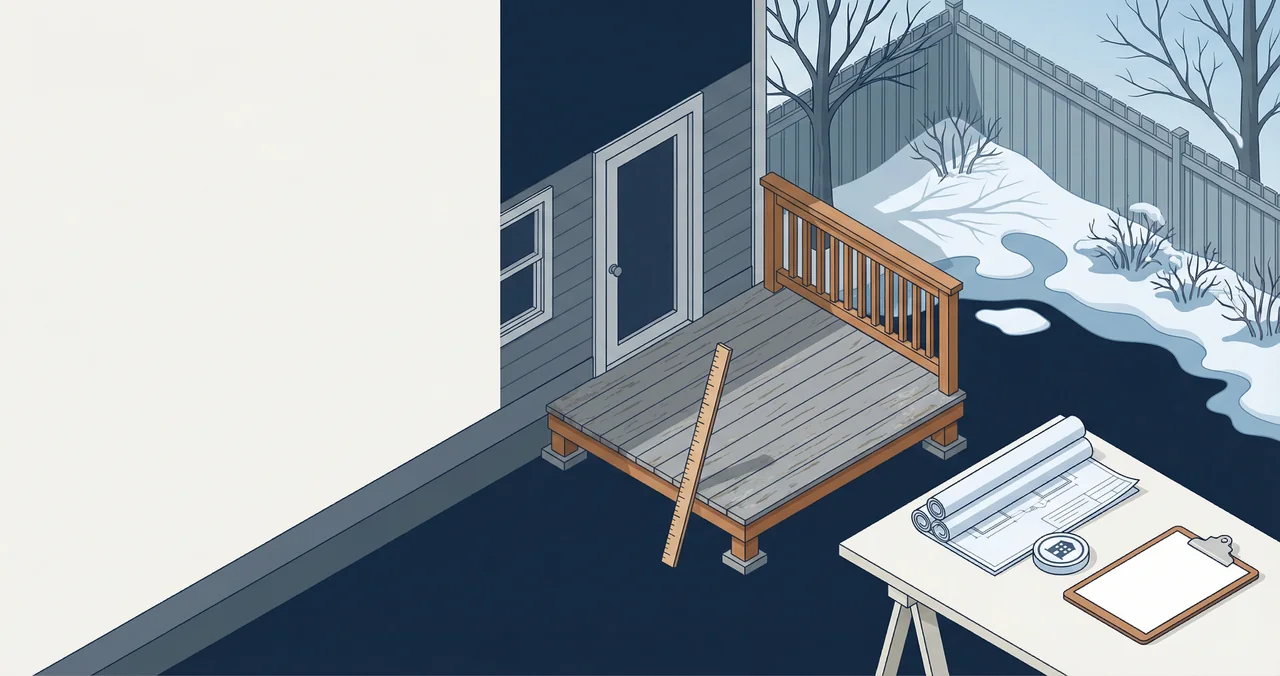
Planning a new deck at your Richmond home? Before you pick out materials or call a contractor, there's one step you can't skip: figuring out whether you need a deck permit in Richmond. The City of Richmond's Building Approvals department enforces specific rules about when permits are required, and getting it wrong can mean fines, forced removal, or serious headaches when you eventually sell your home.
Here's everything Richmond homeowners need to know about deck permits in 2026 — requirements, costs, codes, and the actual application process.
📋 Tool Alert: Permit Checker
Do you really need a permit? Check the exact rules for your city or township.
Check Permits →Do You Need a Permit in Richmond?
Short answer: probably yes.
🏗️ Planning a deck project?
Get a free manual project review, or visualize your dream deck with AI before requesting quotes.
The City of Richmond requires a building permit for most deck construction. The general threshold is:
- Decks higher than 24 inches (0.6 m) above grade require a permit
- Decks over 100 square feet typically require a permit regardless of height
- Any deck attached to your house usually triggers permit requirements because it affects the building envelope
Even a ground-level deck can require a permit if it exceeds the size threshold or affects drainage, setbacks, or lot coverage. Richmond's bylaws are stricter than some neighbouring municipalities because of the city's unique geography — much of Richmond sits at or near sea level, and the city takes grading, drainage, and structural loads seriously.
The safest move: Call Richmond's Building Approvals department at 604-276-4000 before you start any deck project. A five-minute call can save you thousands.
Decks That Typically Don't Need a Permit
A few scenarios where you may be exempt:
- Ground-level platforms under 24 inches high and under 100 sq ft that are freestanding (not attached to the house)
- Replacement of existing deck boards on a structurally sound frame (repair, not rebuild)
- Minor cosmetic work like staining, sealing, or adding surface-mounted accessories
But even here, confirm with the city. Richmond's flood plain regulations and lot coverage rules can surprise you.
When a Permit Is Required
Richmond requires a building permit for deck projects in these situations:
- The deck is more than 24 inches above finished grade at any point
- The deck exceeds 100 square feet in area
- The deck is attached to the principal building (your house)
- The deck includes structural elements like beams, posts, or footings
- The deck affects lot coverage calculations (Richmond has strict lot coverage maximums)
- The project involves electrical, gas, or plumbing work (hot tub hookups, outdoor kitchens, built-in lighting)
- The deck is part of a larger renovation that requires its own permit
Richmond's Flood Plain Factor
Here's something unique to Richmond: large portions of the city sit within a designated flood plain. This means the city enforces minimum building elevations and specific foundation requirements. If your property is in a flood-prone area — and many are, from Steveston to parts of East Richmond — your deck footings and structural design may need to meet additional standards.
Your contractor should know this, but verify. The City of Richmond's Flood Management Strategy outlines elevation requirements that can affect deck construction.
Permit Fees & Processing Time
What You'll Pay
Richmond's building permit fees for residential decks are calculated based on project value. As of 2026, expect:
| Fee Component | Estimated Cost |
|---|---|
| Building permit fee | ~$150–$500+ (based on declared construction value) |
| Plan review fee | Often included in permit fee |
| Development permit (if applicable) | $500–$1,500+ |
| Plumbing/electrical sub-permits | $100–$300 each (if needed) |
For a typical 200–400 sq ft residential deck, most homeowners pay between $200 and $600 CAD in total permit fees. Larger or more complex projects — elevated decks, multi-level builds, or those requiring a development permit — can push costs higher.
Pro tip: The permit fee is a fraction of your total project cost. A composite deck in Richmond runs $50–$85/sq ft CAD installed, so on a 300 sq ft deck you're looking at $15,000–$25,500 for the build itself. The $300–$500 permit fee is well worth the legal protection.
How Long Does It Take?
Processing times vary by season and project complexity:
- Simple deck permits: 2–4 weeks for plan review and approval
- Complex projects (development permits, variances): 6–12 weeks or longer
- Peak season submissions (March–May): Add extra time — everyone's trying to get approved before summer
Submit your application in January or February if you want to build during Richmond's dry season from June through September. Dry season bookings fill fast with local contractors, so early permit approval gives you a real scheduling advantage.
Building Codes & Setback Rules
Richmond follows the British Columbia Building Code (BCBC) with local amendments. Here are the key requirements for residential decks:
Structural Requirements
- Footings must extend below the frost line — 12–24 inches deep in Richmond, though the city may require deeper footings in certain soil conditions
- Post sizes: Minimum 4x4 for low decks, 6x6 for elevated structures (your engineer or designer will specify)
- Joist spacing: Typically 16 inches on center for most decking materials; 12 inches for diagonal or specialty patterns
- Ledger board attachment: Must use approved fasteners and flashing when attaching to the house — Richmond's rain means flashing details are critical to prevent water intrusion
- Beam spans and joist spans must comply with BCBC span tables
Setback Requirements
Richmond enforces setbacks that vary by zone. Typical residential setbacks include:
- Side yard: 1.2 m (approximately 4 feet) minimum from the property line
- Rear yard: 6.0 m (approximately 20 feet) from the rear lot line in many RS1/RS2 zones
- Front yard: Decks are rarely permitted in front yard setback areas
Important: These are general guidelines. Your specific zoning designation (RS1, RS2, RTL, etc.) determines exact setback requirements. Check your property's zoning on Richmond's online mapping tool or call 604-276-4000.
Lot Coverage
Richmond caps lot coverage — the total footprint of all structures on your property, including your house, garage, shed, and deck. In many residential zones, the maximum is 45% lot coverage. Your deck counts toward this total.
If you're already near the limit, adding a deck could push you over. This would require a development variance permit, which adds time and cost.
Railing and Safety Codes
- Guardrails are required on any deck surface more than 24 inches above grade
- Minimum guardrail height: 42 inches (per BCBC 2024 updates)
- Baluster spacing: Maximum 4 inches apart (the "4-inch sphere" rule — nothing larger than a 4-inch sphere should pass through)
- Stairs must have handrails and meet rise/run requirements (max 7.75-inch rise, min 10-inch tread depth)
Richmond's Moisture Reality
Richmond averages over 1,100 mm of rain annually. That constant moisture affects every material choice and code consideration:
- Flashing and waterproofing at the ledger board connection is non-negotiable — water damage behind improperly flashed ledger boards is the most common structural failure in BC decks
- Proper drainage underneath the deck must be maintained; the city may require grading plans showing water flow away from the foundation
- Mold and algae growth is a year-round concern — factor in maintenance access when designing your deck layout
If you're weighing material options, composite decking brands handle Richmond's wet climate far better than untreated wood. Use PaperPlan to visualize different decking materials on your own home before committing — it's a quick way to see how composite, cedar, or PVC will actually look against your siding.
How to Apply for a Deck Permit in Richmond
Step 1: Gather Your Documents
Before you visit or submit online, prepare:
- Site plan showing your property lines, existing structures, and proposed deck location with dimensions and setback measurements
- Construction drawings including framing plan, cross-sections, and elevation views
- Structural details — footing sizes, beam/joist sizes, post connections, and ledger board attachment details
- Material specifications for decking, framing, and fasteners
- Survey certificate (may be required to confirm property boundaries and lot coverage)
Most Richmond contractors prepare these drawings as part of their quote. If you're DIYing the plans, they must still meet the city's submission standards.
Step 2: Submit Your Application
Richmond accepts building permit applications through:
- Online portal: The City of Richmond's online permitting system allows digital submission
- In person: City Hall, 6911 No. 3 Road, Richmond, BC
Include all required drawings, the completed application form, and your payment.
Step 3: Plan Review
A building official reviews your submission for code compliance. During review, you may receive:
- Approval — you're good to build
- Revision requests — the city needs changes to your plans before approval
- Additional requirements — such as engineering reports for complex or elevated structures
Respond to revision requests promptly. Delays here push your entire project timeline back.
Step 4: Receive Your Permit and Build
Once approved:
- Post your permit visibly on-site during construction
- Build according to approved plans — no unauthorized changes
- Schedule inspections at required stages (typically footings, framing, and final)
Step 5: Final Inspection
The city inspects the completed deck to confirm it matches the approved plans and meets code. You'll receive a completion certificate — keep this document. You'll need it if you ever sell your home or apply for future permits.
What Happens If You Build Without a Permit
Building a deck without a required permit in Richmond is risky. Here's what you face:
- Stop-work orders: The city can halt construction immediately
- Fines: Richmond can issue fines for bylaw violations, and they add up
- Forced removal: In worst cases, the city can require you to tear down the unpermitted structure
- Retroactive permits: You may be able to apply after the fact, but expect additional scrutiny, possible engineering requirements, and higher costs
- Insurance problems: Your homeowner's insurance may not cover damage or liability related to an unpermitted structure
- Sale complications: Unpermitted work must be disclosed to buyers and can derail real estate transactions. Title searches in BC often flag building permit records.
The permit costs a few hundred dollars. Tearing down a $20,000 deck costs $20,000 plus the rebuild. The math is simple.
Can You Get a Retroactive Permit?
Sometimes. Richmond may allow you to apply for a permit after construction, but:
- You'll likely need to open up finished work for inspection (remove deck boards so inspectors can see framing and connections)
- An engineer's report may be required at your expense
- The city may require modifications to bring the structure up to code
- Fees may be higher than a standard permit
It's always cheaper and easier to get the permit first.
What About Hiring a Contractor?
A reputable Richmond deck builder will handle the permit process as part of the project. When interviewing contractors, ask:
- "Do you pull the permits, or is that my responsibility?"
- "Are your permit fees included in the quote?"
- "Will you handle all required inspections?"
If a contractor suggests skipping the permit, that's a red flag. Walk away. Check out our guides to finding reliable deck builders in Richmond and nearby Burnaby for vetted options.
2026 Deck Costs in Richmond
For budgeting purposes, here's what Richmond homeowners are paying in 2026:
| Material | Installed Cost (CAD/sq ft) |
|---|---|
| Pressure-treated wood | $30–$55 |
| Cedar | $40–$65 |
| Composite | $50–$85 |
| Trex (brand-name composite) | $55–$90 |
| Ipe (tropical hardwood) | $70–$120 |
Given Richmond's relentless moisture, many homeowners find composite decking worth the higher upfront cost. Pressure-treated wood decks need cleaning and sealing every 1–2 years in this climate, while composite requires little beyond occasional washing.
For a deeper look at what decks cost in Richmond, including labour breakdowns and size-based estimates, check our full cost guide.
🎨 Not sure which material to pick?
Upload a photo of your backyard and see exactly how Trex, TimberTech, or cedar would look — free and instant.
Frequently Asked Questions
Do I need a permit for a ground-level deck in Richmond?
It depends on the size. If your ground-level deck is freestanding (not attached to the house), under 24 inches high, and under 100 square feet, you may be exempt. But Richmond's lot coverage rules still apply — even an exempt deck counts toward your total lot coverage. Call Building Approvals at 604-276-4000 to confirm before you start.
How long does a deck permit take in Richmond?
For a straightforward residential deck, expect 2–4 weeks from submission to approval. Complex projects or those requiring development permits can take 6–12 weeks or more. Submitting during off-peak months (October through February) typically means faster turnaround.
How much does a deck permit cost in Richmond, BC?
Most residential deck permits in Richmond cost between $200 and $600 CAD, depending on the declared construction value. If your project triggers a development permit or variance, add $500–$1,500+ to that. Electrical or plumbing sub-permits for features like hot tubs or outdoor kitchens add $100–$300 each.
Can my contractor handle the deck permit for me?
Yes — and most good ones will. Experienced Richmond deck builders routinely pull permits, submit drawings, and coordinate inspections as part of their service. Some include permit fees in their quote; others pass the cost through separately. Clarify this upfront. If a contractor is reluctant to deal with permits, consider that a warning sign.
What are the setback requirements for decks in Richmond?
Setbacks depend on your property's zoning designation (RS1, RS2, RTL, etc.). Typical side yard setbacks are 1.2 m, and rear yard setbacks are often 6.0 m in standard residential zones. Your deck cannot encroach into required setback areas without a variance. Check your specific zoning requirements through Richmond's planning department or their online property information tool.
📋 Planning a deck project?
Get a free manual project review from our team — no obligation, no spam.
Get Free Project Review →Upload a backyard photo and preview real decking materials with AI — free, instant, no sign-up.
Permits, costs, material comparisons, and questions to ask before requesting quotes — delivered to your inbox.